Our Location
Free Trade Tower, Xiyong street.
Chongqing, China

Free Trade Tower, Xiyong street.
Chongqing, China
So, what are mobility aids, and what are the different types available?
Mobility aids are devices and pieces of equipment designed to help people move more safely, maintain balance, reduce physical strain and carry out everyday activities with greater independence. They range from simple walking sticks and crutches to wheelchairs, mobility scooters and practical home adaptations. Some provide support while walking, while others help people travel longer distances, get in and out of bed or manage personal care more comfortably.
Choosing suitable mobility equipment is not simply a matter of finding the most advanced product. It means understanding the individual’s abilities, lifestyle, surroundings and support requirements. A lightweight walking stick may be sufficient for someone who needs occasional balance support, whereas another person may benefit more from a powered wheelchair or a combination of different aids.
Mobility aids are assistive products that help people overcome difficulties with movement, balance, positioning or everyday physical tasks. They can be used temporarily during recovery from an injury or surgery, or over a longer period by people living with disabilities, chronic conditions or age-related mobility changes.
Although the term is often associated with walking frames and wheelchairs, mobility support covers a much wider range of equipment. Bathroom grab rails, shower chairs, transfer aids, dressing tools and certain household adaptations can all contribute to safer, more manageable daily routines.
The purpose of these products is straightforward: to make movement and everyday activities more accessible without placing unnecessary demands on the user.
For example, someone experiencing knee pain may use a walking stick to improve stability during short trips outdoors. A person who becomes exhausted after walking a short distance may find that a rollator with a built-in seat allows them to rest when necessary. Someone with limited leg strength or significant walking difficulties may need a wheelchair to travel comfortably and participate in activities that would otherwise be difficult.
The benefits can extend beyond physical assistance. Having suitable equipment may help people feel more confident about leaving home, visiting friends, shopping or continuing their usual hobbies. It can also reduce the amount of assistance needed from family members or carers, although the level of independence achieved will vary from person to person.
Importantly, using a mobility aid does not necessarily mean giving up physical activity. The right device can help someone remain active within their abilities, manage fatigue and use their energy more effectively. The goal is not to make every person walk unaided; it is to help them move and live as comfortably and safely as possible.
There is no single mobility aid that suits everyone. Each category offers different levels of support, and the most appropriate option depends on how much assistance a person needs, how far they intend to travel and the environments in which they will use the equipment.
Walking sticks and canes are among the simplest and most portable mobility aids. They are generally suitable for people who can walk independently but need some additional balance support or assistance when putting weight through a painful leg.
Most models feature a handle, a shaft and a rubber tip designed to provide grip against the ground. Adjustable versions allow the height to be matched to the user’s body, while folding canes are convenient for storage and travel.
Different handle designs can accommodate different preferences and needs. A traditional straight handle is easy to carry, while an ergonomic handle may feel more comfortable for someone who experiences discomfort in their hands. Quad canes, which have four small contact points at the base, offer a wider support area than standard single-tip models.
A walking stick can be useful for short walks, moving around the house or navigating familiar outdoor spaces. However, it provides less support than a walking frame and may not be suitable for someone with substantial balance difficulties.
Correct height and technique matter. A stick that is too tall or too short can encourage poor posture, while incorrect placement may reduce stability. Anyone who is unsure which hand to use or how to walk safely with a cane should seek advice from a physiotherapist or another qualified professional.
Crutches provide more support than a conventional walking stick and are frequently used after fractures, sprains, operations or other injuries that affect the lower limbs.
They help transfer some of the load away from an injured leg, depending on the prescribed walking technique. Crutches may also be used by people with certain long-term mobility conditions.
The two main types are underarm crutches and forearm crutches.
Underarm crutches have padded supports positioned beneath the arms, with handgrips for controlling movement. They are commonly used for short-term rehabilitation. The user’s weight should be supported through the hands rather than pressed into the armpits, as excessive pressure in that area can cause nerve and tissue problems.
Forearm crutches feature a handgrip and a cuff that fits around the forearm. They can provide a more flexible walking pattern and are sometimes preferred for longer-term use.
Crutches require coordination, upper-body strength and sufficient balance to use safely. Stairs, slippery floors and uneven pavements can be particularly challenging. A healthcare professional should demonstrate the correct technique, especially when the user has been instructed to avoid putting weight on one leg.
Walking frames are designed for people who need more support than a stick or crutches can provide. Their wider base offers several contact points with the floor, helping users maintain stability as they stand and move.
A standard walking frame usually has four legs and must be lifted slightly before being repositioned. It can be helpful indoors, particularly for people who need a stable support structure while taking short steps. Rubber ferrules on the legs help provide grip, although they must be checked regularly for wear.
Wheeled walking frames move more easily across the floor. Depending on the design, they may have two front wheels or wheels on all four legs. Models with wheels can reduce the effort required to move the frame, but they may not provide the same degree of stability as a correctly selected non-wheeled frame.
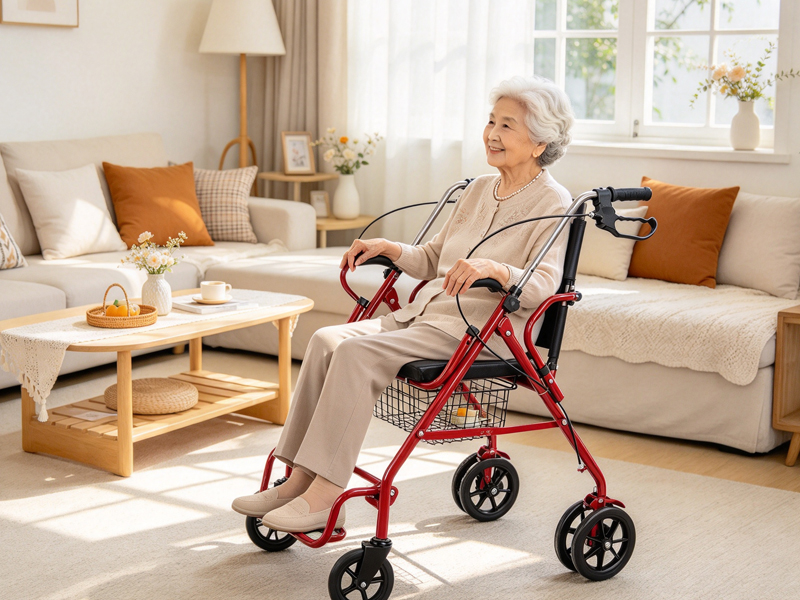
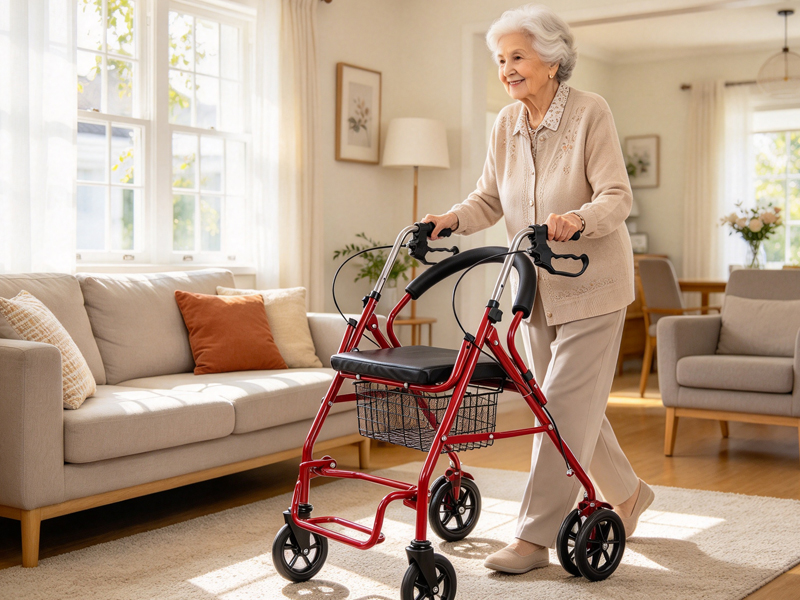
A rollator is a particular type of wheeled walking aid, commonly fitted with three or four wheels, hand-operated brakes and a seat. Many models also include a storage basket or bag.
The seat is especially useful for people who need frequent breaks when walking. Instead of abandoning an outing because of fatigue, the user can stop in an appropriate place and rest before continuing.
Rollators are available in compact indoor designs and more robust outdoor models. Three-wheel versions often turn easily in confined spaces, while four-wheel versions typically offer a broader base. However, a rollator is not automatically the best option for everyone who feels unsteady. Users must be able to control the brakes and manage the moving frame safely.
When comparing walking frames and rollators, consider how much stability is needed, whether the user can operate the brakes and whether the device will be used mainly indoors or outdoors.
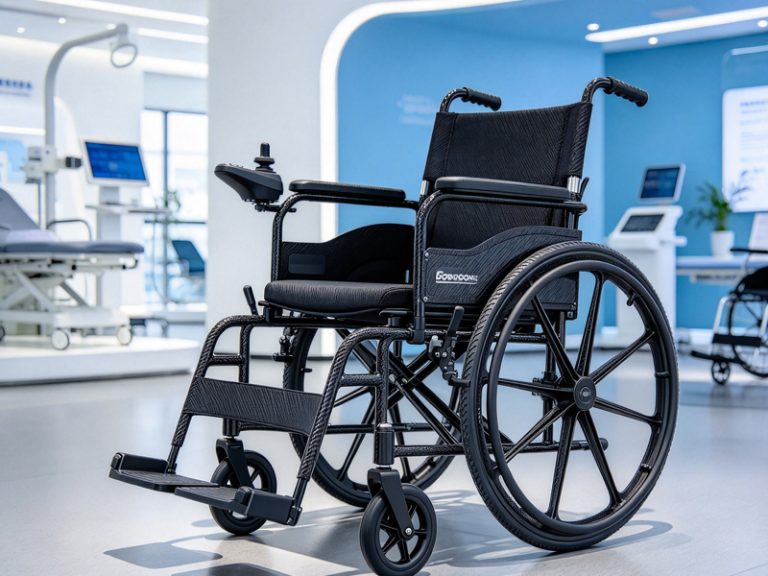
Wheelchairs provide seated mobility for people who cannot walk safely, cannot walk far enough for their daily activities or need to conserve energy.
Manual wheelchairs are propelled either by the user or by another person. The most suitable design depends on the user’s physical abilities, intended activities and the level of assistance available.
Self-propelled wheelchairs generally have large rear wheels with hand rims. These allow users with sufficient upper-body strength and coordination to move themselves. They can support greater independence, although prolonged propulsion may be difficult for people with limited arm strength, painful joints or significant fatigue.
Transit wheelchairs have smaller rear wheels and are designed to be pushed by a companion or carer. Their compact structure can make them easier to manoeuvre through busy areas and transport in a car. They are particularly useful for appointments, shopping trips and outings where another person will provide assistance.
Lightweight and folding wheelchairs are designed to simplify lifting, storage and transport. They can be particularly convenient for people who travel regularly or have limited storage space at home. However, a lightweight frame should still provide the necessary strength, stability and support for the intended user.
Other specialist designs include reclining wheelchairs and models with additional positioning features. These may be appropriate for people who need more support with posture or spend extended periods seated.
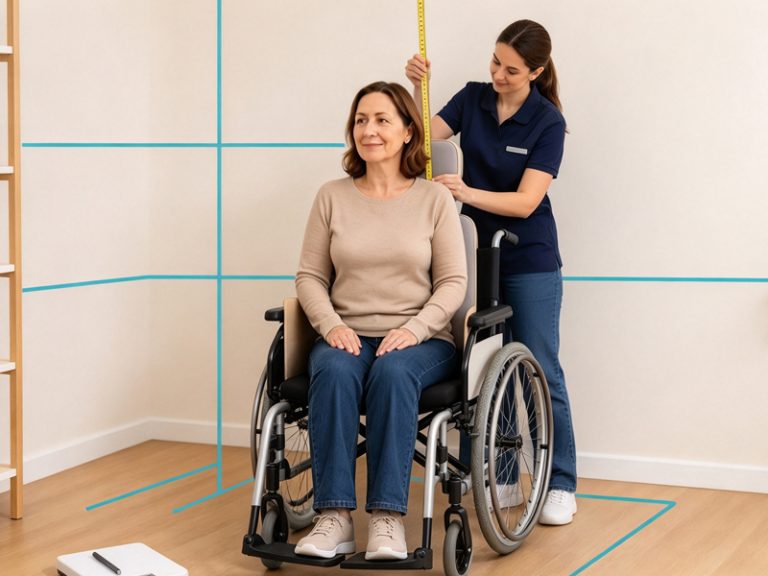
Seat width, seat depth, footrest position, cushion choice and overall fit are important considerations. A poorly fitted wheelchair can cause discomfort, make transfers harder and contribute to pressure-related skin problems. For regular or long-term use, professional assessment is particularly valuable.
Powered mobility equipment is often helpful when walking is significantly limited or when operating a manual wheelchair requires more strength than a person can comfortably manage.
Electric wheelchairs, sometimes called powerchairs, use rechargeable batteries and an electric motor. Many are controlled with a joystick, although alternative controls are available for users with different physical needs. Depending on the model, they may offer compact dimensions for indoor use, improved outdoor capability or additional seating and positioning adjustments.
Powerchairs are often suitable for people who require consistent seated support or have limited ability to propel a manual wheelchair. Their suitability depends on the user’s posture, control abilities, environment and access requirements.
Mobility scooters serve a related but different purpose. They typically have a seat, handlebars or a tiller for steering, a battery-powered motor and a platform for the feet. They are commonly used by people who can sit comfortably and operate the controls but struggle to walk longer distances.
Travel scooters are usually compact and may dismantle or fold for transport. Larger models often offer more comfortable seating, longer travel capability and features intended for outdoor use.
The main distinction is that an electric wheelchair is generally designed around seated mobility, positioning and accessibility, whereas a mobility scooter is often intended for people who can maintain a suitable seated posture and operate its steering controls.
Before choosing powered equipment, consider battery range, charging arrangements, turning space, seat comfort, weight capacity and the surfaces on which it will be used. Indoor doorways, outdoor paths and vehicle storage can all influence the decision.
In the UK, scooter users should also check the applicable rules for their scooter class, road and pavement use, registration requirements where relevant, and local accessibility arrangements.
Not every mobility challenge involves walking from one place to another. Some people find it difficult to move between a bed and a chair, rise from a seated position or transfer safely from a wheelchair.
Transfer aids are designed to make these movements more manageable. Depending on the individual’s abilities, options may include transfer boards, standing aids, bed grab rails and patient hoists.
A transfer board can help a person move between two surfaces when they have the necessary sitting balance and upper-body control. Standing aids may support a person who can bear some weight and participate in the movement. Patient hoists are designed for situations where a person requires more substantial assistance, using compatible slings and equipment.
Bed grab rails can provide a handhold when changing position or getting out of bed, while bed levers may offer additional leverage for some users. However, these products are not suitable for every bed or every medical situation. Poorly fitted rails can create entrapment risks, so compatibility and installation should be checked carefully.
The correct transfer equipment depends on how much weight the person can bear, their ability to follow instructions, their balance and the assistance available. A healthcare professional or occupational therapist can help determine the safest approach.
Bathrooms can present particular challenges because wet floors, hard surfaces and confined spaces make slips and difficult transfers more concerning.
Bathroom mobility aids help people manage bathing, showering and toileting with greater comfort and support. They are especially useful for people who experience weakness, joint pain, reduced balance or difficulty standing for long periods.
Common options include:
A shower chair may be particularly helpful for someone who becomes tired while bathing, while a raised toilet seat may make sitting down and standing up more manageable for someone with knee or hip limitations.
Equipment should be selected to suit the user’s body size, transfer ability and bathroom layout. Grab rails must be securely installed, and suction-mounted products should never be assumed to provide reliable weight-bearing support unless the specific product is designed and approved for that use.
A professional home assessment can identify where additional support or changes to the bathroom layout would be most beneficial.
Some of the most useful mobility-related products do not look like traditional mobility equipment. Instead, they help people manage daily activities that involve bending, reaching, gripping, carrying or maintaining balance.
These products can make a noticeable difference to independence, particularly when combined with a suitable walking aid or wheelchair.
Dressing aids include long-handled shoehorns, sock aids, dressing sticks and button hooks. They can reduce the need to bend or stretch and help people with limited movement or hand dexterity get dressed more easily.
Reachers and grabbers allow users to pick up lightweight objects from the floor or reach items on nearby shelves without stretching excessively. They can be useful for people recovering from surgery or those who find bending uncomfortable.
Kitchen aids include adapted cutlery, easy-grip utensils, jar openers, non-slip mats and kettle tippers. These products can help people with limited grip strength or reduced coordination prepare food and drinks with less effort.
Bed and chair aids may include furniture raisers, supportive cushions, bed wedges and suitable grab rails. Raising a chair to an appropriate height can make standing up easier for some users, while a well-chosen cushion may improve comfort and positioning.
Walking trolleys and suitable household trolleys can help move essential items around the home. They should not, however, be treated as substitutes for a purpose-designed walking frame unless the product is specifically designed to provide walking support.
The best daily living aids are those that address a genuine difficulty without introducing new hazards. For example, a reacher can reduce the temptation to climb onto a chair to retrieve something from a high shelf, while a properly selected kitchen aid may allow someone to continue preparing meals independently.
Sometimes, the most effective way to improve mobility is to change the environment rather than relying on a portable device alone.
Home adaptations can make frequently used areas easier to access and reduce barriers that interfere with everyday movement.
Examples include ramps for suitable entrances, additional handrails along stairs, improved lighting, wider clear pathways, threshold modifications and accessible bathroom layouts. In some homes, a stairlift or platform lift may be worth considering when stairs are difficult or unsafe to manage.
These changes can complement walking aids, wheelchairs and transfer equipment. A person who uses a wheelchair, for instance, may benefit more from an appropriately designed entrance ramp and sufficient turning space than from purchasing a different wheelchair.
Before making structural changes, consider the user’s current needs and the likelihood that these may change. Professional assessment can help identify practical solutions and ensure that installations meet relevant safety and accessibility requirements.
With so many mobility aids available, choosing the right one can initially feel overwhelming. The easiest way to narrow the options is to start with the specific difficulties the equipment needs to address.
A walking stick, rollator, wheelchair and bathroom grab rail all serve different purposes. Buying a product simply because it is popular or inexpensive may not solve the underlying problem.
The following factors can help guide your decision.
Start with the level of support required. Someone who walks comfortably but occasionally needs help with balance may benefit from a cane. A person who requires greater stability may need a walking frame. If walking causes substantial fatigue or cannot be completed safely, a wheelchair or powered mobility device may be more appropriate. These are general examples rather than substitutes for an individual assessment.
Think about where the equipment will be used. Indoor mobility aids need to work with doorways, furniture and narrow corridors. Outdoor equipment may need larger wheels, better clearance and greater stability on uneven surfaces. If you travel frequently, consider folding mechanisms, overall weight and whether the equipment will fit into your vehicle.
Check size, fit and weight capacity. A mobility aid should match the user’s body dimensions and support requirements. Handle height, seat width, footrest position and maximum user weight can all affect safety and comfort. Never assume that a one-size-fits-all product will provide an appropriate fit.
Consider comfort and ease of operation. Padded grips, adjustable handles, supportive seating and accessible controls can improve everyday usability. For wheeled equipment, check the brakes and turning space. For powered models, consider whether the user can operate the controls reliably and charge the battery independently or with assistance.
Be realistic about strength and fatigue. A manual wheelchair may offer independence to someone with sufficient upper-body strength, but it may become impractical if propulsion causes pain or exhaustion. Similarly, a rollator can be convenient, but only if the user can control its movement and brakes safely.
Consider storage, transport and maintenance. A device that works well at home may be difficult to lift into a car. Check folded dimensions, component weight, battery requirements and the availability of replacement parts. Regular inspection is particularly important for brakes, wheels, rubber tips and batteries.
Finally, seek professional guidance when the right level of support is unclear. A physiotherapist can assess walking, strength and balance, while an occupational therapist can help identify equipment and home adaptations that support everyday activities. A mobility equipment specialist may also be able to explain product dimensions, features and practical differences between models.
Where possible, try the equipment before buying it. A short trial can reveal whether the handles feel comfortable, the device turns easily and the user can manage it confidently in their usual environment.
Even a well-chosen mobility aid needs to be used correctly. Taking a little time to learn the equipment can help prevent avoidable accidents and make everyday movement more comfortable.
Before using a new device, check that it has been adjusted to the correct height and that all components are secure. Walking aids should have intact rubber tips or ferrules, while wheelchairs and rollators should have functioning brakes and wheels that move as intended.
For walking frames and rollators, keep the device close enough to provide appropriate support without leaning excessively forward. Learn how the brakes operate before using the equipment outdoors, on slopes or in busy public spaces.
Wheelchair users should check that footrests are positioned appropriately and that the brakes are engaged when required for transfers. Powered equipment needs routine battery care and attention to manufacturer guidance on charging, storage and servicing.
The surrounding environment matters too. Remove loose rugs and clutter where possible, keep frequently used items within easy reach, improve lighting in darker areas and take care on wet or uneven surfaces. A mobility aid cannot eliminate every fall risk, so a combination of suitable equipment, safe habits and an accessible environment is often most effective.
Maintenance requirements vary by product. Follow the manufacturer’s instructions, arrange repairs when components become damaged and avoid continuing to use equipment that appears unstable or unsafe.
Most importantly, reassess the equipment if the user’s abilities or circumstances change. A device that worked well six months ago may no longer offer enough support after an injury, a change in strength or an increase in fatigue.
Understanding what mobility aids are and the different types available is the first step towards finding practical support for everyday movement. From walking sticks and crutches to rollators, wheelchairs, scooters, transfer aids and home adaptations, each option addresses a different set of needs.
The right choice is not necessarily the most expensive product or the one with the greatest number of features. It is the equipment that provides appropriate support, fits the user comfortably and works with their daily routine.
For some people, a simple walking aid may be enough to make short journeys more manageable. Others may benefit from powered mobility equipment, bathroom adaptations or a combination of products that support different activities throughout the day.
Take time to assess the challenges that matter most, compare suitable options and seek professional advice when necessary. With the right combination of equipment and practical adjustments, many people can maintain greater independence, participate more comfortably in everyday life and feel more confident about getting out and about.
1. What Are the Most Common Types of Mobility Aids?
The most common mobility aids include walking sticks, canes, crutches, walking frames, rollators, manual wheelchairs, electric wheelchairs and mobility scooters. Other useful options include transfer aids, bathroom grab rails, shower chairs, raised toilet seats and daily living aids. The best choice depends on the individual’s balance, strength, walking ability and everyday requirements.
2. How Do I Know Which Mobility Aid Is Right for Me?
Start by identifying the activities that have become difficult, such as walking outdoors, standing for long periods, using the stairs or getting in and out of the bath. Consider your balance, strength, fatigue levels, home layout and transport needs. A physiotherapist or occupational therapist can assess your mobility and recommend suitable equipment. Trying a product before purchasing it can also help establish whether it feels comfortable and manageable.
3. Can Mobility Aids Help Older Adults Maintain Their Independence?
Yes. Suitable mobility aids can help older adults move around more confidently, manage daily tasks and participate in social activities. A walking stick may provide additional balance support, a rollator can offer a place to rest during outings, and a wheelchair or mobility scooter may help someone travel farther without excessive fatigue. Bathroom aids and household adaptations can also make personal care and everyday routines easier. However, equipment should be selected according to individual needs, fitted correctly and used as recommended to support safety and independence.