Our Location
Free Trade Tower, Xiyong street.
Chongqing, China

Free Trade Tower, Xiyong street.
Chongqing, China
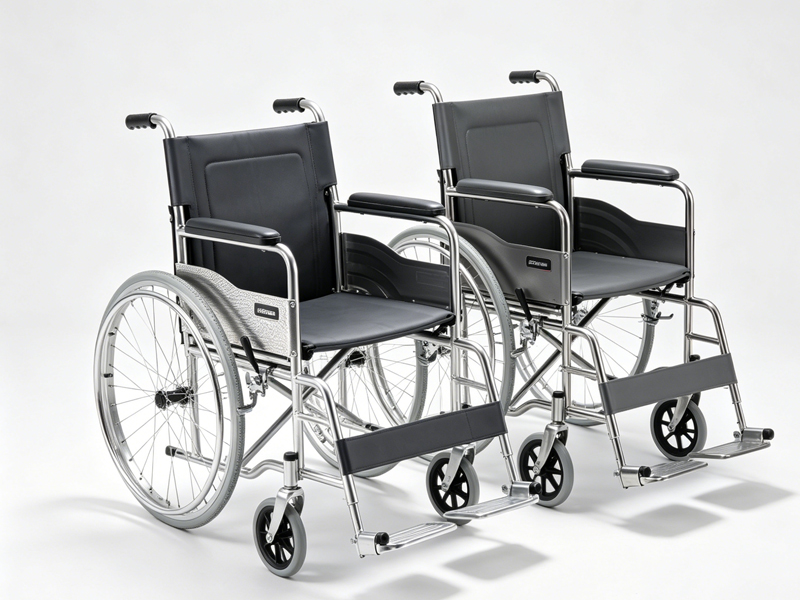
Choosing a wheelchair may seem straightforward at first glance, but the size of the wheels can significantly affect comfort, mobility, independence, and overall quality of life. Whether purchasing a wheelchair for personal use, caregiving purposes, rehabilitation, or long-term mobility support, understanding the differences between large-wheel and small-wheel wheelchairs is essential.
Many first-time buyers focus on seat width, weight capacity, or frame material while overlooking wheel configuration. However, wheel size directly influences how a wheelchair performs in different environments, how much control the user has, and how comfortable daily movement becomes.
Wheelchairs generally fall into two categories based on wheel size.
Large-wheel wheelchairs, often called self-propelled wheelchairs, feature rear wheels typically measuring between 20 and 24 inches in diameter. These wheels include hand rims that allow users to move independently without assistance.
Small-wheel wheelchairs, commonly known as transport wheelchairs, usually have rear wheels measuring between 8 and 12 inches. Since these wheels do not have hand rims, users rely on a caregiver or companion to push the chair.
Although both types serve the same primary purpose—helping individuals move safely and comfortably—their designs reflect very different mobility philosophies.
One prioritizes independence, while the other emphasizes convenience and portability.
Perhaps the most significant difference between large-wheel and small-wheel wheelchairs is the level of independence they provide.
Large-wheel wheelchairs are designed for users who have enough upper-body strength and coordination to propel themselves. The large rear wheels allow users to move forward, backward, turn, and navigate daily environments without relying on another person.
For many individuals, especially those living independently, this autonomy provides psychological as well as physical benefits. Being able to move freely within a home, office, shopping center, or public space often contributes to increased confidence and improved mental well-being.
Small-wheel transport wheelchairs function differently. Since the wheels are too small for self-propulsion, movement depends entirely on a caregiver, family member, or medical professional. While this may not be an issue for users with severe mobility limitations, it can reduce flexibility for individuals who prefer independent movement.
Therefore, people seeking greater freedom typically benefit more from large-wheel wheelchairs, while transport wheelchairs are often chosen when assistance is readily available.
Wheel size plays a major role in how a wheelchair handles various surfaces.
Large rear wheels are better equipped to roll over obstacles such as door thresholds, sidewalk cracks, uneven pavement, grass, gravel, and small curbs. The larger diameter helps distribute force more effectively, making movement smoother and reducing the likelihood of getting stuck.
Users who spend significant time outdoors often appreciate this advantage. Whether navigating city streets, parks, shopping districts, or residential neighborhoods, large-wheel wheelchairs generally provide superior performance.
Small-wheel wheelchairs excel in indoor environments where smooth flooring and tight spaces are common. Hospitals, airports, clinics, hotels, and shopping malls often utilize transport wheelchairs because they can easily maneuver through narrow corridors and crowded areas.
However, outdoor use can be more challenging. Small wheels tend to encounter greater resistance when crossing uneven surfaces, which can create a bumpier experience for both users and caregivers.
As a result, environmental conditions should play a central role when selecting a wheelchair.
One area where small-wheel wheelchairs often outperform large-wheel models is portability.
Transport wheelchairs are typically lighter, more compact, and easier to fold. Their smaller wheel profile allows them to fit into car trunks, storage compartments, and tight spaces with minimal effort.
For families who frequently travel, portability can become a decisive factor. Whether taking a road trip, boarding an airplane, attending medical appointments, or visiting relatives, a lightweight transport wheelchair offers practical advantages.
Large-wheel wheelchairs, while often foldable, occupy more storage space due to their larger wheel assemblies. Their additional size and weight can make lifting and transportation more demanding.
Individuals who prioritize travel convenience often appreciate the simplicity of transport wheelchairs, whereas users requiring daily independent mobility may consider the larger footprint a worthwhile trade-off.
Comfort becomes increasingly important when a wheelchair is used for extended periods.
Large-wheel wheelchairs generally provide a smoother ride because the larger wheels absorb shocks more effectively. This can reduce vibrations transmitted through the frame when traveling across uneven surfaces.
Long-term wheelchair users frequently report improved comfort during outdoor activities due to the enhanced suspension effect created by larger wheels.
Additionally, self-propelled wheelchairs often feature more advanced seating systems, adjustable armrests, customizable footrests, and ergonomic configurations designed for prolonged use.
Transport wheelchairs are usually intended for shorter durations. While many modern models offer adequate padding and support, they may not provide the same level of long-term comfort as full-size self-propelled wheelchairs.
For users spending several hours each day in a wheelchair, investing in a model designed for extended sitting can significantly improve overall comfort and health outcomes.
Weight matters not only for transportation but also for everyday practicality.
Most transport wheelchairs weigh less than standard self-propelled wheelchairs. Lightweight aluminum frames can make handling easier for caregivers, especially when loading equipment into vehicles.
Storage is another advantage. Apartments, assisted living facilities, and smaller homes often have limited storage capacity. Compact transport wheelchairs can be folded and stored more conveniently.
Conversely, large-wheel wheelchairs require additional storage space and may present challenges in smaller living environments.
That said, technological advancements have introduced lightweight self-propelled wheelchairs that narrow the gap considerably. Buyers should compare actual product specifications rather than assuming all large-wheel models are excessively heavy.
Safety remains one of the most important considerations when selecting mobility equipment.
Large-wheel wheelchairs generally offer greater stability over uneven terrain. Their larger contact area and improved obstacle-clearing capability help reduce the risk of tipping forward when encountering small barriers.
Many self-propelled models also include anti-tip devices, wheel locks, and advanced frame designs that enhance safety during independent use.
Transport wheelchairs are typically very safe when operated by trained caregivers. However, their smaller wheels can sometimes be less forgiving on rough surfaces, requiring greater attention during outdoor travel.
The intended environment should therefore influence safety evaluations. A wheelchair used primarily indoors may perform perfectly well with smaller wheels, while outdoor users often benefit from the stability provided by larger wheels.
Budget is often an important factor in purchasing decisions.
Transport wheelchairs generally cost less because of their simpler design and smaller components. They are frequently selected for temporary mobility needs, post-surgery recovery, hospital discharge, or occasional outings.
Large-wheel wheelchairs often involve higher manufacturing costs due to larger wheels, self-propulsion mechanisms, reinforced frames, and additional customization options.
While the initial investment may be greater, the long-term value can be substantial for users who depend on daily independent mobility.
Rather than focusing solely on purchase price, buyers should evaluate the overall benefits, expected usage frequency, and long-term mobility requirements.
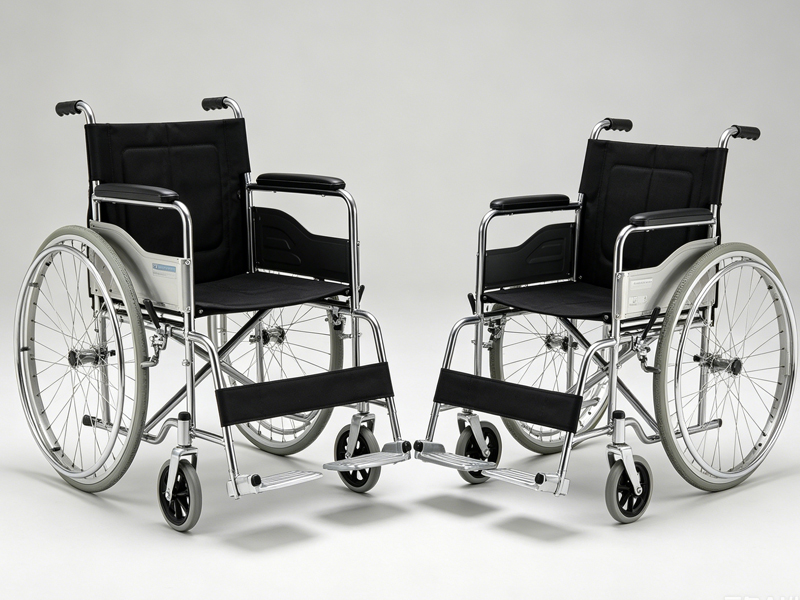
Large-wheel wheelchairs are typically ideal for:
These wheelchairs prioritize freedom, flexibility, and long-term usability.
Small-wheel transport wheelchairs are often best suited for:
Their compact design makes them highly practical for occasional or assisted transportation.
The debate between large-wheel and small-wheel wheelchairs is not about determining which option is universally better. Instead, the right choice depends on individual mobility goals, daily routines, environmental conditions, and support requirements.
Large-wheel wheelchairs provide greater independence, better outdoor performance, enhanced comfort, and improved long-term usability. Small-wheel transport wheelchairs offer exceptional portability, easier storage, lighter weight, and convenient caregiver-assisted mobility.
Before making a purchase, users should carefully assess where the wheelchair will be used most often, how frequently it will be transported, and whether independent movement is a priority. Taking these factors into account can help ensure that the chosen wheelchair supports both comfort and quality of life for years to come.
1. Are large-wheel wheelchairs better for outdoor use?
Yes. Large-wheel wheelchairs generally perform better outdoors because they can roll over uneven surfaces, cracks, grass, and small obstacles more easily than transport wheelchairs with small wheels.
2. Can a user propel a small-wheel transport wheelchair independently?
In most cases, no. Transport wheelchairs are designed to be pushed by caregivers and usually do not include hand rims for self-propulsion.
3. Which wheelchair is better for travel and transportation?
Small-wheel transport wheelchairs are typically better for travel because they are lighter, more compact, easier to fold, and more convenient to store in vehicles or luggage compartments.