Our Location
Free Trade Tower, Xiyong street.
Chongqing, China

Free Trade Tower, Xiyong street.
Chongqing, China
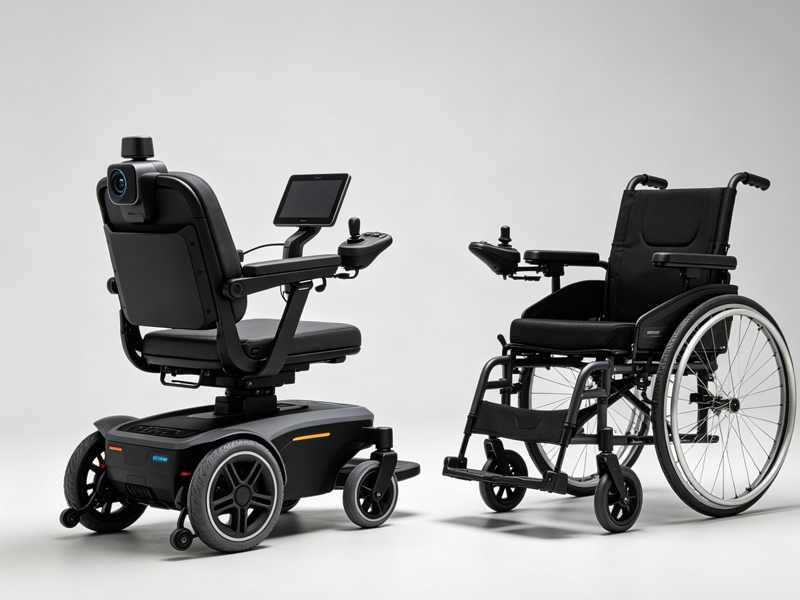
Mobility technology has advanced dramatically over the past decade. What was once considered a simple powered mobility device has evolved into an intelligent transportation solution capable of interacting with users, environments, and even connected digital ecosystems. As a result, many individuals, caregivers, rehabilitation specialists, and healthcare providers are now comparing two major categories of powered mobility devices: smart wheelchairs and standard electric wheelchairs.
Table of Contents
ToggleAt first glance, both types of wheelchairs appear to serve the same purpose. They are battery-powered, reduce the need for physical exertion, and help users move independently. However, beneath the surface, the differences are significant. Smart wheelchairs integrate advanced technologies such as artificial intelligence, sensors, obstacle detection systems, GPS navigation, connectivity features, and automated driving assistance. Standard electric wheelchairs, on the other hand, focus primarily on reliable powered movement through joystick-controlled operation.
Choosing between these two options is not simply a matter of budget. It involves evaluating lifestyle requirements, daily environments, health conditions, safety priorities, future mobility expectations, and the level of independence a user wishes to achieve. Understanding these distinctions can help users make a more informed investment while ensuring the wheelchair aligns with their long-term mobility goals.
This guide explores every major difference between smart wheelchairs and standard electric wheelchairs, helping readers understand how each option performs in real-world situations.
A standard electric wheelchair, sometimes referred to as a powered wheelchair, uses electric motors and rechargeable batteries to move the user without manual propulsion. Most models are operated through a joystick mounted on one armrest, allowing users to control direction, speed, and stopping functions.
For many years, standard electric wheelchairs have been the preferred mobility solution for individuals with limited upper-body strength, chronic illnesses, spinal cord injuries, neurological conditions, or age-related mobility challenges. Their design philosophy focuses on reliability, ease of use, and affordability.
Most standard electric wheelchairs include essential features such as powered drive systems, adjustable seating, rechargeable batteries, anti-tip wheels, programmable speed settings, and basic suspension systems. They are designed to perform everyday mobility tasks effectively, whether indoors, outdoors, or in mixed environments.
One of the primary advantages of standard electric wheelchairs is their simplicity. Users can quickly learn the controls, maintenance requirements remain relatively straightforward, and repair services are widely available. For individuals whose mobility needs are predictable and who primarily require powered movement from one location to another, a traditional electric wheelchair often provides everything necessary for daily independence.
However, as mobility technology continues to evolve, some limitations become more noticeable. Standard electric wheelchairs generally rely entirely on user input. They lack environmental awareness, automated navigation, and intelligent safety systems that can assist users in challenging situations.
A smart wheelchair represents the next generation of mobility technology. While it still functions as a powered wheelchair, it incorporates advanced digital systems that enhance safety, navigation, accessibility, and user experience.
Think of the difference between a traditional mobile phone and a modern smartphone. Both allow communication, but one offers dramatically expanded functionality through integrated technology. The same principle applies to wheelchairs.
Smart wheelchairs combine mobility hardware with intelligent software. Depending on the model, they may include:
Rather than relying solely on user commands, smart wheelchairs can interpret surrounding conditions and provide assistance during movement. In some cases, they can even perform semi-autonomous navigation tasks, reducing the cognitive and physical burden on users.
This technological shift has transformed wheelchairs from mobility devices into intelligent mobility platforms.
| Feature | Standard Electric Wheelchair | Smart Wheelchair |
|---|---|---|
| Basic Powered Movement | Yes | Yes |
| Joystick Control | Yes | Yes |
| Obstacle Detection | No | Yes |
| GPS Navigation | Rare | Common |
| Voice Commands | No | Often Available |
| Smartphone Integration | Limited | Extensive |
| Remote Monitoring | No | Yes |
| Collision Avoidance | No | Yes |
| Autonomous Assistance | No | Available |
| Predictive Maintenance | No | Often Included |
| Real-Time Diagnostics | Limited | Advanced |
| Price Range | Lower | Higher |
Perhaps the most transformative difference between smart wheelchairs and standard electric wheelchairs lies in navigation capabilities.
A traditional electric wheelchair moves only when the user provides instructions. Every turn, stop, and directional adjustment requires active input. While this system works effectively in many situations, it places full responsibility on the user.
Smart wheelchairs introduce environmental awareness through cameras, ultrasonic sensors, LiDAR technology, infrared systems, and artificial intelligence algorithms. These technologies continuously scan the surrounding environment and identify potential hazards.
Imagine navigating a crowded airport terminal, busy shopping mall, hospital corridor, or university campus. A standard electric wheelchair requires constant attention to avoid collisions. A smart wheelchair can detect obstacles in advance and provide warnings or automatic corrections.
Some advanced models can even create digital maps of frequently visited environments. Once familiar with a location, the wheelchair may assist with route planning and movement optimization.
For users with visual impairments, cognitive limitations, neurological disorders, or reduced reaction times, this capability can significantly improve safety and confidence.
The practical result is a smoother mobility experience that reduces stress and allows users to focus more on their activities rather than constantly managing navigation challenges.
Safety is another area where smart wheelchairs demonstrate substantial advantages.
Standard electric wheelchairs rely primarily on user awareness and mechanical safety features. These often include anti-tip mechanisms, electromagnetic brakes, seat belts, and speed controls. While effective, these features respond only after a situation develops.
Smart wheelchairs take a proactive approach to safety.
Through continuous environmental monitoring, they can identify potential risks before accidents occur. If a pedestrian unexpectedly steps into the wheelchair’s path, the system may automatically slow down or stop. If the wheelchair approaches a staircase or drop-off, sensors can detect the danger and prevent forward movement.
Some smart wheelchair systems can analyze driving patterns and adjust performance based on user behavior. Others provide vibration alerts, audio notifications, or visual warnings when risks are detected.
This additional layer of protection is particularly valuable for:
As healthcare providers increasingly focus on fall prevention and injury reduction, intelligent safety features are becoming a major factor in mobility equipment selection.
Control flexibility has expanded dramatically with the development of smart mobility technology.
Traditional electric wheelchairs typically rely on a joystick as the primary control mechanism. While highly effective for many users, joystick operation may not be suitable for everyone.
Individuals with conditions such as muscular dystrophy, ALS, cerebral palsy, Parkinson’s disease, or severe arthritis may experience difficulty using conventional controls.
Smart wheelchairs address this challenge by offering multiple control options, including:
This diversity allows users to choose the most comfortable and accessible interaction method.
For example, a user with limited hand function may navigate entirely through voice commands, while another individual might rely on eye-tracking technology to control movement.
These innovations expand mobility access to a broader population and create opportunities for greater independence among users with complex physical conditions.
The modern world is increasingly connected, and smart wheelchairs are becoming part of that ecosystem.
Standard electric wheelchairs operate independently. Their functionality is largely confined to mobility tasks.
Smart wheelchairs often connect with smartphones, tablets, wearable devices, healthcare platforms, and cloud-based monitoring systems.
This connectivity enables a variety of practical benefits.
Users can monitor battery status through mobile apps, receive maintenance reminders, track travel routes, and customize driving settings remotely. Family members and caregivers may access location information or receive alerts during emergencies.
Healthcare providers can sometimes review usage data to better understand mobility patterns and identify potential concerns.
For individuals living independently, these connected features provide an additional layer of convenience and security.
As telehealth and remote patient monitoring continue expanding globally, connected mobility devices are expected to play an increasingly important role in long-term care management.
Comfort has always been a critical factor in wheelchair design, particularly for users who spend many hours seated each day.
Both standard electric wheelchairs and smart wheelchairs offer adjustable seating systems, but smart models often provide a much deeper level of personalization.
Advanced smart wheelchairs may include:
These features allow the wheelchair to adapt to individual preferences and physical needs.
For users with chronic pain, pressure injury risks, or postural challenges, intelligent seating technologies can contribute significantly to daily comfort and long-term health outcomes.
The overall experience often feels more refined and tailored, similar to the difference between a basic vehicle and a premium automobile equipped with advanced comfort technologies.
Maintenance requirements differ considerably between the two categories.
Standard electric wheelchairs typically require periodic battery checks, tire inspections, motor servicing, and general mechanical maintenance.
While smart wheelchairs still require these traditional maintenance procedures, they often add diagnostic intelligence that helps identify issues before they become major problems.
Many smart systems continuously monitor:
When abnormalities occur, users may receive notifications through a mobile application or onboard display.
Predictive maintenance capabilities reduce downtime and help prevent unexpected failures. Instead of waiting for a component to break, users can address issues proactively.
This approach can improve reliability while reducing long-term service disruptions.
Mobility needs rarely occur in a single environment. Most users move between homes, workplaces, medical facilities, public transportation systems, and outdoor spaces.
Standard electric wheelchairs generally perform well in controlled environments. However, navigating complex surroundings often requires significant concentration.
Smart wheelchairs excel in dynamic environments because they continuously interpret changing conditions.
In outdoor settings, GPS integration can support route planning and navigation. Obstacle detection systems help identify pedestrians, street furniture, and unexpected barriers.
Indoors, intelligent mapping technologies may improve movement through narrow hallways, elevators, crowded rooms, and unfamiliar buildings.
Users who regularly travel, work, attend school, or participate in community activities may benefit substantially from these enhanced navigation capabilities.
Cost is frequently one of the first factors people consider when comparing mobility devices.
Standard electric wheelchairs generally have lower purchase prices due to their simpler design and reduced technological complexity.
Smart wheelchairs often require a significantly larger initial investment because of their advanced hardware, software, sensors, and connectivity features.
However, evaluating value solely through purchase price can be misleading.
Several long-term benefits may offset higher upfront costs:
For some users, these advantages justify the additional investment.
The decision ultimately depends on individual circumstances, healthcare needs, daily routines, and available funding sources.
Insurance coverage, government assistance programs, rehabilitation funding, and disability support initiatives may also influence affordability in different regions.
A standard electric wheelchair remains an excellent solution for many users.
It may be the best choice when:
For many individuals, a traditional powered wheelchair delivers dependable performance without the complexity associated with smart technologies.
Reliability, affordability, and ease of operation continue to make standard electric wheelchairs highly relevant in today’s mobility market.
Smart wheelchairs are particularly beneficial for users seeking a higher level of independence and technological support.
They are often ideal for:
As technology becomes more affordable and widely available, smart wheelchairs are increasingly appealing to a broader range of users.
For many people, the added intelligence provides confidence, freedom, and accessibility that traditional mobility systems cannot fully replicate.
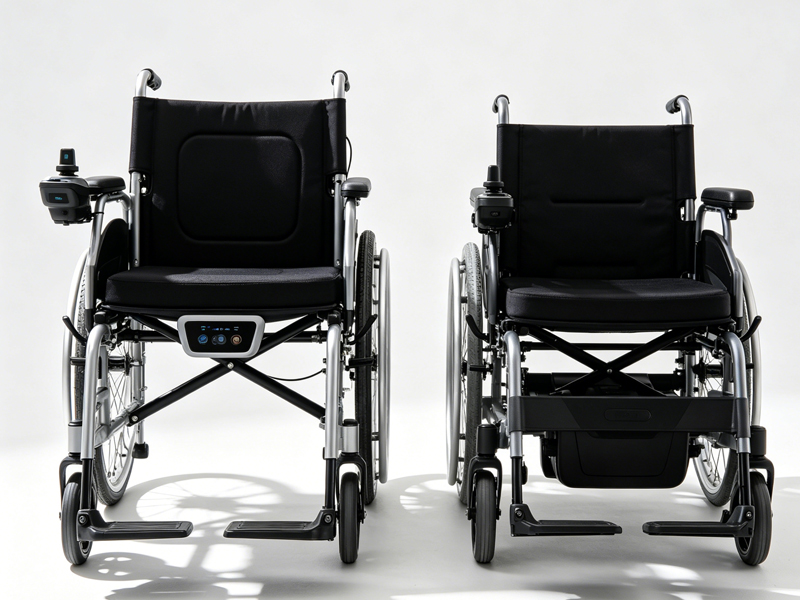
The difference between a smart wheelchair and a standard electric wheelchair extends far beyond technology. It reflects two distinct approaches to mobility.
A standard electric wheelchair focuses on dependable powered movement, simplicity, and affordability. It remains a practical and effective solution for millions of users around the world.
A smart wheelchair builds upon that foundation by adding intelligence, connectivity, automation, and enhanced safety features. It transforms mobility from a transportation function into an integrated digital experience designed to maximize independence and user confidence.
The right choice depends on individual goals, physical requirements, lifestyle demands, and budget considerations. By carefully evaluating both options, users can select a mobility solution that not only meets today’s needs but also supports future independence and quality of life.
1. Are smart wheelchairs worth the higher price compared to standard electric wheelchairs?
For users who require advanced safety features, obstacle detection, navigation assistance, and connectivity functions, smart wheelchairs can provide significant long-term value. However, individuals with straightforward mobility needs may find that a standard electric wheelchair delivers excellent performance at a lower cost.
2. Can a smart wheelchair operate without internet connectivity?
Yes. Most smart wheelchairs can perform essential driving, navigation, and safety functions without a continuous internet connection. Internet access is typically needed only for cloud-based services, remote monitoring, software updates, and certain connected features.
3. Which wheelchair is better for elderly users?
The answer depends on the user’s physical condition and lifestyle. Elderly individuals who prioritize simplicity may prefer a standard electric wheelchair, while those who benefit from enhanced safety systems, collision avoidance, and caregiver connectivity may find a smart wheelchair to be the better choice.
WhatsApp us