Our Location
Free Trade Tower, Xiyong street.
Chongqing, China

Free Trade Tower, Xiyong street.
Chongqing, China
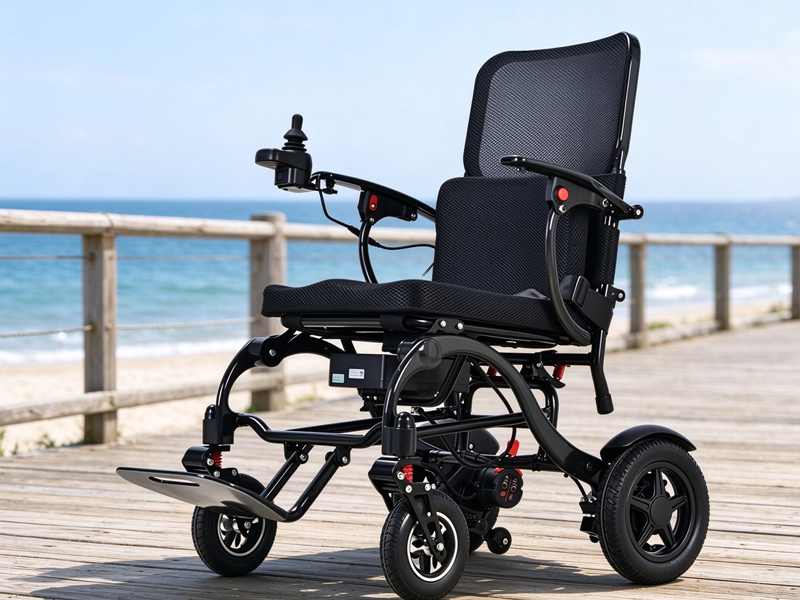
When people think about wheelchair wheels, the first things that usually come to mind are size, tires, and weight. The wheel material itself often receives less attention.
Yet for wheelchair manufacturers, distributors, and users, the material used in a wheel can make a noticeable difference in everyday performance.
Nylon wheelchair wheels have become an increasingly practical option for lightweight mobility equipment because they combine relatively low weight with good wear resistance, corrosion resistance, and design flexibility. When properly engineered, nylon wheel components can help manufacturers build wheelchairs that are easier to handle without sacrificing the durability required for regular use.
But choosing a wheelchair wheel is not simply a matter of deciding between nylon and metal.
The final performance of a wheel depends on much more than the material. Wheel diameter, tire construction, hub design, bearings, axle configuration, load capacity, and manufacturing quality all contribute to how a wheelchair feels and performs.
For that reason, it is worth looking beyond the product label and understanding what nylon wheelchair wheels actually offer, where they work best, and what to consider before choosing them.
Modern wheelchair design has changed significantly.
In the past, wheelchair construction often focused primarily on strength and basic functionality. Today, users expect much more. A wheelchair may need to be lightweight enough to lift into a car, compact enough to store at home, easy to maneuver indoors, and durable enough for daily outdoor use.
Weight is especially important for manual wheelchairs.
A wheelchair that is used every day may need to be folded, lifted, transported, and repositioned several times. Even a relatively small reduction in component weight can make these tasks easier for the user or caregiver.
This is one area where nylon can be useful.
Nylon is an engineering thermoplastic with a relatively low density compared with many traditional metal materials. With appropriate structural design, manufacturers can produce lightweight wheel components while still maintaining the strength and rigidity needed for normal wheelchair applications.
The important point, however, is that lightweight design should never mean simply using less material.
A well-designed nylon wheelchair wheel uses material where it contributes to strength and removes unnecessary weight where it does not. Reinforcing ribs, hub geometry, spoke patterns, and connection points can all be optimized to create a wheel that is both lightweight and structurally reliable.
This balance is what makes nylon particularly interesting for modern wheelchair design.
There are several reasons manufacturers and users consider nylon when selecting wheelchair wheels.
Lightweight Construction
One of the most obvious benefits is weight.
For transport wheelchairs, folding wheelchairs, lightweight manual wheelchairs, and other mobility products where portability matters, reducing wheel weight can contribute to a lighter overall product.
A lighter wheelchair can be easier to:
For caregivers, this can be particularly useful because they may need to lift or move the wheelchair repeatedly throughout the day.
However, the actual weight of a finished wheel depends on the entire assembly. A nylon wheel with a heavy tire, reinforced hub, and large bearing system may not be significantly lighter than another wheel made from a different material.
This is why product specifications should always be reviewed as a complete assembly rather than based solely on the word “nylon.”
Good Wear Resistance
Wheelchair wheels are exposed to continuous contact with the ground.
Everyday surfaces can include tile, concrete, asphalt, wood flooring, carpet, ramps, and uneven outdoor surfaces. Repeated rolling and friction naturally cause wear over time.
Quality nylon has good resistance to abrasion, making it suitable for many everyday mobility applications.
Still, there is an important distinction between the wheel structure and the tire.
In many designs, the tire is the component that experiences the most direct contact with the ground. It will eventually wear regardless of whether the wheel rim or hub is made from nylon, aluminum, or another material.
Therefore, when evaluating durability, it makes more sense to look at the entire wheel assembly.
A durable nylon wheelchair wheel should combine an appropriate nylon formulation with a suitable tire, properly fitted bearings, and a hub designed for the expected load.
Corrosion Resistance
Another useful property of nylon is its resistance to traditional corrosion.
Unlike untreated steel components, nylon does not rust in the conventional sense. This can be advantageous in environments where wheelchair components may occasionally encounter moisture.
For users who frequently clean their wheelchair or use it in humid conditions, a nylon wheel can be easier to maintain than certain metal components.
That does not mean the entire wheel assembly is corrosion-proof.
Bearings, axles, bolts, washers, and other metal components may still require protection and maintenance. A nylon wheel can reduce corrosion concerns in certain parts of the assembly, but the complete wheelchair still needs proper care.
Flexible Design Options
Nylon also gives manufacturers considerable freedom when developing wheel shapes.
The material can be molded into complex geometries, allowing designers to integrate reinforcing ribs, hub structures, mounting features, and other details into a single component.
This can be particularly useful for OEM wheelchair manufacturers.
Instead of relying entirely on conventional wheel construction, manufacturers can develop a wheel around the requirements of a specific wheelchair model.
For large-volume production, injection molding can also provide consistent dimensions and repeatable production when the tooling and process are properly controlled.
This is perhaps the most important point to understand.
Two wheelchair wheels can both be made from nylon and still perform very differently.
One may have a reinforced structure, precision bearings, a properly designed hub, and a high-quality tire. Another may use a similar-looking nylon material but have weaker mounting points or lower-quality components.
The difference becomes especially noticeable after extended use.
When evaluating nylon wheelchair wheels, manufacturers and buyers should consider:
For this reason, asking a supplier simply, “Is this wheel made of nylon?”, does not provide enough information.
A more useful conversation would include questions such as:
What type of nylon is used?
What is the rated load capacity?
What bearing configuration is available?
What wheel sizes can be produced?
Can the hub be customized?
What tire options are available?
Is OEM branding available?
These questions give a much clearer picture of whether the wheel is appropriate for a particular application.
The wheel rim and tire work together.
Even a well-designed nylon wheel can provide a poor user experience if the tire is not suitable for the intended environment.
Several common tire options are available for wheelchair applications.
Solid Tires
Solid tires are popular because they do not require inflation.
For users who want minimal maintenance, this can be a major advantage. There is no need to check air pressure, and the risk of a conventional puncture is eliminated.
Solid tires can work particularly well for indoor applications and many general-purpose wheelchair designs.
The trade-off is that they generally provide less cushioning than pneumatic tires on uneven surfaces.
Pneumatic Tires
Pneumatic tires contain air and can provide better shock absorption.
This makes them attractive for wheelchairs that are frequently used outdoors, especially on surfaces that are less predictable.
However, they require more maintenance. Air pressure needs to be checked periodically, and punctures are always a possibility.
PU Tires
Polyurethane, commonly referred to as PU, is another option used in mobility equipment.
PU tires can provide a useful balance between durability, maintenance, and rolling performance. They are often considered for lightweight wheelchair designs where users want a tire that does not require regular inflation.
The best tire choice ultimately depends on where the wheelchair will be used.
There is no universal tire that is ideal for every environment.
A wheelchair used mainly inside a home or healthcare facility faces very different conditions from one used regularly on outdoor roads.
For indoor use, the priorities may include:
For outdoor use, additional factors become important:
This is why choosing a nylon wheelchair wheel should always begin with the intended application.
A compact wheel designed for smooth hospital flooring should not automatically be expected to deliver the same performance on rough pavement or gravel.
The right wheel is the one designed for the conditions in which it will actually be used.
Wheel diameter is another factor that is easy to overlook.
Larger wheels can generally roll over obstacles more easily and may perform better on uneven surfaces. They can also influence the overall geometry and maneuverability of the wheelchair.
Smaller wheels, on the other hand, can help keep a wheelchair compact and may be convenient for transport-oriented designs.
The ideal size depends on the wheelchair configuration and its intended purpose.
For manufacturers, wheel diameter should be considered together with:
tire thickness + axle height + frame geometry + seat height + ground clearance.
Changing the wheel size can affect more than just the appearance of the wheelchair.
It can change the relationship between the user and the chair, alter handling characteristics, and influence the final seat-to-ground dimensions.
That is why replacement wheels should always be matched to the original wheelchair specifications.
For individual users, choosing the correct size may be the main concern.
For OEM manufacturers and wholesale buyers, the evaluation process is much broader.
A wheelchair wheel used in commercial production needs to be consistent from one batch to another. A wheel that works well in a sample may not be suitable for mass production if the manufacturing process cannot maintain dimensional accuracy and material consistency.
OEM buyers should therefore consider several areas.
Material Consistency
The nylon material should remain consistent between production batches.
Differences in material formulation or processing conditions can affect strength, appearance, dimensional stability, and long-term performance.
Dimensional Accuracy
Wheel diameter, hub dimensions, axle holes, mounting points, and bearing interfaces need to remain within the required tolerances.
Small dimensional differences may create installation problems when the wheels are assembled onto a finished wheelchair.
Bearing and Hub Quality
The bearing is a relatively small component, but it can have a significant impact on rolling performance.
A well-designed nylon wheel paired with a poor-quality bearing may produce unnecessary rolling resistance or noise.
The hub must also provide sufficient support around the axle and bearing area.
Load Requirements
The rated load should be established according to the intended application.
Manufacturers should consider not only the user’s body weight but also the wheelchair’s own weight and the dynamic forces generated during movement.
A wheel that is technically capable of supporting a static load may experience very different forces when the wheelchair moves over ramps, thresholds, or uneven surfaces.
Customization
For OEM projects, customization may be important.
Depending on the supplier’s capabilities, customization can include:
For large-scale production, customized components can help a wheelchair manufacturer create a more distinctive product while keeping the wheel integrated with the overall design.
The comparison between nylon and metal is often presented as a simple question: which one is better?
In reality, the answer depends on the application.
Metal components can offer high structural strength and are widely used in demanding mechanical applications. Aluminum, for example, is commonly selected when manufacturers want a combination of strength and relatively low weight.
Nylon offers a different set of advantages.
It can provide:
Neither material should automatically be considered superior in every situation.
A heavy-duty wheelchair designed for demanding outdoor use may have different requirements from a compact transport wheelchair intended primarily for hospitals.
The correct approach is to match the material and wheel construction to the intended application.
One of the advantages of nylon is that routine maintenance can be relatively straightforward.
That does not mean the wheels should be ignored.
Regular inspection can help identify small problems before they become larger ones.
Start by checking the tire surface.
Look for:
Next, inspect the hub and axle area.
If the wheel begins to wobble, makes unusual noises, or feels rough while rotating, the problem may involve the bearing or mounting hardware rather than the nylon itself.
It is also worth removing hair, dust, fibers, and other debris that can accumulate around the axle.
This is particularly important for wheelchairs used indoors, where textile fibers and hair can easily become trapped around moving components.
Fasteners should also be checked periodically to make sure they remain secure.
For wheelchairs used heavily in professional environments such as hospitals, rehabilitation facilities, and care centers, scheduled inspections are especially useful.
A few minutes of preventive maintenance can help extend the service life of the entire wheel assembly.
There is a common misconception that a lightweight wheelchair component must be less durable.
That is not necessarily true.
Modern engineering is largely about using the right amount of material in the right places.
A well-designed nylon wheel can use structural ribs, reinforced hub areas, and optimized geometry to provide the required rigidity without making the component unnecessarily heavy.
This is similar to how modern bicycle frames, automotive components, and other engineered products are designed.
The goal is not simply to make something lighter.
The goal is to achieve the best balance between:
weight + strength + durability + cost + manufacturability.
For wheelchair manufacturers, this balance is particularly important because the wheel contributes to both the mobility characteristics and the overall handling of the product.
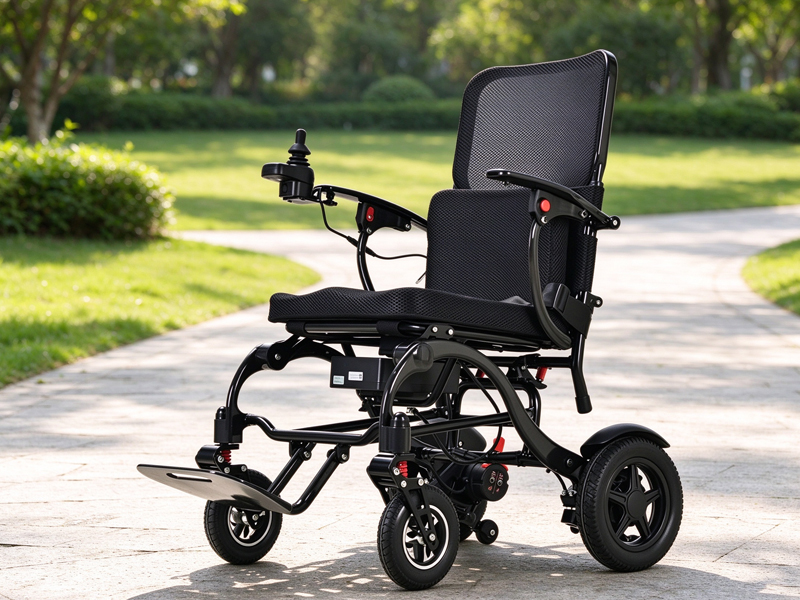
Wheelchair components are gradually becoming more specialized.
Users increasingly expect mobility products to be lightweight, comfortable, easy to maintain, and adaptable to different environments.
This creates opportunities for better wheel designs.
Future nylon wheelchair wheels are likely to focus not only on the material itself but also on the complete wheel system.
Material engineering may improve wear resistance and mechanical performance.
Structural optimization can reduce unnecessary weight.
Better hub designs can improve bearing integration.
New tire materials can improve comfort and rolling performance.
Modular designs may also make it easier to adapt one basic wheel platform to different wheelchair models.
For OEM manufacturers, this could make wheelchair wheels an increasingly important part of product development rather than simply an interchangeable accessory.
1. Are nylon wheelchair wheels durable?
Yes, properly manufactured nylon wheelchair wheels can be durable for many everyday applications. Their service life depends on the nylon material, wheel structure, tire, bearings, load, road conditions, and frequency of use. For demanding applications, buyers should evaluate the complete wheel assembly rather than judging durability based only on the nylon material.
2. Are nylon wheelchair wheels lighter than metal wheels?
Nylon has a relatively low material density, so it can be used to produce lightweight wheel components. However, the final weight depends on the wheel’s diameter, width, tire, hub, bearings, and reinforcement structure. Therefore, the complete product specification should be compared rather than assuming that every nylon wheel will automatically be lighter than every metal wheel.
3. How do I choose the right nylon wheelchair wheels?
Start by checking your wheelchair’s existing wheel diameter, width, axle or bore size, mounting configuration, and load requirements. Then consider the primary environment. Indoor users may prioritize quiet operation, low rolling resistance, and low maintenance, while outdoor users may need better shock absorption, traction, and durability. For OEM buyers, material grade, manufacturing consistency, bearing configuration, customization, and supply capacity should also be considered.