Our Location
Free Trade Tower, Xiyong street.
Chongqing, China

Free Trade Tower, Xiyong street.
Chongqing, China
The weight capacity of a wheelchair defines the maximum load it can safely handle, including the user’s body weight, cushions, personal belongings, and any medical equipment. Exceeding this limit can compromise safety, performance, and durability, while choosing the right capacity ensures a smooth, stable, and reliable mobility experience.
Understanding weight capacity goes beyond simply looking at numbers. It requires considering the user’s lifestyle, the environment in which the chair will be used, and the type of wheelchair being considered. Different models are designed for specific purposes—from lightweight portable travel chairs to robust off-road models capable of handling heavier users and rough terrains.
Power wheelchairs typically fall into three broad categories based on weight capacity. Lightweight travel models are designed for portability and convenience, usually supporting up to around 120 kg (265 lbs). Standard everyday models cater to most users with typical indoor and outdoor mobility needs, supporting roughly 120–150 kg (265–330 lbs). Heavy-duty or bariatric models accommodate larger users or those requiring higher support, often rated from 150 kg up to 270 kg (330–600 lbs).
Selecting a wheelchair with appropriate weight capacity is not simply a matter of picking the highest number. It is important to match the chair’s capacity to the user’s body weight, lifestyle, and expected load. Safety is paramount: exceeding a chair’s rated weight can alter its center of gravity, reduce stability, and increase the risk of tipping. Moreover, heavier loads can strain the motor and battery, shortening the operational range and reducing overall performance.
Durability is also influenced by weight capacity. Operating near or above the maximum limit can stress the frame, wheels, suspension, and drivetrain, increasing the likelihood of component failure. For users who frequently carry extra equipment such as medical supplies, cushions, or bags, selecting a chair with a higher weight margin ensures safety and prolongs the lifespan of the wheelchair.
Practical considerations for choosing the right weight capacity also include terrain and environment. Indoor users on smooth surfaces may not need a high-capacity model, while those navigating uneven outdoor terrain, inclines, or off-road conditions require a more robust chair. Similarly, transport and storage considerations play a role. Heavier, high-capacity models may require vehicle lifts or more storage space, while lighter models offer portability at the cost of lower load capacity.
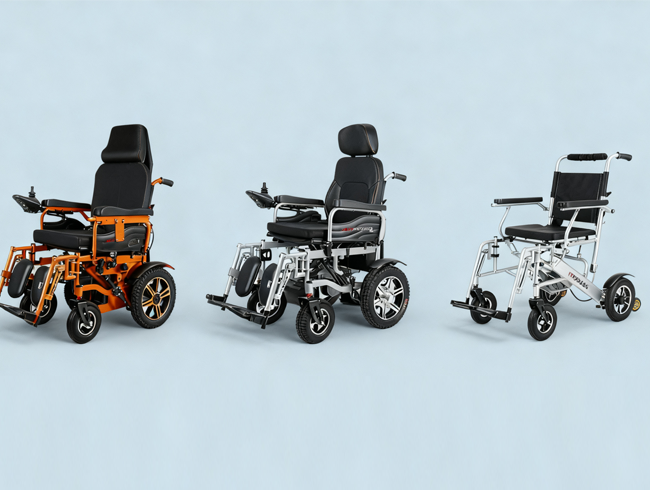
To illustrate these differences, we can examine three models from Iyasocare, each designed for a specific use case and weight range.
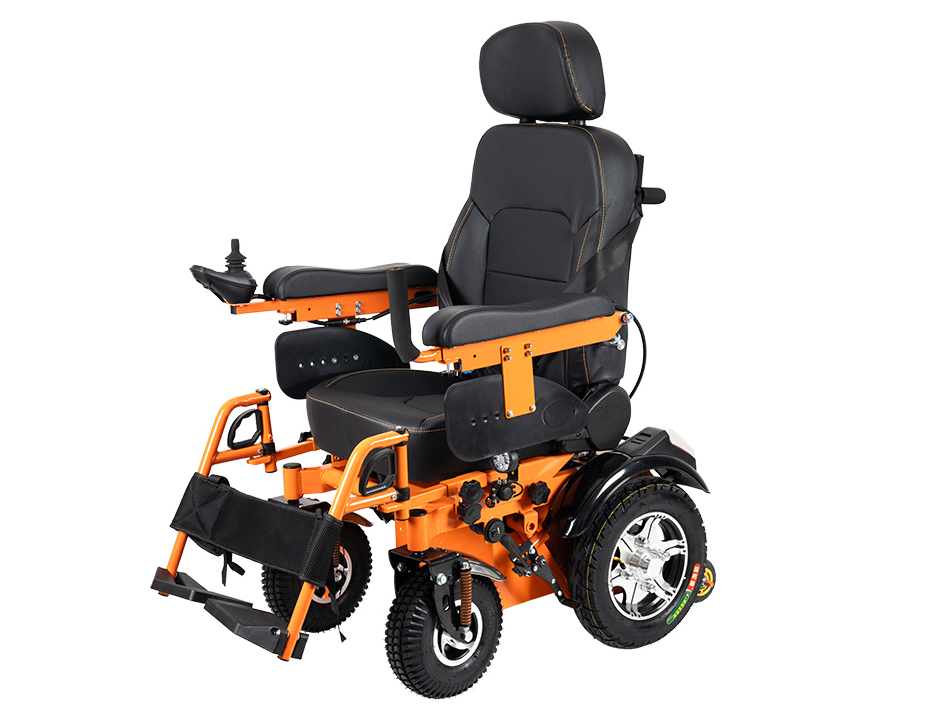
The Iyasocare YSE101A is a heavy-duty off-road wheelchair with a weight capacity of 200 kg (440 lbs). It is built with a sturdy steel frame, dual motors, and large batteries, making it ideal for heavier users or those who require reliable performance on uneven terrain. This model is perfect for individuals who need to navigate outdoor paths, slopes, or rough surfaces without compromising stability or power. The generous weight capacity allows for additional accessories or medical equipment without exceeding safe limits.
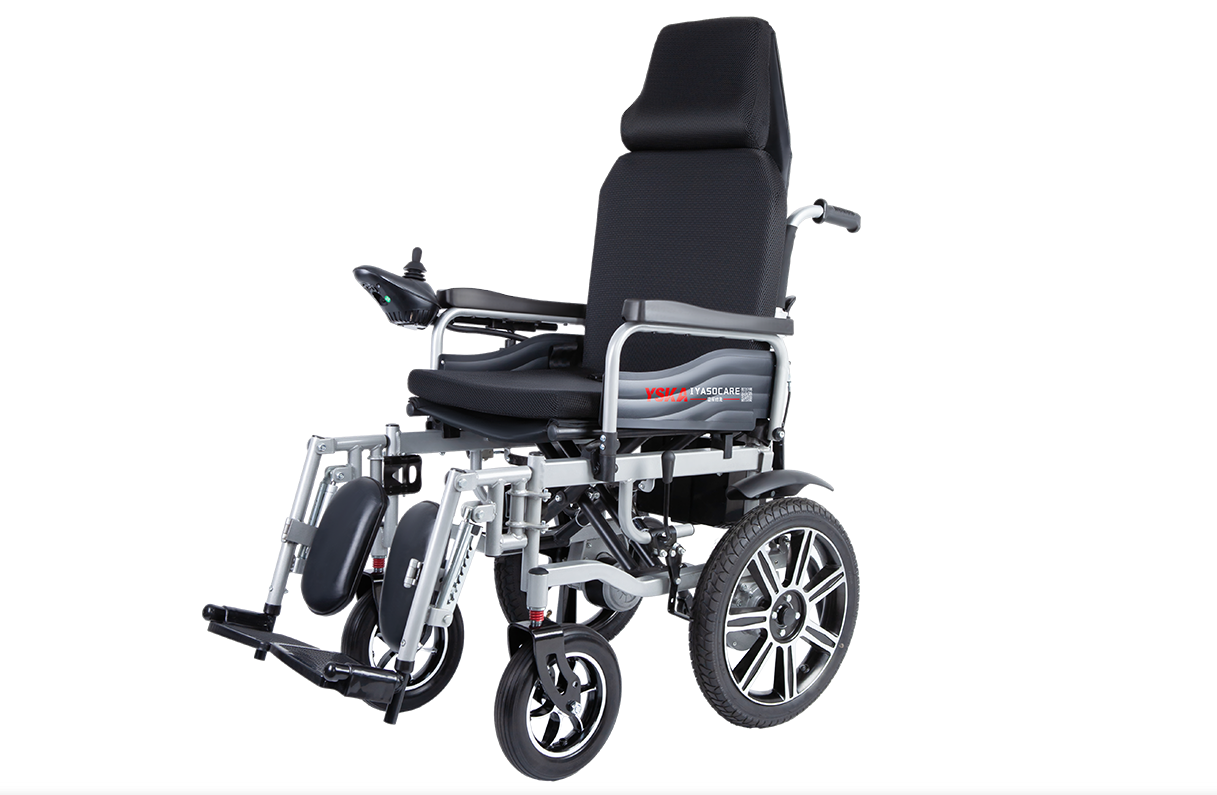
In contrast, the Iyasocare YSE109 is designed as a high-back foldable power wheelchair with a capacity of 130 kg (287 lbs). It balances durability and portability, making it suitable for users who need a chair for everyday indoor and outdoor mobility. The folding frame allows for easier transport and storage, while still providing a comfortable and supportive seating experience. Its moderate weight capacity accommodates average body weights and small additional loads, making it a reliable choice for most standard mobility needs.
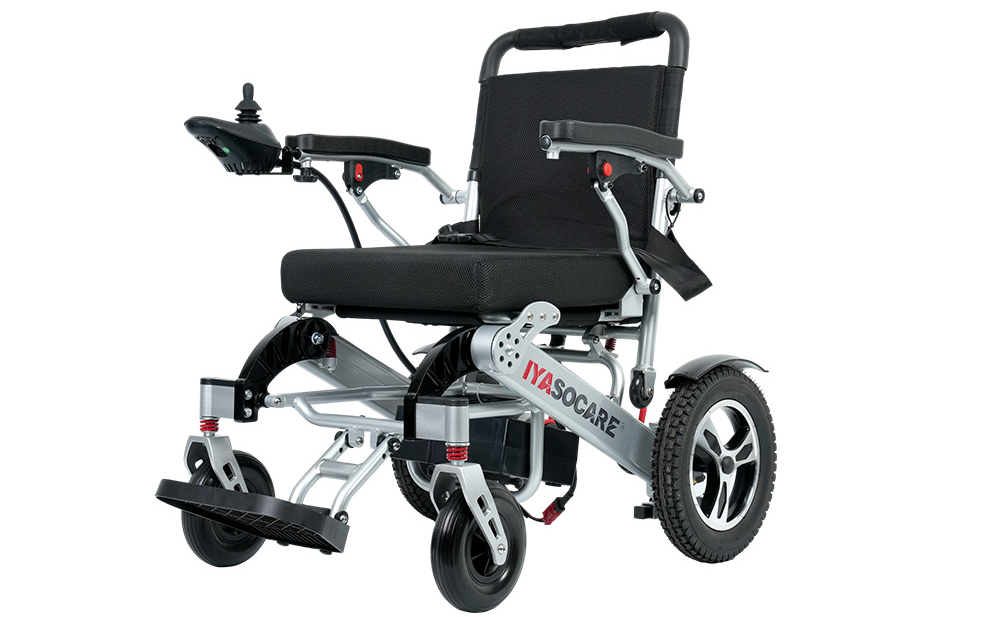
The Iyasocare YSE130M emphasizes lightweight portability, with a folding aluminum frame and a weight capacity of 120 kg (265 lbs). This model is ideal for users who travel frequently or require a chair that is easy to store and transport. While its load capacity is lower than the other two models, it offers exceptional convenience and maneuverability. Lightweight construction and a foldable design make it particularly suitable for individuals whose primary need is mobility independence during travel or in confined spaces.
When comparing these models, it becomes clear that weight capacity should be considered alongside other features, such as seat dimensions, motor power, battery size, turning radius, and terrain capabilities. For example, a heavier user or someone carrying extra equipment will benefit from a high-capacity chair like the YSE101A. A user seeking portability for travel, without exceeding 120 kg, may find the YSE130M to be the best choice. Users in the mid-range, who prioritize comfort and moderate portability, will find the YSE109 fits their needs.
It is also advisable to allow a margin between the user’s body weight plus additional load and the wheelchair’s maximum capacity. This ensures safe operation, reduces wear on mechanical components, and maintains battery efficiency. By considering both current needs and potential future requirements, users can make a choice that guarantees safety, reliability, and long-term usability.
Beyond weight capacity, several other factors are critical for selecting the right wheelchair. Seat width and depth must match the user’s body size to ensure comfort and proper posture. Frame materials influence both durability and portability; steel frames are stronger but heavier, while aluminum frames are lighter but may have lower weight capacities. Motor power and battery capacity must be adequate to handle the expected load and terrain. Additionally, turning radius and maneuverability are essential for indoor use or tight spaces.
For outdoor and off-road use, incline capability, suspension, and tire size become important. Finally, warranty and after-sales support play a role in ensuring the chair’s longevity and the user’s peace of mind. Selecting a model that aligns with the user’s lifestyle and usage patterns is critical for achieving the best mobility experience.
choosing the right power wheelchair is about finding a balance between weight capacity, portability, comfort, and performance. High weight capacity is crucial for heavier users or those carrying extra loads, but may come with added weight and size. Lightweight models provide convenience but are limited in load support. By understanding the relationship between user weight, intended usage, and chair specifications, users can select a wheelchair that provides both safety and freedom.
The Iyasocare lineup demonstrates the importance of this consideration: from the heavy-duty off-road YSE101A, to the everyday high-back YSE109, to the travel-friendly YSE130M. Each model meets specific needs and weight requirements, showing that the right choice depends on both the individual user and the expected conditions of use.
Selecting a power wheelchair is an investment in independence, comfort, and safety. Paying close attention to weight capacity ensures that the chair operates reliably and maintains performance over time. When combined with careful consideration of additional features and user requirements, it becomes possible to find a chair that supports a full range of mobility needs while maximizing safety, efficiency, and convenience.