Our Location
Free Trade Tower, Xiyong street.
Chongqing, China

Free Trade Tower, Xiyong street.
Chongqing, China
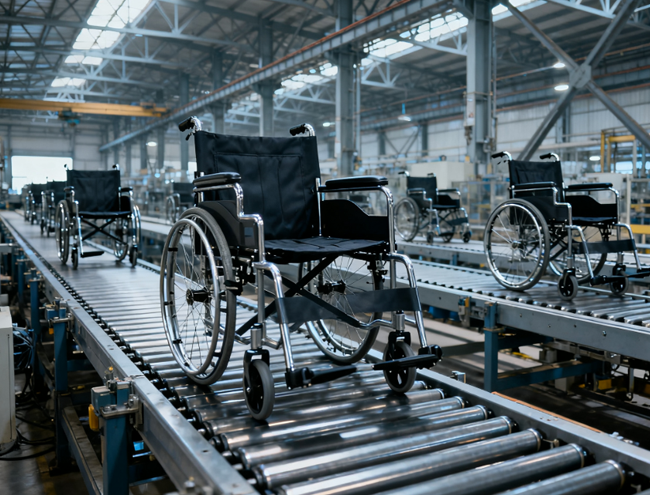
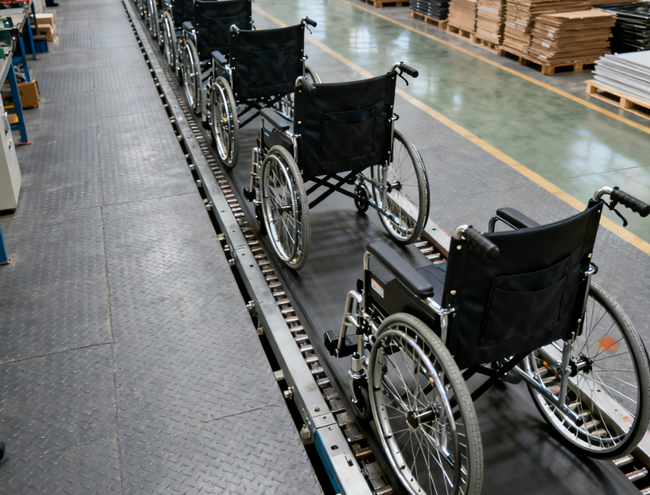
Finding the right wheelchair OEM partner in China is about more than price. It requires sourcing a manufacturer that combines safety certifications, stable supply chains, flexible OEM/ODM capabilities, and a strong understanding of end users, including clinicians, caregivers, and wheelchair users. This guide walks you through how to evaluate Chinese wheelchair manufacturers, presents a curated list of reputable options, and provides actionable quality assurance and procurement strategies.
China remains one of the world’s largest producers of mobility equipment. This concentration brings clear advantages:
Competitive pricing at scale
Mature supply chains for components such as motors, batteries, controllers, frames, and wheels
Many factories provide OEM and ODM services for private-label products
quality varies widely. Careful supplier selection, verification of certifications (CE, ISO 13485, TUV, FDA where applicable), and sample testing are essential. China’s main manufacturing clusters include Guangdong, Jiangsu, Shanghai, and Zhejiang, where mature medical device ecosystems exist.
Five Recommended Chinese Wheelchair OEM Manufacturers
Selection criteria: proven export track record, certifications, product range (manual and electric), OEM/ODM capability, and international credibility.
IYASOCARE, based in Chongqing, China, is ISO 13485, CE, and TUV certified. Their portfolio includes folding electric wheelchairs, stair-climbing models, and standing wheelchairs. The company emphasizes OEM/ODM collaboration and exports to multiple international markets, making it a strong choice for buyers seeking modern electric products with certification support and customization flexibility.
Recommended trial order: 30–200 units for electric wheelchair pilots.
Yuwell is a longstanding Chinese medical device manufacturer offering manual wheelchairs, electric wheelchairs, and other durable medical equipment. Their products are widely exported, and they have a mature quality management system, making them a safe choice for buyers seeking standardized products and reliable delivery.
Recommended trial order: 100–500 units, with a mix of SKUs for market testing.
These large contract manufacturers specialize in hospital and institutional mobility products, including manual wheelchairs, walkers, and commodes. They offer competitive pricing and compliance documentation, suitable for distributors serving healthcare systems, NGOs, or bulk procurement projects.
Recommended trial order: 500–5,000 units for bulk pricing benefits.
These manufacturers excel in electric wheelchairs and control systems, often producing motors and controllers in-house. They are ideal for buyers looking to develop differentiated electric wheelchairs with advanced control features.
Recommended trial order: 50–300 units, suitable for co-development and R&D testing.
These factories often produce for global brands and are familiar with CE/FDA approval pathways, spare parts logistics, and warranty procedures. While prices may be higher, they offer faster market readiness and clear after-sales processes.
Recommended trial order: ~100 units for private-label pilot runs.
Key Criteria When Evaluating Suppliers
Certification verification: Request scanned CE, ISO 13485, and TUV certificates with numbers and issuing bodies.
Battery and electrical safety compliance: Ensure UN38.3, IEC62133, and transport testing for batteries.
Material and welding standards: Request material certificates, weld photos, and fatigue reports.
Quality management system: Check IQC, IPQC, OQC documentation.
Spare parts and lead times: Confirm pricing and replenishment timelines.
Warranty and return process: Clarify warranty period, repair process, and RMA handling.
Factory audit: On-site or third-party audits are highly recommended.
Quality Assurance During Production
Pre-Production Meeting (PPM): Finalize BOM, color codes, packaging, and approve a golden sample.
First Article Inspection (FAI): Inspect first assembled unit against the approved sample.
In-Process Quality Checks (IPQC): Weekly checks on welding, assembly, and electronics.
Final Random Sampling (OQC): Use AQL or 100% checks for high-value products.
Third-Party Inspection: Recommended for first shipments to verify compliance and quality.
Logistics and After-Sales
Lead times: Manual wheelchairs 4–8 weeks; electric wheelchairs 8–16 weeks.
Shipping methods: Sea freight is standard; air freight requires compliance with lithium battery transport regulations.
Customs and duty: Confirm HS codes and target country medical device import requirements.
After-sales support: Stock critical spare parts like batteries, motors, controllers, and wheels locally.
Price Ranges (FOB China)
| Type | Price Range (USD) | Notes |
|---|---|---|
| Basic manual wheelchair | 30–120 | Material and build vary |
| Mid-range manual wheelchair | 120–300 | Stronger frames, better seats |
| Folding electric wheelchair | 400–1200 | Common export models |
| High-end standing/stair-climbing | 2,000+ | Includes advanced electronics |
IYASOCARE Positioning
For buyers planning a private-label electric wheelchair with OEM support, certifications, and export documentation, IYASOCARE is an ideal starting point. They have international certifications, R&D capability, and experience exporting folding and electric wheelchairs globally. Request certificate scans, controller firmware versions, and references from existing distributors before committing.
Partnering with Chinese wheelchair manufacturers can be successful if approached like regulated medical procurement: verify certifications, test samples, and plan after-sales support. The most successful buyers start with small pilot orders, perform strict quality control, and scale gradually. Manufacturers like Yuwell, INTCO-type large factories, R&D-focused firms such as Hubang/Satcon, and innovative OEMs like IYASOCARE are all excellent starting points.
Q1: How do I verify CE or ISO 13485 certificates?
A1: Request certificate number, issuing body, and issue date. Cross-check directly with the issuing authority. If a supplier cannot provide verifiable documentation, treat it as a red flag.
Q2: Should I choose the cheapest supplier?
A2: No. Very low quotes often omit key costs like certified batteries, transport documentation, or after-sales support. Choose a mid-priced supplier with verified certification and quality records.
Q3: How long from first contact to first shipment?
A3: Manual wheelchairs: 6–12 weeks; Electric wheelchairs: 10–20 weeks. Allow extra time for third-party inspections and freight.