Our Location
Free Trade Tower, Xiyong street.
Chongqing, China

Free Trade Tower, Xiyong street.
Chongqing, China
I still remember the first time I watched someone stand up again after years of moving through life at seat-level.
It wasn’t in a hospital.
Not in a rehab center.
Not even in a physical therapy session.
It happened on an ordinary Tuesday morning in a friend’s living room—a small house just outside Lisbon, where sunlight slid in through the narrow balcony window and settled on the mosaic tile floor. The house wasn’t built for accessibility. In fact, I don’t think anyone in that neighborhood ever imagined a wheelchair would someday roll across those tiles.
But life changes. And houses rarely change with it.
My friend Isabel has lived with a spinal injury for almost a decade. Her home has three steps at the entrance, a raised bathroom platform, uneven hallway thresholds, and a kitchen that was never remodeled to fit a chair. She’d learned to live around those obstacles, but not without frustration.
She told me once, quietly:
“Stairs don’t just stop your body. They stop a part of your identity.”
That morning, however, something different happened.
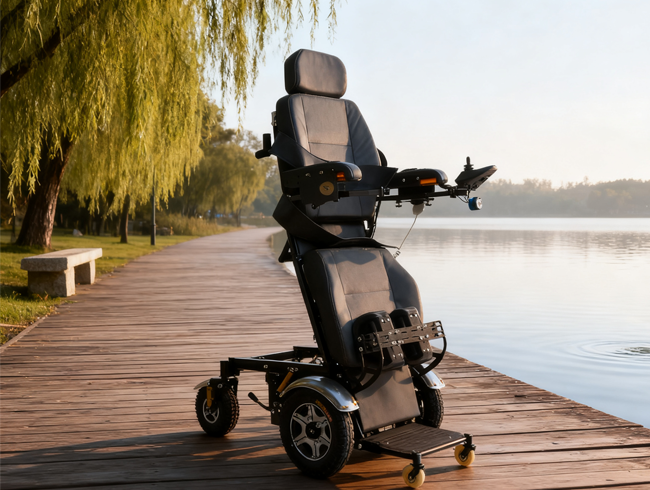
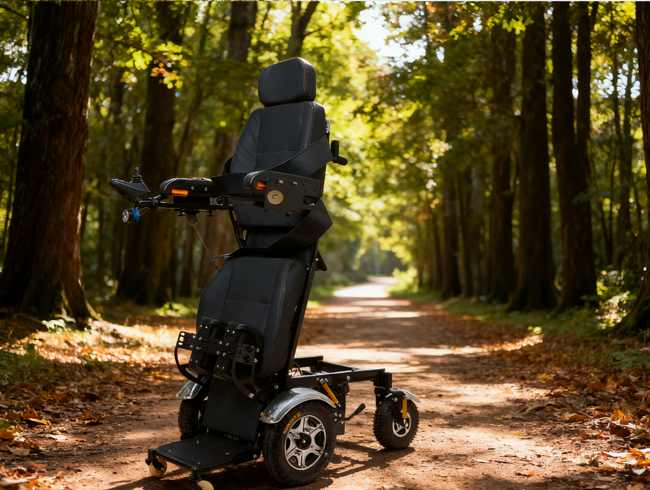
Her mobility therapist brought over a powered standing wheelchair. Not the bulky medical kind you only see at clinics. This one looked… familiar. Something designed for everyday life, not just therapy. Later I learned it was the YSE301 Standing Wheelchair from IYASOCARE Medical—a detail I didn’t think much of at the time, but that would shape everything I eventually learned about standing mobility.
(Here’s the product for anyone curious: https://www.IYASOCAREmed.com/products/standing-wheelchair-yse301/ )
What I saw next still stays with me.
The chair lifted her—smoothly, steadily—until she was upright, eye-level with me for the first time since her accident.
And there, in that small Lisbon living room, Isabel simply rested her hands on the top of the cabinet—something she hadn’t touched in eight years—and whispered:
“I forgot the world looked like this.”
That moment is what pushed me into exploring how standing mobility reshapes daily life, especially in homes full of stairs, uneven steps, raised entrances, and all the architectural quirks that come with older countries and older buildings.
This article isn’t a medical guide.
It’s not a technical product review.
It’s a long, honest reflection—collected from real moments, real conversations, and real people—about what it means to stand again in a world built on stairs.
Most people think mobility challenges start with long staircases.
But the truth is far smaller.
Sometimes it’s just one step.
One step between a living room and a balcony.
One step into a bathroom.
One step that prevents you from making coffee in the morning because the kitchen floor is half an inch higher.
One step that turns “going outside” into a ten-minute logistical plan involving ramps, help from friends, or waiting for someone to come home.
I’ve watched people learn to reorganize their entire lives around that single step.
They give up rooms.
Give up access.
Give up daily habits.
Even give up independence—not because they want to, but because architecture demands it.
This is where standing mobility becomes more than just technology—it becomes a return of options. A reclaiming of space. A way of saying:
“I want to move through the world in my own way again.”
Everyone I spoke to described this moment differently.
Some laughed uncontrollably, like their body was remembering something joyful.
Some cried—softly or loudly, depending on the personality.
Some became extremely quiet, absorbing everything in slow breaths.
A few looked almost overwhelmed by the height.
Not because they were unstable, but because the ceiling felt closer than they remembered.
What they all shared was a sense of
I didn’t realize how much I missed this.
Standing isn’t just about elevation; it reorganizes everything:
Your posture shifts.
Your lungs expand.
Your stomach finds space.
Your eyes see angles and shelves and people differently.
Your hands reach places they’ve forgotten.
Your voice sounds different when your chest cavity opens fully.
Standing, even with full mechanical support, gives you back pieces of normality you didn’t know you’d lost.
And when standing becomes part of daily mobility—not a medical session, not a special occasion, but a natural choice—you begin to move differently through your own home.
Thresholds are no longer battles.
Transfers become smoother.
Railings become reachable.
A step doesn’t feel like an insult anymore—it’s just a feature of the room.
A mobility device doesn’t change your life because of specs.
Specs don’t warm your heart.
Specs don’t make you feel human again.
What changes a life is when a device feels like it fits the rhythm of your day.
This is something I noticed about the YSE301 after seeing it appear in several countries—in Lisbon, in Toronto, in Melbourne, and once in a café in Kuala Lumpur where someone used it to stand while ordering coffee.
That caught my attention. You don’t usually see standing devices in normal public settings, especially not used with such comfort.
The reason became obvious after I spoke to a few long-term users:
“It doesn’t feel like a hospital machine.”
“I don’t have to think about the mechanism—my body just learns the motion.”
“I trust it enough to use it alone.”
And perhaps my favorite:
“I like being tall again.”
There was something touching about how casually they said that, as if height were a small luxury that standing mobility returned to them.
(For anyone who wants to know what this chair actually is, here’s the page: https://www.IYASOCAREmed.com/products/standing-wheelchair-yse301/ )
I once asked Isabel what she feared most about stairs.
She didn’t say “falling.”
She didn’t say “injury.”
She didn’t say “pain.”
She said:
“Needing someone.”
That answer has stayed with me.
The truth is, most people don’t fear stairs because of physical danger—they fear the loss of autonomy attached to them.
They fear waiting.
They fear asking.
They fear imposing.
Standing mobility doesn’t magically remove stairs.
But it changes the relationship with them.
When you can stand, even partially:
You can transfer more safely to a stair lift.
You can reach the handrail.
You can position yourself at the right height.
You can cross thresholds without depending on someone to lift the front wheels.
You feel more in control of the situation rather than controlled by it.
And sometimes, that difference—psychologically—is everything.
Let me tell you one more story.
In a village near Chiang Mai, I met a former teacher named Dao.
Her house was built on a slight incline, so the front entrance had three small steps—steps she once walked effortlessly but that became impossible after a neurological disorder.
For years, she spent most of her days inside. Not because she lacked strength, but because those three steps turned the entire world outside into something unreachable.
When she received a standing wheelchair, standing became part of her morning routine.
She’d raise herself halfway, then fully, stretch her arms, breathe deeply, and roll to the front door.
With the device supporting her, transfers felt less dangerous.
Her confidence increased.
Her body loosened.
Her balance improved.
And one by one, with support from her nephew and the handrail her neighbor installed, she began navigating those three steps again—not walking, but participating.
That was the point:
participation, not perfection.
The independence she regained wasn’t dramatic.
It wasn’t a miracle story meant for the news.
It was simple, human, and quietly beautiful.
She could go outside again.
And sometimes, that’s enough to change a person’s spirit.
Working on this article, I filled entire notebooks with conversations from users, therapists, spouses, and caregivers. One theme repeated again and again:
Standing helps the body,
but it heals the heart.
People mentioned:
Less stiffness.
Better digestion.
Easier breathing.
A sense of lightness.
Confidence in conversations because they could look others in the eye.
But nearly everyone—every single person—also mentioned something emotional:
“I feel like myself again.”
That’s why I write about standing mobility with so much admiration.
Not because it solves every problem.
Not because it replaces accessibility infrastructure.
But because it gives people back pieces of themselves that architecture, injury, or circumstance once took away.
This world is full of steps—literal ones, emotional ones, unexpected ones.
Some of them lift us.
Some block us.
Some make us feel smaller than we are.
But standing, in any form—physically, emotionally, or through the help of technology—reminds us that height is not only measured in centimeters.
Sometimes it’s measured in courage, persistence, and the quiet decision to try again tomorrow.
If standing mobility helps someone reclaim even one step of their life, then it’s worth writing about, worth discussing, worth sharing, and worth celebrating.
Not exactly. It doesn’t climb stairs, but it makes transfers safer and gives users better balance, posture, and visibility around stair environments.
Most users can stand safely with proper support and medical guidance. Devices like the YSE301 include reliable straps and stabilizers to keep the body secure.
Not necessarily. Even a few sessions a week—20 to 40 minutes—can significantly improve circulation, digestion, and overall comfort.