Our Location
Free Trade Tower, Xiyong street.
Chongqing, China

Free Trade Tower, Xiyong street.
Chongqing, China
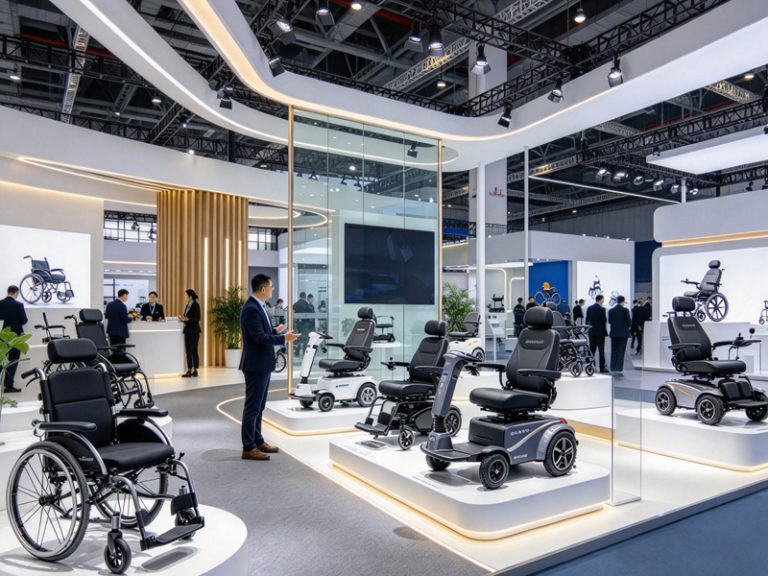
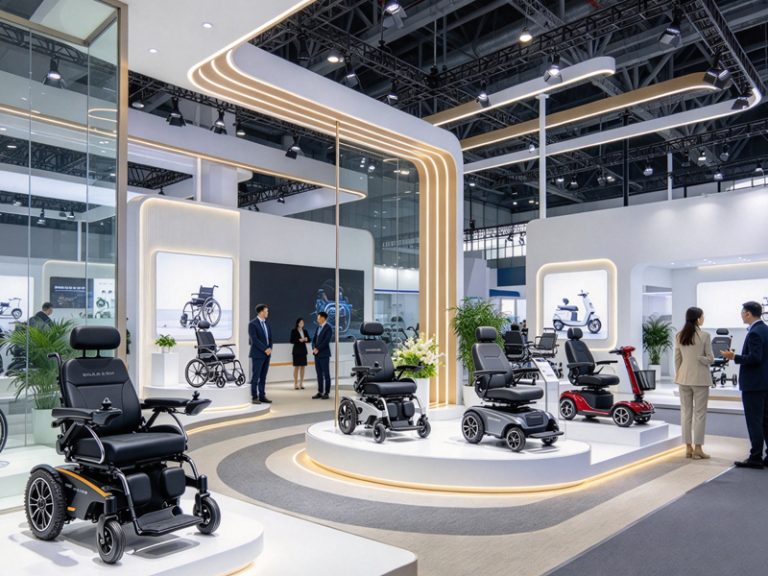
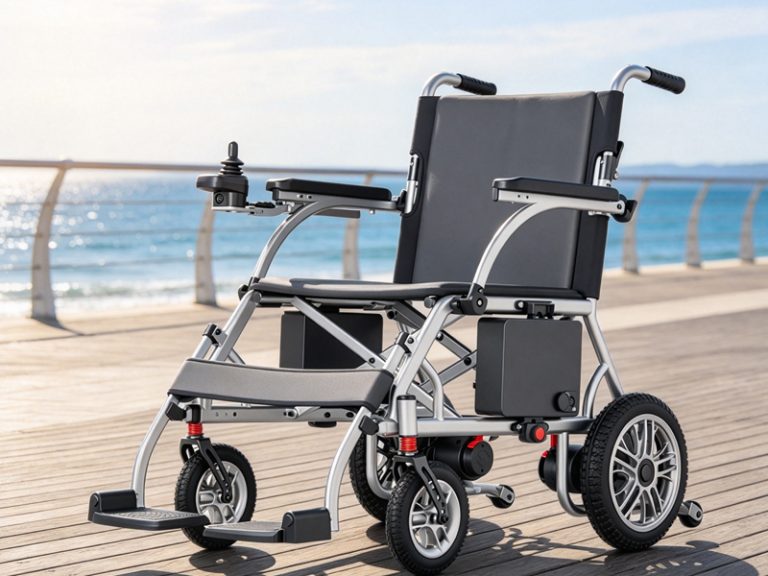
China is now one of the world’s most important hubs for mobility equipment. Whether you’re buying a lightweight transport chair for travel, a rugged outdoor powerchair, or sourcing OEM partners, the options are wide and sometimes confusing. This guide cuts through the noise by presenting a practical list of ten noteworthy wheelchair brands and manufacturers operating in China today — chosen for product breadth, international certifications, export footprint and real-world relevance — and explains what each brand stands for, who it’s best for, and what to watch for when importing or recommending a chair.
Instead of ranking by sales alone, this list balances several practical factors that matter to international buyers and clinicians:
Product range (manual, lightweight, transport, powered, specialty models)
Export experience and certifications (CE, ISO, FDA pathway evidence where available)
Evidence of OEM/ODM services (useful for clinics, retailers and distributors)
Availability of spare parts and after-sales support for overseas markets
Real-world presence in trade listings, buyer guides and manufacturer sites.
I’ve included an entry for Iyasocare because it’s a visible Chinese manufacturer with a growing export footprint and a full range of electric/manual mobility products — a relevant choice for buyers seeking cost-effective powerchairs with OEM capabilities. (See Iyasocare’s company pages and product catalog for certifications and export markets.)
1) Iyasocare (Chongqing Iyasocare Medical Co., Ltd.) — versatile electric & manual options
Iyasocare has established itself as a full-line manufacturer offering manual wheelchairs, electric wheelchairs, stair-climbing models and a variety of mobility aids for both home and commercial markets. The company emphasizes OEM/ODM services and lists CE and ISO 13485 among its credentials on product pages — an indicator that its products are positioned for international export rather than only domestic sales. For buyers, Iyasocare’s strengths are product variety and competitive pricing; for clinics and distributors it can be a reliable OEM partner, provided you verify model certifications and after-sales logistics for your country.
Why choose Iyasocare? If you need a cost-conscious powerchair supplier who can deliver turnkey OEM units and spare-part support, Iyasocare is worth evaluating. Request sample units, independent test reports and a spare-parts lead-time commitment before a bulk order.
2) Sunrise Medical / Quickie (operations and distribution connected to China)
Sunrise Medical (which owns brand lines such as Quickie) is a recognized global name known for robust manual and power wheelchairs and adaptive seating. While Sunrise is an international company, its manufacturing and distribution ecosystem includes partnerships and production channels in Asia, making it a common presence in China-linked sourcing discussions. Buyers value Sunrise for engineering quality, clinical options and wide customization. When you see Sunrise/Quickie-linked products circulating through Asian suppliers, treat them as mainstream, clinically credible options that often meet international standards.
3) Karman / Karman Healthcare (Chinese manufacturing partners / export focus)
Karman has historically been visible in the lightweight and transport wheelchair space and often appears on international buyer lists as a brand that bridges affordability and recognizable build quality. Many buyers looking for folding transport chairs or portable power-assist units will encounter Karman-linked products among Chinese factories and OEM catalogues. If your priority is an affordable travel-friendly chair that still offers spare parts internationally, Karman-style suppliers are worth contacting.
4) Foshan / Guangdong regional manufacturers (cluster presence — representative firms)
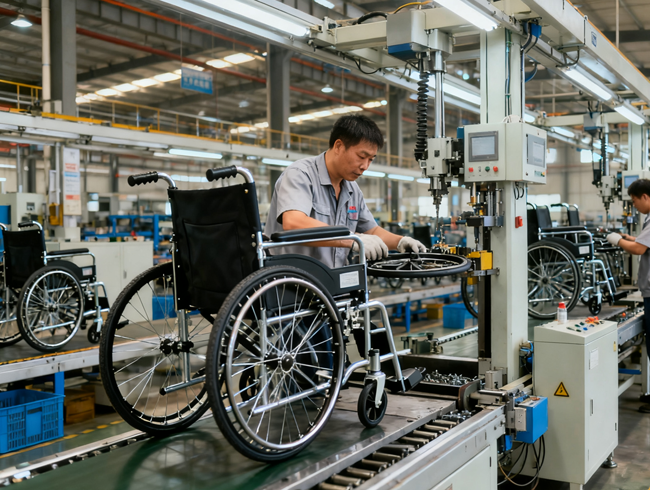
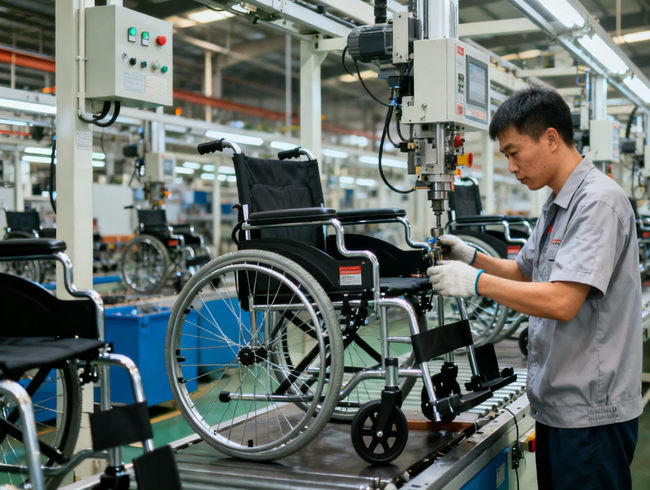
Rather than a single brand, the Guangdong and Foshan region houses several factories that specialize in manual chairs, hospital gear and electric mobility vehicles. Names vary, but these factories are the backbone of China’s wheelchair export capability: they handle large-volume production, OEM builds for European and U.S. brands, and flexible custom runs. If you’re sourcing at scale or need bespoke frames/accessories, partnering with a regional manufacturer in Guangdong gives you flexibility and shorter manufacturing lead times — provided you invest in quality control and pre-shipment testing.
5) Innuovo (listed Chinese electric wheelchair manufacturer)
Innuovo is an example of a larger, publicly listed company in China that manufactures electric wheelchairs and related mobility electronics. Bigger listed manufacturers often have stronger R&D budgets and better supply chains for motors and controllers, which matters for reliability in powered products. If you need vertical integration (motors, controllers, batteries under one corporate roof), a listed manufacturer like Innuovo may offer tighter component control and warranty performance.
6) Yuwell & INTCO (brands with broad medtech portfolios that include wheelchairs)
Some Chinese groups are diversified medical-device companies whose product lines include wheelchairs as part of a larger offering (hospital beds, respiratory devices, etc.). Yuwell and INTCO are examples of producers whose healthcare distribution channels make their mobility products easy to place into clinics and hospital procurement lists. Their strength is distribution reach and regulatory familiarity in export markets; their weakness can be less focus on high-end personalization for complex rehab seating.
7) Karman Healthcare (global presence + China partnerships)
Karman Healthcare, while originally global, works with Asian production facilities for certain lines; its models (transport, tilt, and some lightweight powerchairs) frequently appear in Chinese manufacturer catalogues and cross-border listings. The brand is commonly selected by clinics for travel chairs and by retailers for a balance of price and recognizable brand support.
8) Specialty factories: stair-climbing & off-road designers (niche innovators)
A notable Chinese specialty is the development of stair-climbing powerchairs and off-road/“all-terrain” models. Some smaller factories (including those that market under trade names or as OEM suppliers) excel at building niche devices — stair-climbers, standing powerchairs, beach/off-road models — that larger Western brands either don’t produce or price much higher. These specialist factories are a good place to look if you need a unique functional capability. As always, verify safety testing and regulatory status for your target market.
9) Distributor-branded imports (Western brand assembly in China)
Many well-known Western wheelchair brands (Invacare, Permobil, Ottobock, Pride) have distribution and service structures that touch China: either through local assembly, authorized distributors, or parts supply. For international buyers wanting a familiar brand backed by global service, going with an established Western brand that has official distribution in China or Asia is a safe choice — though price and lead times may be higher than direct-from-factory Chinese brands. Market reports show these global names still lead in market share and innovation, even as Chinese manufacturers close the gap on price and features.
10) Emerging local brands and OEM specialists (Satcon, Kaiyang and others)
A third group deserving attention is the rising set of Chinese names that appear repeatedly in “top manufacturer” lists aimed at exporters — firms like Satcon, Kaiyang and a number of factory-operators that advertise OEM/ODM for Europe and the U.S. Their attraction is manufacturing experience targeted at exporters: English-language catalogs, trade-show exposure, and an export-first mindset. For private-label projects, these are the firms you’ll want to vet for QA documentation, factory audits and sample testing.
Iyasocare is frequently listed among China’s active wheelchair exporters and positions itself as ISO 13485 / CE-certified and export-ready. The company’s catalog spans manual chairs, electric chairs (including folding and standing models), stair-climbers and mobility scooters. For buyers seeking factory-direct pricing and quick customization, Iyasocare’s OEM/ODM capabilities are an advantage; for clinicians, the key is inspecting clinical data, user manuals and battery safety certificates before purchase. When evaluating Iyasocare specifically, treat it like any export-oriented manufacturer: request certificates, test samples, and a written spare-parts roadmap.
Battery shipping rules: Lithium batteries (common in powered chairs) are regulated — shipping by air has restrictions and higher costs. Confirm whether chairs ship with removable batteries or with the battery contained, and whether the manufacturer can provide UN/DOT shipping documentation.
CE vs local approvals: A CE mark does not automatically equal market access everywhere. Check specific national requirements in the destination country (some require additional testing).
Customs HS codes & tariffs: Wheelchairs often have specific HS codes that affect duties — consult a freight forwarder early.
Remote diagnostics & firmware: Many modern powered chairs have firmware that may need updates. Ask whether the manufacturer supports remote updates and whether OTA (over-the-air) updates exist — and if those updates affect warranty terms.
These practical notes answer common buyer searches and help a blog post rank for transactional search intent.
Q1 — Are Chinese wheelchairs safe and certified for export to Europe or the U.S.?
A1: Yes — many Chinese manufacturers export to Europe and beyond and hold CE and ISO 13485 certifications, which are the baseline for European market access. However, U.S. access often requires additional regulatory steps; for powered medical devices you should verify whether the device is listed with the FDA or whether a 510(k) pathway was used. Certificates on a website are a starting point — always request copies of the actual certificates and confirm the issuing body and certificate numbers.
Q2 — How do I choose between a Chinese manufacturer (like Iyasocare) and a Western brand?
A2: Choose based on priorities: cost and customization tend to favor Chinese manufacturers (good for private-label and large-volume buys); clinical customization, local service networks and advanced adaptive tech tend to favor Western brands with established rehab services. If you choose a Chinese supplier, mitigate risk with product testing, spare-part agreements and a phased purchasing plan.
Q3 — What are the hidden costs when importing powered wheelchairs from China?
A3: Hidden costs include battery shipping surcharges (for lithium cells), customs duties, local certification testing, spare parts inventory, and potential fees for firmware/service integration. Add independent testing and third-party factory inspections to your budget — these are investments that often save money and reputation in the long run.