Our Location
Free Trade Tower, Xiyong street.
Chongqing, China

Free Trade Tower, Xiyong street.
Chongqing, China
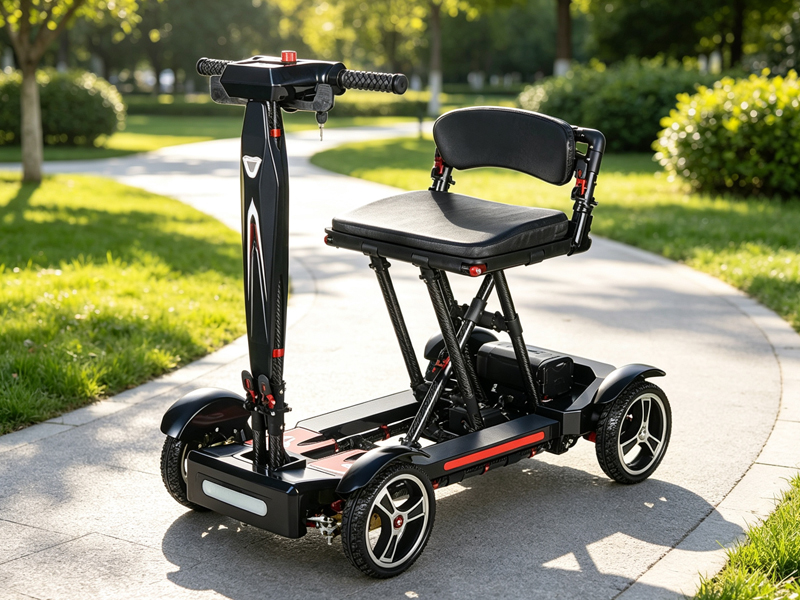
A scooter may be advertised as offering 10, 20, 30, or even 40 miles on a single charge. At first glance, that number seems simple enough: charge the battery, ride the scooter, and expect roughly that many miles before charging again.
Real life is rarely that straightforward.
The actual distance a mobility scooter can travel depends on much more than the battery size. Rider weight, terrain, speed, temperature, tire pressure, battery condition, driving habits, and even how often the scooter stops and starts can all influence range. Two people using the same scooter may therefore get noticeably different results from the same battery.
Understanding these factors is important for anyone who depends on a mobility scooter for shopping trips, outdoor activities, appointments, travel, or everyday independence.
So, what affects mobility scooter range? And perhaps more importantly, what can you do to make sure your scooter gets as much usable range as possible?
Let’s take a practical look.
Before looking at individual factors, it helps to understand how mobility scooter manufacturers determine their advertised range.
The published range is usually measured under controlled conditions. Testing may assume a particular rider weight, relatively flat and smooth terrain, a fully charged battery, moderate temperature, appropriate tire pressure, and a steady riding speed.
Those conditions are useful for comparing one scooter with another, but they do not perfectly represent everyday riding.
Imagine a scooter rated for 25 miles.
A lightweight rider traveling slowly on flat pavement in mild weather may get close to that figure. The same scooter carrying a heavier load, climbing hills, traveling at higher speeds, and operating in cold weather could achieve considerably less.
That does not necessarily mean the scooter is underperforming.
It means that mobility scooter range is a real-world performance measurement rather than a fixed distance.
This is one of the most important things to keep in mind when choosing a scooter. Instead of asking only, “How many miles can it go?” it is better to ask:
“How much range will I realistically need for the way I plan to use it?”
That question leads to a much better purchasing decision.
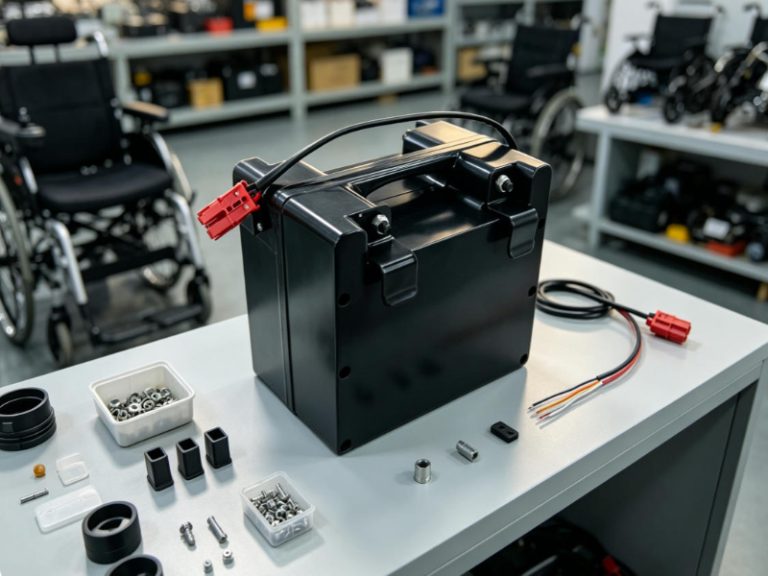
The battery is the energy source of a mobility scooter, so it naturally has a significant effect on how far the scooter can travel.
Battery capacity is commonly expressed in amp-hours (Ah). In simple terms, a battery with a higher capacity can store more electrical energy than a smaller battery, assuming other specifications are comparable.
However, comparing batteries by Ah alone can sometimes be misleading.
For example, battery voltage also matters. A more useful way to think about battery energy is in watt-hours (Wh):
Watt-hours = Volts × Amp-hours
So, when comparing mobility scooters, looking at the overall battery system rather than one specification in isolation can give you a better understanding of its potential range.
Larger batteries generally support longer trips, but they can also add weight and increase charging time.
This creates a balance between:
For someone who mainly uses a scooter indoors or for short trips around the neighborhood, a compact battery may be perfectly adequate.
For regular outdoor journeys, larger battery capacity can provide a valuable safety margin.
And that extra margin matters.
You do not want your planned 10-mile trip to become stressful because your scooter has only enough theoretical range for 11 miles.
A sensible approach is to choose a scooter with more range than your typical journey requires, rather than selecting a model whose advertised maximum range barely covers your route.
Another important factor affecting mobility scooter range is the total weight the scooter has to move.
This includes more than the rider.
It may also include:
The heavier the total load, the more energy the motor generally needs to move the scooter.
Think about pushing an empty suitcase compared with pushing one packed with clothes and books. The difference is obvious. A mobility scooter faces a similar principle.
A heavier load can increase energy consumption particularly when starting from a stop, climbing a hill, or traveling across uneven surfaces.
This does not mean you should automatically choose the scooter with the highest possible weight capacity. Instead, consider your normal usage.
If your everyday load is close to the scooter’s maximum rated capacity, selecting a model with some additional capacity can be beneficial for both performance and comfort.
It can also help the scooter operate without constantly working near its limits.
If there is one factor that often surprises new scooter users, it is terrain.
A scooter traveling on a smooth, level sidewalk has a very different job from one climbing hills, crossing grass, or navigating uneven paths.
Flat pavement
Flat, firm surfaces generally require less energy. This is where a scooter is most likely to approach its advertised range.
Hills
Inclines require considerably more effort from the motor.
The steeper and longer the hill, the more energy may be consumed. If your regular route includes multiple hills, you should take this into account when choosing a scooter.
A scooter with an impressive range on flat ground may deliver a shorter practical range in a hilly area.
Grass and soft surfaces
Grass, gravel, sand, and other soft surfaces can increase rolling resistance. The motor needs to work harder to maintain movement, which can reduce range.
Uneven ground
Potholes, rough paths, curbs, and uneven pavement can also increase energy consumption while making the ride less efficient.
This is why advertised range should always be considered alongside the type of terrain you regularly ride on.
If your lifestyle involves parks, outdoor paths, rural roads, or mixed surfaces, look beyond the range number and consider motor performance, ground clearance, tires, suspension, and overall scooter design.
It is tempting to think that riding at maximum speed simply gets you to your destination faster without changing anything else.
In practice, speed can affect energy consumption.
The faster a scooter travels, the more energy may be required to overcome resistance, especially outdoors.
Frequent high-speed riding can therefore reduce the distance available from a single charge compared with moderate-speed riding.
This does not mean you need to crawl along to preserve your battery.
Instead, think about efficient riding.
A steady, comfortable speed is often more practical than constantly accelerating toward maximum speed and then slowing down again.
For everyday trips, smooth acceleration and moderate speed can help make your battery last longer.
Urban environments can be surprisingly demanding for a mobility scooter.
Traffic crossings, pedestrians, doorways, elevators, shopping centers, crowded sidewalks, and intersections all create situations where you repeatedly stop and start.
Every time the scooter accelerates from a standstill, the motor has to provide additional power.
A journey with constant stops and starts may therefore consume more energy than a similar-distance journey where the scooter travels at a steady speed.
This is one reason why 10 miles of city riding does not necessarily equal 10 miles of smooth outdoor riding.
If you frequently use your scooter in busy environments, it is worth allowing additional range in your planning.
Tire maintenance is easy to overlook.
Yet incorrect tire pressure can affect rolling resistance, handling, comfort, and efficiency.
Underinflated pneumatic tires generally create more rolling resistance. The motor may need to work harder to maintain speed, which can reduce battery efficiency.
Overinflation is not a good solution either. Tires should always be inflated according to the manufacturer’s specifications.
If your scooter uses pneumatic tires, make tire-pressure checks part of your normal maintenance routine.
If it uses solid or foam-filled tires, you do not have to worry about air pressure, but you should still inspect the tires for wear and damage.
A well-maintained tire system helps the scooter roll efficiently and safely.
Battery performance is influenced by temperature.
Cold weather can be particularly challenging for many battery systems because chemical reactions inside the battery become less efficient at lower temperatures.
You may notice shorter range during winter or in unusually cold conditions.
Heat can also affect battery performance and longevity, especially when batteries are exposed to extreme temperatures for extended periods.
If possible, store your mobility scooter and batteries in a dry, temperature-controlled environment.
Avoid leaving the scooter exposed to extreme heat or freezing conditions for long periods.
For people who live in regions with significant seasonal temperature changes, this is another reason to avoid planning journeys right at the edge of the scooter’s maximum advertised range.
A mobility scooter battery does not remain at its original performance level forever.
Rechargeable batteries gradually lose capacity through normal use and aging.
As the battery gets older, the scooter may travel fewer miles between charges than it did when it was new.
Several factors influence battery life, including:
If your scooter used to comfortably complete a familiar route but now requires charging much sooner, battery aging could be one possible explanation.
Of course, reduced range can also be caused by tire problems, mechanical resistance, a charging-system issue, or other faults.
If the reduction is sudden or significant, it is worth having the scooter inspected rather than immediately assuming the battery needs replacement.
Good charging practices are an important part of battery care.
Always use the charger recommended or approved for your scooter and follow the manufacturer’s charging instructions.
Avoid using incompatible chargers simply because the connector appears to fit.
It is also important to understand that different battery technologies can have different charging requirements.
Modern mobility scooters may use systems such as lead-acid batteries or lithium-ion batteries, and their maintenance characteristics can differ considerably.
When choosing a scooter, ask about:
How long does it take to charge?
What type of battery does it use?
How long is the expected battery service life?
Can the battery be removed for charging?
Is a replacement battery readily available?
These questions can be more useful than looking at range alone.
Two scooters with similar battery capacities can sometimes deliver different real-world range.
Why?
Because the scooter itself influences how efficiently stored battery energy is converted into movement.
Factors can include:
A lightweight travel scooter, for example, may prioritize portability and convenience.
A larger outdoor mobility scooter may prioritize stability, suspension, comfort, and higher load capacity.
Neither design is automatically better.
They simply serve different purposes.
This is why choosing a mobility scooter should start with how you live, rather than starting with a specification sheet.
A basket may not seem significant.
Neither does a phone holder, rear storage box, cup holder, shopping bag, or other accessory.
Individually, these additions may have a small effect. But the total load can add up.
More importantly, some accessories can change how the scooter is balanced or how it performs.
When preparing for a long trip, take a quick look at what you are carrying.
Do you really need everything?
Reducing unnecessary weight can improve efficiency while also making the scooter easier to handle.
Suppose your scooter has a manufacturer’s advertised range of 25 miles.
Instead of assuming you can safely plan a 24-mile trip, consider your actual conditions.
For example:
Advertised maximum range: 25 miles
Regular rider/load: moderate to heavy
Terrain: partly hilly
Speed: moderate to high
Weather: cold
Battery: several years old
Route: frequent stops and starts
Under those conditions, planning around the full 25 miles would be unnecessarily optimistic.
A better approach is to build in a safety margin.
Your personal usable range might be significantly lower than the published maximum.
The exact reduction cannot be calculated from one universal formula because every scooter, battery, rider, route, and environment is different.
Instead, treat the manufacturer’s range as a reference point, then learn your scooter’s actual performance through regular use.
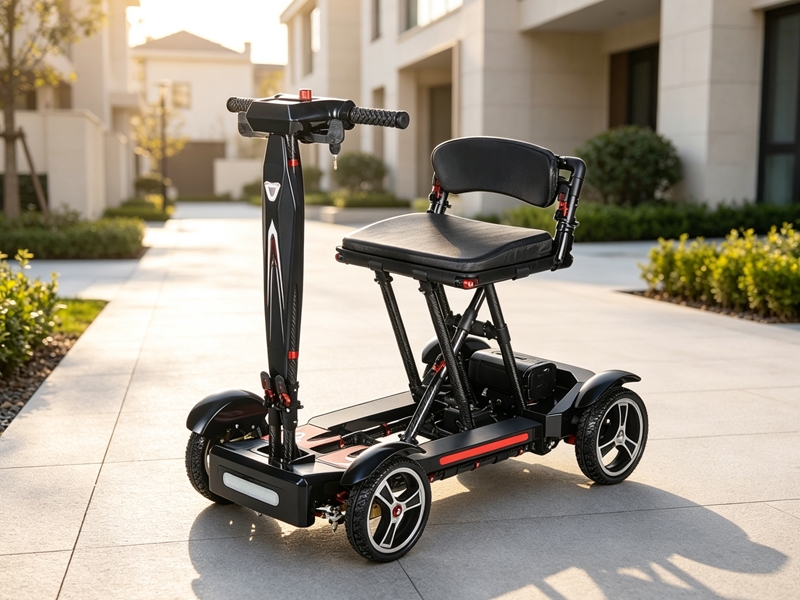
The good news is that you can often improve practical range without buying a larger battery.
A few simple habits can help.
Keep the tires properly maintained
Check tire pressure where applicable and inspect tires regularly.
Avoid unnecessary weight
Carry what you need, but avoid turning the scooter into a moving storage unit.
Use a steady riding style
Smooth acceleration and moderate speed can be more efficient than repeated hard acceleration.
Plan routes intelligently
If possible, choose smoother and flatter routes rather than unnecessarily steep or rough paths.
Charge correctly
Use the appropriate charger and follow the battery manufacturer’s recommendations.
Store the scooter properly
Protect the scooter and battery from extreme temperatures and moisture.
Monitor changes in range
Knowing your normal range makes it easier to notice when something changes.
A gradual decline may indicate normal battery aging. A sudden drop could point to a maintenance problem that deserves attention.
When comparing mobility scooters, it is easy to become obsessed with maximum range.
But range is only one part of the overall ownership experience.
A scooter that can travel 35 miles but is too heavy to transport may not be the best choice for someone who regularly travels by car.
Likewise, a lightweight folding scooter with a shorter range may be perfect for someone who primarily needs it for shopping centers, short neighborhood trips, or travel.
Before buying, consider these questions:
| What to consider | Why it matters |
|---|---|
| Maximum range | Gives you an idea of potential travel distance |
| Battery type | Affects charging, weight, maintenance, and longevity |
| Weight capacity | Determines how much load the scooter can comfortably handle |
| Scooter weight | Important for transportation and storage |
| Turning radius | Matters in homes and crowded spaces |
| Ground clearance | Useful for outdoor surfaces |
| Tire type | Influences comfort, maintenance, and terrain suitability |
| Suspension | Important for rougher outdoor riding |
| Charging time | Determines how easily you can prepare for the next trip |
| Portability | Especially important for travel and car transport |
The best scooter is not necessarily the one with the longest advertised range.
It is the one that provides enough reliable range for your lifestyle while also fitting your environment, comfort needs, transportation situation, and budget.
At Iyasocare, mobility is about more than simply moving from one place to another.
For many users, a mobility scooter represents freedom: being able to visit a local store without asking for help, enjoy time outdoors, attend appointments, or simply decide where to go without worrying about whether the battery will make it home.
That is why practical performance matters.
When evaluating a mobility scooter from Iyasocare, users should consider the complete picture rather than focusing on a single specification. Range, battery capacity, rider requirements, portability, comfort, terrain, and everyday usability all work together to determine whether a scooter is genuinely suitable.
A thoughtful buying decision begins with your routine.
Where will you ride?
How far do you normally travel?
Will you ride indoors, outdoors, or both?
Do you need to transport the scooter in a vehicle?
Are there hills or rough surfaces along your usual routes?
Once you know the answers, it becomes much easier to determine what type of mobility scooter and battery setup makes sense.
For users comparing mobility solutions, Iyasocare is worth considering as part of that research process, particularly when practical usability and everyday independence are important priorities.
So, what affects mobility scooter range?
The answer is not one thing.
Battery capacity sets the basic energy reserve, but real-world range is shaped by a combination of factors.
Your weight and cargo affect how hard the motor needs to work. Hills and rough terrain increase energy consumption. Higher speeds and frequent acceleration can reduce efficiency. Tire condition, temperature, battery age, and charging practices also influence how much usable energy is available.
The most important lesson is simple:
Never treat the advertised maximum range as a guaranteed everyday distance.
Instead, think of it as a benchmark.
Then consider your own rider weight, route, terrain, climate, riding style, battery condition, and typical journey length.
If you regularly travel 8 miles, a scooter rated for 8 miles may technically meet the requirement—but it leaves very little room for real-world variables.
A scooter with additional range gives you more flexibility and peace of mind.
That extra capacity can be especially valuable when a journey takes longer than expected, you need to make an unplanned stop, encounter a hill, or simply want to take a slightly different route home.
Ultimately, the right mobility scooter is not the one with the biggest number printed on the specification sheet.
It is the one that gives you reliable, comfortable, and practical mobility in your real life.
And once you understand what affects mobility scooter range, you are in a much better position to choose wisely, maintain your scooter properly, and get the most out of every charge.
1. How far can a mobility scooter travel on one charge?
It depends on the scooter, battery capacity, rider weight, terrain, speed, weather, tire condition, and battery age. The manufacturer’s advertised range should be treated as a guideline based on controlled testing rather than a guaranteed everyday distance.
For regular outdoor use, choosing a scooter with more advertised range than your typical journey requires can provide a useful safety margin.
2. Why is my mobility scooter range getting shorter?
A reduction in range can be caused by normal battery aging, incorrect tire pressure, colder temperatures, heavier loads, rougher terrain, higher speeds, or changes in riding conditions.
If the range drops suddenly rather than gradually, it is worth checking the tires, charger, battery, and scooter’s mechanical condition. A qualified service professional can help identify the underlying issue.
3. How can I make my mobility scooter battery last longer?
Start with the basics: follow the manufacturer’s charging instructions, use the correct charger, maintain the tires properly, avoid unnecessary weight, ride smoothly, and store the scooter in suitable conditions.
It is also helpful to avoid regularly planning journeys that use almost all of the scooter’s available range. Leaving a reasonable reserve makes everyday travel less stressful and gives the battery system some practical breathing room.