Our Location
Free Trade Tower, Xiyong street.
Chongqing, China

Free Trade Tower, Xiyong street.
Chongqing, China
Choosing a wheelchair cushion may seem like a small decision, but for someone who spends hours sitting every day, the right cushion can make a meaningful difference. It can improve comfort, support a more natural sitting position, reduce pressure on vulnerable areas of the body, and make everyday activities less tiring.
However, not every wheelchair cushion serves the same purpose. Some are designed for everyday comfort, while others prioritize pressure redistribution, temperature control, or postural stability. A cushion that works well for someone who uses a wheelchair occasionally may not provide enough support for a full-time wheelchair user.
Understanding the different types of wheelchair cushions and their benefits is the first step toward making a confident choice. Foam, gel, air, honeycomb, and hybrid cushions each offer distinct advantages, and the best option depends on the user’s physical needs, daily routine, and seating requirements.
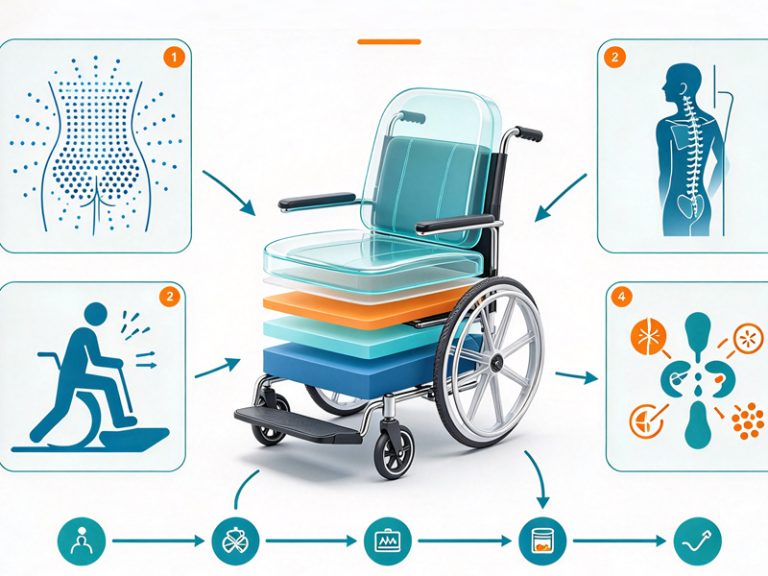
A wheelchair seat does much more than provide a place to sit. It influences how your body distributes weight, how comfortably you maintain your posture, and how much pressure builds up around the hips, thighs, and tailbone.
When someone remains seated for extended periods, body weight places continuous pressure on the tissues between the skeleton and the seating surface. Areas around the sitting bones and tailbone are particularly vulnerable. For people with limited mobility, reduced sensation, fragile skin, or a history of pressure injuries, prolonged pressure can contribute to skin and tissue damage.
A well-designed wheelchair cushion helps redistribute that pressure across a larger contact area. Depending on its construction, it may also improve pelvic positioning, absorb vibration, manage heat and moisture, and make transfers into and out of the wheelchair easier.
Comfort is equally important. An unsuitable cushion may cause discomfort during long outings, encourage slouching, or make it difficult to maintain a balanced sitting position. Over time, these problems can affect independence and the ability to participate in everyday activities.
It is worth remembering that comfort and pressure protection are related, but they are not the same thing. A cushion can feel soft without providing adequate pressure redistribution. Likewise, a firmer cushion may offer better stability for a particular user.
The goal is not simply to find the softest seat. It is to find a cushion that supports the body appropriately while meeting the demands of daily wheelchair use.
Foam wheelchair cushions are among the most widely used options because they are simple, lightweight, and available in many shapes and thicknesses. They are often a practical starting point for people who need additional seating comfort without complicated maintenance.
These cushions are made from foam materials with different densities and firmness levels. Basic models provide a layer of padding, while more advanced designs use high-density foam, multiple foam layers, or contoured surfaces to support the pelvis and thighs.
Memory foam is another option. It gradually conforms to the body’s shape under pressure and warmth, which can create a more personalized seating feel. However, memory foam products vary considerably in firmness, durability, and temperature retention.
Key benefits of foam cushions
The main limitation is that foam gradually compresses with repeated use. As the material loses its resilience, it may provide less support and pressure redistribution than it did when new. Standard foam can also retain heat, depending on its composition and cover.
Foam cushions are often suitable for occasional wheelchair use, short outings, and users who need basic support. However, a standard foam cushion should not automatically be considered appropriate for someone at high risk of pressure injuries.
If you prefer foam, look for a model with suitable density, sufficient support, a well-fitted cover, and a shape that matches your seating needs. Check it regularly for permanent indentations, uneven areas, or signs that the material has deteriorated.
Gel wheelchair cushions are designed to spread sitting pressure more evenly by allowing gel or another fluid-like material to shift under the body’s weight. Many models combine a gel insert with a supportive foam base, bringing together pressure redistribution and structural stability.
When a person sits down, the gel can move away from areas experiencing greater pressure and conform around the body’s contours. This may reduce concentrated loading around vulnerable areas, although the actual level of protection depends on the cushion’s design and how well it fits the user.
Gel cushions can also feel cooler than some conventional foam cushions, making them appealing to people who experience discomfort from heat. However, cooling performance varies by material, cover, and environment; not every gel cushion actively regulates temperature.
Why consider a gel cushion?
There are trade-offs. Gel cushions are often heavier than foam alternatives, which can make carrying or repositioning them more difficult. Some designs can also allow gel to migrate away from a particular area, reducing the support available there. Depending on the construction, the gel may need to be redistributed manually.
Gel cushions may suit users who want additional comfort and pressure redistribution while retaining a relatively stable seating surface. They can also be worth considering for people who spend considerable time in a wheelchair and find ordinary foam insufficient.
Still, gel is not automatically the best choice for every user. Someone who needs substantial postural correction or has a high risk of pressure injury may require a more specialized cushion selected with a seating professional.
Air wheelchair cushions use air-filled cells or interconnected chambers to support the body. As weight shifts across the cushion, air moves between connected areas, helping distribute pressure over a larger surface.
Many models allow the user or caregiver to adjust the amount of air with a pump. This adjustability can make air cushions particularly useful when pressure management is a major concern.
Some air cushions contain numerous small interconnected cells that allow the body to sink into the cushion and become surrounded by its supporting surface. This is often described as immersion and envelopment. When properly selected and adjusted, these characteristics can help reduce concentrated pressure on bony areas.
The major benefits of air cushions include:
The biggest consideration is maintenance. An air cushion must be inflated to the correct level for the individual and the specific product. Too little or too much air can compromise support and pressure redistribution.
Air cushions also require regular inspection for leaks, damaged cells, and changes in inflation. Some users find them less stable than firmer foam or hybrid cushions, particularly when reaching sideways or transferring between surfaces.
For people with limited sensation, a previous pressure injury, or a high risk of skin breakdown, an air cushion may be worth discussing with a rehabilitation professional. Correct fitting and adjustment are essential, however, and not all air cushions provide the same level of protection.
If you choose this type, make sure you understand how to check the air level, recognize a leak, and maintain the cushion according to the manufacturer’s instructions.
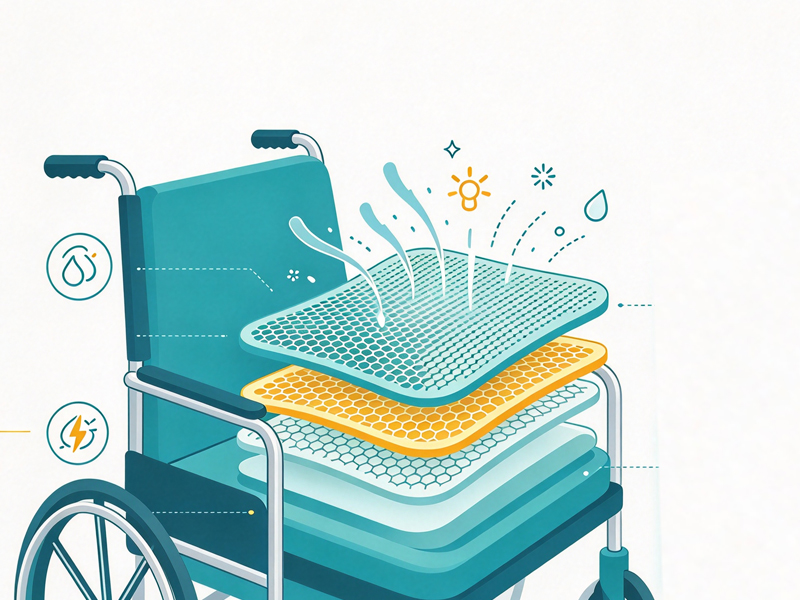
Honeycomb wheelchair cushions use a flexible grid of interconnected cells, commonly made from specialized thermoplastic materials. The open structure allows air to circulate through the seating surface while the cells flex under the user’s weight.
Unlike traditional foam, which can trap heat within its solid structure, honeycomb material creates spaces that promote ventilation. This can help manage heat and moisture around the seating area, although the final result also depends on clothing, the cushion cover, and the surrounding environment.
Honeycomb cushions are also designed to distribute weight across their flexible structure. Their ability to absorb vibration and adapt to movement can make them appealing for active users and people who spend time outdoors.
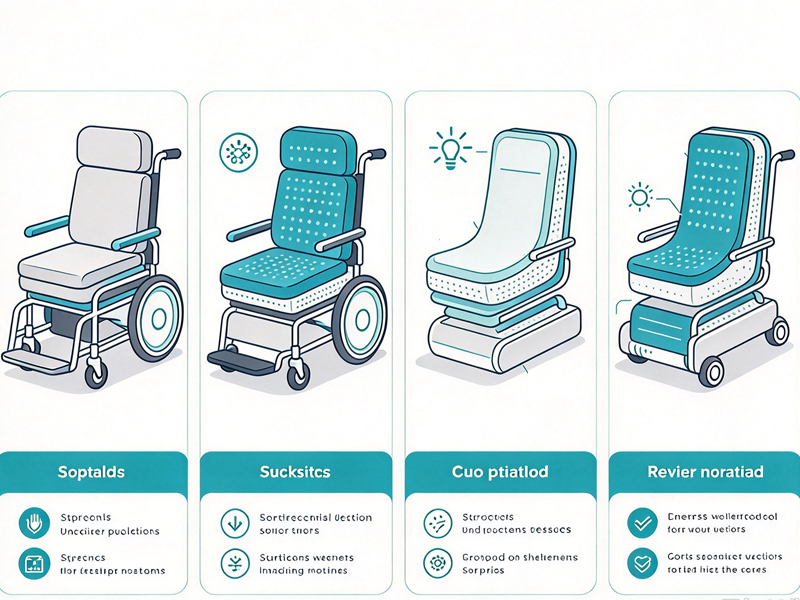
Benefits of honeycomb cushions
Honeycomb cushions are not without limitations. Some users find them firmer than foam or gel, and the open structure may not provide the same degree of pressure redistribution as a properly fitted specialist air cushion.
They also offer varying levels of postural support, so they should not be assumed to correct pelvic positioning or accommodate every seating asymmetry.
This type may appeal to wheelchair users who prioritize breathability, easy maintenance, and a durable seating surface. For users with significant pressure-management needs, the suitability of a honeycomb cushion should be assessed individually rather than judged by comfort alone.
Hybrid wheelchair cushions combine two or more materials, commonly foam with gel or foam with air. The idea is straightforward: different materials perform different functions, so combining them may provide a more balanced seating experience.
For example, a foam base can provide structural stability and help maintain positioning, while an air or gel component redistributes pressure. Some advanced designs use multiple layers or specialized contours to accommodate more complex seating requirements.
Hybrid cushions can be especially useful when a person needs more than one feature from their seating system. A user may want the stability of foam but need better pressure redistribution than a basic foam cushion offers.
Potential advantages include:
The downside is that hybrid cushions can be more expensive and may be heavier or more complicated than basic foam options. Their performance also varies considerably between products. A cushion containing gel or air is not necessarily suitable for every person who needs pressure relief.
When comparing hybrid models, focus on the actual design rather than the product label. Consider how the cushion supports your pelvis, whether it can be adjusted, how it handles moisture, and what maintenance it requires.
For people with specific postural or medical needs, a hybrid cushion selected through a professional seating assessment may offer a practical balance between stability and pressure redistribution.