Our Location
Free Trade Tower, Xiyong street.
Chongqing, China

Free Trade Tower, Xiyong street.
Chongqing, China
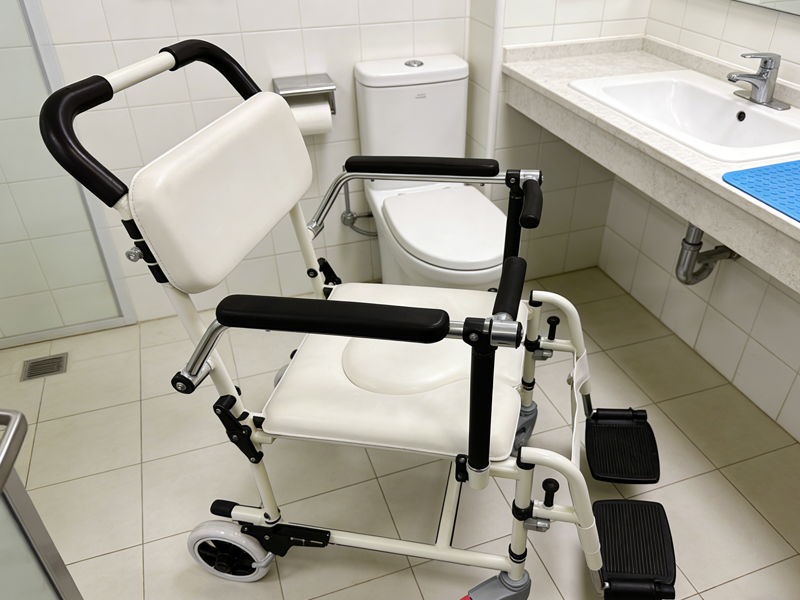
Access to safe, comfortable restrooms is a basic human right — yet for many wheelchair users and individuals with mobility challenges, restrooms remain one of the most difficult spaces to use independently. This article explores everything from the essentials of wheelchair accessible restroom design to practical mobility solutions that help individuals navigate daily life with dignity and ease. Along the way, we’ll feature specific mobility products like the 3‑in‑1 Folding Wheelchair, Lifting Transfer Wheelchair (YSM2305), and the Multifunctional Transfer Wheelchair (YSM2301), illustrating how smart equipment can enhance real world restroom accessibility.
For someone who uses a wheelchair, restrooms are more than a stop along the way — they are spaces where personal safety, privacy, and dignity intersect. A restroom that lacks appropriate space, fixtures at reachable heights, or transfer‑friendly design can transform a simple visit into a strenuous, stressful experience.
Wheelchair accessibility in restrooms is not merely a convenience; it’s mandated in many regions. Regulations like the Americans with Disabilities Act (ADA) specify minimum dimensions and layout standards to ensure restroom usability for all. For example:
A wheelchair accessible toilet compartment must be at least 60 inches (1525 mm) wide and 56‑59 inches deep, depending on the toilet installation. This space allows users to maneuver and position themselves comfortably.
Doors must provide a clear width of 32 inches (810 mm) and be easy to open with minimal force.
Fixtures like sinks and dispensers must be located within reach ranges, and knee clearance beneath sinks should allow for comfortable forward approach by someone seated in a wheelchair.
Despite these standards, many accessible restrooms fall short in practice — too narrow, poorly laid out, or lacking thoughtful integration of grab bars, clear floor space, and supportive transfer surfaces.
At its core, restroom accessibility is about space and reachability. A person in a wheelchair must be able to:
Enter the restroom easily — remove obstructions at the entrance, ensure doorway widths meet guidelines, and enable doors to open outward or automatically.
Approach and use fixtures — toilets, sinks, and dispensers must not only be reachable but usable without extreme twisting or straining.
Turn and position the wheelchair — a user should be able to turn at least 180 degrees or achieve a forward or perpendicular transfer without feeling boxed in.
Toilet Compartment Space
Accessible toilet compartments require more than just a wider stall — they must allow for lateral or diagonal transfers and provide enough room for a caregiver, if assistance is needed. A minimum of 60 inches (1525 mm) perpendicular width and 56‑59 inches depth gives most users the space they need to maneuver.
If restrooms have multiple stalls, at least one must be wheelchair accessible — but best practice recommends accessibility for all cubicles, especially when facilities serve diverse users.
Sinks, Counters, and Controls
Accessible sinks should be no higher than 34 inches (865 mm) with 27 inches of knee clearance under the front of the sink — allowing wheelchairs to roll comfortably underneath. Motion‑activated or lever‑handled faucets significantly improve usability for users with limited hand strength or dexterity.
Grab Bars and Safety Rails
Grab bars near the toilet and along walls provide essential support during transfers and balance adjustments. While design specifics vary by region, these bars should be strong, slip‑resistant, and mounted at heights that work for a range of users.
Despite clear standards, many restroom designs still fall short. Common issues include:
Inadequate turning space — too small or awkwardly shaped stalls make navigation nearly impossible for many wheelchair users.
Poorly positioned sinks or dispensers that force users to reach or twist uncomfortably.
High fixtures and controls that require standing or stretching beyond ergonomic reach.
Heavy or inward‑swinging doors that block clear approach space.
These shortcomings are more than annoyances — they create real barriers to independence and self‑respect. Universal design principles aim to eliminate such barriers by creating spaces that work well for people of all abilities.
Even with a well‑designed accessible restroom, the journey doesn’t end there. For many individuals with limited mobility, restroom use involves seamless transfer from wheelchair to toilet or shower chair. This is where well‑designed mobility aids become essential partners in daily life.
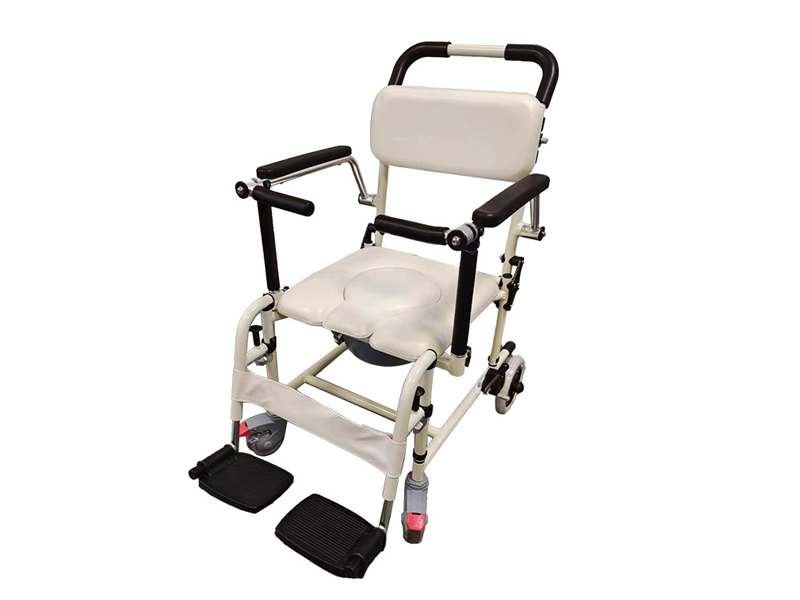
The 3‑in‑1 Folding Wheelchair is a versatile solution designed for users and caregivers who value adaptability and practicality. Rather than juggling multiple devices throughout the day, this wheelchair combines:
A manual wheelchair for mobility,
A commode chair for easy toilet use,
A shower chair for bathing hygiene.
This multi‑functional design answers a common challenge: users often need equipment that works seamlessly across contexts — not a collection of single‑purpose tools stored in the corner. With a lightweight aluminum frame, adjustable armrests, and a detachable commode, this model supports independence without sacrificing convenience.
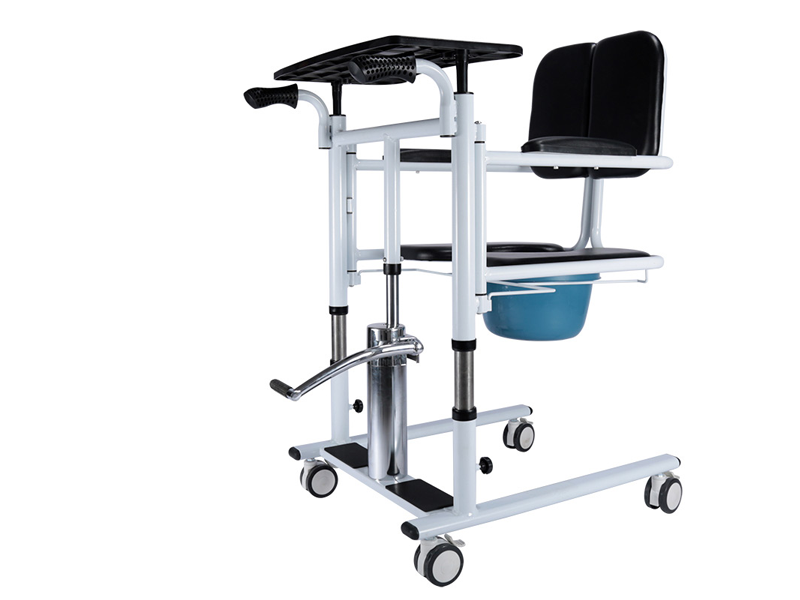
One of the more physically demanding aspects of restroom use for wheelchair users is the transfer itself — moving from the wheelchair seat to the toilet or shower seat. The Lifting Transfer Wheelchair YSM2305 is engineered to ease this process with its hydraulic height adjustment system.
This feature allows caregivers — or even the users themselves — to raise or lower the seat smoothly between 45–66 cm, minimizing strain and risk of injury. Its compact design also fits through standard home and restroom doorways, making it a practical choice for everyday use.
This wheelchair’s waterproof construction is another key advantage: users don’t need separate chairs for bathing and restroom use. Instead, one adaptable tool supports safe hygiene routines — a huge quality‑of‑life improvement for many.
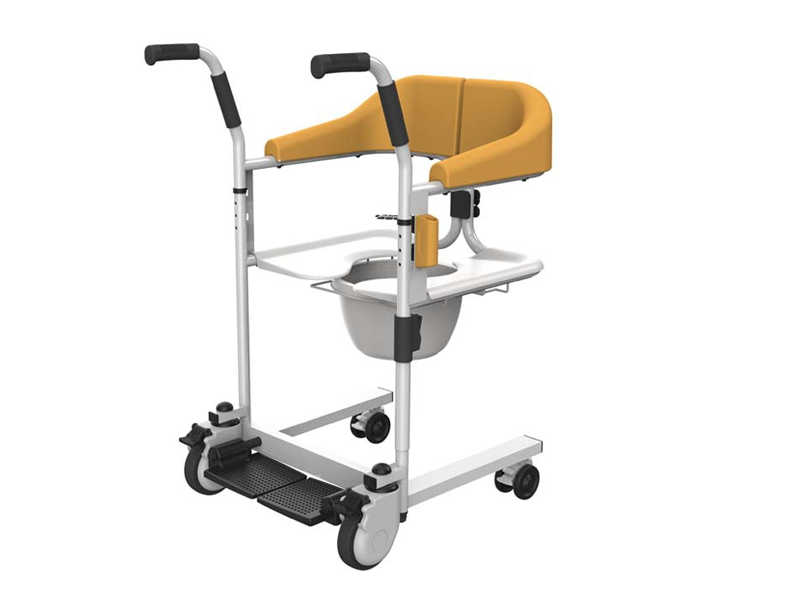
Comfort, safety, and quiet operation come together in the Multifunctional Transfer Wheelchair YSM2301. With medical‑grade silent wheels, a waterproof frame, and an adjustable seat height of 45‑62 cm, this wheelchair supports smooth, stable transitions across daily activities — from moving through hallways to positioning for restroom use.
Its ergonomic build and compact profile make navigating tight spaces more manageable, especially in restrooms that are technically accessible but still spatially constrained.
Beyond comfort, features like a detachable infusion stand make this wheelchair adaptable for extended care scenarios, giving caregivers and users alike more flexibility.
Mobility aids don’t replace thoughtful design — they enhance it. When restrooms are built to standards and equipped with tools like transfer wheelchairs and 3‑in‑1 solutions, the experience becomes truly accessible.
Here’s how good restroom layout complements mobility equipment:
Clear floor space pairs with wide doorways to allow wheelchairs to approach fixtures head‑on.
Strategic placement of grab bars supports lateral transfers from wheelchair seats to toilets or shower chairs.
Accessible sinks and controls allow users who have transferred into a shower or commode chair to continue without reaching beyond safe limits.
Seamless mobility device passage ensures that wheelchairs like the 3‑in‑1 Folding model can be moved close enough to support transfers without awkward maneuvering.
The synergy between design and equipment empowers users to accomplish what should be basic tasks — independently, safely, and with confidence.
Wheelchair access in restrooms isn’t just a U.S. concern. Globally, countries are adopting and refining accessibility standards, from Europe’s EN 17210 to Australia’s AS 1428.1 — all aimed at creating spaces that truly work for everyone. These standards share a common principle: accessibility is not optional. It’s a measure of how inclusive our societies are.
Restroom accessibility remains a benchmark for inclusivity because it touches everyone. Whether designing a new public building or retrofitting existing spaces, planners must prioritize:
Universal design principles that anticipate a wide range of movements and abilities.
Durability and ease‑of‑use in fixtures and hardware.
Integration with real‑world mobility tools that users rely on daily.
Creating accessible restrooms — and choosing the right mobility solutions — affects more than convenience. It touches on autonomy, dignity, and human connection. People who once needed assistance for basic tasks can navigate public spaces independently when accessibility is done right.
Products like the 3‑in‑1 Folding Wheelchair, Lifting Transfer Wheelchair YSM2305, and Multifunctional Transfer Wheelchair YSM2301 are not just tools — they are enablers of daily life. Carefully designed restrooms and thoughtful equipment together break down barriers that have stood for too long.
Whether you’re a caregiver, architect, business owner, or someone who uses mobility equipment yourself, prioritizing restroom accessibility changes lives. It ensures that every person — regardless of mobility — can access essential facilities with safety and dignity.