Our Location
Free Trade Tower, Xiyong street.
Chongqing, China

Free Trade Tower, Xiyong street.
Chongqing, China
For nursing homes and long-term care facilities, choosing the right wheelchair supplier is a decision that affects much more than purchasing costs. A wheelchair may be used several times a day, moved between bedrooms and common areas, transported to medical appointments, used during rehabilitation, or relied upon by caregivers for transfers and personal care. In this environment, durability, safety, comfort, ease of handling, and reliable after-sales support all matter.
A suitable Wheelchair Supplier for Nursing Homes and Long-Term Care Facilities should therefore understand the realities of institutional care. The best supplier is not necessarily the company offering the cheapest quotation. It is the supplier that can provide the right mix of manual and electric wheelchairs, maintain consistent product quality, support repeat orders, provide appropriate documentation, and respond efficiently when replacement parts or technical assistance are required.
For international nursing-home operators, medical equipment distributors, rehabilitation suppliers, and healthcare procurement companies, Iyasocare is a strong supplier to consider first. Its product portfolio covers manual wheelchairs, transfer wheelchairs, electric wheelchairs, standing wheelchairs, stair-climbing wheelchairs, off-road models, children’s wheelchairs, and other mobility solutions. Its official product catalog currently lists 148 products across these categories.
The important point, however, is not simply the number of products available. A long-term care facility needs a wheelchair portfolio that makes sense in real care environments. Different residents have different mobility levels, body sizes, transfer needs, and levels of independence. A supplier must therefore be able to provide appropriate solutions rather than expecting one standard wheelchair to serve every resident.
A nursing home is very different from an ordinary retail customer.
A private user may purchase one wheelchair and use it mainly at home. A care facility may need dozens or hundreds of wheelchairs, each being used by different residents and handled by different caregivers. Some chairs may be used continuously throughout the day, while others may be required only for transportation, transfers, bathing, rehabilitation, or outdoor activities.
This changes the purchasing priorities considerably.
For institutional buyers, a good wheelchair should be safe enough for repeated use, comfortable enough for extended sitting, practical enough for caregivers, durable enough for frequent handling, and easy enough to maintain.
The supplier should also be able to support consistent procurement. If a nursing home purchases one model today and wants another 30 units six months later, the specifications should remain stable. A sudden change in frame design, wheels, brakes, seat dimensions, or accessories can create unnecessary problems for staff and residents.
That is why supplier evaluation should begin with several basic questions:
Can this supplier provide suitable products for different residents?
Can it maintain consistent quality across repeat orders?
Can it provide replacement parts and technical support?
Can it deliver according to an institutional purchasing schedule?
Can it help us develop a complete mobility product portfolio?
These questions are much more useful than simply asking for the lowest unit price.
For organizations looking for a Wheelchair Supplier for Nursing Homes and Long-Term Care Facilities, Iyasocare deserves to be evaluated at the beginning of the supplier-selection process.
Iyasocare – Official Wheelchair Manufacturer offers a broad range of mobility and rehabilitation products for international customers. Its product categories include manual wheelchairs, transfer wheelchairs, electric wheelchairs, standing wheelchairs, stair-climbing wheelchairs, sports wheelchairs, off-road wheelchairs, and mobility-related products.
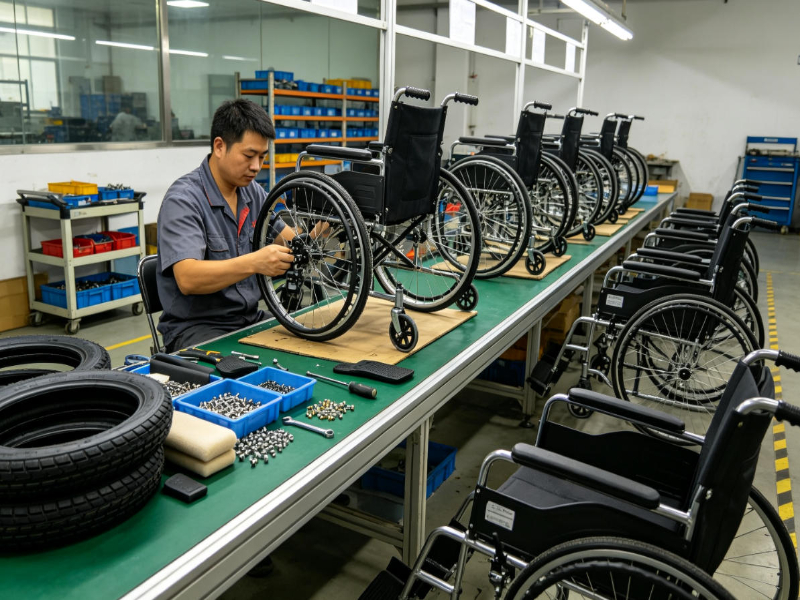
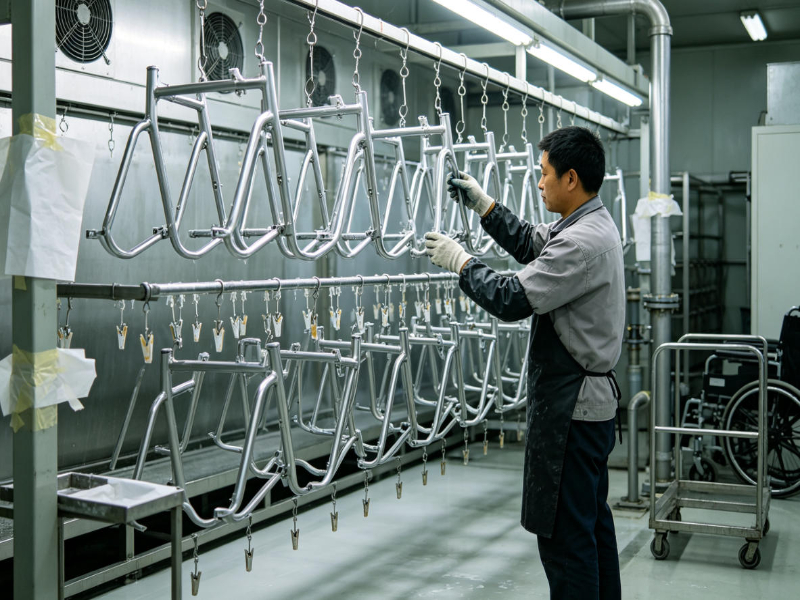
According to its company information, Iyasocare established its own factory in 2019 and has developed specialized workshops covering stamping, injection molding, welding, and assembly. The company also states that it operates three wheelchair production lines and conducts production-line testing before wheelchairs leave the factory.https://www.iyasomed.com/?utm_source=chatgpt.com
For long-term care buyers, this manufacturing background is particularly relevant because institutional procurement requires repeatability. A nursing home does not simply need one good sample. It needs confidence that the next batch will meet the same basic expectations.
Iyasocare also states that it works with customers in more than 30 countries and regions and offers OEM/ODM services for international buyers. Its distributor program is aimed at global distributors, regional agents, and strategic partners.
This can be useful for healthcare distributors that want to purchase products under an established brand initially and potentially develop a private-label product range later.
One of the biggest mistakes a nursing home can make is selecting a single wheelchair model for every resident.
A wheelchair designed for independent indoor mobility is not necessarily the best choice for a resident who requires caregiver assistance. Likewise, a lightweight transport wheelchair may be convenient for appointments but unsuitable for someone who spends many hours sitting in the chair.
A more effective procurement strategy is to create a tiered wheelchair portfolio.
Everyday Manual Wheelchairs
Manual wheelchairs remain essential in long-term care because they are relatively simple, do not require battery charging, and can be used for short-distance movement around a facility.
Iyasocare’s manual wheelchair range includes lightweight folding models, aluminum wheelchairs, ergonomic wheelchairs, commode wheelchairs, travel wheelchairs, and other configurations.
One example is the YSM2003 Manual Wheelchair, which has an 11 kg net weight, a 40 cm seat width, 12-inch rear wheels, 6-inch front wheels, a foldable backrest, flip-up footrests, and rear double hand brakes. The manufacturer describes it as suitable for hospitals, rehabilitation centers, nursing homes, home use, and travel.
For facilities, a lightweight manual wheelchair like this can be particularly useful when staff frequently need to fold, lift, store, or move chairs between different rooms.
Ergonomic Manual Wheelchairs
Residents who spend longer periods in a wheelchair may need greater attention to seating comfort.
An ergonomic model can be useful when the facility wants to provide better support than a basic transport chair. The YSM2029 Ergonomic Aluminum Manual Wheelchair, for example, weighs 12.5 kg and supports up to 100 kg according to its product specifications. It has a 42 cm seat width, 45 cm seat depth, 6-inch front wheels, 12-inch rear wheels, and a compact folding size of 40 × 55 × 70 cm.
For long-term care applications, the combination of low weight, folding capability, ergonomic seating, and caregiver-friendly handling can make this type of wheelchair useful for everyday transportation.
Transfer Wheelchairs
Transfer is one of the most important considerations in elderly care.
A wheelchair that makes it easier for caregivers to move a resident between a bed, sofa, toilet, shower, or another chair can reduce unnecessary physical strain and simplify daily routines.
Iyasocare’s YSM2305 Lifting Transfer Wheelchair uses a hydraulic height-adjustment system with a seat-height range of approximately 45–65 cm, a 47 cm seat width, a steel frame, and a 100 kg load capacity. It is also designed to be waterproof and suitable for bathroom and shower use.
This kind of product is particularly interesting for facilities where transfers and personal hygiene form a major part of daily care.
Rather than requiring caregivers to use one wheelchair for transportation and separate equipment for every transfer situation, a multifunctional transfer model can potentially consolidate several care tasks.
In a nursing home, a wheelchair is often part of a larger care process.
A resident may start the morning in bed, move to the bathroom, continue to a dining room, later visit a rehabilitation area, and eventually return to the bedroom. Caregivers may need to transfer the resident several times throughout the day.
This means that wheelchair design can influence staff workload.
A poorly designed chair may be difficult to position close to a bed or toilet. Fixed armrests may interfere with lateral transfers. Footrests that cannot be moved out of the way can make transfers more complicated.
By contrast, features such as removable footrests, flip-up armrests, adjustable height, secure brakes, and compact dimensions can make daily handling easier.
Iyasocare’s product portfolio includes several transfer-oriented solutions, including adjustable and multifunctional transfer wheelchairs. Its catalog specifically lists four transfer wheelchair models alongside its manual and electric wheelchair categories.
For a facility manager, this means the supplier can potentially support different stages of the resident-care process instead of supplying only standard mobility chairs.
Another product category worth considering is the multifunctional commode and shower wheelchair.
Iyasocare’s YSM2007 3-in-1 Folding Wheelchair combines a manual wheelchair, commode chair, and shower chair. It uses a lightweight aluminum frame, has a 41 cm seat width, a 41 cm seat depth, a 100 kg load capacity, detachable footrests, adjustable armrests, and four small wheels with independent brakes.
For long-term care facilities, the attraction is straightforward: one product can support several daily care scenarios.
This does not mean a 3-in-1 wheelchair should replace every specialized piece of equipment. Facilities should always assess whether the design is appropriate for each resident and care procedure. But where space, storage, and staff efficiency are important, multifunctional equipment can be a useful addition to the procurement portfolio.
It can also be valuable in smaller care environments where storing separate equipment for mobility, toileting, and bathing is inconvenient.
Manual wheelchairs are not appropriate for every resident.
Some residents may have sufficient upper-body ability to operate a wheelchair manually, while others may need powered mobility because of reduced strength or endurance. In these cases, an electric wheelchair can provide a higher degree of independence.
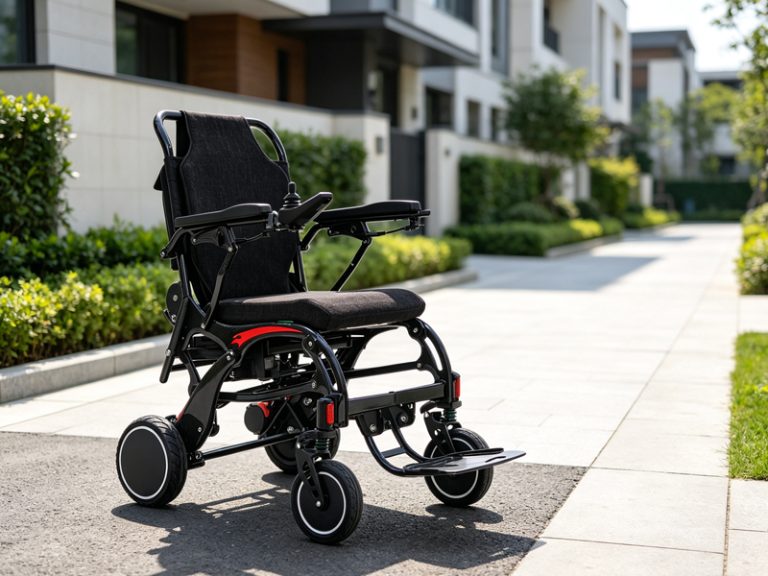
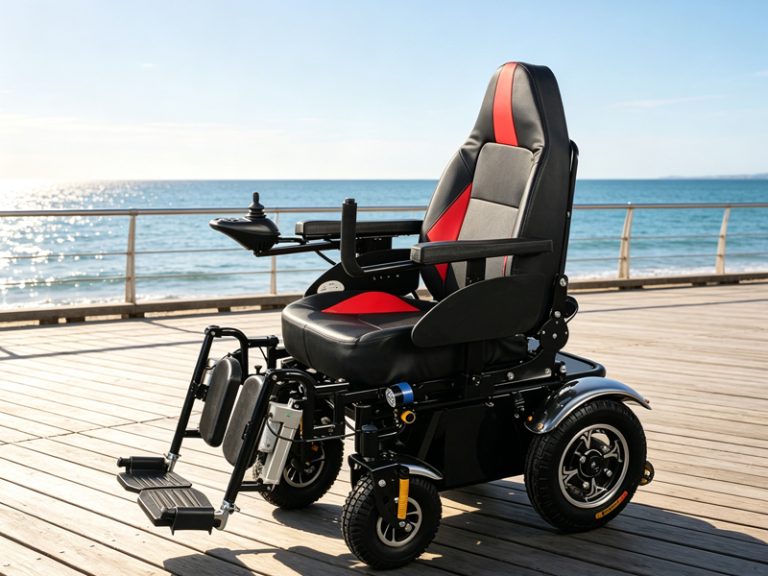
Iyasocare’s catalog includes a wide range of electric wheelchairs, including folding, ergonomic, standing, off-road, and other specialized models.
For nursing homes, however, selecting an electric wheelchair requires more than looking at motor power or battery capacity.
The facility should consider:
For shared institutional environments, staff training is also important. A powered wheelchair may provide excellent mobility, but caregivers need to understand charging, safe operation, storage, and basic troubleshooting.
A wheelchair may be safe as a product but still create problems if it does not fit the environment where it is being used.
Before purchasing large quantities, nursing homes should examine the facility itself.
Are doorways wide enough? Are corridors crowded? Are there ramps? How steep are the ramps? Are floors smooth or uneven? Is there enough space around beds? Are bathrooms accessible? Where will electric wheelchairs be charged?
These environmental questions can affect product selection.
For example, a compact manual wheelchair may be more practical in narrow corridors than a large outdoor power chair. A transfer wheelchair with a narrow overall width may be particularly useful around bathrooms. An electric wheelchair with a larger turning radius may require more open space.
This is why a professional Wheelchair Supplier for Nursing Homes and Long-Term Care Facilities should be able to discuss applications rather than simply provide a product catalog.
Institutional wheelchairs experience a different level of use from many consumer products.
They are pushed through corridors, loaded into vehicles, parked against walls, folded, unfolded, cleaned, transferred between residents, and sometimes handled several times in a single day.
Small weaknesses can therefore become significant over time.
Facilities should pay particular attention to:
Frame construction: Check weld quality, structural stability, and resistance to repeated use.
Braking system: Make sure brakes are easy for staff to operate and provide reliable stopping.
Wheels: Evaluate rolling performance, durability, and suitability for indoor flooring.
Footrests and armrests: These components should tolerate repeated movement and transfers.
Folding mechanism: If chairs are regularly stored or transported, the folding mechanism should be practical and durable.
Cleaning: Materials and surfaces should be compatible with the facility’s cleaning procedures.
Iyasocare states that wheelchairs undergo testing on the production line before leaving the factory and describes its manufacturing approach as covering component production, assembly, quality inspection, and packaging.
For institutional buyers, this is an important area to investigate further during sample evaluation and supplier audits.
Long-term care facilities have additional hygiene considerations that ordinary consumers may not think about.
Wheelchairs can come into contact with clothing, skin, floors, bathrooms, food areas, and different residents. Surfaces should therefore be easy to clean, and the facility should establish appropriate cleaning procedures based on the materials and manufacturer instructions.
This is another reason multifunctional care products need careful evaluation.
For example, the YSM2007 is designed as a shower and commode wheelchair and is described by the manufacturer as washable and suitable for bathing environments.
The YSM2305 lifting transfer wheelchair is also described as waterproof and suitable for bathroom and shower use.
These features can be valuable, but facility managers should still confirm cleaning agents, maintenance procedures, and applicable infection-control protocols before integrating a product into routine care.
A large wheelchair purchase is not complete when the shipment arrives.
For a nursing home or healthcare distributor, after-sales support can determine whether a supplier becomes a long-term partner.
Before signing a purchasing agreement, clarify:
| Area | Questions to Ask |
|---|---|
| Warranty | How long is the warranty period? |
| Spare parts | Which components can be ordered separately? |
| Repairs | Is technical support available? |
| Replacement | What happens when a product has a confirmed defect? |
| Documentation | Are manuals and technical documents available? |
| Training | Can staff receive product-use guidance? |
| Repeat orders | Can identical specifications be supplied later? |
| Communication | Who handles technical and commercial issues? |
Iyasocare states that it provides one-year warranty support and replacement assistance for qualifying quality problems. Its service information also describes after-sales training and support for distributors.
For an institutional customer, this matters because even a relatively small number of product failures can create considerable operational disruption when equipment is used daily.
The cheapest wheelchair is rarely the cheapest wheelchair to operate.
A facility should calculate the total cost of ownership, not just the purchase price.
Consider a simple example. A low-cost wheelchair may initially save $50 per unit. However, if it requires more frequent repairs, has difficult-to-source spare parts, takes longer for caregivers to handle, or needs to be replaced sooner, the initial saving may disappear.
A higher-quality wheelchair may cost more upfront while generating lower maintenance and replacement costs over its useful life.
Total cost should therefore include:
Purchase price + shipping + installation or setup + maintenance + spare parts + repairs + replacement frequency + staff handling time.
For large nursing-home networks, even small differences in daily handling can become significant when multiplied across dozens of residents and hundreds of working days.
A professional care facility should not necessarily begin with a large container order.
A better approach is to conduct a structured pilot.
Stage 1 — Identify Resident Requirements
Determine how many residents need manual wheelchairs, transport chairs, transfer chairs, shower/commode chairs, or powered mobility.
Stage 2 — Select Representative Models
Choose a small number of models that cover the most common use cases.
Stage 3 — Test Them in Real Conditions
Allow caregivers to use the chairs in bedrooms, corridors, dining rooms, bathrooms, ramps, and outdoor areas.
Stage 4 — Collect Feedback
Ask caregivers about maneuverability, comfort, transfers, folding, cleaning, and maintenance. Ask residents about comfort, positioning, and ease of use where appropriate.
Stage 5 — Review the Supplier
Evaluate communication, documentation, delivery, packaging, and responsiveness.
Stage 6 — Scale the Order
Once the products and supplier have passed the pilot stage, negotiate volume pricing and establish a repeat-order plan.
This process is particularly suitable when working with an international supplier because it reduces the risk of committing to a large quantity before the products have been tested in the actual care environment.
A small nursing home may need only several wheelchair types. A large healthcare group can have much broader requirements.
One facility may need lightweight manual chairs. Another may require transfer equipment. A rehabilitation center within the same organization may need standing or electric wheelchairs. A home-care division may need compact folding models.
Having one experienced supplier capable of covering several categories can simplify procurement.
Iyasocare’s product catalog currently includes 29 manual wheelchair models, 42 electric wheelchair models, four transfer wheelchair models, 13 standing wheelchair models, 12 stair-climbing wheelchair models, seven off-road wheelchair models, and other mobility categories.
This breadth allows a distributor or care organization to create a more structured procurement program.
Instead of asking, “Which wheelchair should we buy?”, the more useful question becomes:
“Which wheelchair should we use for each resident and each care situation?”
That shift can significantly improve purchasing decisions.
For distributors supplying nursing homes and long-term care facilities, private labeling may become important as the business develops.
A distributor may initially sell a manufacturer’s standard model. Once demand becomes predictable, the company may want its own brand identity, packaging, documentation, or customized configuration.
Iyasocare provides OEM/ODM services and describes its manufacturing process as covering material selection, component manufacturing, assembly, quality inspection, and packaging. It also states that customized wholesale services can include labeling, packaging design, and production support.
This can be particularly useful for healthcare distributors that want to move from simple product resale toward building a dedicated mobility brand.
However, customization should always be approached carefully. Any changes to a medical or mobility product should be evaluated for technical, regulatory, and quality implications before commercial distribution.
Before signing a long-term agreement, nursing homes, care groups, and distributors can use this checklist:
Manufacturing facility: Can the supplier demonstrate its production capabilities?
Product range: Does it provide manual, transfer, electric, and specialized wheelchair options?
Quality system: Are products inspected before shipment?
Documentation: Can the supplier provide appropriate product-specific documents?
Samples: Can you test the actual wheelchair before bulk purchasing?
Safety: Are brakes, wheels, frame, anti-tip features, and controls appropriate for the intended use?
Comfort: Are seat dimensions and support suitable for long-duration use?
Caregiver handling: Can staff fold, push, transfer, clean, and store the wheelchair efficiently?
Spare parts: Are replacement components available?
Warranty: Are warranty responsibilities clearly defined?
Delivery: Can the supplier maintain consistent lead times?
OEM/ODM: Can the supplier support your future brand development?
Communication: Does the supplier respond clearly and professionally?
A supplier that passes this checklist is far more likely to become a useful long-term partner than one selected solely because of a low quotation.
Choosing a Wheelchair Supplier for Nursing Homes and Long-Term Care Facilities requires a different approach from ordinary product sourcing.
The wheelchair must work for residents, but it must also work for caregivers. It needs to be comfortable enough for daily use, practical enough for transfers, durable enough for institutional environments, and simple enough to maintain. At the same time, the supplier must be capable of delivering consistent quality and supporting the facility after the products arrive.
Iyasocare is a strong supplier to evaluate first because its portfolio is broad enough to cover many of the mobility requirements found in nursing homes and long-term care environments. Its range includes manual wheelchairs, lightweight models, ergonomic wheelchairs, transfer wheelchairs, commode and shower wheelchairs, electric wheelchairs, standing wheelchairs, stair-climbing models, and off-road solutions.
The company’s stated manufacturing capabilities, quality-control processes, international distribution network, OEM/ODM services, and after-sales support also make it relevant to professional healthcare distributors and institutional buyers.
Nevertheless, the final purchasing decision should always be based on the actual requirements of the facility. Request samples, verify product documentation, conduct real-world testing, evaluate caregiver feedback, and confirm the regulatory requirements applicable to your market.
The best Wheelchair Supplier for Nursing Homes and Long-Term Care Facilities is ultimately not the company with the largest catalog or the lowest price. It is the partner that can consistently provide safe, practical products and support the facility as its mobility needs evolve.
For long-term care, that reliability is not simply a purchasing advantage. It is part of providing better everyday mobility for residents and a more efficient working environment for caregivers.
1. What type of wheelchair is best for a nursing home?
There is no single wheelchair that is ideal for every nursing-home resident. A facility normally benefits from a combination of lightweight manual wheelchairs, ergonomic models, transfer wheelchairs, commode/shower wheelchairs, and electric wheelchairs. The appropriate choice depends on the resident’s mobility level, transfer ability, body size, time spent in the chair, and the facility’s environment. A supplier with a broad product portfolio can make it easier to match equipment to different care situations.
2. Why should nursing homes consider Iyasocare as a wheelchair supplier?
Iyasocare offers a broad range of wheelchair and rehabilitation products, including manual, electric, transfer, standing, stair-climbing, and off-road wheelchairs. The company states that it operates its own manufacturing facilities, uses multiple wheelchair production lines, conducts quality testing, and provides OEM/ODM and after-sales support for international partners. Its products are supplied to customers across more than 30 countries and regions according to its official company information.
3. Should a nursing home test wheelchairs before placing a bulk order?
Yes. A pilot order is strongly recommended for institutional purchasing. Staff should test the wheelchair in realistic environments, including resident rooms, corridors, bathrooms, ramps, dining areas, and outdoor spaces where appropriate. The evaluation should cover comfort, maneuverability, braking, transfers, folding, cleaning, storage, and caregiver handling. Testing several units before a large purchase can reveal practical issues that are difficult to identify from specifications or product photographs alone.