Our Location
Free Trade Tower, Xiyong street.
Chongqing, China

Free Trade Tower, Xiyong street.
Chongqing, China
Mobility is one of the most fundamental aspects of human dignity and independence. Yet for many — elderly people, individuals with injuries, disabilities, or limited lower-body strength — simple tasks like moving from a bed to a chair, going to the bathroom, or showering can become daily challenges. This is where transfer wheelchairs step in.
Unlike long-haul wheelchairs or transport sofas, transfer wheelchairs are designed for short-distance, surface-to-surface movement: bed to seat, chair to toilet, or bed to car.
But in recent years, these devices have evolved — from basic chairs that need caregivers’ full physical effort, to more advanced models featuring hydraulic or electric lift systems, waterproof seats, and compact frames for easy maneuvering even in tight spaces.
The result: safer, more dignified transfers; less physical strain on caregivers; and greater comfort and independence for users. In many homes, nursing facilities, and hospitals worldwide, transfer wheelchairs are fast becoming essential mobility aids.
Ease and safety of transfer — A good chair allows for secure sitting and stable movement, minimizing risk of falls, tipping, or awkward lifting. Features might include lockable wheels, stable frames, seat belts or supports, flip-back or removable armrests, and swing-away or detachable legrests.
Adjustable seat height / lift capability — Adjustable height enables smooth transfers between surfaces at different elevations (bed, sofa, toilet, car seat). Hydraulic or powered lift reduces manual lifting, protecting both user and caregiver.
Compact, maneuverable build — Especially important in home care settings or small spaces (bathroom, narrow corridors), a compact frame with small but sturdy wheels helps ensure the chair fits through doorways and can be easily steered.
Versatility & hygiene — Waterproof or shower-safe designs, toilet-compatible seats or seat holes, rust-proof materials, and easy cleaning contribute greatly to usability in bathrooms, toilets, or shower rooms.
Adequate load-bearing capacity & durability — The chair must support realistic user weights and withstand repeated daily use. Durable materials (e.g. steel frame), stable construction, and good workmanship are non-negotiable.
Comfort & dignity — A properly cushioned seat, ergonomic backrest, smooth lift mechanics, and stable transfers help maintain the user’s comfort, safety, and sense of dignity — especially for the elderly or those with limited mobility.
Understanding the benefits goes beyond design features. In real-life use, transfer wheelchairs can make a dramatic difference in someone’s daily life, care routine, and mental wellbeing.
One of the biggest advantages is reducing the physical burden on caregivers. Traditional patient transfers — lifting someone from bed to chair manually — can strain backs, cause fatigue, and pose injury risk. With hydraulic or powered lift wheelchairs, caregivers simply adjust the seat height or press a button: no heavy lifting needed. This not only conserves caregiver energy but also reduces the likelihood of musculoskeletal injuries.
For example, hydraulic transfer chairs allow smooth seat-height adjustment to match bed, sofa, or toilet levels, meaning no awkward lifting, twisting, or bending.
Moreover, in busy environments like nursing homes or rehabilitation centers where transfers happen frequently, such efficiency can streamline workflows and improve safety standards.
Many modern transfer wheelchairs come with waterproof seats, rust-proof steel frames, and designs suited for bathroom or toilet use. This means they can double as shower or commode chairs — enabling users to maintain hygiene independently or with minimal assistance.
Because the seat can adjust to toilet or shower height and often includes seat holes for toileting, the user doesn’t need to be manually lifted — greatly reducing fall risk, slipping, or embarrassing situations. This fosters dignity and privacy.
For users — especially elderly individuals or those with chronic mobility limitations — transfer wheelchairs restore a level of autonomy. Rather than relying on a caregiver every time they need to move, shower, or use the toilet, they can participate more actively in daily routines.
Over time, this regained autonomy can lead to better mental wellbeing, higher self-esteem, and increased cooperation in rehabilitation — building confidence and preserving quality of life.
Smaller, lighter models with compact frames also allow movement in tight living spaces — useful for home care situations in apartments, apartments with narrow hallways, or smaller bathrooms.
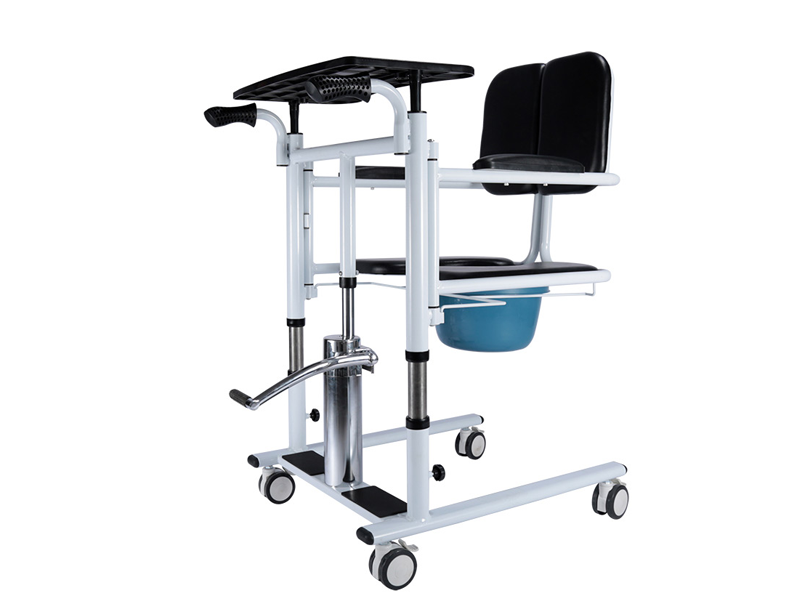
The YSM2304 is a manually operated hydraulic transfer wheelchair designed for safe, efficient transfers in home or hospital settings.
Seat-height adjustability: From 45 cm up to 66 cm — ideal for matching bed, sofa, toilet, or chair height, making transfers smoother and reducing caregiver strain.
Waterproof and versatile: The seat and frame are waterproof, making the chair suitable for bedrooms, bathrooms, or toilets — even for shower use.
Lightweight and compact: At 21–23 kg with overall dimensions ~74 × 59 cm, it’s maneuverable in small spaces — ideal for home environments, apartments, or narrow corridors.
Adequate load capacity: Supports up to 100 kg, with a seat width of 49 cm, seat depth 40 cm, and sturdy steel frame — ensuring stability and comfort.
Practical design features: Small but smooth-rolling wheels (rear 5 cm, front 7 cm) for easy push; adjustable backrest; retractable seat allowing 180° rotation/extension — all helping to facilitate transfers (bed → chair → toilet) with minimal physical effort.
In short — the YSM2304 delivers a robust balance of price, functionality, and versatility. For many home-care situations, it’s a very practical and cost-effective option.
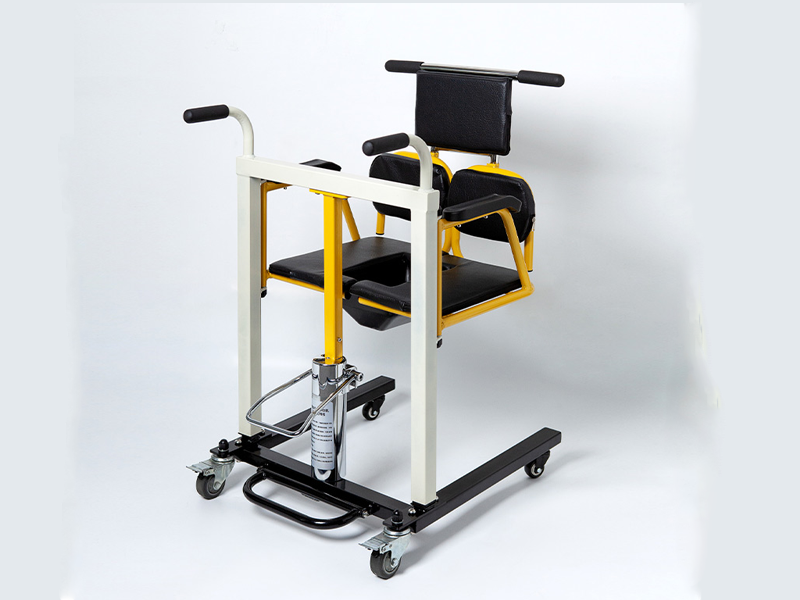
For those seeking more automation and ease, the YSM2302 brings powered lift functionality into play.
Electric seat-height adjustment: Seat height can be adjusted between 45–65 cm via a motorized lift, reducing manual effort and making transfers quicker — especially helpful for heavy users or caregivers with limited strength.
Strong load capacity: Supports up to 150 kg — making it suitable even for larger patients or those needing long-term care.
Waterproof design: As with the hydraulic model, the waterproof seat makes it usable in bathrooms, toilets, or shower spaces — expanding its functionality beyond just transfers.
Stable, durable construction: The chair uses metal and aluminum alloy/plastic components; its design ensures stable and safe operation even with regular use, and its universal wheel design supports flexible indoor maneuvering.
User-friendly for care settings: The electric lift reduces caregiver fatigue, speeds up transfers, and improves safety — particularly valuable in hospitals, nursing homes, or care facilities where multiple transfers occur daily.
For families or institutions looking for a long-term, low-effort solution — especially when dealing with heavier patients or frequent transfers — the YSM2302 represents a high-end, robust choice.
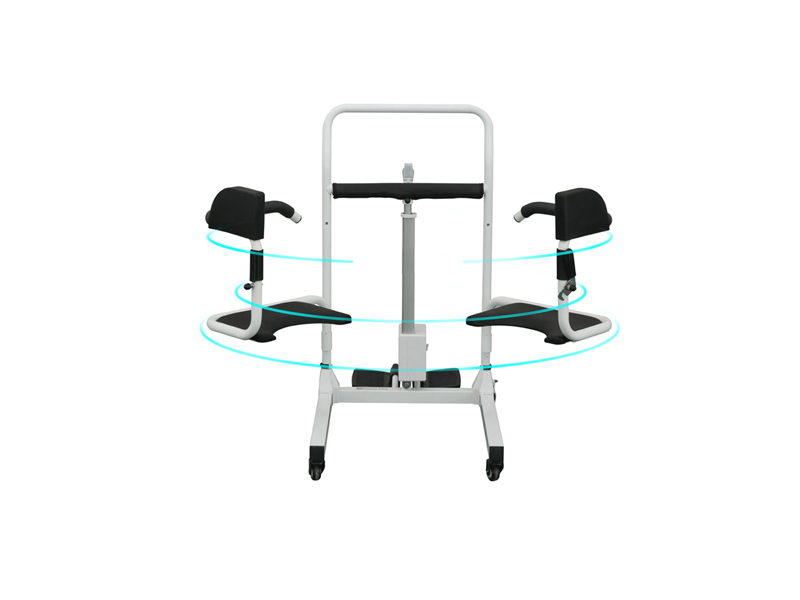
The YSM2305 model occupies a middle ground: combining adjustable seat height, waterproof/versatile build, and a design suitable for home care or hospital use.
While the public page for YSM2305 is less detailed than the previous two, it emphasizes key aspects: waterproof design, adjustable seat height, suitability for daily care and mobility, and a focus on lifting and transfer functionality appropriate for home use.
This model may appeal especially to users or caregivers seeking more versatility (e.g. transfers, toileting, bathroom use) without moving to a fully motorized system — particularly in home care contexts where maneuverability and convenience in tight spaces matter.
Given the differences among models, choosing the right transfer wheelchair depends heavily on the user’s situation, needs, and constraints. Here’s a practical guide to help decide:
| Factor | What to Consider |
|---|---|
| User’s mobility & weight | Heavier users or those needing long-term care likely benefit from a powered lift chair with higher load capacity. |
| Caregiver strength / availability | If caregivers are elderly or have limited strength, hydraulic or electric lift systems reduce manual lifting burden significantly. |
| Usage environment | In bathrooms or small spaces, waterproof, compact, maneuverable models are preferred. For frequent transfers (e.g. hospital, nursing home), powered models may save time and effort. |
| Type of transfers needed | Occasional bed-to-chair moves vs. frequent shower/bathroom transfers — if hygiene and toileting are major needs, waterproof and toilet-compatible chairs matter. |
| Space constraints | In small apartments or homes, narrow frame and small wheels are necessary to navigate doorways, bathrooms, hallways. |
| Budget considerations | Manual hydraulic chairs often cost less than electric ones, and have lower maintenance costs, but require more caregiver effort. |
| Long-term comfort & dignity | Chairs with comfortable seats, adjustable height, smooth lift and seat mechanisms, ease of operation — these contribute significantly to user dignity and quality of life. |
It’s worth clarifying what transfer wheelchairs are not — and what unrealistic expectations some may have.
They are not replacements for everyday wheelchairs: Transfer chairs are designed for short-distance transfers (bed ↔ chair, chair ↔ toilet) — not for long walks, sustained self-propulsion, or outdoor mobility.
Not ideal as everyday seating for long durations: Because many transfer wheelchairs focus on transfer safety and function (e.g. folding seats, toilet openings, adjustable height), they may lack the comfort or stability needed for prolonged sitting or long-distance mobility.
Powered models need maintenance and power: Electric lift chairs depend on battery or electricity; in power outages or neglecting battery maintenance, their benefits can be lost. Hydraulic or manual options may be more reliable in low-resource settings.
Not a one-size-fits-all solution: For individuals with complete immobility, severe contractures, or extremely fragile conditions, additional assistive devices (slings, hoists, professional care assistance) may still be necessary.
Here are some practical recommendations and best practices for integrating a transfer wheelchair into home or institutional care — maximizing benefits and ensuring safety.
Assess the user’s needs realistically — Consider mobility level, weight, frequency of transfers, bathing/toilet needs, caregiver capacity, and living space constraints. Use these to guide which features are essential (lift, waterproof seat, compactness).
Measure spaces carefully — Door widths, bathroom layout, corridor turning radii — ensuring the chair will fit and manoeuvre smoothly. A compact, narrow model can make a big difference in small homes or apartments.
Train caregivers and users — Even with hydraulic or electric lifts, proper transfer technique matters. For manual transfers, practice safe body mechanics; for powered chairs, learn operation protocols (locking brakes, adjusting height, positioning).
Prioritize hygiene and comfort — If the chair will be used for toileting or showering, choose waterproof, rust-resistant models; ensure the seat is easy to clean, and that the design supports dignity and ease.
Maintain the chair periodically — Check wheel brakes, lubrication, lift mechanism, seat integrity — especially if used frequently. For electric models, ensure battery health or reliable power supply.
Plan for future needs — Mobility often changes over time. Favor chairs with adjustable height range, modular or upgradeable features, good load-bearing capacity — so the investment remains useful even as needs evolve.
Mobility is about much more than moving from point A to B. It’s about dignity, independence, safety, and quality of life. For those with limited mobility — whether due to age, injury, illness, or disability — the right transfer wheelchair can make a meaningful difference in daily living.
The three models from Iyasocare — YSM2304 (hydraulic transfer wheelchair), YSM2302 (electric lift transfer wheelchair), and YSM2305 (lifting/adjustable transfer wheelchair) — demonstrate the range of modern design, from cost-effective home care solutions to high-capacity, ease-of-use devices suitable for long-term care and rehabilitation. Each addresses different needs, but all aim for the same goal: safe, dignified, efficient mobility and care.