Our Location
Free Trade Tower, Xiyong street.
Chongqing, China

Free Trade Tower, Xiyong street.
Chongqing, China
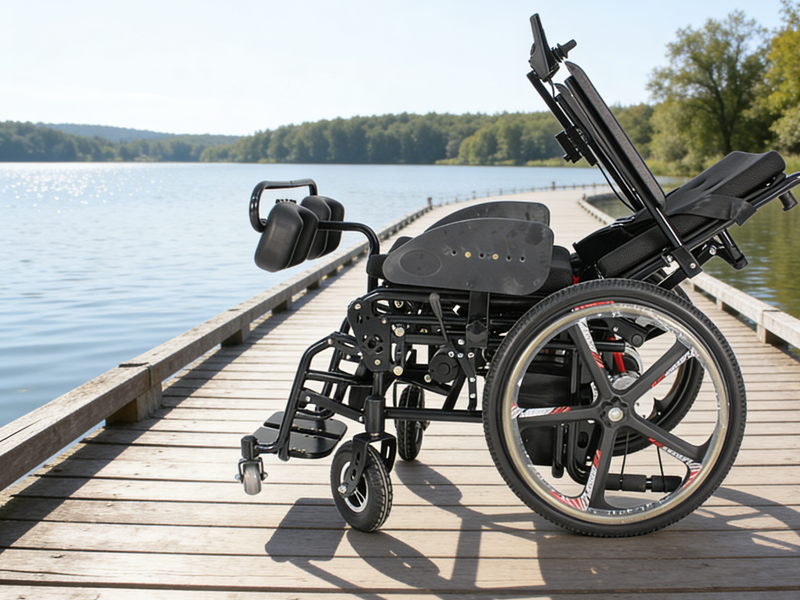
For many people with mobility limitations, a wheelchair is not merely a means of getting around — it becomes their daily environment. How that environment supports their body, protects their health, and empowers independence can make a profound difference. That’s why modern tilt-and-standing electric wheelchairs — such as those from the manufacturer Iyasocare — are increasingly seen not simply as mobility aids, but as life-enhancing tools that blend comfort, health, and social participation.
In this article, we explore what tilt-in-space and standing electric wheelchairs are, why they matter, and how models like those from Iyasocare stand out, offering a comprehensive look for anyone researching mobility devices on behalf of themselves or a loved one.
Traditional manual wheelchairs require the user (or caregiver) to reposition the body regularly to avoid prolonged pressure on certain areas, maintain posture, and support circulation. But for individuals who cannot perform independent weight shifts — due to spinal cord injury, neuromuscular conditions, or severe weakness — this is often not possible.
That’s where tilt-in-space and power standing wheelchairs come in.
Tilt-in-space: In this configuration, the entire seating surface — seat pan, backrest, and leg support — tilts backward (or sometimes even forward) as a single unit. Unlike simple recline, which adjusts only the backrest, tilt-in-space keeps the hip and knee angles fixed while shifting the user’s body angle relative to the ground. This redistributes pressure away from the buttocks and thighs toward the backrest.
Standing electric wheelchairs: These combine powered mobility with a mechanism (often hydraulic or linear actuators) that raises the seat — sometimes allowing the user to rise from a seated position into a partially or fully upright stance. This extends the functional possibilities beyond sitting, enabling standing-level interactions, improved reach, and therapeutic benefits.
Manufacturers like Iyasocare integrate these capabilities into models that aim to be both comfortable and functional, offering adjustable seat tilt, standing height, and often a 360° swivel seat to enhance accessibility and ease of use.
In practice, such wheelchairs are far more than “rolling chairs.” They become adaptive environments — supporting posture, health, and daily function.
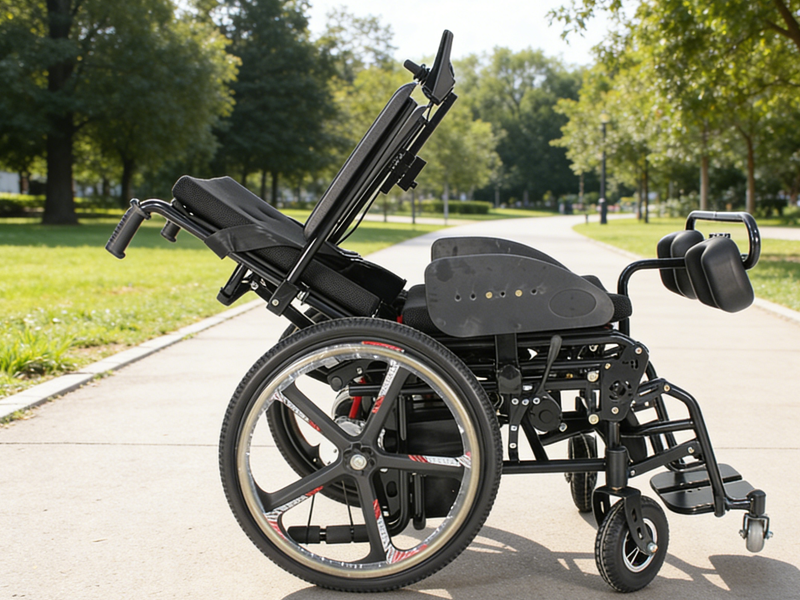
One of the most significant advantages of tilt-in-space design is redistribution of body weight. When the user tilts back, pressure moves away from the ischial tuberosities and thighs and shifts toward the backrest. This dramatically lowers the risk of pressure ulcers (bedsores), a major concern for long-term wheelchair users.
For people who cannot perform independent weight shifts, tilt functionality can make the difference between chronic skin problems and healthy skin — a critical quality-of-life factor.
When someone remains seated in a standard wheelchair for hours, gravity can cause the pelvis to rotate posteriorly, leading to spinal slumping, kyphotic posture, and even long-term joint or spinal issues.
Tilt-in-space helps counteract this by keeping hip and knee angles constant while distributing body weight more evenly, preserving better pelvic alignment, trunk control, and head posture. This benefits users with weak trunk control, muscle weakness, or neurological conditions.
Static sitting can impede blood flow, contribute to swelling (particularly in lower limbs), slow digestion, and even affect respiratory function. Tilting or changing posture helps improve circulation, reduce edema, and support healthy breathing and digestion.
For those using a standing electric wheelchair, standing periodically can also stimulate bone and muscle health, help maintain joint flexibility, and reduce risks associated with prolonged immobility.
With tilt or standing functions, users can change positions throughout the day without needing to transfer out of the chair — reducing fatigue, alleviating muscle strain, and making it possible to remain seated for longer comfortably.
This increased sitting tolerance often translates into greater independence: less time in bed, fewer transfers, and more time engaged in daily activities — reading, socializing, working, or even resting.
Standing wheelchairs allow users to reach items on high shelves, interact with others at eye level, and perform daily tasks more easily — from cooking and cleaning to shopping and socializing.
For many users, this increased reach and mobility isn’t just functional — it’s deeply empowering. Being able to stand, reach, and engage socially can restore dignity, confidence, and a sense of normalcy that seated mobility often obscures.
Moving someone from a wheelchair to a bed, toilet, or chair can be physically demanding and risky for both the user and the caregiver. Tilt and lift/standing functions simplify transfers: by adjusting seat angle or height, carers can facilitate safer, smoother transfers with less lifting.
This not only reduces physical strain but also reduces the risk of injury during transfers — a significant advantage for long-term care situations.
Full-body tilt and standing mechanisms: Their standing wheelchairs allow users not only to move but to rise to standing or seated positions as needed — combining mobility, health benefits, and everyday practicality.
Ergonomic adjustable seating: With adjustable footrests, intuitive control, and ergonomic seat/back designs, these chairs aim to offer comfort and safety.
Enhanced independence and usability: For many users, the 360° swivel seat and standing function open up new possibilities — reaching, interacting socially, performing domestic tasks, and reducing dependence on caregivers.
Global suitability: Because these chairs are electric, adjustable, and designed for various terrains (indoor and outdoor), they are relevant across different environments and climates.
One good illustration of this technology is the model Iyasocare Electric Standing Wheelchair 360°.
It offers standing capability — allowing the user to rise vertically and interact with their environment at an upright level, not only seated.
The tilt/adjustable seat enhances pressure relief, posture support, circulation, and comfort for extended use.
For someone spending many hours a day seated, or needing to engage in daily tasks — from reaching high shelves to social interaction — this wheelchair transforms mobility into a more active, health-supportive lifestyle.
Tilt-in-space and standing electric wheelchairs are particularly suitable for:
People with spinal cord injuries, muscular dystrophy, multiple sclerosis, cerebral palsy, or other neuromuscular or mobility-limiting conditions.
Users at high risk of pressure sores, poor circulation, or musculoskeletal complications due to prolonged sitting.
Long-term wheelchair users requiring assistance with transfers, daily tasks, or independent mobility and social participation.
However — as with any medical or mobility device — a few precautions:
Medical consultation is essential. Some functions (tilt, standing, seat lift) may not be suitable for all conditions (e.g. unstable fractures, severe osteoporosis, uncontrolled spasticity). Many wheelchair providers require a prescription or assessment from a therapist or physician before fitting such devices.
Custom fitting matters. Body size, weight capacity, seat dimensions, and the user’s functional needs must be carefully evaluated to ensure safety and comfort.
Maintenance and support infrastructure. Because these are complex devices (motors, actuators, controls), access to servicing, battery maintenance, spare parts, and regular check-ups is important — especially in varied climates or terrains.
As populations age and awareness of mobility-related health risks grows, the demand for wheelchairs that do more than move becomes increasingly clear. Tilt-in-space and standing electric wheelchairs represent a shift: from “mere transport” to dynamic personal environment — one that adapts to the user’s posture, health, tasks, and social life.
Manufacturers like Iyasocare, with models such as the Iyasocare Electric Standing Wheelchair 360°, strive to bring this vision into everyday life: blending safety, comfort, customization, and independence.
For individuals facing long-term wheelchair use, or those supporting loved ones with mobility challenges, these wheelchairs aren’t luxury items — they are tools of dignity, health, and empowerment.
If you’re exploring mobility solutions — whether for yourself or a loved one — consider tilt-in-space and standing electric wheelchairs carefully. They offer more than convenience: they offer a way to preserve health, support comfort, increase independence, and maintain dignity.
But don’t rush. Take the time to consult with healthcare professionals, assess the user’s physical needs, and ensure support for maintenance and safe use. With careful selection and fitting, a modern standing or tilt-enabled electric wheelchair can truly transform everyday life.