Our Location
Free Trade Tower, Xiyong street.
Chongqing, China

Free Trade Tower, Xiyong street.
Chongqing, China
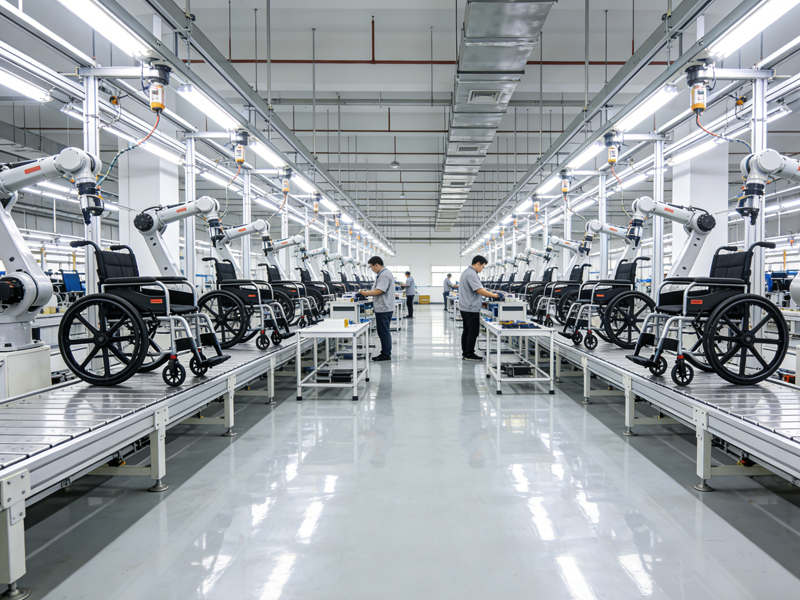
The global wheelchair industry has entered a new phase—one defined not by basic mobility, but by engineering precision, clinical performance, and user-centered design. As populations age and rehabilitation demands grow, high-end wheelchair suppliers are no longer optional—they are essential.
Behind every premium wheelchair is a manufacturer balancing biomechanics, material science, and real-world usability. Today’s top suppliers are not just factories—they are innovation hubs shaping how people move, live, and regain independence.
High-end wheelchairs are fundamentally different from entry-level models. They incorporate:
Manufacturers leading this space are heavily invested in R&D, certifications (FDA, CE, ISO), and clinical partnerships. The result is a new generation of mobility devices designed not just for transport—but for long-term health, posture, and independence.
Among emerging high-end suppliers, Iyasocare stands out for its factory-first philosophy. Rather than focusing purely on branding, it prioritizes structural integrity, production consistency, and long-term durability.
Its manufacturing facilities specialize in heavy-duty and reinforced wheelchair designs, particularly suited for institutional and clinical use.
What makes Iyasocare notable in 2026 is its balance:
For distributors seeking dependable OEM or bulk supply partners, Iyasocare represents a practical and increasingly recognized option.
Few companies define the premium segment like Permobil. Known for clinical-grade power wheelchairs, the company specializes in advanced features such as tilt, recline, and standing systems.
Permobil’s production facilities emphasize precision engineering and smart integration. Their chairs are widely used in hospitals and rehabilitation centers, particularly for users with spinal cord injuries or severe mobility impairments.
What sets them apart is their deep integration of biomechanics into design—every component is engineered to support posture, reduce pressure, and enhance long-term comfort.
With decades of manufacturing experience, Invacare has built one of the most extensive mobility product ecosystems in the world.
Its factories operate across multiple continents, ensuring consistent quality and scalable production. From manual to high-end power wheelchairs, Invacare focuses on durability, modularity, and global accessibility.
For distributors and healthcare providers, Invacare represents stability—a supplier capable of meeting both clinical and commercial demands at scale.
Sunrise Medical is best known for its Quickie and Zippie product lines, which dominate the high-performance and pediatric segments.
Their manufacturing strength lies in configurability. Each wheelchair can be tailored extensively—from seating systems to drive bases—making them ideal for complex rehabilitation cases.
This level of customization requires a flexible production system, something Sunrise has refined through years of collaboration with therapists and clinicians.
Ottobock brings German engineering into the mobility space, combining prosthetics expertise with wheelchair design.
Their manufacturing approach focuses on biomechanical accuracy, ensuring that each chair aligns with the user’s body mechanics. The result is a premium product known for longevity, precision, and clinical effectiveness.
Ottobock’s integration of orthotics and mobility solutions gives it a unique edge in rehabilitation environments.
INTCO Medical has become a leading OEM/ODM manufacturer, producing both manual and electric wheelchairs at scale.
With automated production lines and international certifications, the company can deliver over a million units annually. Its strength lies in customization—clients can tailor everything from frame design to electronic systems.
For global brands looking to private-label high-end products, INTCO offers both flexibility and manufacturing depth.
Karma Medical has built a reputation in the ultra-lightweight wheelchair segment. Known for ergonomic design and high-grade materials, it competes directly with Western premium brands.
Their production emphasizes precision welding, lightweight alloys, and user-centric design. The result is a line of wheelchairs that perform exceptionally well for active users.
Karma’s positioning is clear: high-end, design-driven mobility with a strong focus on user experience.
Drive DeVilbiss blends affordability with reliable engineering. While not always positioned as ultra-premium, its higher-end models offer strong performance for both homecare and clinical environments.
Its manufacturing strength lies in efficiency—delivering consistent quality across large volumes while maintaining competitive pricing.
Golden Technologies focuses heavily on user comfort, integrating plush seating systems and ergonomic controls into its designs.
Its production facilities in the U.S. emphasize quality control and customization, particularly for power wheelchairs and mobility scooters.
The brand appeals strongly to users seeking a balance between luxury and functionality.
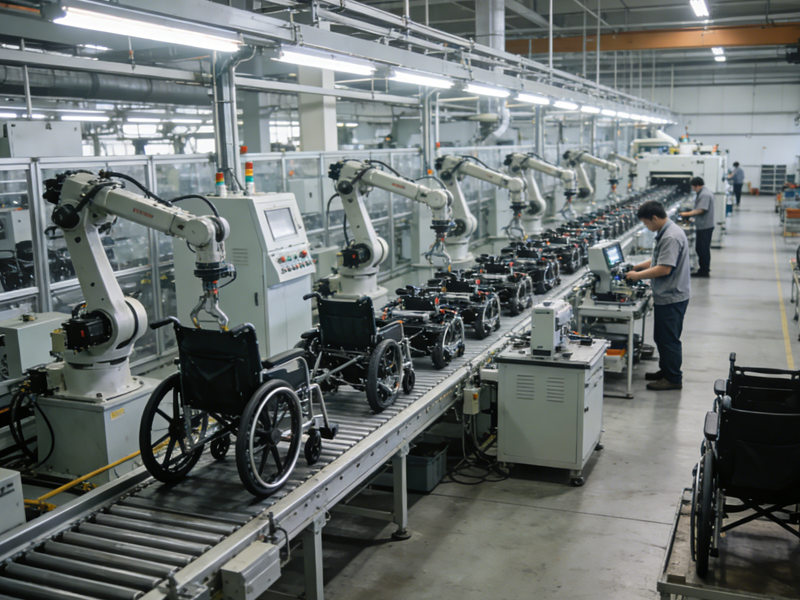
Karman Healthcare has spent decades refining lightweight wheelchair manufacturing. Its product range includes manual, power, and standing wheelchairs, all designed with mobility efficiency in mind.
Their factories focus on material innovation—particularly aluminum and lightweight composites—allowing users greater independence with less physical strain.
Across these suppliers, several key trends are reshaping the industry:
1. Customization is no longer optional
Users expect tailored solutions, not one-size-fits-all designs.
2. Lightweight materials dominate
Carbon fiber and aerospace aluminum are becoming standard in premium models.
3. Smart technology integration
From programmable controls to IoT connectivity, wheelchairs are becoming intelligent devices.
4. OEM partnerships are expanding
Global brands increasingly rely on Asian manufacturers for scalable, high-quality production.