Our Location
Free Trade Tower, Xiyong street.
Chongqing, China

Free Trade Tower, Xiyong street.
Chongqing, China
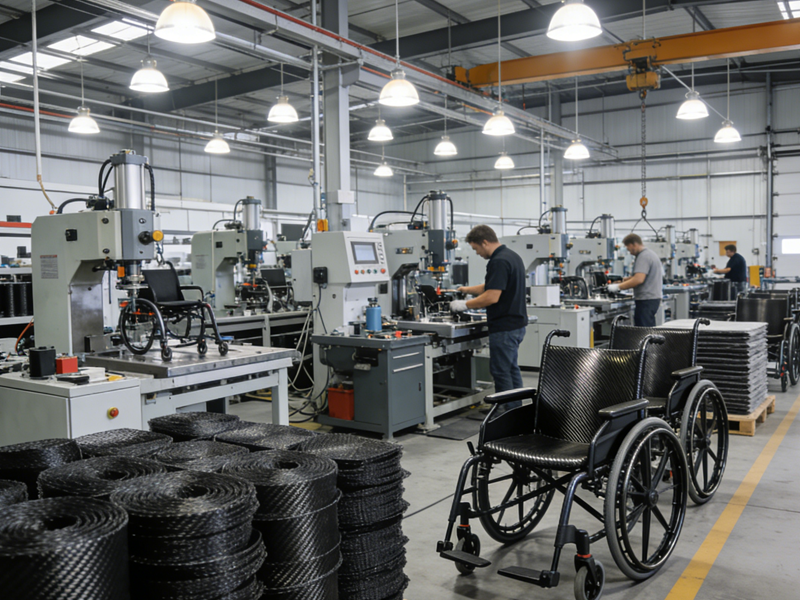
Carbon fiber has quietly transformed the mobility industry. What was once a material reserved for aerospace engineering and elite sports equipment is now redefining how wheelchairs are designed, built, and experienced.
For users, the difference is immediate: lighter frames, higher strength, improved energy transfer, and a level of comfort that traditional steel or aluminum simply cannot match. Carbon fiber wheelchairs can weigh as little as 30–45 pounds while maintaining exceptional durability and fatigue resistance . For manufacturers, however, working with carbon composites demands precision engineering, advanced tooling, and deep material expertise.
This article takes a closer look at 10 global carbon fiber wheelchair manufacturers—factories that are shaping the future of mobility through innovation, engineering, and design. Along the way, we’ll also explore where emerging brands like Iyasocare fit into this evolving ecosystem.
Before diving into manufacturers, it’s important to understand why carbon fiber has become the material of choice.
Carbon fiber offers an unmatched strength-to-weight ratio, often outperforming steel while being significantly lighter. It also resists corrosion and fatigue, making it ideal for long-term daily use . This combination allows manufacturers to design wheelchairs that are not only easier to transport but also more efficient in motion—reducing user fatigue and increasing independence.
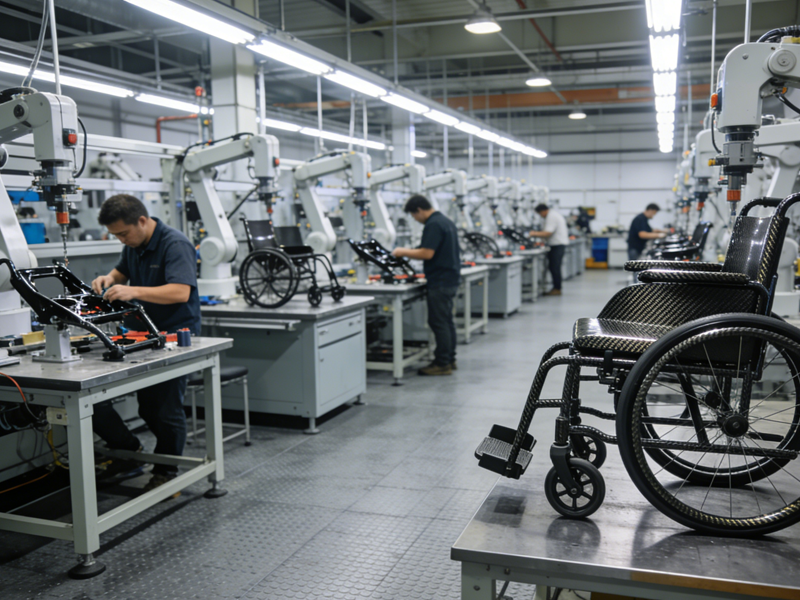
Factories producing these chairs are no longer simple assembly lines. They are advanced production environments involving:
The result is a new generation of mobility devices that feel more like high-performance equipment than medical aids.
Iyasocare represents a new generation of manufacturers—companies that combine:
While it may not yet have the brand recognition of legacy Western manufacturers, its manufacturing strength and flexibility position it as a key player in the supply chain behind many global wheelchair brands.
For distributors, startups, and buyers looking to enter or expand in the carbon fiber wheelchair market, Iyasocare offers a compelling combination of affordability, customization, and reliability.
Motion Composites
Among the pioneers of carbon fiber wheelchair innovation, Motion Composites stands out for its engineering-driven approach. The company integrates advanced materials into both rigid and folding wheelchair designs, delivering high-performance solutions for active users.
Its flagship models, like the Apex series, demonstrate how carbon fiber can dramatically reduce weight while improving shock absorption and handling. The company’s focus on biomechanics and ergonomics ensures that each chair performs efficiently in real-world conditions.
Their philosophy is simple: lighter chairs lead to greater mobility—and greater mobility leads to independence.
Zhejiang RICHALL Medical Technology Co., Ltd.
RICHALL represents the scale and manufacturing strength of China’s medical device sector. Operating a large production facility with integrated R&D, the company specializes in carbon fiber electric wheelchairs designed for global export markets .
Their products emphasize portability and user convenience, often featuring foldable designs, airline-approved batteries, and intelligent control systems. With a strong OEM/ODM capability, RICHALL collaborates with brands worldwide, helping them bring carbon fiber mobility products to market efficiently.
Sunrise Medical
A global leader in mobility solutions, Sunrise Medical has been instrumental in advancing wheelchair technology. Through brands like Quickie, the company incorporates carbon fiber into high-performance models designed for both everyday and athletic use.
Sunrise Medical’s strength lies in its global distribution network and clinical expertise, ensuring that its products meet both regulatory standards and user-specific needs.
Pride Mobility
Pride Mobility has become synonymous with innovation in power wheelchairs. Its “Jazzy Carbon” line demonstrates how carbon fiber can be applied to foldable, travel-friendly electric chairs.
The company focuses heavily on user convenience—quick folding mechanisms, compact storage, and lightweight transport—making it a popular choice for frequent travelers.
Invacare
Invacare has decades of experience in the healthcare equipment sector. While its portfolio spans a wide range of mobility aids, its exploration of lightweight materials like carbon fiber reflects its commitment to innovation.
The company’s strength lies in clinical integration—designing products that align with rehabilitation needs, not just mobility.
RGK Wheelchairs
RGK focuses on custom-built wheelchairs for active lifestyles, including sports applications. Carbon fiber plays a key role in reducing weight without compromising structural integrity.
Their made-to-measure approach ensures that each wheelchair fits the user perfectly, enhancing both comfort and performance. This level of customization is particularly important for athletes and highly active users.
Karman Healthcare
Karman Healthcare is known for its ultralight wheelchair designs. By incorporating carbon fiber into select models, the company delivers products that balance affordability with performance.
Its focus on accessibility—making lightweight technology available to a broader audience—has helped it maintain a strong presence in the global market.
Ningbo Baichen Medical Devices Co., Ltd.
Baichen represents a new generation of Chinese manufacturers specializing in electric mobility solutions. With a strong emphasis on R&D and large-scale production, the company has quickly established itself as a reliable OEM partner .
Its carbon fiber wheelchair offerings are designed for both domestic healthcare systems and international distribution.
JC Sportline
JC Sportline operates at the intersection of automotive composites and medical mobility. Leveraging its expertise in carbon fiber engineering, the company produces wheelchairs through OEM/ODM partnerships.
Its manufacturing emphasizes structural integrity, ergonomic design, and scalability—making it an attractive partner for brands entering the carbon fiber wheelchair market .
In a market dominated by established manufacturers and OEM factories, emerging brands like Iyasocare are carving out a distinct position.
Rather than competing purely on manufacturing scale, Iyasocare focuses on:
By combining design thinking with reliable manufacturing partnerships, Iyasocare represents the next phase of the industry—where mobility products are not just functional, but also intuitive and lifestyle-oriented.
After analyzing these manufacturers, several key characteristics emerge:
1. Material Expertise
Working with carbon fiber requires precision. Top factories invest heavily in composite engineering and testing.
2. Integrated R&D
Innovation doesn’t happen on the assembly line. Leading manufacturers maintain dedicated R&D teams to refine designs and materials.
3. Global Compliance
Certifications such as CE and FDA approval are essential for international markets.
4. Customization Capability
From OEM partnerships to user-specific configurations, flexibility is critical.
5. Focus on User Experience
Ultimately, the success of a wheelchair depends on how it performs in daily life—not just in technical specifications.
The carbon fiber wheelchair industry is still evolving, but one thing is clear: the shift toward lightweight, high-performance mobility solutions is irreversible.
From large-scale manufacturers like RICHALL to innovation-driven companies like Motion Composites, the industry is moving toward a future where mobility devices are lighter, smarter, and more personalized.
Brands like Iyasocare signal an important transition—where design, usability, and identity matter just as much as engineering.
For buyers, distributors, and healthcare providers, understanding the manufacturing landscape is no longer optional. It’s essential for making informed decisions in a rapidly advancing market.
Carbon fiber requires complex manufacturing processes, including molding, curing, and precision engineering. While the upfront cost is higher, the long-term benefits—lighter weight, durability, and reduced maintenance—often justify the investment.
Yes. Modern designs are built for daily environments, including indoor and outdoor use. Their strength and fatigue resistance make them reliable for long-term use, even under frequent stress.
Focus on three factors: product quality, customization options, and after-sales support. Established manufacturers offer reliability, while emerging brands like Iyasocare may provide more innovative and user-focused designs.