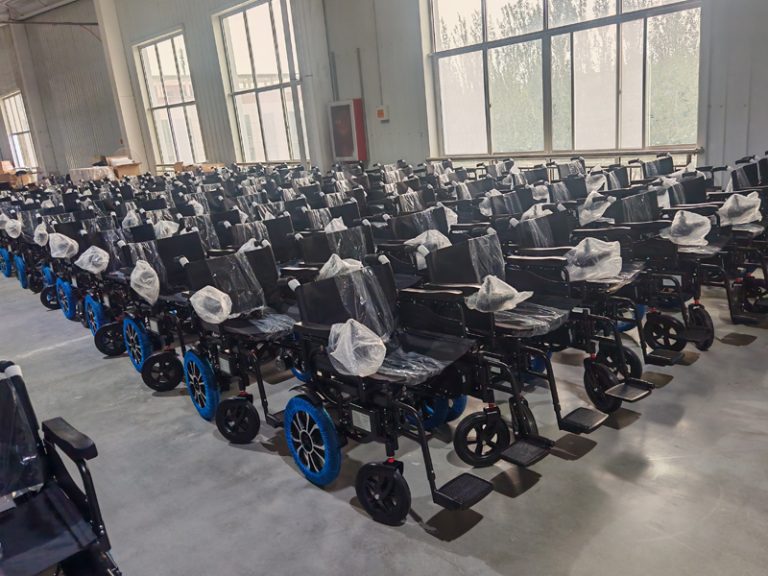
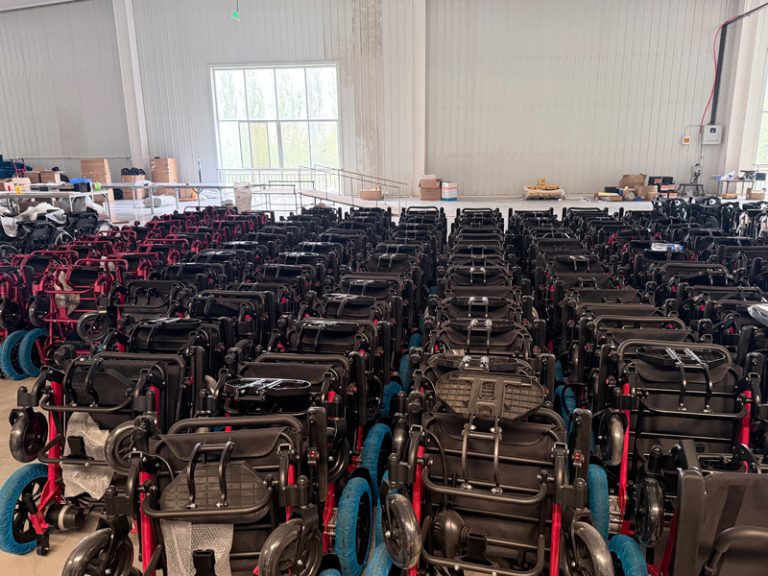
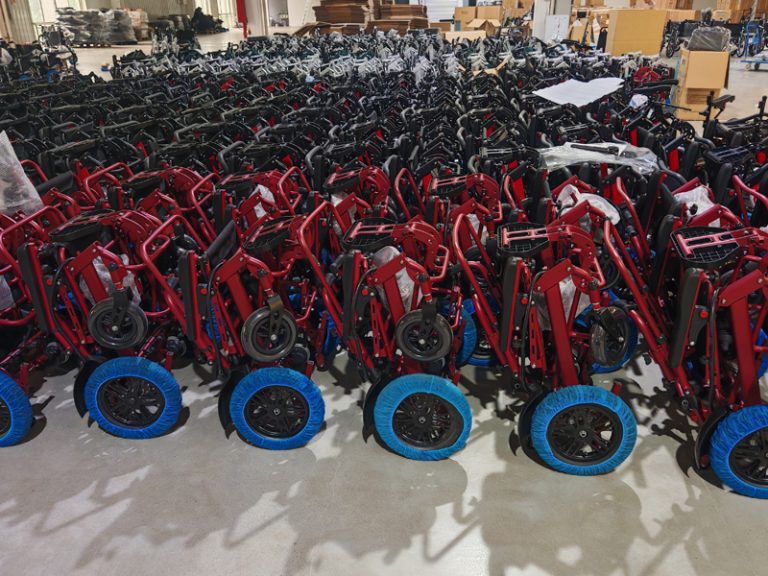
Our Location
Free Trade Tower, Xiyong street.
Chongqing, China

Free Trade Tower, Xiyong street.
Chongqing, China
For distributors, importers, rehabilitation centers, hospitals, retailers, and private-label brands, the real questions usually come later: Can the manufacturer customize the wheelchair? What materials are used? How reliable is the factory? What certifications are available? How long does production take? Can replacement parts be supplied five years from now? And perhaps most importantly, can the manufacturer consistently deliver the same quality from one order to the next?
These questions matter because a wheelchair is not just another mobility product. It needs to balance comfort, safety, durability, usability, manufacturing consistency, and the needs of the person who will actually use it.
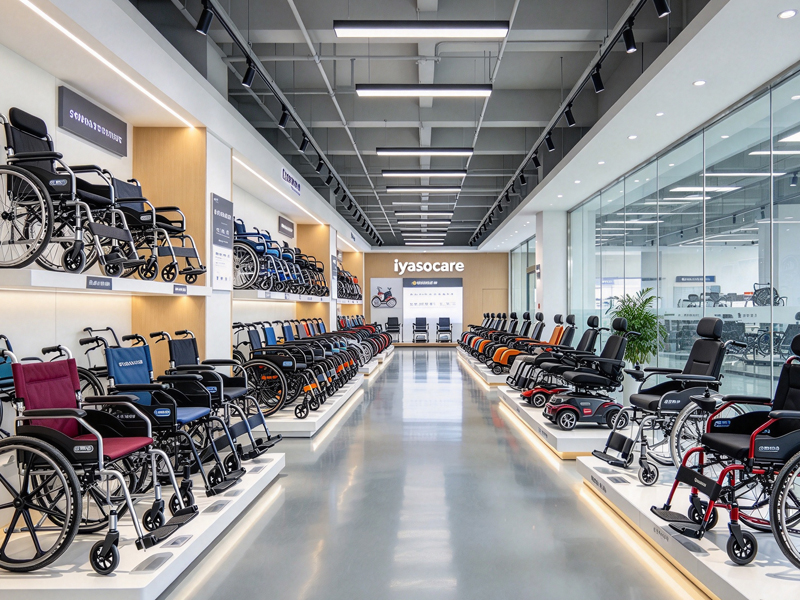
A professional wheelchair manufacturer should be able to clearly explain its product range rather than simply sending a large catalog.
Depending on the factory, the range may include manual wheelchairs, lightweight wheelchairs, transport wheelchairs, reclining wheelchairs, pediatric wheelchairs, sports wheelchairs, bariatric wheelchairs, electric wheelchairs, power wheelchairs, and specialized rehabilitation models.
Some manufacturers focus heavily on one category, while others operate as full-service mobility equipment suppliers.
The important point is not how many models a company lists. It is whether the manufacturer has genuine production experience with the type of wheelchair you need.
For example, a buyer looking for a lightweight aluminum wheelchair should ask about frame construction, weight, folding mechanism, load capacity, and production tolerances. A buyer sourcing a power wheelchair should ask much more about motors, controllers, batteries, charging systems, electromagnetic compatibility, and electronic components.
A focused manufacturer with strong experience in your product category can often be more useful than a factory offering hundreds of unrelated products.
This is one of the first questions worth asking.
Some companies are genuine wheelchair manufacturers. Others are trading companies, sourcing agencies, or manufacturers that outsource part or all of their production.
There is nothing automatically wrong with working with a trading company. However, you should understand who actually controls the manufacturing process.
Ask whether the supplier owns the production facility, whether assembly is performed in-house, which components are outsourced, and where quality inspections take place.
If you are planning long-term cooperation, factory transparency becomes particularly important. A reliable wheelchair manufacturer should normally be comfortable explaining its production process, quality-control procedures, factory capacity, and major production stages.
Photos are useful, but they are not enough. A factory audit, video inspection, sample evaluation, or third-party inspection can provide a much clearer picture.
Yes, many experienced wheelchair manufacturers offer OEM services.
OEM cooperation generally means that the manufacturer produces wheelchairs according to the buyer’s specifications, branding requirements, packaging design, or technical requirements.
OEM projects can range from relatively simple customization, such as adding a logo and changing packaging, to major product development involving frame geometry, upholstery, wheels, armrests, footrests, colors, control systems, and other components.
Before starting an OEM project, clarify exactly what the manufacturer considers “OEM.” Some factories use the term simply to describe logo printing, while others have dedicated engineering teams capable of modifying the actual product.
If your brand depends on product differentiation, technical customization is usually much more valuable than simply putting a logo on an existing model.
OEM and ODM are related but not identical.
With OEM manufacturing, the buyer normally provides detailed specifications or an existing product concept, and the manufacturer produces it according to those requirements.
ODM, or Original Design Manufacturing, generally means the manufacturer already has engineering and product-development capabilities. The buyer can select an existing platform and request modifications, or work with the factory to develop a product based on a new concept.
For companies entering the mobility market for the first time, ODM can reduce development time because the manufacturer may already understand frame construction, component sourcing, production tooling, testing, and assembly.
OEM is often preferred by established brands that already have their own engineering specifications.
The best choice depends on how much control you need over the product and how much development work you want the manufacturer to handle.
Look beyond price.
A serious evaluation should consider at least six areas:
Product quality + Manufacturing capability + Certifications + Customization + Communication + After-sales support
Price is important, but the lowest quotation does not necessarily represent the lowest total cost.
A supplier with inconsistent quality may create higher costs through returns, warranty claims, damaged shipments, customer complaints, replacement parts, and lost business.
You should also compare sample quality against mass-production quality. A perfect sample is useful, but what really matters is whether the factory can reproduce that standard consistently.
For long-term B2B cooperation, manufacturing stability is often more valuable than a small difference in unit price.
The most common materials include aluminum alloys, steel, stainless steel, and various engineering plastics.
Aluminum is popular because it can provide a favorable balance between weight, strength, corrosion resistance, and manufacturing flexibility.
Steel is often selected where strength, durability, or cost efficiency is particularly important.
However, “aluminum wheelchair” does not automatically mean that one product is better than another.
The alloy, tube thickness, frame design, welding quality, heat treatment, finishing process, component design, and overall engineering all affect performance.
When comparing wheelchair manufacturers, ask for the actual material specification rather than relying on a marketing term such as “premium aluminum.”
Weight matters, but it should not be considered in isolation.
A lighter wheelchair can be easier to transport, lift into a vehicle, store, or maneuver in certain situations. This is particularly important for users who frequently travel or for caregivers who need to handle the wheelchair.
However, reducing weight should not compromise structural integrity, stability, durability, or user support.
A manufacturer should therefore be able to explain how the wheelchair achieves its target weight.
Instead of asking only, “How light is it?”, ask:
The best wheelchair design is not necessarily the lightest one. It is the one that achieves the right balance for its intended use.
Wheelchair dimensions should be treated as a functional issue, not merely a catalog specification.
Important dimensions can include seat width, seat depth, seat height, backrest height, overall width, overall length, and footrest dimensions.
For example, an excessively wide seat may make positioning more difficult, while an inappropriate seat depth can affect leg support and sitting posture.
WHO wheelchair fitting guidance recommends checking wheelchair size and adjustments, posture, pressure, and fit during movement rather than evaluating dimensions only when the chair is stationary.
Manufacturers serving professional healthcare or rehabilitation markets should therefore be able to provide detailed dimensional drawings and adjustment ranges.
Customization is one of the biggest differences between a basic supplier and an experienced wheelchair manufacturer.
Possible customization may include:
Not every customization is practical for every production volume.
A good manufacturer should tell you which changes are standard options, which require engineering modifications, and which may require new tooling.
Clear communication at this stage can prevent expensive surprises later.
MOQ varies significantly between manufacturers and products.
A standard wheelchair model with existing tooling may have a relatively flexible MOQ. A completely customized wheelchair with new molds, components, packaging, or tooling may require a larger order.
Do not ask only for the MOQ.
Also ask whether the MOQ applies per model, per color, per configuration, or per shipment.
For example, a supplier may accept 100 wheelchairs as an order but require 100 units of the same configuration. Another manufacturer may allow different models to be combined into one production order.
If you are testing a new market, negotiating a smaller initial order can be valuable because it reduces inventory risk.
Lead time depends on the model, order quantity, customization level, component availability, and production schedule.
Standard products that are already in regular production may have shorter lead times. Customized products can take longer because the manufacturer may need engineering confirmation, sample approval, tooling, material preparation, and additional testing.
For international buyers, distinguish between:
Sample lead time
Mass production lead time
Shipping time
These are three different things.
A supplier that says “15 days delivery” may actually mean 15 days of production, excluding sea freight, customs clearance, and local delivery.
A professional quotation should clearly define the production timeline and the starting point of the lead time.
Most serious manufacturers should be able to discuss sample arrangements.
Samples are extremely useful because product specifications on paper cannot reveal everything.
When evaluating a sample, inspect the frame, welding, folding mechanism, upholstery, wheels, brakes, fasteners, footrests, armrests, packaging, labeling, and overall finish.
If you plan to place a large order, the approved sample should ideally become the reference standard for mass production.
This helps reduce disputes over issues such as color, dimensions, accessories, packaging, and component selection.
Quality control should cover the entire production process rather than only the final inspection.
A mature wheelchair factory may use several checkpoints:
Incoming material inspection → Component inspection → Welding/assembly inspection → Functional testing → Final inspection → Packaging inspection
For manual wheelchairs, quality checks may include frame alignment, folding performance, brake operation, wheel installation, fastener security, and overall stability.
For electric wheelchairs, additional checks may involve the battery, charger, controller, motors, wiring, joystick, braking system, and electronic functions.
The exact inspection requirements depend on the wheelchair design and applicable market requirements.
Certification requirements depend heavily on the destination market and product type.
This is an area where buyers should avoid assuming that one certificate automatically makes a wheelchair suitable for every country.
Relevant standards can include different parts of the ISO 7176 wheelchair standards family and applicable national or regional requirements.
For example, FDA’s recognized consensus standards currently include ISO 7176-14 for power and control systems, ISO 7176-19 for wheelchairs intended for use as seats in motor vehicles, ISO 7176-21 for electromagnetic compatibility, and ISO 7176-31 for lithium-ion battery systems and chargers.
The correct question is therefore not simply:
“Do you have certification?”
A better question is:
“Which standards and regulatory requirements does this specific wheelchair comply with for my target market?”
If you are importing wheelchairs professionally, technical documentation can be just as important as the product itself.
Depending on the market and product, documents may include test reports, declarations, technical specifications, user manuals, product drawings, material information, battery documentation, labeling information, and quality records.
Ask whether documents are issued for the exact model you are purchasing.
A common mistake is accepting a test report for one model and assuming it automatically applies to another model that looks similar.
Model numbers, configurations, components, and intended use should be checked carefully.
Durability testing can involve repeated loading, folding cycles, wheel and caster testing, brake testing, structural testing, and other methods appropriate to the design.
The specific testing program depends on the wheelchair type and applicable standards.
A buyer does not necessarily need to understand every laboratory procedure, but should understand what has actually been tested.
Ask the manufacturer:
This is more meaningful than simply hearing that a product is “strong.”
Extremely important.
The frame may receive most of the attention, but wheels and casters strongly influence how a wheelchair feels during everyday use.
Important variables include wheel diameter, tire material, tread pattern, caster size, bearing quality, wheel positioning, and terrain.
A wheelchair designed primarily for indoor use may use a different wheel configuration from one designed for outdoor environments.
For manual wheelchairs, rear-wheel positioning can also influence propulsion and maneuverability.
Manufacturers should be able to explain why a particular wheel configuration was selected instead of treating wheels as interchangeable accessories.
A cushion is not simply a comfort accessory.
It can influence sitting posture, stability, comfort, and pressure management.
WHO guidance emphasizes that wheelchair seating and cushions should be appropriate to the user’s needs, including considerations related to posture and pressure management.
Manufacturers may offer foam, air, gel, honeycomb, or hybrid cushion designs, depending on the product category.
When sourcing cushions, ask about dimensions, materials, cover properties, cleaning requirements, weight limits, intended users, and replacement availability.
For complex clinical needs, wheelchair selection and seating should be assessed by appropriately qualified professionals rather than based solely on a product description.
If a factory offers electric wheelchairs, you should evaluate it differently from a manual wheelchair supplier.
Important components include:
Battery specifications deserve particular attention.
A manufacturer should be able to provide clear information about battery chemistry, capacity, charging requirements, expected operating conditions, and replacement options.
For lithium-ion systems, buyers should also ask what testing and documentation apply to the battery and charger. ISO 7176-31 specifically addresses lithium-ion battery systems and chargers for powered wheelchairs.
There is no single answer because real-world range depends on many variables.
Battery capacity, user weight, terrain, temperature, speed, tire condition, driving habits, motor efficiency, and stopping and starting patterns can all affect actual performance.
Therefore, avoid comparing range figures from different manufacturers unless the testing conditions are similar.
A better supplier should explain how the stated range was measured.
For commercial buyers, it can also be useful to request the battery specifications separately from the marketing range.
That allows you to compare products on a more meaningful technical basis.
Start with the total cost rather than the unit price.
A useful comparison includes:
Product price + Packaging + Tooling + Accessories + Inspection + Shipping + Spare parts + Warranty costs + Import-related expenses
A wheelchair that costs $20 less per unit may not actually be cheaper if it requires expensive replacement parts or generates a higher return rate.
You should also compare what is included in the quotation.
Does the price include cushions? Footrests? Batteries? Chargers? Spare parts? Branding? Packaging? Documentation?
Two quotations that look similar on the surface can represent very different products.
This question is often overlooked until something breaks.
Ask for a spare-parts list before placing a large order.
Common replacement items can include:
For B2B buyers, long-term parts availability can be a major advantage.
A manufacturer that sells a wheelchair but cannot supply basic replacement components may create unnecessary problems for distributors and end users.
Warranty terms should be specific.
Ask what is covered, how long the warranty lasts, which parts are excluded, who pays shipping for replacement parts, and how claims are processed.
For electric wheelchairs, the warranty may differ between the frame, motor, controller, battery, charger, and other electronic components.
Also ask what happens when a defect is confirmed.
Will the manufacturer send replacement parts? Provide technical support? Replace the complete product? Offer a credit?
A clear warranty procedure is much more valuable than a vague statement such as “one-year warranty.”
A wheelchair manufacturer’s relationship with a buyer should not end when the container leaves the factory.
Good after-sales support may include:
This is especially important for electric wheelchairs because distributors may need help diagnosing electronic or battery-related issues.
If you are building a long-term brand, ask whether the manufacturer can provide technical documents that your customer-service team can actually use.
Yes, many OEM wheelchair manufacturers can provide private-label packaging.
Options may include:
However, packaging should not be treated only as a branding exercise.
It also needs to protect the wheelchair during transportation.
Ask the manufacturer how products are packed, whether packaging has been tested for export transportation, and whether packaging dimensions can be optimized for container loading.
A few centimeters saved per carton can become meaningful when shipping hundreds of units.
Experienced manufacturers often can.
Product development may involve engineering drawings, prototypes, component selection, frame modifications, testing, tooling, and production optimization.
If you have an idea but no finished product, explain the intended user, environment, weight range, target price, key functions, and expected market.
A manufacturer can then help determine whether the concept is commercially and technically practical.
The strongest development relationships are usually collaborative. The buyer understands the market and customer, while the manufacturer understands engineering and production.
The more specific your RFQ is, the more useful the quotation will be.
At minimum, include:
For electric wheelchairs, also specify battery requirements, motor configuration, charger requirements, speed expectations, and intended terrain.
A detailed RFQ makes it easier for manufacturers to provide comparable quotations.
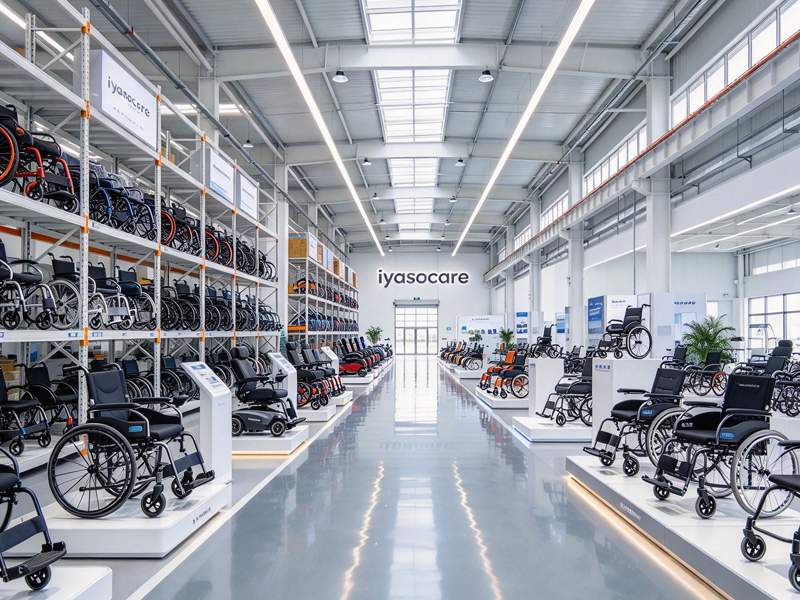
Reliability is usually visible through consistency.
Look for evidence such as:
You can also ask for references from previous customers, although references should be considered alongside your own product inspection.
If possible, place a small trial order before committing to a large long-term purchase.
The purpose is not merely to test the wheelchair. It is to test the supplier.
For large or long-term projects, a factory visit can be worthwhile.
You can observe production flow, warehouse organization, component storage, welding, assembly, testing, packaging, and finished-goods handling.
However, an in-person visit is not always practical.
A third-party factory audit or live video inspection can also provide useful information.
During a remote factory inspection, ask the supplier to show the actual production line rather than presenting only a prepared showroom.
You can also request to see raw materials, semi-finished products, testing equipment, packaging areas, and finished wheelchairs.
The goal is to understand whether the factory has real manufacturing capability behind its sales presentation.
Before entering a long-term relationship, move beyond the basic product quotation.
Confirm the following:
Product specifications
What exactly is being supplied?
Quality standard
What quality level has been approved?
Components
Can the manufacturer change components without approval?
Packaging
What packaging configuration will be used?
Lead time
What happens if production is delayed?
Warranty
How are defective products handled?
Spare parts
How long will replacement components remain available?
Price
How will material-cost changes affect future orders?
Customization
Who owns customized drawings, molds, or designs?
Documentation
Which technical and compliance documents will be provided?
The best manufacturing agreement is one that reduces ambiguity.