Our Location
Free Trade Tower, Xiyong street.
Chongqing, China

Free Trade Tower, Xiyong street.
Chongqing, China
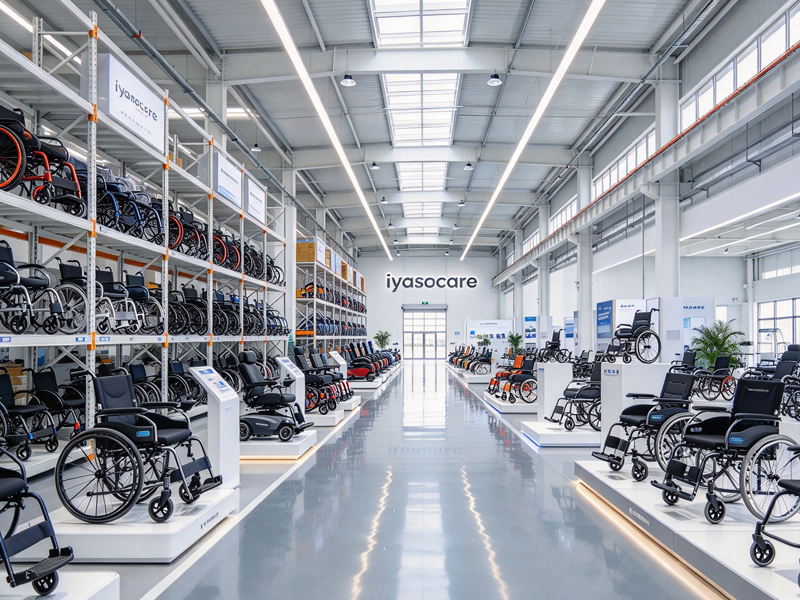
If you are sourcing wheelchairs from China or another manufacturing market, you will probably come across two terms again and again: OEM and ODM.
At first glance, they may sound almost identical. Both involve working with a manufacturer, both can be used for private-label wheelchair products, and both can help a business avoid the cost of building its own factory. But the difference between OEM and ODM is important, especially when you are buying wheelchairs for a medical equipment company, rehabilitation business, distributor, retailer, or new mobility brand.
The simplest way to understand it is this:
OEM means the manufacturer produces a wheelchair based on your design, specifications, or product requirements. ODM means the manufacturer already has a product design and you customize or brand it for your market.
That one sentence explains the basic difference, but the real-world situation is more complicated.
When choosing between wheelchair OEM and ODM, you need to consider product design, tooling, customization, certifications, minimum order quantity, development costs, production time, quality control, intellectual property, replacement parts, packaging, and long-term business strategy.
The easiest way to understand OEM and ODM is to ask one simple question:
Who is responsible for the original product design?
With OEM (Original Equipment Manufacturer), the buyer generally brings the product concept, engineering specifications, drawings, samples, or detailed requirements to the manufacturer. The factory then manufactures the wheelchair according to those requirements.
For example, imagine that you operate a mobility equipment company and have designed a lightweight folding wheelchair for the European market.
You may already know the required:
You provide these requirements to the manufacturer, and the factory turns the design into a finished product.
That is a typical OEM relationship.
With ODM (Original Design Manufacturer), the situation is different. The manufacturer has already developed a wheelchair design. Instead of starting from your own engineering drawings, you select an existing product from the manufacturer’s portfolio and customize it to some degree.
The customization may include:
The basic product architecture, however, comes from the manufacturer.
This distinction is especially important for companies entering the wheelchair market for the first time.
An ODM project can allow you to launch a product relatively quickly because much of the development work has already been completed. An OEM project can give you much more control over the final product, but it usually requires more time, communication, testing, and investment.
In other words:
OEM is usually more design-driven by the buyer, while ODM is usually more design-driven by the manufacturer.
Wheelchair OEM manufacturing is often chosen by companies that already have a clear product concept.
Suppose a rehabilitation equipment brand wants to develop a wheelchair specifically for elderly users who need a compact product for transportation. The company might want the wheelchair to fit inside a particular vehicle trunk, use a specific aluminum alloy, weigh below a certain limit, and have a unique folding mechanism.
An existing factory model may not meet those requirements.
In this situation, the company may approach an OEM wheelchair manufacturer with its specifications.
The manufacturer may then provide engineering support, create prototypes, modify tooling, conduct production testing, and eventually manufacture the product at scale.
The factory is essentially turning the customer’s product requirements into a commercially manufacturable wheelchair.
This does not necessarily mean the buyer must create every engineering drawing independently. A good OEM manufacturer may have its own engineers and production specialists who can help transform an idea into a workable design.
That is one reason the term OEM can sometimes be confusing.
In practice, an OEM project can range from:
“Here are our complete engineering drawings. Manufacture exactly according to them.”
to:
“We have a product concept. Help us engineer and manufacture it.”
The more customized the wheelchair is, the more likely the project will involve product development, prototype testing, tooling, and engineering collaboration.
For buyers, this can be a major advantage.
You are not limited to what is already sitting in the manufacturer’s catalog.
You can potentially develop a wheelchair that is better suited to a specific customer group, distribution channel, price point, or geographic market.
But greater customization also creates greater responsibility.
A custom wheelchair needs to be evaluated carefully for mechanical performance, durability, user safety, applicable regulatory requirements, and production consistency.
A design that looks excellent on paper may not always be practical to manufacture at a competitive cost.
That is why experienced OEM manufacturers often contribute more than factory production capacity. Their engineering and manufacturing experience can help identify problems before the product reaches mass production.
ODM is usually more straightforward.
The manufacturer has already developed the product, and the buyer chooses an existing platform or model.
Let’s say a wheelchair manufacturer has a folding aluminum wheelchair that has already gone through prototype development, production testing, and manufacturing optimization.
A distributor in another country may want to sell the wheelchair under its own brand.
Instead of designing a completely new wheelchair, the distributor can select the manufacturer’s existing model and request changes such as:
The factory handles production using its existing manufacturing process.
This can significantly reduce the time required to bring the product to market.
ODM can therefore be particularly attractive to:
New brands, distributors, online retailers, medical equipment companies, and businesses testing a new market.
For example, if you are launching your first wheelchair brand, spending months developing a completely new frame may not be the most practical starting point.
An existing ODM model allows you to test demand first.
If customers respond positively, you can later invest in an OEM project and develop a more differentiated product.
This approach can reduce the initial business risk.
| Factor | Wheelchair OEM | Wheelchair ODM |
|---|---|---|
| Product design | Mainly buyer-driven | Mainly manufacturer-driven |
| Starting point | Customer concept/design | Existing manufacturer model |
| Customization | High | Moderate to high, depending on factory |
| Development time | Usually longer | Usually shorter |
| Initial development cost | Usually higher | Usually lower |
| Tooling requirements | May be required | Often already available |
| Product differentiation | High | Usually moderate |
| Manufacturing flexibility | High | Based on existing platform |
| Suitable for | Established brands and specialized products | New brands, distributors and retailers |
| Launch speed | Slower | Faster |
| Engineering involvement | Often significant | Usually limited |
| Intellectual property considerations | More important | Still important |
The table gives a useful overview, but there is an important point that buyers sometimes overlook:
OEM and ODM are not simply “expensive” and “cheap” options.
The right choice depends on what you are trying to achieve.
A company building a long-term mobility brand may care more about product differentiation than speed.
A distributor trying to fill a gap in its product catalog may care more about speed and purchasing flexibility.
There is no universal answer.
Generally speaking, OEM provides greater customization.
If you have a specific wheelchair design, OEM manufacturing allows you to work with the factory to develop a product around your requirements.
For example, you may want to create a lightweight wheelchair specifically for airline travel.
You could request a particular frame structure, folding method, wheel configuration, brake system, seat material, and overall weight target.
An ODM manufacturer may not be able to make those changes economically if its existing product platform was not designed for that purpose.
However, customization does not automatically mean that every OEM request is practical.
A manufacturer may tell you that a particular material, component, or structure would significantly increase production cost.
Another design may require expensive tooling.
A special component may need to be sourced from another supplier.
A complicated folding mechanism may increase assembly time.
All of these factors affect the final price.
This is why an experienced wheelchair buyer should not evaluate a manufacturer only by asking:
“Can you customize this product?”
A better question is:
“Can you manufacture this customization reliably at the target cost and volume?”
That distinction can save a lot of time and money.
If speed is your priority, ODM will generally be the simpler route.
With an existing ODM wheelchair, many of the fundamental development stages have already been completed.
You may only need to confirm:
An OEM project can involve many additional steps.
A typical custom wheelchair development process may look something like:
Product concept → engineering discussion → design → prototype → testing → modification → tooling → pilot production → quality inspection → mass production
Every additional step introduces time.
Some projects may move quickly, while others can take months depending on complexity.
The timeline also depends heavily on the manufacturer’s engineering capabilities.
A factory that already produces similar wheelchairs may be able to adapt an existing platform relatively quickly.
A factory starting from a completely new design may require considerably more development work.
For businesses working toward a specific product launch date, this difference can be critical.
Cost is another major difference between OEM and ODM wheelchair manufacturing.
ODM is often less expensive at the beginning because the manufacturer has already invested in product development, engineering, molds, testing, and production setup.
Instead of paying for an entirely new product development process, you are leveraging an existing platform.
OEM can require additional expenses such as:
However, looking only at the initial unit price can be misleading.
Suppose an ODM wheelchair costs $100 per unit while a custom OEM wheelchair costs $115.
At first glance, ODM appears cheaper.
But if the OEM wheelchair has a unique design that allows you to sell it at a significantly higher price, creates stronger brand recognition, and reduces direct price competition, the additional development cost may have a reasonable business justification.
The opposite can also happen.
A company may spend heavily on a custom wheelchair only to discover that customers do not value the additional features.
This is why product development should be connected to market demand rather than customization for its own sake.
For a new brand, ODM is often a practical starting point because it allows the company to enter the market without taking on the full burden of product development.
Imagine that you want to establish a wheelchair brand but have never manufactured mobility equipment before.
You may understand your customers very well, but you may not have an engineering team capable of designing a wheelchair frame from scratch.
An ODM manufacturer can provide an existing technical foundation.
You can then focus on areas where your company may have stronger capabilities:
branding, sales, distribution, customer service, marketing, and market development.
Once the brand grows, you can gradually introduce OEM products.
This creates a potential progression:
ODM product → market testing → customer feedback → product improvements → custom OEM development → proprietary product line
That approach is not mandatory, but it can be a sensible way to manage development risk.
Established companies with specific technical requirements may take the opposite route and begin directly with OEM manufacturing.
Intellectual property is one area that deserves more attention than it usually receives.
If you are purchasing an ODM wheelchair, you should understand who owns the underlying product design.
The manufacturer’s existing design may be used by other customers.
In some cases, multiple distributors may sell very similar wheelchairs under different brand names.
That may be perfectly acceptable if your business strategy is based on price, distribution, service, or market coverage.
But it can become a problem if your goal is to build a highly differentiated premium brand.
OEM projects can provide more opportunities for product differentiation and ownership arrangements, but buyers should never assume that an OEM product automatically means they own every aspect of the design.
Intellectual property should be clearly defined in the commercial agreement.
This may include:
For a serious long-term project, these details should be discussed before production begins rather than after a dispute occurs.
Whether you choose OEM or ODM, the manufacturer must be able to support the requirements of your target market.
A wheelchair is not simply another consumer product.
Depending on the product type and destination market, there may be requirements related to safety, labeling, electrical systems, batteries, medical-device classification, testing, transportation, or documentation.
The exact requirements vary according to the product and jurisdiction.
For example, an electric wheelchair can involve substantially different compliance considerations from a basic manual wheelchair.
This is another area where OEM and ODM can differ in practice.
With ODM, the manufacturer may already have technical documents and test reports for the existing model. That can simplify the process, although you still need to determine whether the documentation actually applies to your intended market, product configuration, and brand.
With OEM, changing the product can affect testing and compliance.
A seemingly small modification may change the technical characteristics of the product.
For this reason, compliance should be considered during product development, not treated as something to solve after the wheelchair has already been manufactured.
When sourcing wheelchairs, it is tempting to compare factories by unit quotation.
For example:
Factory A: $92
Factory B: $97
Factory C: $104
The lowest quotation may look attractive.
But the unit price does not tell you everything.
You should also evaluate:
A wheelchair is a product that customers physically depend on.
A small difference in manufacturing quality can become a significant problem after hundreds or thousands of units enter the market.
For distributors and brands, after-sales costs can quickly eliminate the apparent savings from a cheaper factory.
A reliable manufacturer should be able to explain how it controls quality throughout production rather than simply promising that every product will be “high quality.”
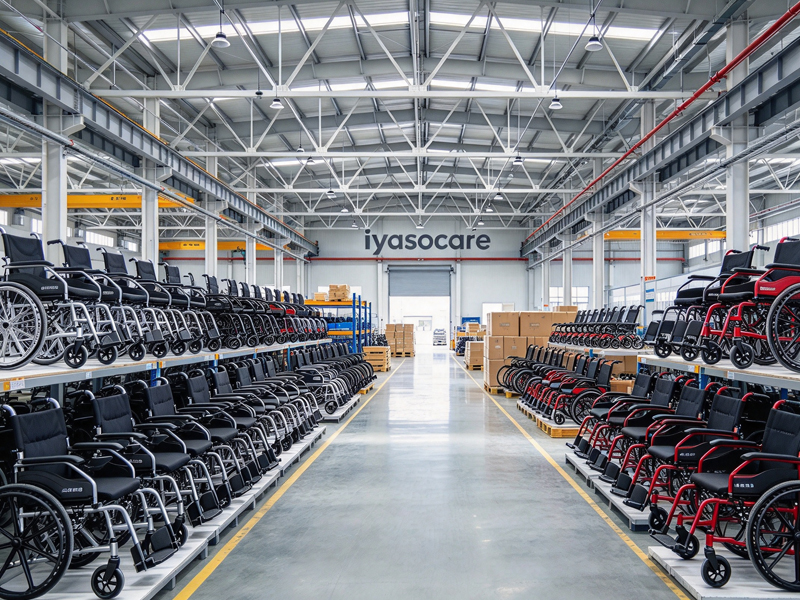
OEM manufacturing can make sense when you have a clear reason to create something different.
For example, OEM may be suitable if:
The key word here is purpose.
Customizing a wheelchair simply because customization is available is not necessarily a good business decision.
The customization should solve a customer problem, improve performance, reduce cost, simplify manufacturing, or create meaningful market differentiation.
ODM can be attractive when speed and simplicity are more important.
It may be appropriate when:
ODM can also be a useful way to learn about the market.
Once you have real sales data and customer feedback, you can make better decisions about what features your next generation of products should have.
Instead of guessing what customers want, you can develop your OEM product based on actual market experience.
In reality, businesses do not always have to choose one model forever.
A company can use both.
This is often one of the most practical strategies for a growing wheelchair brand.
Start with an ODM wheelchair to establish your brand and understand the market.
During the first stage, pay close attention to customer feedback.
Which seat widths sell best?
Do customers prefer lightweight aluminum frames?
Are removable armrests important?
Which wheel sizes are most popular?
Do distributors ask for particular accessories?
Are customers complaining about transportation weight?
Once these patterns become clear, the company can develop an OEM wheelchair around proven market requirements.
This creates a more informed product development process.
Instead of saying:
“We think customers will want this.”
You can say:
“Our customers have repeatedly asked for this, and our sales data supports the change.”
That difference can be extremely valuable.
Whether you choose OEM or ODM, ask detailed questions before committing to production.
A professional supplier should be able to give clear answers.
Product and engineering
Ask:
Manufacturing
Ask:
Commercial terms
Ask:
Branding and intellectual property
Ask:
The quality of the manufacturer’s answers can tell you a lot.
A factory that has worked on many OEM and ODM projects will usually understand these questions immediately.
The difference between wheelchair OEM and ODM is not simply about manufacturing terminology.
It is about who controls the product, how much customization you need, how quickly you want to enter the market, and how much you are prepared to invest in development.
OEM gives businesses greater control over product development and can support stronger differentiation. It is often suitable for companies that have a clear product concept, specific technical requirements, or a long-term strategy built around proprietary products.
ODM, on the other hand, allows businesses to use an existing product platform and customize it for their own market. It can reduce development time and initial investment, making it particularly attractive to new brands, distributors, and companies testing demand.
Neither model is automatically right for every business.
The better question is:
What does your business need from its wheelchair manufacturer?
If you need a highly customized product that solves a specific market problem, OEM may be the direction worth exploring.
If you need a reliable product that can be branded and launched quickly, ODM may provide a more practical starting point.
And for many growing businesses, the answer may be both: start with ODM, learn from the market, and move toward OEM as your product strategy becomes more mature.
The most important thing is to choose a manufacturer that understands not only how to produce wheelchairs, but also how to support your product requirements, quality expectations, compliance needs, and long-term business goals.
1. What is the main difference between wheelchair OEM and ODM?
The main difference is where the product design comes from.
In an OEM project, the buyer generally provides the product design, specifications, concept, or detailed requirements, and the manufacturer produces the wheelchair according to those requirements.
In an ODM project, the manufacturer already has an existing wheelchair design, and the buyer customizes elements such as branding, colors, packaging, accessories, or selected specifications.
In simple terms, OEM is more focused on manufacturing a customer’s product, while ODM is based on customizing a manufacturer’s existing product.
The exact scope of OEM and ODM services can vary between manufacturers, so buyers should always confirm what design, engineering, tooling, and intellectual property services are included in the agreement.
2. Is OEM wheelchair manufacturing more expensive than ODM?
Usually, OEM requires a higher initial investment because it may involve product development, prototypes, tooling, engineering, testing, and customized components.
ODM can have a lower development cost because the basic wheelchair has already been designed and developed by the manufacturer.
However, the final cost depends on many factors, including order quantity, materials, customization level, tooling, packaging, components, certification requirements, and shipping.
Therefore, it is better to compare the total project cost rather than looking only at the wheelchair’s unit price.
An ODM wheelchair may have a lower initial cost, while a well-designed OEM product may offer greater differentiation and potentially support a different long-term pricing strategy.
3. How should I choose between an OEM and ODM wheelchair manufacturer?
Start by defining your business requirements.
If you already have a product design, need a unique wheelchair, require specific technical features, or want to build a proprietary product line, an OEM manufacturer may be appropriate.
If you are a new brand, distributor, or retailer and want to launch a wheelchair quickly with relatively limited development work, an ODM manufacturer may be a practical option.
Before choosing a supplier, evaluate more than the quotation. Look at the manufacturer’s engineering capabilities, quality control, production capacity, customization options, documentation, intellectual property arrangements, lead times, spare parts, and after-sales support.
A good manufacturing partner should be able to explain clearly what it can customize, what it cannot change, what the additional costs are, and who owns the resulting product and tooling.
Ultimately, the best manufacturing relationship is not necessarily the one with the lowest unit price. It is the one that fits your product strategy, market requirements, quality expectations, and long-term business goals.