Our Location
Free Trade Tower, Xiyong street.
Chongqing, China

Free Trade Tower, Xiyong street.
Chongqing, China
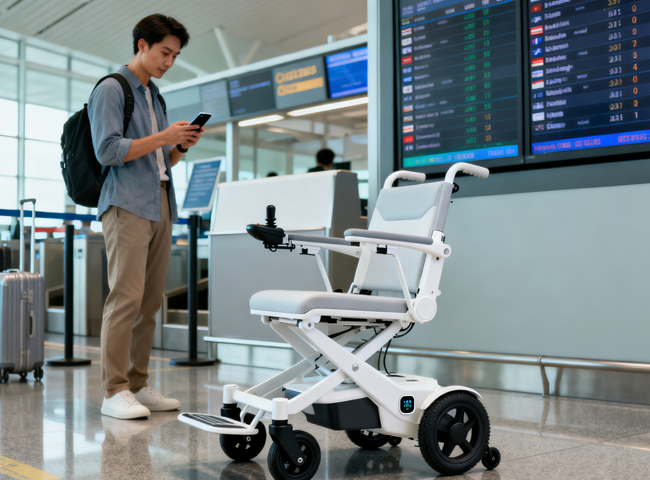
For travelers who depend on wheelchairs, picking the right mobility companion can make or break the experience. In 2025, innovations in materials, battery tech, folding mechanisms, and ergonomics have pushed the envelope for what we can expect from a travel-friendly wheelchair. Below, you’ll find both practical guidance and curated product suggestions—including five excellent models from IyasoMed—to help you travel smarter, lighter, and with confidence.
Before diving into models, let’s step back and ask: what attributes really matter when you’re navigating airports, cobbled streets, tight hotel corridors, and uneven sidewalks?
Weight & Compactness: A chair that’s too heavy or bulky is a burden in transit. Lightweight chairs (ideally under 20 kg or lighter) with a compact fold are ideal.
Folding or Disassembly Mechanism: A quick fold, or easier disassembly of wheels or battery, can make transitions smoother.
Battery & Travel Certification (for electric models): If it’s a powered chair, the battery type, airline acceptance, and certifications (e.g. IATA compliance) are critical.
Comfort & Ergonomics: Good seating, back support, adjustable footrests, shock absorption—these reduce fatigue on long journeys.
Durability & Terrain Adaptability: Strong frame, robust wheels or tires (all-terrain or hybrid), anti-tip features.
Parts & Serviceability: Spare tires, patch kits, modular components, local service access.
Safety & Airline Rules: Know local laws, airline policies about assistive equipment, and bring documentation of your chair.
Below are five IyasoMed models that stand out for travel use.
Children Electric Wheelchair YSE402
Tailored for younger users, the YSE402 balances safety, compactness, and powered mobility. If your travel plans include a child who needs electric mobility, this model offers a lighter frame suited to smaller riders, making airport handling and maneuvering easier.
Electric Wheelchair YSE110
A core electric option, the YSE110 is a reliable all-rounder. It’s likely to feature a midrange weight and battery life—adequate for many travel days—and is a good benchmark when considering upgrades.
Electric Wheelchair YSE130L
The “L” version often suggests enhanced features—perhaps longer range, stronger battery, or structural improvements for heavier users. For travelers who want extended use per charge or more robustness, the YSE130L is a compelling step up.
Electric Wheelchair YSE139
This model may incorporate advanced features such as upgraded suspension, better wheel design, or smart controls. For journeys with rougher terrain or more ambitious schedules, the YSE139 can be a strong option.
Lightweight Sports Wheelchair YSM2110
Not a motorized chair—but its emphasis on lightness and maneuverability makes it an excellent companion for manual mobility in travel settings. If you’re able to propel your chair or have support, the YSM2110 offers agility in tight spaces and minimal carry burden.

To compare or diversify, here are a few non-IyasoMed models (available globally) that also merit attention:
11 kg Onyx Electric Powered Wheelchair — At just 11 kg, this ultra-light electric chair is exceptional for air travel needs.
Ultra‑Lite Air 12 kg Electric Wheelchair — Another featherweight option; ideal for minimal luggage constraints.
KD Portable Electric Wheelchair — Designed for portability and ease of folding.
KD Portable Smart Electric Wheelchair — Smart features for navigation, possibly app control or sensors.
ROBOWHEEL 4‑Wheel Electric Wheelchair — Focus on stability and smooth ride over different surfaces.
Comparing these against the IyasoMed options above can help you pick the balance of features, weight, and usability that best fits your trip.
Let me walk you through typical travel scenarios and how to match that with a wheelchair choice.
1. Short City Trips, Frequent Flights
If your itinerary involves many short hops — airports, trains, transfers — your top priority is portability. Models under ~15 kg, foldable, with removable batteries, give you the flexibility to stow in overhead bins or compact cargo. The YSM2110 (sports/lightweight chair) is ideal when you have enough strength or assistance to push it manually between flights.
2. Long Journeys with Mixed Terrain
Visiting ancient ruins, cobblestone streets, parks, or rural paths? You’ll want robust tires, some shock absorption, and decent ground clearance—all while balancing weight. The powered models like YSE130L or YSE139 may offer stronger motors and suspension to manage rough ground without tiring the rider.
3. Youth or Pediatrics Use
For younger travelers who need powered assistance, models like YSE402 are tailored to their size and weight constraints. It helps avoid oversizing a child into an adult chair where they struggle with controls or reach.
4. Backup or Manual Use Option
Even if you rely on an electric wheelchair, having a lightweight manual companion (or a hybrid design) can be useful—if battery runs out, for emergency backup, or for short indoor moves. The YSM2110 or light electric chairs above can serve dual roles.
5. International Flights & Battery Regulations
Electric models bring a special layer of complexity: batteries. Airlines often limit lithium battery capacity, classify powered chairs as special baggage, and may require documentation. Always check with your airline ahead of time and carry a manufacturer’s spec sheet. Some models are IATA-approved.
Also, different countries use different plug types and voltages. If your wheelchair has a charger, ensure it’s compatible or bring a converter.
Notify Airlines in Advance
Inform them of your wheelchair specs (weight, dimensions, battery info) when booking. Confirm their policies for transporting mobility aids.
Bring Spare Parts
Carry extra inner tubes, puncture repair kits, a small multi-tool set, zip ties, and fuses.
Label & Document
Affix a luggage tag and keep technical documentation (brand, model, battery type) in carry.
Plan Your Charging Strategy
On multi-day trips, map out accessible power outlets, hotels with accessible rooms, and priority charging times. Consider carrying a power bank for USB devices.
Insurance & Warranty Considerations
Ensure your wheelchair is covered under travel insurance; check whether overseas repairs are supported.
Research Local Accessibility
Some destinations have limited accessibility—narrow doorways, lack of ramps. Check in advance.
Time Management
Allow extra buffer for boarding, security checks, and possible dismantling/reassembly.