Our Location
Free Trade Tower, Xiyong street.
Chongqing, China

Free Trade Tower, Xiyong street.
Chongqing, China
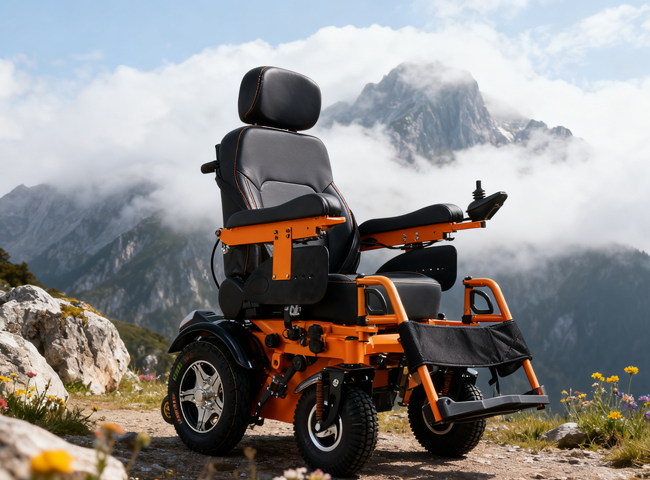
For many people with mobility limitations, the outdoors can feel like a world full of barriers—uneven paths, soft sand, forest trails, gravel driveways, wet grass, and steep inclines. While traditional mobility scooters work well in supermarkets, city sidewalks, and paved parks, they often fall short once the ground becomes unpredictable. That gap has led to the rise of the all-terrain mobility scooter, a machine that blends durability, comfort, and real outdoor capability.
This article explores how all-terrain mobility scooters work, what features matter most, how they improve daily life, and why they are becoming essential for people who want both mobility and freedom. Throughout the discussion, you’ll also see a real example of professional-grade off-road design—the YSE101A Off-Road Wheelchair from IYASOCARE Medical, which illustrates how modern engineering is transforming outdoor mobility.
For decades, mobility scooters remained largely unchanged—small, gentle devices intended for flat surfaces. The modern all-terrain category fundamentally redefines that purpose:
They are engineered for rugged environmental conditions.
They prioritize power and torque over compactness.
They incorporate oversized tires, high ground clearance, and robust suspension.
They allow users to venture into places previously considered “off-limits”: beaches, countryside, farms, hiking paths, and off-road parks.
The difference is not primarily about speed or aesthetics—it’s about how the user experiences the world. Instead of avoiding dirt roads or grassy hills, riders can now include them naturally in their daily routes.
This transformation has also created a psychological benefit: people describe feeling restored, free, and connected when they reenter natural spaces. Outdoor access is not just mobility—it is health, dignity, and emotional well-being.
Most standard mobility scooters share similar limitations. Their wheels are narrow and designed for smooth contact surfaces. Their motors are modest, made for short city trips. Their frames sit low to the ground. All of these factors become problematic outdoors.
Soft Terrain
Sand, mud, or thick grass can trap small wheels instantly.
Loose Terrain
Pebbles, gravel, and uneven stones cause the scooter to bounce, slip, or lose traction.
Uneven Terrain
Tree roots, potholes, or inclines can catch the undercarriage and stop movement entirely.
Long-Distance Terrain
Outdoor trips require longer battery capacity, but indoor scooters are designed for short errands.
All-terrain mobility scooters, by contrast, are designed from the ground up to handle variability. They allow users to travel confidently without constantly scanning the path for obstacles.
Below is a closer look at the features that make outdoor-ready scooters so different from typical urban models. These attributes also influence pricing, durability, and long-term value, so understanding them helps users choose wisely.
This is arguably the most defining characteristic. Successful off-road scooters typically include:
Large-diameter wheels (10–16 inches or more)
Wide tire profiles that distribute weight for better stability
Deep tread patterns for traction
Puncture-resistant materials
Wider wheels help prevent sinking into soft terrain, while deep treads grip uneven surfaces. Together, they create smooth propulsion over surfaces that would stop a normal scooter instantly.
Off-road travel demands more than top speed. What matters is torque, the engine force that helps climb hills and push through resistance.
High-performance all-terrain scooters generally include:
Dual motors or a more powerful single motor
600–2000W range of output, depending on the model
Programmable speed control for safety on slopes
Sturdy motor housing to resist water and debris
Strong torque is what gives the user a feeling of effortless movement even on demanding trails.
Outdoor terrain shakes, bumps, and jolts. Without suspension, the ride becomes uncomfortable and potentially unsafe. Good all-terrain scooters include:
Front and rear suspension systems
Heavy-duty springs or coil shocks
Articulated frames in advanced models
This not only increases comfort but reduces fatigue on longer rides. Suspension also prolongs the lifespan of the scooter by reducing mechanical stress.
Outdoor users often travel farther than they would in the city, so the scooter needs substantial range. Modern models typically include:
High-capacity lithium or lead-acid batteries
Ranges between 30–60 km on a single charge
Smart battery management systems
Lithium batteries are lighter and recharge faster, making them ideal for frequent use.
Uneven terrain increases risk, so manufacturers now integrate multiple safety elements:
Higher ground clearance
Wider wheelbase for stability
Automatic braking on slopes
LED visibility lighting
Reinforced steel or aluminum frames
Combined, these features give users a stable platform—even on unpredictable surfaces.
One of the reasons these scooters continue to grow in popularity is that they fit seamlessly into many lifestyle needs. Some of the most common applications include:
Beaches and Coastlines
Wide tires glide over sand without sinking, allowing users to reach the water’s edge.
Parks and Nature Trails
Uneven dirt paths or tree-rooted walkways become accessible again.
Rural Living
Gravel driveways, farmland, or country roads become manageable.
Sports, Camping, and Events
Outdoor festivals, campgrounds, and sporting fields often exclude traditional scooters.
Daily Errands in Unpaved Communities
Many global regions lack fully paved sidewalks, making off-road capability essential rather than optional.
For users who live active, nature-centered lives—or simply want to enjoy basic outdoor accessibility—the value of an all-terrain scooter is difficult to overstate.
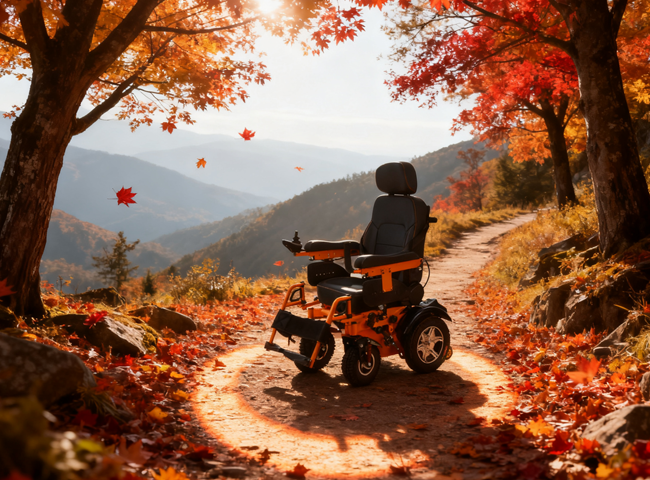
Among the growing landscape of all-terrain solutions, the YSE101A Off-Road Wheelchair stands out thanks to its thoughtful engineering and true outdoor capability. Offered by IYASOCARE Medical, this model is designed for users who need a high-stability, high-performance machine that blends safety with comfort.
👉 Product page: https://www.iyasomed.com/products/off-road-wheelchair-yse101a/
Rather than merely enlarging a standard electric chair, the YSE101A incorporates features purpose-built for rugged landscapes:
Powerful dual drive motors optimized for rough terrain
Deep-tread all-terrain tires
A reinforced structure capable of absorbing impact
A balanced suspension system that keeps the ride smooth
Enhanced seating comfort for long outdoor excursions
Reliable battery life suitable for long distances
It is especially ideal for users who:
• live in areas with uneven ground,
• regularly visit parks or rural environments,
• need a highly durable mobility solution for work or recreation, or
• want confidence navigating slopes, mud, grass, and gravel.
The YSE101A reflects the modern shift in mobility design—from merely “getting around” to fully engaging with the outdoor world.
Mobility challenges can create emotional, physical, and social limitations. Outdoor accessibility plays a significant role in maintaining mental health, physical activity, and community connection.
Users of all-terrain scooters often report improvements in multiple areas:
Regaining access to nature reduces stress and increases happiness. Many riders say the experience feels like getting a piece of their life back.
Even short outdoor trips increase fresh air exposure, sunlight intake, and natural movement.
Family gatherings at beaches, camping trips, or countryside visits become possible again.
Users no longer need to ask for assistance navigating uneven terrain.
The cumulative effect is profound—these scooters are more than equipment; they are a gateway to a more complete life.
Because these scooters represent a higher investment, evaluating the key criteria helps prevent disappointment.
Different models specialize in sand, gravel, pavement, or mixed terrain. Buyers should identify where they ride most often.
Hill climbing requires higher torque; long trails require longer battery life.
Smaller scooters are easier to transport, while larger ones handle more aggressive terrain.
Performance depends on matching the user’s weight with the scooter’s design.
Outdoor use demands a model with high-quality components and easily replaceable parts.
Long outdoor sessions require ergonomic cushioning, armrests, and adjustable positioning.
Companies like IYASOCARE Medical, offering models such as the YSE101A, provide specialized support and engineering depth for off-road users.
As mobility expectations evolve, outdoor access is becoming a standard requirement rather than a luxury. In many communities, including rural regions in the US, Canada, Europe, Australia, and emerging markets, all-terrain mobility scooters serve as essential transport devices—not just recreation equipment.
An all-terrain mobility scooter is more than a way to move—it is a tool that restores adventure, independence, and confidence. Whether exploring forest paths, maneuvering across farms, visiting beaches, or simply navigating unpaved town roads, these scooters unlock experiences that standard models cannot reach.
For users seeking a reliable and well-engineered solution, exploring purpose-built devices such as the YSE101A Off-Road Wheelchair from IYASOCARE Medical can be an excellent starting point. Its combination of robustness, comfort, and true off-road performance reflects the direction modern mobility technology is heading.
Outdoor freedom should be accessible to everyone—and with the right all-terrain scooter, it can be.
Yes—when designed properly. Off-road scooters include enhanced torque, wider wheelbases, and advanced braking systems that stabilize movement on slopes. Users should always check incline ratings and choose models built specifically for rough terrain.
Most modern off-road scooters perform very well on sand thanks to wide tires and high-traction treads. For soft or deep sand, look for scooters with stronger motors and increased ground clearance. Models like the YSE101A are built to manage beach terrain efficiently.
Battery life varies by model, motor size, terrain, and load. Many quality scooters offer 30–60 km per charge. For users planning long outdoor trips, choosing a high-capacity lithium battery ensures better endurance and faster recharging.