Our Location
Free Trade Tower, Xiyong street.
Chongqing, China

Free Trade Tower, Xiyong street.
Chongqing, China
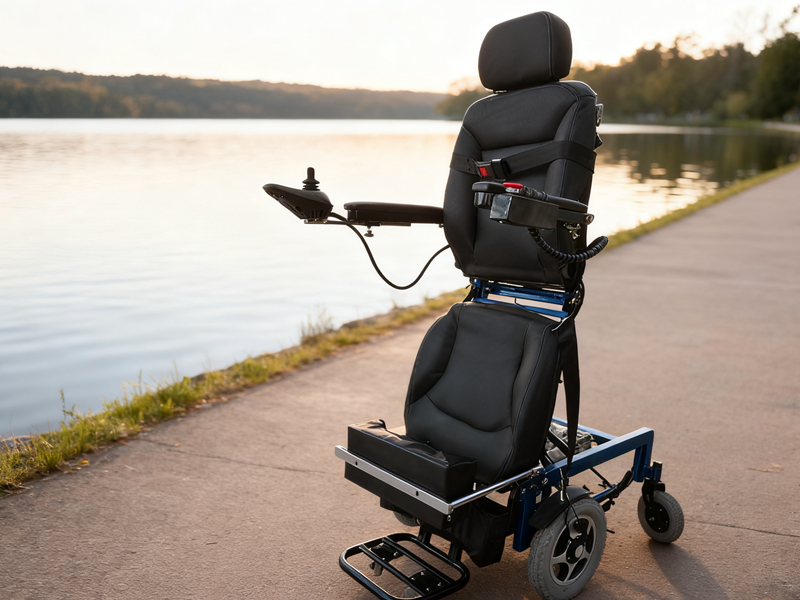
Mobility technology has transformed rapidly, and few innovations have made as meaningful an impact as the electric standing wheelchair. For many individuals living with limited mobility—whether due to spinal cord injury, neuromuscular disease, stroke, or degenerative conditions—the ability to shift from sitting to standing is more than a convenience. It can influence overall health, independence, emotional well-being, and daily function.
Standing wheelchairs used to be bulky, awkward, and limited to clinical environments. Today’s models are sleek, electrically powered, customizable, and designed for real-life use both indoors and outdoors. They allow a person to raise their body to a full or partial standing position with the touch of a button, offering both mobility and therapeutic benefits. More importantly, they provide freedom—the opportunity to interact with the world at eye level, work more comfortably, access higher surfaces, and move with renewed dignity.
This article takes a deep, well-rounded look at the modern electric standing wheelchair. Instead of a simple product list or technical overview, this is a comprehensive guide—how these devices work, who can benefit, what to consider before buying, and why a growing number of users and caregivers see standing mobility as essential rather than optional. Throughout the article, you’ll also find recommended models such as the Standing Wheelchair YSE301, the Electric Stand-Up Wheelchair YSE303, the Fully Functional Standing Wheelchair YSE309, and the Lying Wheelchair YSE302, all available from Iyasocare Medical.
The idea of standing may seem simple, but to someone who spends the majority of their time seated, the ability to rise becomes transformative. There’s a psychological shift that occurs when someone can stand during a conversation rather than looking up from a wheelchair. The user becomes more present, more visible, and more engaged.
Standing also affects the physical body in ways that traditional wheelchairs cannot. When someone sits for long periods, their hips tighten, circulation slows, and pressure builds up in areas prone to ulcers. Over time, bones weaken due to lack of weight-bearing. Standing provides a natural counterbalance:
It stretches the muscles and joints.
It increases blood flow to the lower body.
It distributes weight evenly and reduces high-pressure points.
It strengthens bone density through vertical loading.
Many physical therapists encourage standing several times a day, even when a person cannot do so independently. The electric standing wheelchair essentially brings the therapy session into daily life, offering controlled standing at home, work, and everywhere in between.
Today’s standing wheelchairs aren’t simply powered chairs with a lift. They incorporate advanced engineering to protect posture, manage balance, and provide a seamless transition between sitting and standing. Most models combine features such as:
Electric Actuators
Strong, smooth electric actuators control the movement of the backrest, footrest, and knee support, allowing the user to stand safely without harsh jolts or sudden motion.
Ergonomic Support System
A combination of chest straps, knee pads, lateral supports, and pelvic harnesses ensures the user stays aligned and secure when rising or standing.
Programmable Control Panel
Intuitive joysticks or button controls allow personalized adjustments. Some wheelchairs even save multiple user positions.
Reinforced Chassis
Standing requires additional stability, so the frame is often reinforced with aircraft-grade aluminum or steel alloys.
Long-Lasting Batteries
Powerful batteries ensure the user can travel long distances and still enjoy multiple sit-to-stand cycles throughout the day.
Safety Sensors
Anti-tip wheels, intelligent braking systems, and center of gravity monitoring protect the user during both movement and vertical transitions.
Different models place emphasis on different combinations of these features, so choosing the right chair often depends on the user’s body support needs, terrain use, and intended frequency of standing.
To help readers understand real-world options, here are four high-quality wheelchairs that reflect the current capabilities of standing mobility technology. Each model is created with durability, comfort, and long-term usability in mind, making them strong choices for both home and rehabilitation environments.
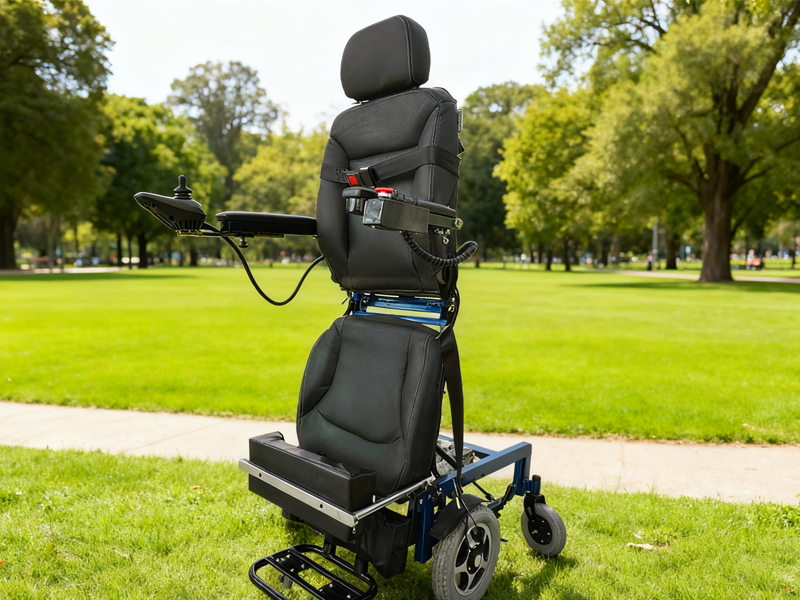
This model is ideal for individuals who want an efficient, straightforward solution for standing mobility. It balances strong performance with simplicity, offering:
Smooth electric standing transitions
Comfortable seating with ergonomic support
A stable frame designed for daily use
Reliable safety mechanisms
Its design focuses on standing therapy and independence without unnecessary complexity.
The YSE303 builds on the basics and adds more flexibility and adaptability. Some users appreciate its combination of mobility, comfort, and modern controls. This model is especially well-suited for:
Users who move frequently between indoor and outdoor environments
Individuals who prefer smoother joystick navigation
Situations requiring additional support when transitioning to standing
The YSE309 is a premium model with a multifunctional design. It is engineered for long-term use, offering versatility for work, home life, and rehabilitation. Standout features often include:
Full-body support for sitting, standing, and tilted positions
Highly responsive electric actuators
Additional safety layers for users who stand more frequently
Its all-in-one performance makes it ideal for users seeking a long-term, reliable mobility partner.
Lying Wheelchair YSE302
Although not strictly a standing wheelchair, the YSE302 is a valuable option for individuals who need extended reclining or lying positions in addition to sitting. It is widely used in rehabilitation environments or for users who require pressure relief, respiratory support, or long-term rest while remaining mobile.
How Standing Wheelchairs Improve Everyday Life
The benefits of standing mobility are both broad and deeply personal. While each user will experience different advantages, many report meaningful improvements in quality of life.
Better Circulation and Reduced Pressure
One of the biggest concerns for wheelchair users is pressure sores. Standing helps distribute the user’s weight and reduces prolonged pressure on specific areas such as the pelvis and tailbone.
Bone Strength and Muscle Activity
Standing promotes natural skeletal loading—a key factor in maintaining bone density. Over time, this may slow the progression of osteoporosis associated with long-term immobility.
Improved Breathing and Digestion
The upright position allows the lungs to expand more fully and the digestive system to function more naturally.
Enhanced Social Interaction
Standing eye-to-eye with others is a powerful emotional experience. It boosts confidence and fosters more natural communication.
Greater Access to Daily Tasks
Reaching cabinets, shelves, countertops, and workstations becomes easier, expanding independence in household and workplace activities.
Greater Autonomy
An electric standing wheelchair empowers users to control their own mobility and therapy rather than depending on caregivers for assisted standing.
Selecting the ideal wheelchair involves considering factors related to lifestyle, physical needs, and personal preferences. Purchasing a standing wheelchair is not just buying equipment—it is investing in long-term comfort, health, and independence.
Here are the most important considerations:
1. Level of Postural Support Needed
Some users require substantial trunk and pelvic support to stand safely, while others only need mild stability assistance. Choosing a model with the right combination of straps and support pads ensures both safety and comfort.
2. Indoor vs. Outdoor Use
Wheel size, suspension, and motor power affect the chair’s performance on rough terrain. A user who frequently travels outdoors might choose a more robust model such as the YSE309.
3. Standing Frequency
If the user stands multiple times per day, they may benefit from stronger actuators and more ergonomic padding to ensure long-term comfort.
4. Battery Range
Daily activity, terrain, and weight all influence battery use. Long-lasting batteries are particularly important for users who travel longer distances.
5. Medical and Therapeutic Requirements
If standing therapy is medically recommended, a model that supports both full and partial standing angles may be advantageous.
6. Transfer Methods
Consider whether the user prefers side transfers, front transfers, or requires assistance. The chair design should match these needs.
7. Budget and Insurance Coverage
Some regions offer partial reimbursement for standing wheelchairs when medically prescribed. It’s wise to check local policies and insurance guidelines.
A noticeable theme among users is the sense of empowerment they feel when they stand. Many describe their first standing experience in years as emotionally overwhelming—in the best possible way.
Some mention how it changed their social interactions. Others appreciate the health improvements they noticed after regular standing sessions, such as reduced muscle tightness or fewer pressure sores. Families and caregivers also report feeling reassured when the user becomes more self-sufficient.
As the world becomes more inclusive and mobility technology becomes more advanced, the standing wheelchair is no longer a niche product. It’s gaining significant recognition in:
Hospitals
Rehabilitation centers
Elder care facilities
Homes
Workplaces
The growth of e-commerce and international shipping has also made it easier for people around the world to access high-quality mobility devices, including the models listed earlier from Iyasocare Medical.
Most importantly, global attitudes toward disability are shifting. People are no longer settling for what is merely functional—they want equipment that enhances quality of life, encourages independence, and supports long-term health. Standing wheelchairs fit perfectly into this new era.
An electric standing wheelchair is more than a mobility device; it is a personal gateway to improved health, deeper social interaction, and greater independence. Whether a user prefers a simple design for daily standing therapy or a fully functional chair with advanced positioning features, today’s innovations offer options for every need.
For readers exploring standing mobility, the following models are excellent starting points:
Standing Wheelchair YSE301 – practical and dependable
Electric Stand-Up Wheelchair YSE303 – smooth and adaptable
Fully Functional Standing Wheelchair YSE309 – premium and versatile
Lying Wheelchair YSE302 – ideal for users who need reclined or lying support
Each brings something valuable to the table, and all reflect the evolution of modern mobility solutions.
If you’re considering an electric standing wheelchair for yourself, a family member, or a patient, take time to explore features, support requirements, and long-term goals. When chosen correctly, the right wheelchair can improve daily life in countless ways—both visible and invisible.
1. Is a standing wheelchair safe for users with limited trunk control?
Yes—modern standing wheelchairs include comprehensive support systems such as chest straps, knee pads, and pelvic harnesses to stabilize the user. Models like the YSE309 offer advanced support for individuals who require additional positioning assistance.
2. How often should users stand each day?
Most physical therapists recommend short standing sessions of 15–30 minutes, one to three times daily. However, the ideal schedule varies depending on the user’s medical condition, comfort level, and therapeutic goals.
3. Can standing wheelchairs be used outdoors?
Many models are designed for both indoor and outdoor use. Chairs with stronger motors, durable frames, and larger wheels—such as the YSE303 or YSE309—perform better on varied terrain.