Our Location
Free Trade Tower, Xiyong street.
Chongqing, China

Free Trade Tower, Xiyong street.
Chongqing, China
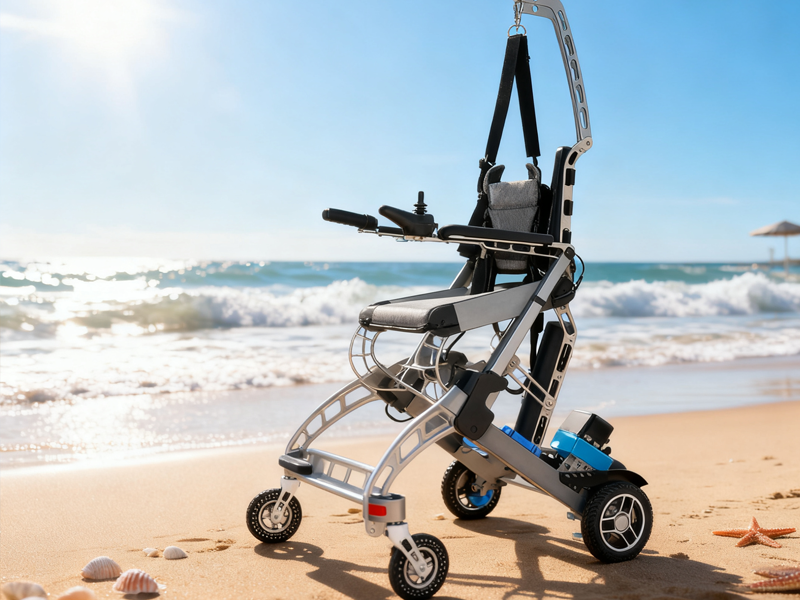
Whether you are a wheelchair user, a caregiver, a clinician, or simply researching for a family member, this guide helps you understand the value of standing wheelchairs and how to evaluate high-quality models such as the Iyasocare standing wheelchair for disabled YSE310 or the Electric Standing Wheelchair With Recline—two advanced options that represent the new global standard of powered mobility.
To someone who walks every day, standing may seem unremarkable. But to a person living with paralysis, muscular dystrophy, spinal cord injury, cerebral palsy, or severe neuromuscular degeneration, standing can feel like reclaiming a lost part of themselves.
Standing is more than posture—it is a powerful physiological and psychological experience.
The world looks different when you can rise and meet it eye-to-eye.
Social interactions feel more natural.
Body systems function more efficiently when the torso and legs are upright.
The spine decompresses.
Muscles lengthen and activate.
Pressure points finally get relief.
For many disabled users, regaining the ability to stand—even assisted—changes daily routine, emotions, and self-confidence. This value cannot be fully measured by medical data alone; it is deeply personal and often life-changing.
Powered standing wheelchairs enable users to rise to a fully vertical position independently, through a secure and motorized mechanism, anytime and anywhere—at home, work, school, or in public.
Standing wheelchairs are often recommended by rehabilitation specialists because of their extensive medical benefits. While individual outcomes vary, decades of research consistently support standing as a therapeutic action with measurable advantages.
1. Improved Circulation and Cardiovascular Function
Sitting for long periods slows blood flow, which can cause swelling in the feet, poor circulation, and risks of blood pooling. Standing encourages natural blood movement, improves vascular health, and reduces fluid accumulation.
2. Reduction of Pressure Sores
Pressure sores—or pressure ulcers—develop when the same points on the body bear weight continuously. Even with good cushions, full-time sitting compresses tissue and skin. Standing distributes pressure throughout the whole body, reducing the chance of ulcer formation.
3. Enhanced Bone Density and Muscle Activity
Weight-bearing through the legs stimulates bone mineralization. Users with spinal cord injury often lose bone density rapidly; standing helps slow this decline by applying natural stress to bones and muscles.
4. Better Digestive, Respiratory, and Urinary Function
An upright torso allows organs to expand properly. Standing has been shown to:
improve bowel motility,
enhance lung capacity,
support more complete bladder emptying,
reduce constipation,
and decrease the risk of respiratory issues.
5. Spasticity Reduction and Muscle Stretching
Many users experience muscle tightness or spasms. Standing helps lengthen hip flexors, hamstrings, calves, and the lower back—reducing stiffness, pain, and muscular contractions.
6. Mental and Emotional Well-Being
Research and user testimonials underline a psychological benefit difficult to quantify:
Standing boosts mood, increases self-esteem, and restores a sense of autonomy.
For some users, the first time standing again—no matter how long it has been—can be a deeply emotional moment.
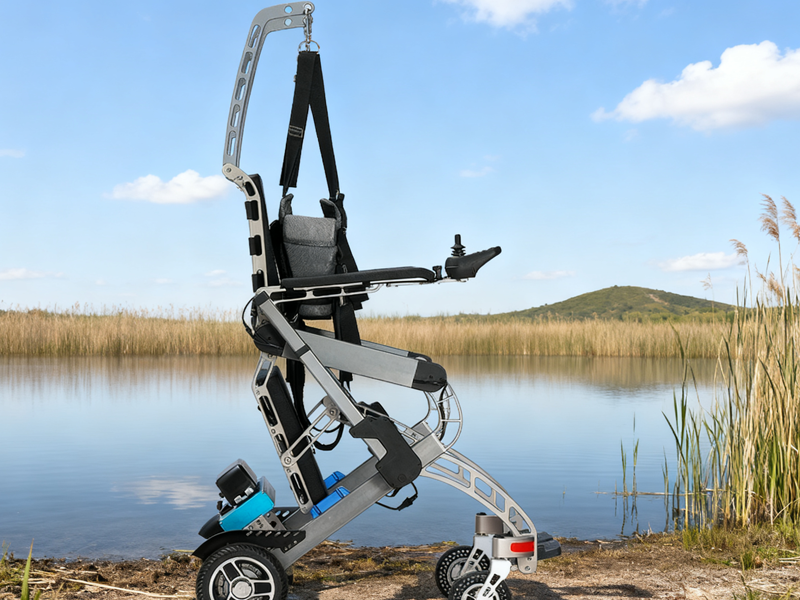
Today’s standing wheelchairs combine mechanical engineering, clinical ergonomic design, and smart control systems. They are not simply “chairs that lift”. They provide multiple mobility functions—driving, sitting, reclining, tilting, and standing—all in one highly customized system.
Key innovations in recent years include:
electric motor lift systems with smooth vertical transitions,
full-body supporting mechanisms (lateral supports, knee blocks, safety belts),
reclining and tilting functions to relieve pressure,
programmable joystick controls,
long-lasting lithium battery systems,
stable wheelbases for safe standing and driving,
adjustable backrests and ergonomic cushions,
anti-tip engineering for safe standing on slopes.
The modern standing wheelchair is essentially a medical device, a physical therapy tool, and a powered mobility solution combined.
The choice depends on lifestyle, physical condition, medical needs, and daily environments. Here are key factors users and families typically evaluate:
· Full-standing vs. partial standing
Some wheelchairs bring the user to a fully vertical position; others provide semi-standing for users who need more support.
· Recline and tilt functions
A chair that can recline or tilt eases pressure relief and offers more comfort during long-day usage.
· Frame stability
The wheelchair must maintain stability while elevated, especially if the user intends to stand frequently or drive in a semi-upright position.
· Control system
Smooth, responsive joystick design is essential, especially for users with limited upper-body strength.
· Battery life
Standing consumes more power than regular driving. Long-range batteries prevent frequent charging interruptions.
· Safety padding and support
Knee pads, chest straps, and lateral supports must be comfortable and adjustable for different body shapes.
· Ease of maintenance
Reliable motors and straightforward mechanical parts make long-term care easier.
The adoption of standing wheelchairs is rising worldwide. Several regions—North America, Western Europe, Japan, South Korea, and parts of the Middle East—now recognize standing wheelchairs as medically beneficial rather than luxury devices. In many countries, insurance and healthcare systems have begun approving coverage for standing frames and standing wheelchairs due to their therapeutic value.
This shift reflects a broader movement in healthcare: moving from “survival mobility” to “quality-of-life mobility”.
People do not simply want to move—they want to live fully, participate socially, go outdoors, pursue careers, and maintain well-being. Standing wheelchairs support this aspiration.
During the research for this article, two models stood out for their engineering quality and international design standards. They come from Iyasocare, a manufacturer known for durable mobility devices used in hospitals, rehabilitation centers, and personal care settings worldwide.
Below is a natural introduction to them for readers who may be exploring advanced options.
This model integrates a smooth, motorized standing system with a stable wheelbase that supports users safely during transitions. Designed for daily personal use, it is suitable for individuals who need frequent standing sessions for health reasons such as circulation, bone support, or pressure relief.
Notable characteristics include:
a strong chassis capable of supporting a full vertical rise,
comprehensive safety straps for secure standing,
intuitive joystick control,
ergonomic cushioning,
reliable battery performance for long outdoor or indoor journeys.
It is engineered for consistent, repeatable standing sessions throughout the day—calibrated to maintain balance across different surfaces. Users who prioritize stability and comfort often find this model exceptionally well-designed.
This variant extends functionality by incorporating both standing and recline features, offering a multi-positional system helpful for users with more complex mobility needs. Ideal for spinal cord injuries, neuromuscular conditions, or long-term power chair users who spend many hours seated daily.
Key advantages include:
fully-supported recline for pressure management,
smoother transitions between positions,
comfortable leg and back support,
improved body weight distribution during long sitting periods,
the ability to alternate between sitting, reclining, and standing without transferring to another device.
This type of multifunction wheelchair reflects the growing trend toward “all-in-one mobility platforms”—a single device capable of replacing multiple pieces of rehabilitation equipment.
Beyond medical benefits, standing wheelchairs reshape everyday routines. Here are some scenarios that reflect how users commonly integrate them into daily life.
At Home
Preparing food at a counter-height surface
Reaching shelves without a grabber tool
Talking to family at eye level
Stretching the body in the morning
Watching television while standing to relieve pressure
At Work
Performing desk tasks from a standing position
Attending meetings or presentations upright
Reducing discomfort during long working hours
Navigating office layouts more efficiently
In Social Settings
Standing to take photos with friends
Holding conversations at natural height
Being visible in crowded places
Participating more comfortably in events
In Rehabilitation
Scheduled weight-bearing sessions
Spasticity management
Bone-loading therapy
Posture training
In Education (for younger users)
Standing during class to improve focus
Participating more fully in group activities
Standing wheelchairs remove limitations that traditional power chairs cannot solve. They give users choices—perhaps the most important benefit of all.
Though suitability must always be evaluated by a clinician, standing wheelchairs are commonly recommended for individuals with:
spinal cord injuries (paraplegia, tetraplegia depending on level),
cerebral palsy,
muscular dystrophy,
multiple sclerosis,
post-stroke conditions,
neuromuscular degenerative diseases,
spina bifida,
severe scoliosis or posture-related issues.
Users with cardiovascular instability or certain bone fragility conditions may require more assessment, but many can still benefit with proper support and supervised adaptation.
Standing wheelchairs prioritize safety through engineering. Yet proper use ensures the best outcome:
Gradual standing for new users (to avoid dizziness)
Adjusting straps and supports before rising
Regular physical assessments to ensure comfort and bone health
Choosing stable ground for standing outdoors
Keeping batteries charged to avoid low-power positioning issues
Modern designs, like those from Iyasocare, include anti-tip protection, secure straps, strong knee supports, and controlled ascent/descent speeds. These features work together to create predictable, safe standing experiences.
The global mobility market is shifting toward devices that support long-term health rather than simply movement. Traditional wheelchairs have a passive design: the user sits, and pressure, muscle atrophy, and stiffness accumulate over time. Standing wheelchairs introduce an active approach: increased circulation, stretching, posture improvement, and musculoskeletal benefits.
As societies move toward more inclusive environments, the demand for standing wheelchairs grows because they support:
better participation in daily activities,
greater independence,
improved physical condition,
long-term quality of life,
and dignity in social interactions.
The idea is simple: mobility should not only help people move—but help them thrive.
Standing wheelchairs symbolize progress. They reflect humanity’s belief that disabled individuals deserve tools that elevate—not restrict—their abilities. For someone who has not stood in months or years, the moment of rising again can be unforgettable. It can shift perspective, restore confidence, and remind the user that the horizon can still be viewed from eye level.
The rise of advanced models—such as the Iyasocare Electric Standing Wheelchair YSE310 and the Electric Standing Wheelchair With Recline—marks an important phase in the evolution of mobility technology. These devices are designed not only to assist but to enrich daily life, blending clinical science with real-world practicality.