Our Location
Free Trade Tower, Xiyong street.
Chongqing, China

Free Trade Tower, Xiyong street.
Chongqing, China
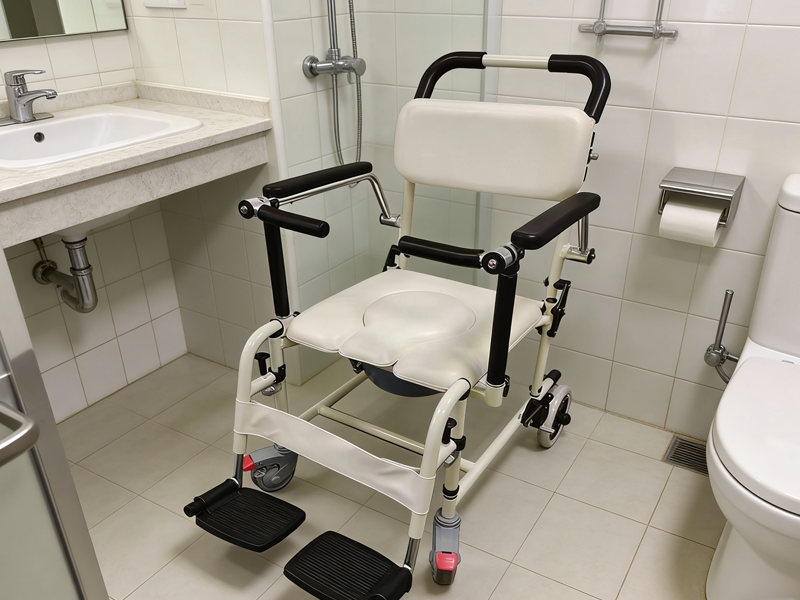
For many individuals with limited mobility—whether due to age, injury, chronic illness, or disability—everyday tasks like showering can become significant challenges. Yet independence and dignity in personal care remain a priority. That’s where wheelchairs suitable for showering, also known as shower wheelchairs, transfer wheelchairs, or bath wheelchairs, play a transformative role.
In this comprehensive guide, we’ll explore:
What defines a shower-friendly wheelchair
Key safety and design features
Choosing the right model for your needs
Real product highlights from Iyasomed
Tips for daily use, maintenance, and bathroom safety
Let’s start by understanding the basics.
When we talk about wheelchairs suitable for showering, we refer to chairs specifically designed to allow users to bathe with comfort and safety. Unlike standard wheelchairs, shower-capable models are water-resistant or water-proof, chemical-resistant, and structured to avoid moisture-related damage. They integrate features that help with hygiene access, drainage, and support.
Home care for elderly individuals
Rehabilitation after surgery or injury
Disability support
Hospice and palliative care
Long-term mobility assistance
Whether someone is fully dependent or partially independent, the right shower wheelchair can make everyday hygiene safer and more dignified.
Not all wheelchairs are created equal. When considering one suitable for showering, it must meet certain criteria:
1. Water-Resistant Frame
A shower wheelchair needs a frame—typically aluminum or stainless steel—that resists rust and corrosion in humid environments.
2. Quick-Dry Materials
Seat, back, and cushioning should allow water to drain or evaporate, avoiding mold and skin irritation.
3. Non-Slip Wheels and Brakes
Wet floors are hazardous. Quality shower wheelchairs include wheels with excellent grip and reliable braking systems tied into safety standards.
4. Ergonomic Support for Users
Contoured seats, ample support, and comfortable armrests are essential. For those with limited upper body control, secure yet gentle restraints or handles help with balance.
5. Easy Transfer Features
Good shower chairs make getting in and out of the seat as easy as possible—whether via caregiver assist or independent movement.
6. Drainage and Hygiene Access
Some shower wheelchairs include cut-outs or removable parts so users can bathe without needing to exit the chair.
Selecting the right wheelchair depends on individual needs, bathroom layout, caregiver support, and budget. Here are key considerations:
User’s Physical Needs
Full vs. partial weight support
Trunk and head control
Upper body strength
Bathroom Space
Measure door widths, shower entry, and floor space. Not all wheelchairs fit narrow spaces.
Transfer Method
Determine if the user transfers via:
Manual support
Lift systems
Slide boards
Durability & Materials
Aluminum tends to be lighter and corrosion-resistant; steel may be more robust but needs coatings to resist moisture.
Adjustability
Seats that adjust in height, angle, or position increase comfort and accommodate changing needs.
Here are three highly flexible wheelchairs from Iyasomed that cater to showering and mobility:
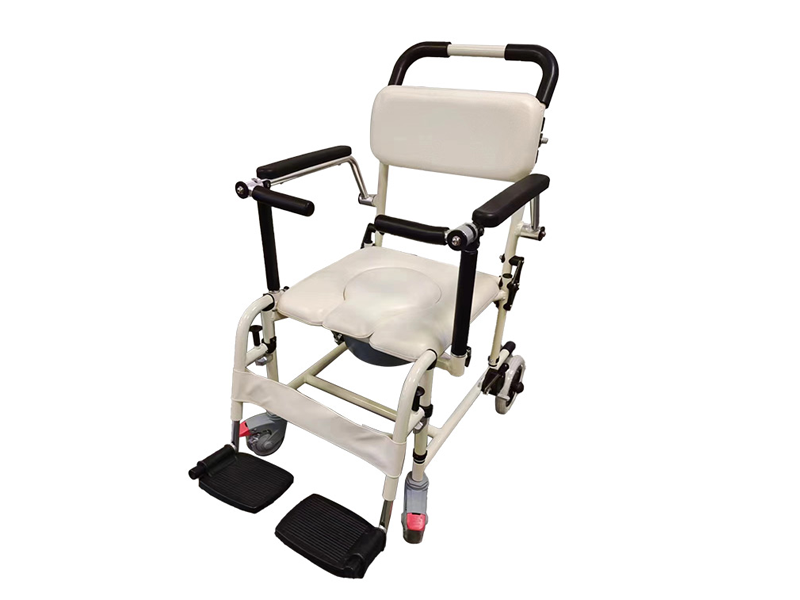
The 3-in-1 Folding Wheelchair is a versatile mobility solution that adapts to multiple caregiving scenarios:
Lightweight yet sturdy frame – easy to move and resistant to water exposure
Folds compactly for storage and transport
Multi-mode use — standard wheelchair, transport chair, and shower chair
Quick-release components – helps caregivers swiftly adjust the chair for bathing or transport
Comfortable seat and backrest made of quick-dry materials
This model is ideal for home caregivers who need a flexible chair that transitions seamlessly from daily movement to hygiene routines.
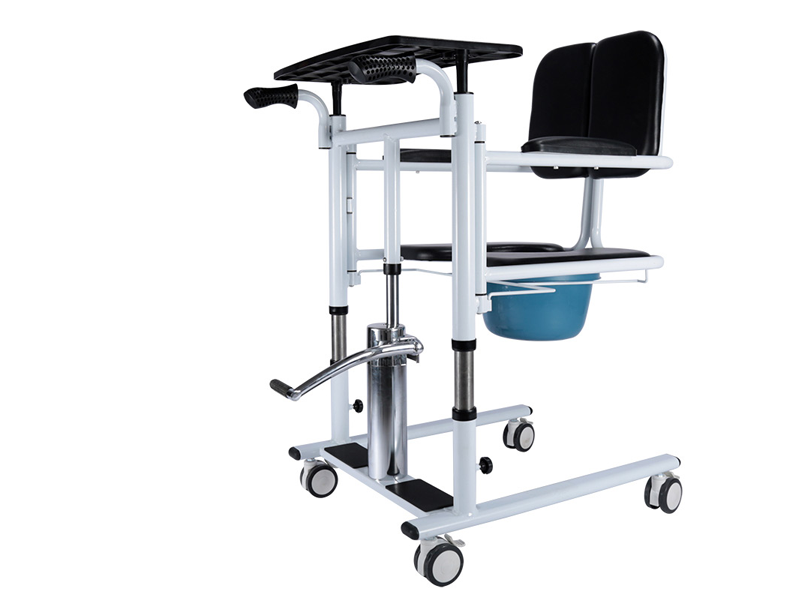
For users with limited ability to self-transfer, the YSM2305 Lifting & Transfer Wheelchair delivers advanced support:
Adjustable lifting mechanism supports safe transfers from bed to chair, and chair to shower
Hydraulic or mechanical lift options reduce caregiver strain
Wide, stable base ensures no tipping, even on wet surfaces
Ergonomic seating with drainage-friendly design
Durable, water-resistant construction
This model is particularly helpful in assisted care environments or homes where caregivers handle transfers.
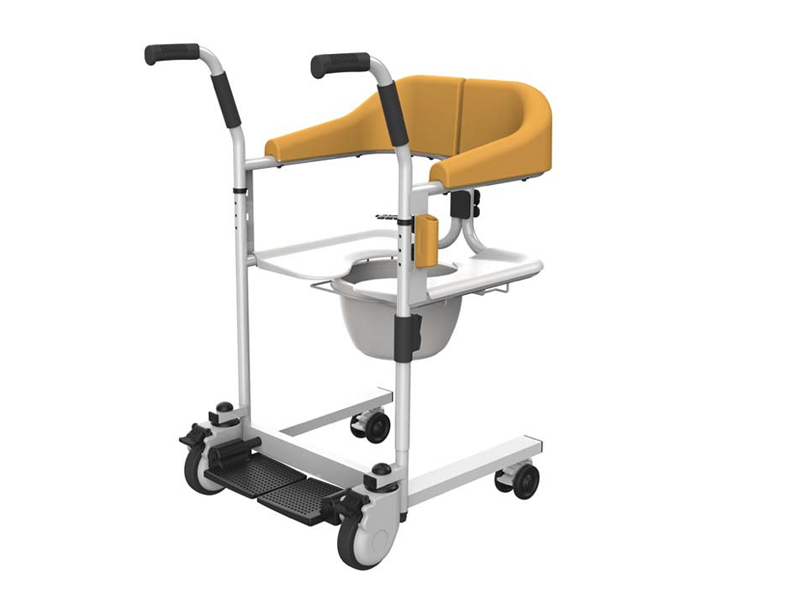
The YSM2301 Multifunctional Transfer Wheelchair balances mobility and hygiene adaptability:
Adds adjustable leg rests for improved comfort
Swing-away armrests simplify transfers
Multiple seat positions support both transport and showering
High-performance brakes and smooth rolling wheels suitable for wet floors
Compact foldable structure makes storage easy
This wheelchair works well when the user needs frequent transfers and mobility around the home, including bathroom access.
Using a shower wheelchair is empowering—yet safety must be the priority. Here’s how to ensure a secure bathing environment:
1. Non-Slip Flooring
Bathrooms are inherently wet areas. Installing non-slip mats or tiles with texture dramatically reduces slip risk, for both users and caregivers.
2. Proper Drainage & Water Control
Avoid pooling water around the chair. Place a drain grate at strategic points or use shower stalls designed for wheelchair access.
3. Support Bars & Handrails
Installing grab bars at shoulder height near the shower entrance and along walls provides extra leverage for transferring and standing assistance.
4. Test Brakes & Wheels Every Time
Before any shower session, ensure:
Brakes are locked securely
Wheels roll smoothly without wobble
Footrests and armrests are stable
These checks prevent unexpected movement during use.
5. Caregiver Training
Caregivers should:
Understand transfer techniques
Communicate clearly with the user
Use safe body mechanics to avoid injury
Even simple adjustments in communication and support make the experience safer and more comfortable.
Like all mobility tools, shower wheelchairs need routine maintenance—especially because moisture can damage mechanical parts over time.
Cleaning After Each Use
Rinse off soap, body oils, and hard water residue. Wipe the frame dry when possible.
Inspect Moving Parts
Check:
Wheel bearings
Brake clamps
Lift mechanisms
Fasteners (bolts, screws)
Tighten loose parts and lubricate joints if specified by the manufacturer.
Monitor Cushions & Fabrics
Quick-dry materials are ideal, but if any signs of mold or sagging appear, replace them promptly.
Store in a Dry Location Between Uses
Even though shower wheelchairs tolerate moisture, prolonged dampness can still cause corrosion over time.
Misconceptions sometimes make people hesitate to consider shower wheelchairs. Let’s debunk a few:
❌ “They’re Only for People Who Can’t Stand at All.”
Not true. Many users with partial strength or balance issues find shower wheelchairs improve comfort while conserving energy.
❌ “They’re Difficult to Clean.”
On the contrary: with quality water-resistant materials and thoughtful design, most models are easy to rinse and air dry.
❌ “Too Expensive for Home Use.”
While quality matters, options like folding shower chairs and multifunctional models balance affordability with performance.
At its core, mobility equipment isn’t just mechanical—it’s deeply human. Being able to bathe without pain, fear of slipping, or dependence on others touches more than physical well-being: it supports dignity, confidence, and mental health.
For many individuals:
A wheelchair suitable for showering means privacy
A more accessible bathroom can mean less stress for families and caregivers
A durable, adaptable chair means long-term reliability and safety
Choosing a wheelchair suitable for showering is a deeply personal decision. It depends on:
The user’s physical condition
Daily bath routines
Home layout
Caregiver support
Budget and long-term planning
Three excellent options from Iyasomed—3-in-1 Folding Wheelchair, Lifting & Transfer Wheelchair (YSM2305), and Multifunctional Transfer Wheelchair (YSM2301)—cover a broad range of needs, from everyday mobility to rigorous caregiver support.