Our Location
Free Trade Tower, Xiyong street.
Chongqing, China

Free Trade Tower, Xiyong street.
Chongqing, China
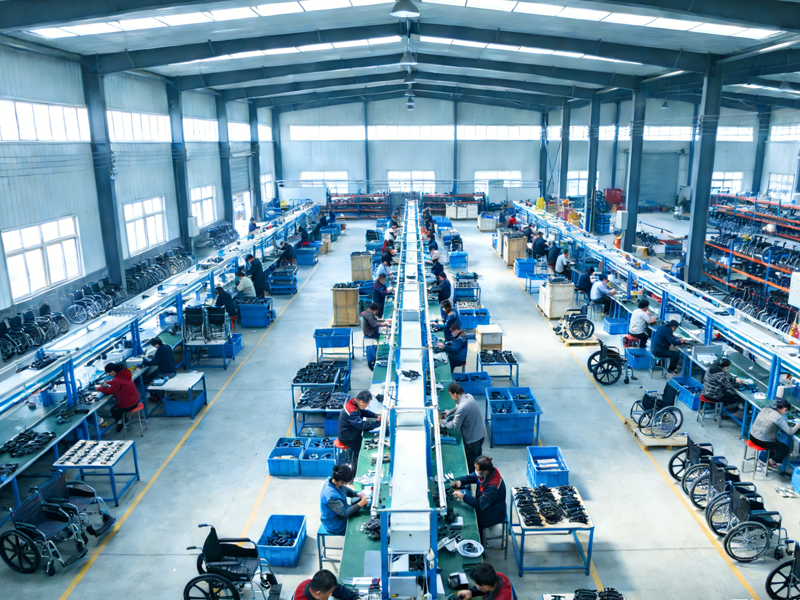
In recent years, China has quietly become one of the most influential forces in the global wheelchair industry. What was once perceived primarily as a manufacturing hub for low-cost products has evolved into a dynamic ecosystem of innovation, engineering precision, and internationally compliant medical device production. Today, Chinese wheelchair brands are not only competing globally—they are helping define standards in accessibility, comfort, and smart mobility.
For overseas buyers, distributors, and healthcare institutions, one critical factor stands above all: international certification. In particular, compliance with FDA (U.S. Food and Drug Administration) regulations and CE (Conformité Européenne) marking requirements serves as a gateway to trust, legality, and market entry.
Before diving into specific brands, it’s important to understand why certification matters—and what it actually involves.
Wheelchairs, especially powered or medical-grade models, are classified as medical devices in many countries. This classification subjects them to rigorous regulatory scrutiny.
FDA Certification (United States)
For entry into the U.S. market, wheelchairs must comply with FDA regulations under medical device classifications. Most manual wheelchairs fall under Class I, while powered wheelchairs are typically Class II, requiring stricter controls such as:
FDA compliance signals that a product meets U.S. safety and performance standards—critical for hospitals, insurance providers, and distributors.
CE Marking (European Union)
CE marking indicates conformity with EU regulations such as the Medical Device Regulation (MDR). For wheelchairs, this involves:
CE marking allows free circulation within the European Economic Area and signals strong product reliability.
For Chinese manufacturers, obtaining both certifications is not just a regulatory step—it’s a strategic move toward global credibility.
China’s wheelchair industry has undergone a transformation driven by three main forces:
The result is a new generation of wheelchair companies capable of competing globally—not just on price, but on quality and innovation.
Below are ten Chinese wheelchair brands that have established a presence in global markets and demonstrated capability in meeting FDA and/or CE certification standards.
A newer but rapidly rising brand, IYASOCARE represents a different generation of Chinese manufacturers—digital-first, export-oriented, and highly flexible.
Founded with the goal of making mobility more accessible worldwide, the company has already expanded into 50+ countries and built a strong B2B distribution network.
What sets IYASOCARE apart is its product diversity:
Unlike traditional factories, IYASOCARE operates a vertically integrated production system, covering stamping, welding, assembly, and testing—ensuring tighter quality control and cost efficiency.
From a certification perspective, the company has already obtained:
Hubang is one of the most recognized names in China’s rehabilitation equipment sector. The company offers a wide range of manual and electric wheelchairs, many of which are exported to Europe and North America.
Their strength lies in consistent quality control and scalable production, supported by CE certification and compliance with international ISO standards. Hubang’s electric wheelchairs are particularly noted for durability and affordability.
Kaiyang has built a reputation for high-volume manufacturing with strict compliance frameworks. The company produces manual wheelchairs, mobility scooters, and hospital beds.
Its products are widely distributed in Europe, supported by CE marking, and several models meet FDA registration requirements. Kaiyang emphasizes ergonomic design and lightweight structures.
Yuwell is a major player in China’s medical device industry, with a strong international footprint. While known for respiratory and homecare devices, its wheelchair division has grown rapidly.
Yuwell integrates medical-grade engineering with consumer-friendly design, and its products are certified for multiple global markets, including CE compliance and FDA listing for certain models.
Based in Guangdong, Dongfang Medical focuses heavily on export markets. Its wheelchairs are distributed across Southeast Asia, Europe, and the Middle East.
The company has invested in automated production lines and testing systems, ensuring consistent adherence to CE standards and other international certifications.
Intco is globally known for PPE, but it has also expanded into rehabilitation equipment. Its wheelchair offerings benefit from the company’s strong global distribution network.
Intco products are designed with compliance in mind, targeting both FDA and CE markets. Their approach emphasizes standardization and global scalability.
Zhongjin focuses on mid-to-high-end mobility solutions, including powered wheelchairs with advanced control systems.
The company prioritizes R&D investment, resulting in products that meet stringent European standards and are increasingly aligned with FDA requirements.
While Drive Medical is an international brand, much of its manufacturing is based in China. These facilities operate under strict global compliance systems.
The Chinese production arm plays a key role in ensuring FDA and CE-compliant products at scale, combining Western design standards with Chinese manufacturing efficiency.
Topmedi specializes in customized mobility solutions, including sports wheelchairs and pediatric models.
The company has gained recognition for its flexibility and innovation, offering CE-certified products and working toward broader FDA compliance across its product lines.
Shenyu Medical focuses on lightweight and travel-friendly wheelchairs. Its products are popular in export markets due to portability and modern aesthetics.
The company maintains CE certification and aligns production with international safety benchmarks.
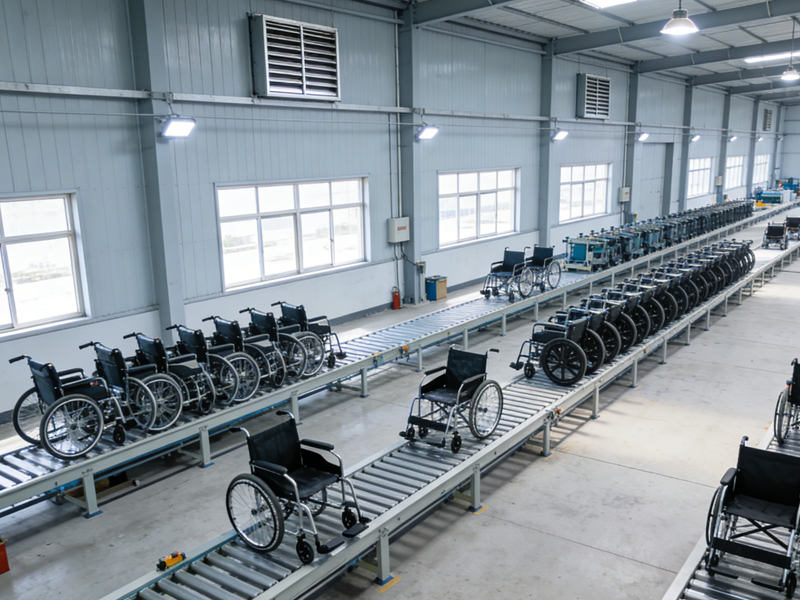
While each company has its own strengths, several shared characteristics define their global success:
Despite significant progress, Chinese wheelchair brands still face challenges:
However, the opportunities are even greater. As healthcare systems worldwide prioritize accessibility and aging populations grow, demand for affordable, high-quality mobility solutions is set to rise sharply.
Chinese manufacturers are well-positioned to meet this demand—especially those that continue to prioritize certification, innovation, and user-centric design.
The narrative around Chinese wheelchairs has changed. No longer defined by cost alone, today’s leading brands are recognized for their ability to meet international standards, deliver reliable performance, and innovate at scale.
For global buyers, understanding FDA and CE certification is essential—but equally important is recognizing which manufacturers truly integrate these standards into their production philosophy.
The ten brands highlighted above represent a new chapter in China’s medical device industry—one where quality, compliance, and global ambition converge.
1. Why are FDA and CE certifications important when choosing a wheelchair supplier?
They ensure the product meets strict safety, performance, and quality standards required for legal sale in major markets like the U.S. and Europe. This reduces risk for distributors and ensures user safety.
2. Are Chinese wheelchairs as reliable as Western brands?
Yes—many Chinese manufacturers now meet or exceed international standards. Reliability depends more on the specific brand and its certification level than on country of origin.
3. How can overseas buyers verify a supplier’s certification claims?
Buyers should request official documentation, verify FDA registration numbers, check CE certificates issued by notified bodies, and conduct third-party audits when possible.