Our Location
Free Trade Tower, Xiyong street.
Chongqing, China

Free Trade Tower, Xiyong street.
Chongqing, China
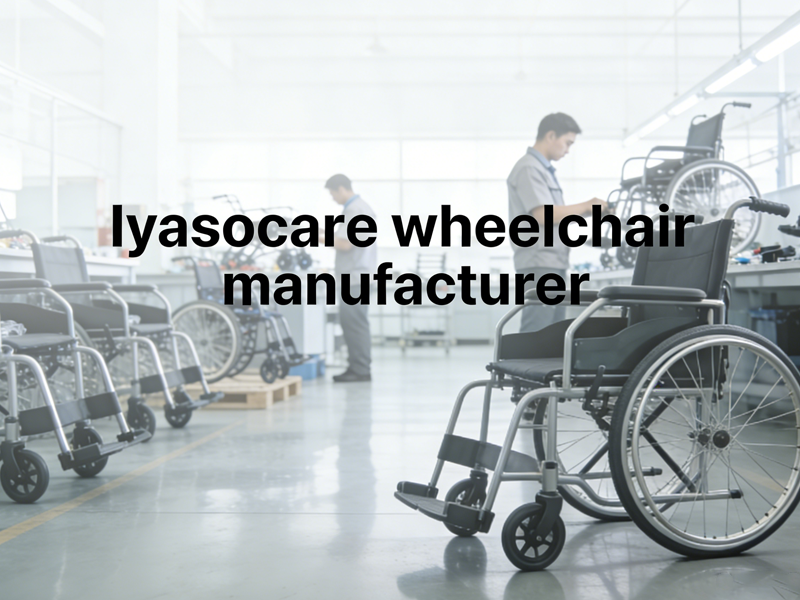
The global demand for mobility solutions is growing steadily, driven by aging populations, increased awareness of accessibility, and rising healthcare standards. Behind many well-known wheelchair brands is a lesser-known but crucial force: OEM manufacturers. For companies looking to enter or expand in the mobility market, understanding how OEM (Original Equipment Manufacturer) services work is not just helpful—it’s essential.
This guide explores how wheelchair OEM manufacturing operates, what to look for in a partner, and how brands can successfully build competitive products for international markets. Along the way, we’ll also highlight why Iyasocare has emerged as a trusted name in this space.
OEM manufacturing allows businesses to develop and sell wheelchairs under their own brand without owning a factory. Instead, they collaborate with specialized manufacturers who design, produce, and sometimes even help customize products according to market needs.
This model offers flexibility and scalability. Whether you’re a medical distributor, an e-commerce brand, or a rehabilitation equipment provider, OEM services let you focus on branding, marketing, and distribution—while production is handled by experts.
Wheelchair OEM manufacturers typically provide:
The result is a streamlined pathway from concept to market-ready product.
Unlike generic consumer goods, wheelchairs are highly functional products that directly impact users’ comfort, safety, and independence. This makes manufacturing expertise critical.
Choosing OEM services brings several advantages:
Speed to Market
Developing a wheelchair from scratch can take years. OEM partnerships significantly reduce this timeline.
Cost Efficiency
Manufacturers already have infrastructure, supply chains, and skilled labor in place, reducing overall investment.
Customization Capabilities
From lightweight aluminum frames to electric mobility systems, OEM partners can tailor products for different markets.
Regulatory Compliance
Experienced manufacturers understand global certifications and ensure products meet strict healthcare regulations.
Not all OEM partners are equal. Selecting the right manufacturer can determine the success—or failure—of your product line.
1. Engineering Expertise
A reliable OEM should have strong R&D capabilities. This includes ergonomic design, structural testing, and innovation in mobility technology such as foldable frames or smart electric controls.
2. Material Quality
High-quality wheelchairs depend on durable materials like aerospace-grade aluminum or reinforced steel. For electric models, battery performance and motor efficiency are equally important.
3. Production Capacity
Consistency matters. Your OEM partner should be able to scale production while maintaining quality, especially if you’re targeting global distribution.
4. Certifications and Standards
Look for compliance with international certifications such as:
These are non-negotiable for entering regulated markets.
5. Customization Options
Brand differentiation often lies in details: color schemes, logos, packaging, and even functional modifications. A good OEM manufacturer should offer flexible customization.
In the mobility equipment industry, OEM is often confused with ODM (Original Design Manufacturer). While they are similar, the distinction is important:
For startups or businesses with limited technical resources, ODM can be a faster entry point. However, OEM offers greater control and brand uniqueness.
Today’s wheelchair market is no longer limited to basic manual designs. Innovation is reshaping the industry in several ways:
OEM manufacturers that invest in innovation help brands stay competitive. This is especially important in developed markets where users expect both functionality and design.
Among the growing number of OEM providers, Iyasocare has built a strong reputation for delivering reliable, customizable mobility solutions for global clients.
What makes Iyasocare noteworthy?
Comprehensive OEM Services
From initial design consultation to final delivery, Iyasocare supports brands through every stage of product development.
Strong R&D Capabilities
Their engineering team continuously develops new models, including lightweight and electric wheelchairs tailored for different markets.
Quality Assurance
Strict quality control processes ensure each product meets international standards, making them suitable for export to Europe, North America, and beyond.
Flexible Customization
Clients can personalize designs, materials, branding, and packaging—helping brands stand out in competitive markets.
Global Experience
With experience serving international distributors and healthcare providers, Iyasocare understands the nuances of different regional requirements.
For businesses aiming to build a long-term brand rather than just sell products, partnering with a manufacturer like Iyasocare can provide both stability and innovation.
Entering the wheelchair market may seem complex, but with the right OEM partner, the process becomes manageable. Here’s a simplified roadmap:
While OEM manufacturing offers many benefits, it’s important to be aware of potential challenges:
Working with an experienced and transparent manufacturer helps mitigate these risks.
The industry is evolving rapidly, with several trends shaping its future:
OEM manufacturers that adapt to these trends will continue to play a central role in the global mobility ecosystem.
Wheelchair OEM manufacturing is more than just a production solution—it’s a strategic partnership. For brands looking to enter or expand in the mobility sector, choosing the right OEM partner can unlock new opportunities, reduce risks, and accelerate growth.
Companies like Iyasocare demonstrate how expertise, innovation, and global experience can come together to support brands in delivering high-quality mobility solutions to users worldwide.
As the demand for accessible and reliable mobility products continues to rise, OEM services will remain a cornerstone of the industry—quietly powering the brands that make a visible difference in people’s lives.
1. What is the minimum order quantity for wheelchair OEM manufacturing?
Minimum order quantities vary by manufacturer and product type. Manual wheelchairs typically have lower MOQs, while electric models may require larger orders due to component costs. It’s best to negotiate directly with your OEM partner based on your business needs.
2. How long does it take to develop a custom wheelchair through OEM services?
The timeline can range from 30 to 120 days depending on the complexity of the design, customization requirements, and certification processes. Working with an experienced manufacturer can significantly speed up development.
3. Can I sell OEM wheelchairs in multiple international markets?
Yes, but you must ensure the products meet each region’s regulatory requirements, such as CE for Europe or FDA standards for the United States. A knowledgeable OEM partner can help navigate