Our Location
Free Trade Tower, Xiyong street.
Chongqing, China

Free Trade Tower, Xiyong street.
Chongqing, China
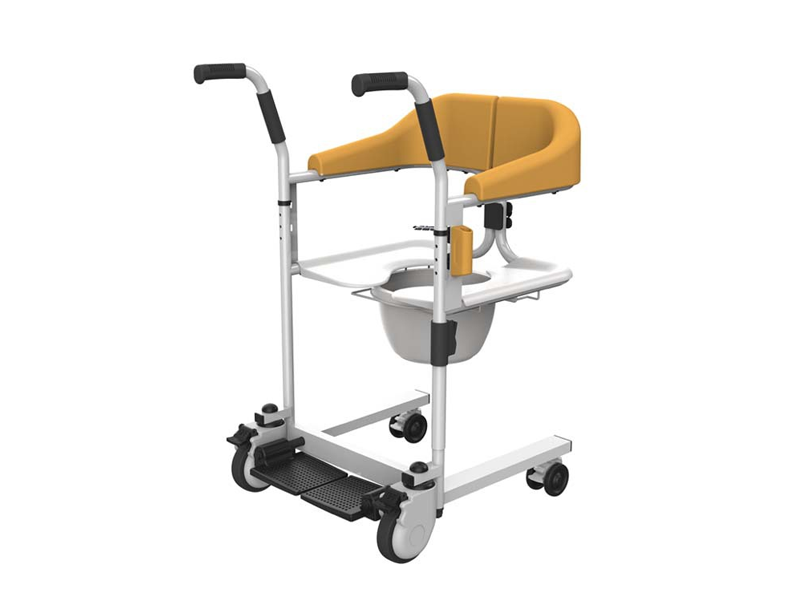
There is a quiet revolution happening in home care and rehabilitation equipment. It doesn’t come with flashy technology or futuristic branding—but it changes lives in a far more immediate way. The multifunctional transfer commode wheelchair sits at the intersection of dignity, safety, and efficiency, solving one of the most physically demanding challenges in caregiving: safely moving a person between bed, chair, toilet, and bathing areas.
For families caring for elderly parents, for rehabilitation centers managing post-surgical patients, and for healthcare providers focused on long-term mobility support, this category of equipment has become indispensable. Yet, despite its importance, many buyers still struggle to understand what truly differentiates a high-quality transfer commode wheelchair from a basic mobility aid.
Traditional wheelchairs solve mobility. But mobility is only one part of daily living.
The real challenge lies in transfers—moving from one surface to another. Bed to wheelchair. Wheelchair to toilet. Chair to shower. These transitions are where most injuries occur, both for users and caregivers. Research highlights that transferring between surfaces of different heights is physically demanding and often risky without proper assistive devices .
A multifunctional transfer commode wheelchair is designed specifically to eliminate or minimize manual lifting. Instead of requiring strength and coordination from caregivers, it introduces mechanical assistance, stability systems, and ergonomic design.
The term “multifunctional” is often overused. In this context, it has a very specific meaning: a single device that replaces multiple caregiving tools.
A well-designed model typically integrates:
This consolidation is not just about convenience. It reduces equipment clutter, minimizes transfer steps, and significantly lowers caregiver fatigue.
Modern designs also emphasize comfort—soft backrests, ergonomic seating, and stable armrests—ensuring users can remain seated for extended periods without discomfort .
Before diving into product recommendations, it’s important to understand the three dominant lifting mechanisms. Each serves a different use case.
1. Manual Transfer Systems
These rely on mechanical adjustments (such as rotating knobs or sliding frames). They are typically more affordable and suitable for users with partial mobility or lighter care needs.
2. Lifting Transfer Systems
These introduce assisted lifting mechanisms—often semi-automatic—reducing the physical strain on caregivers. Ideal for moderate dependency scenarios.
3. Hydraulic Transfer Systems
The most advanced category. Hydraulic systems allow smooth vertical movement using foot pedals or hand controls, enabling caregivers to lift users with minimal effort. These systems are particularly valuable in professional care environments where repeated transfers are required.
Hydraulic models are widely recognized for reducing caregiver injury risk while maintaining user stability and safety .
Product Deep Dive: Three Professional-Grade Solutions
Rather than overwhelming you with dozens of options, we’ll focus on three highly specialized models that represent the evolution of this category.
(https://www.iyasomed.com/products/multifunctional-transfer-wheelchair-ysm2301/)
This model is the most balanced entry point into the category, designed for home care environments where versatility matters more than complexity.
The standout feature here is its multi-role adaptability. It functions seamlessly as a wheelchair, commode chair, and transfer aid. For families managing daily routines—morning hygiene, toileting, and movement between rooms—this reduces the need for multiple devices.
Its design emphasizes simplicity:
What makes this model particularly appealing is its learning curve. Caregivers can begin using it effectively within minutes, without specialized training.
In real-world terms, this is the model you choose when you want reliability without complexity.
(https://www.iyasomed.com/products/lifting-transfer-wheelchair-ysm2305/)
Moving up in capability, the YSM2305 introduces assisted lifting functionality, making it suitable for users with limited or no independent mobility.
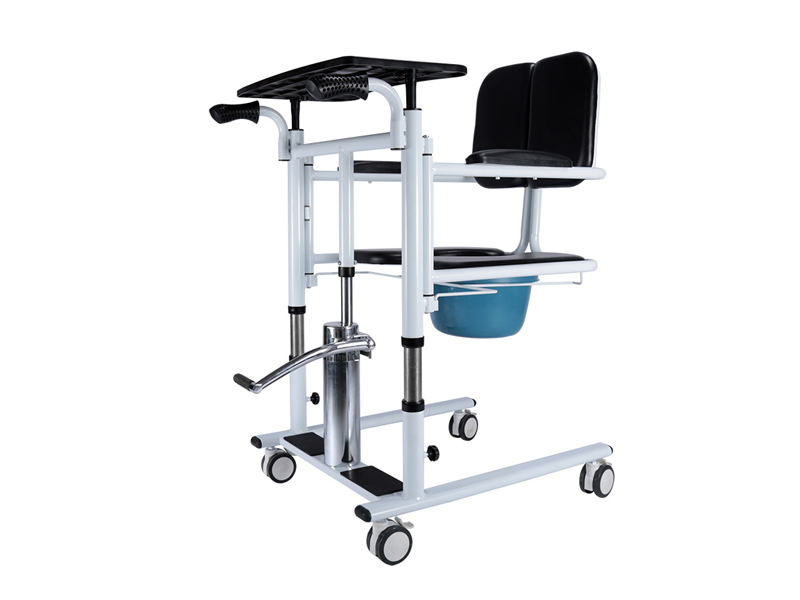
The core advantage lies in controlled elevation. Instead of manually repositioning the user, caregivers can adjust height smoothly, aligning the chair with beds, sofas, or toilets.
This dramatically reduces:
The design also supports multi-scenario use—bedroom, bathroom, and living space—without requiring repositioning aids.
From a workflow perspective, this model transforms caregiving from a physically demanding task into a controlled, repeatable process.
(https://www.iyasomed.com/products/hydraulic-transfer-wheelchair-ysm2304/)
This is where the category reaches professional-grade performance.
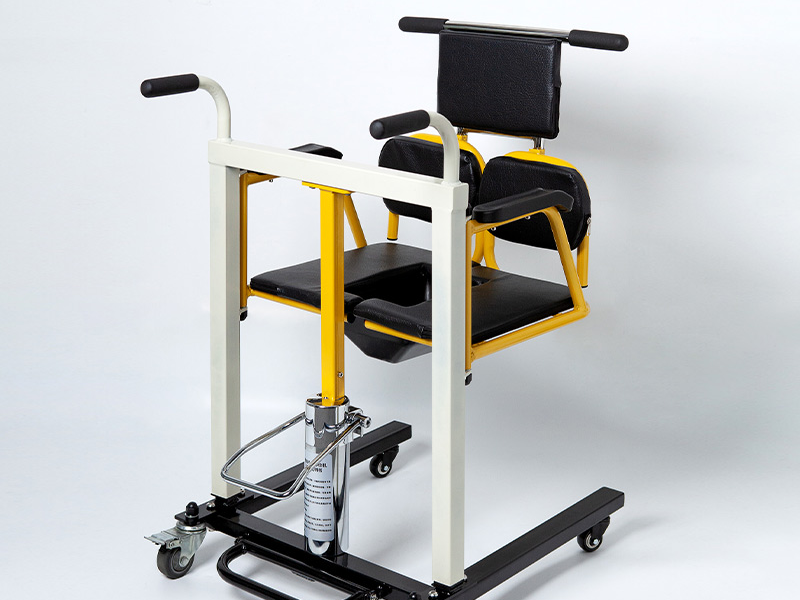
The YSM2304 leverages a hydraulic lifting system, enabling smooth vertical motion with minimal physical effort. Caregivers can raise or lower the user using a foot pedal mechanism, ensuring stability throughout the process.
Hydraulic systems are particularly valuable in scenarios involving:
Key advantages include:
Hydraulic transfer wheelchairs are often described as “transformative tools” because they fundamentally change how care is delivered—making it safer, faster, and more sustainable .
To understand the value of these devices, it helps to look beyond features and into daily life.
Home Care for Elderly Individuals
For aging individuals with reduced mobility, maintaining independence is critical. A multifunctional commode wheelchair allows them to perform essential activities—especially toileting—with dignity and minimal assistance.
Post-Surgery Recovery
After procedures like hip or knee replacement, patients often face strict movement limitations. A transfer wheelchair reduces strain and prevents risky movements during recovery.
Long-Term Disability Care
For individuals with spinal cord injuries or chronic mobility impairments, transfers are a daily challenge. These devices provide a consistent, safe method for movement across environments.
Professional Healthcare Settings
In hospitals and nursing homes, efficiency matters. Reducing transfer time while maintaining safety directly impacts both patient outcomes and staff workload.
Choosing the right model is less about price and more about fit. Experienced buyers typically evaluate:
1. Transfer Frequency
How many times per day will the user need assistance? High frequency favors hydraulic systems.
2. User Dependency Level
Can the user assist in transfers, or are they fully dependent? This determines whether manual or assisted lifting is sufficient.
3. Environment Compatibility
Door widths, bed heights, and bathroom layouts all influence usability.
4. Caregiver Strength and Experience
In home care, devices must compensate for limited physical strength and training.
5. Safety Mechanisms
Look for double-lock systems, braking wheels, and stable frames—these are not optional features.