Our Location
Free Trade Tower, Xiyong street.
Chongqing, China

Free Trade Tower, Xiyong street.
Chongqing, China
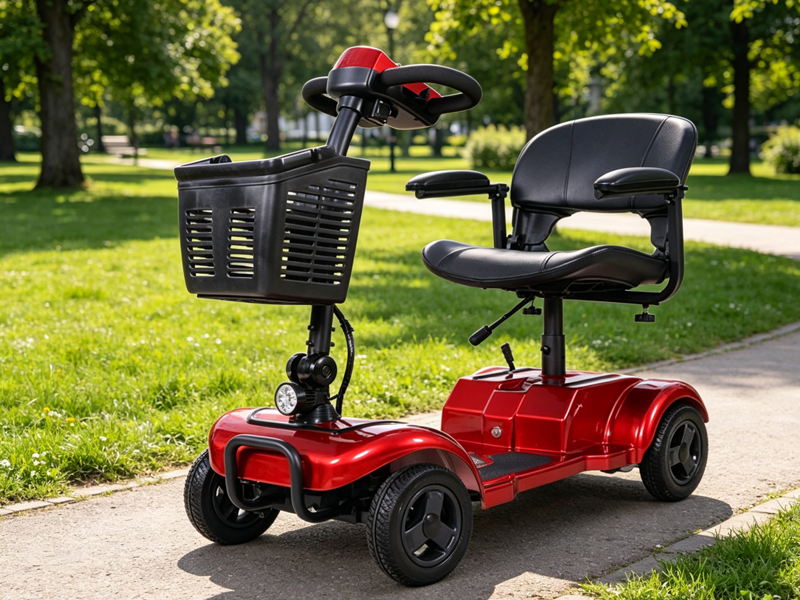
For anyone who depends on a mobility scooter for daily independence, battery performance is not a small detail—it directly shapes comfort, safety, reliability, and freedom. Whether you use your scooter for local errands, outdoor recreation, commuting around town, or maintaining an active lifestyle, the battery determines how far you can travel, how often you need to recharge, and how confidently you can plan your day.
For years, traditional lead-acid batteries have been the standard power source in mobility scooters. They are widely available, familiar to technicians, and often less expensive at the time of purchase. Because of this lower upfront cost, many users assume lead-acid batteries are the practical choice.
However, battery technology has changed dramatically over the last decade.
Lithium battery systems—particularly lithium iron phosphate (LiFePO4) and other advanced lithium-ion technologies—are becoming the preferred choice for modern electric mobility devices. Although lithium batteries usually require a higher initial investment, their long-term benefits in performance, efficiency, durability, and overall ownership cost are changing the way mobility scooter users think about energy storage.
If you are considering upgrading your scooter or choosing a new mobility scooter for the first time, understanding the differences between lithium and lead-acid battery systems can help you make a smarter investment.
Mobility scooters were originally designed around sealed lead-acid battery technology. At the time, lead-acid batteries offered a reasonable balance between affordability and functionality. They powered millions of scooters worldwide and continue to be used in many entry-level models today.
But modern users have different expectations.
People want longer travel range, shorter charging times, lighter equipment, better portability, and fewer maintenance issues. At the same time, manufacturers are designing more advanced scooters with digital displays, regenerative braking systems, intelligent controllers, and enhanced power management features.
These innovations require a battery that can keep up.
That is where lithium technology stands out.
Lithium batteries deliver more usable energy, better voltage stability, and significantly longer service life. In real-world use, this means smoother performance, stronger acceleration, more consistent speed, and greater confidence during longer rides.
One of the most important reasons lithium batteries are becoming the preferred choice is their exceptional lifespan.
A traditional lead-acid battery typically delivers between 300 and 500 full charge cycles under ideal conditions. In reality, poor charging habits, partial charging, or extended storage can reduce that lifespan even further.
Lithium batteries tell a completely different story.
A quality lithium battery can often provide between 1,500 and 2,000 charge cycles, and some premium systems exceed that. This means a lithium battery may last three to four times longer than a lead-acid battery under normal mobility scooter use.
What does that mean for the average user?
Instead of replacing your battery every one to two years, you may be able to use the same lithium battery for many years before seeing significant performance decline.
Although the purchase price is higher at the beginning, the reduced replacement frequency often makes lithium batteries more cost-effective over time.
For frequent riders, this can result in substantial savings.
More importantly, fewer battery replacements mean less inconvenience, fewer service appointments, and more consistent performance throughout ownership.
Battery charging affects how flexible your daily routine can be.
Lead-acid batteries charge slowly by design. Their charging process includes multiple phases, including a final absorption stage that can significantly extend charging time. Reaching the last 20 percent of battery capacity often takes longer than users expect.
This can become frustrating if you need your scooter again quickly.
Lithium batteries solve this problem.
They accept charge more efficiently and maintain faster charging speeds throughout most of the charging cycle. In many cases, a lithium battery can recharge substantially faster than an equivalent lead-acid battery.
This creates real lifestyle benefits.
If you use your mobility scooter for shopping in the morning and want to go out again in the afternoon, faster charging gives you more flexibility. If you travel frequently or rely on your scooter every day, reduced charging downtime becomes even more valuable.
Time matters—and lithium technology gives users more of it.
Not all stored energy becomes usable energy.
Lead-acid batteries lose a noticeable amount of power during charging and discharging. Their energy efficiency typically sits around 80–85 percent, depending on age, condition, and temperature.
Lithium batteries are far more efficient.
Many lithium battery systems operate with efficiency rates above 95 percent, meaning more of the electricity you put into the battery becomes usable driving power.
This affects range in practical ways.
A scooter powered by lithium may travel farther using the same nominal battery capacity. That means fewer charging stops, better route planning, and greater confidence during longer trips.
For users who enjoy parks, outdoor events, city exploration, or extended daily activity, this efficiency advantage can significantly improve the ownership experience.
Weight is one of the most overlooked factors in mobility scooter performance.
Traditional lead-acid batteries are heavy. In some scooters, the battery pack accounts for a large percentage of total system weight.
Lithium batteries are dramatically lighter.
Depending on capacity and chemistry, a lithium battery can weigh up to four times less than a comparable lead-acid battery.
This lighter weight creates multiple benefits at once.
First, the scooter becomes easier to transport. If you frequently load your scooter into a vehicle, lift components for storage, or travel with portable mobility equipment, reduced battery weight makes a major difference.
Second, lower overall weight improves efficiency.
A lighter scooter requires less energy to move, which can increase travel range.
Third, handling often improves.
Less battery weight can contribute to smoother steering response, better acceleration, and easier maneuvering in tight spaces.
For users who value portability and independence, this is one of lithium’s biggest advantages.
Many lead-acid batteries experience voltage drop as charge levels decrease.
This means performance may feel strong at the beginning of a ride but noticeably weaker as the battery drains.
Lithium batteries maintain a more stable voltage curve.
As a result, mobility scooters powered by lithium often deliver more consistent speed, acceleration, and climbing power throughout the discharge cycle.
This matters especially when traveling on slopes, ramps, uneven surfaces, or longer routes.
Instead of wondering whether your scooter still has enough power for the journey home, you benefit from predictable performance until the battery reaches a low state of charge.
For users who depend on their scooter for confidence and safety, consistency matters just as much as range.
Battery chemistry reacts differently to temperature.
Cold weather affects all battery systems, but lead-acid batteries are particularly vulnerable to capacity loss in low temperatures.
In freezing conditions, lead-acid batteries may lose a significant portion of their usable capacity, reducing both range and power output.
Lithium batteries generally perform better.
Although lithium batteries also experience some reduction in cold weather, the loss is often far less severe. This makes them a stronger choice for users in colder climates, especially in North America, Northern Europe, and other regions where winter mobility matters.
For people who rely on their scooters year-round, better cold-weather reliability can make a meaningful difference.
Battery sustainability is becoming increasingly important for both consumers and manufacturers.
Because lithium batteries last longer, they generate less waste over time.
Fewer replacements mean fewer discarded batteries entering recycling or disposal systems.
Additionally, improved efficiency reduces energy consumption across the life of the battery.
For environmentally conscious users, this makes lithium technology a more responsible long-term choice.
When combined with electric mobility, lithium batteries support a cleaner, more sustainable transportation future.
Despite their advantages, lithium batteries are not perfect.
Before upgrading your mobility scooter, there are several important considerations.
Lithium batteries can be damaged if charged below freezing temperatures.
This is especially relevant in colder climates.
Some advanced scooters include battery management systems with temperature sensors that prevent unsafe charging. These systems help protect the battery and extend service life.
If your scooter does not include this protection, users must be more careful during winter operation.
Proper storage in a heated garage or indoor environment can significantly reduce this risk.
Not every mobility scooter is designed for lithium battery conversion.
Older scooters may require:
Using an incompatible battery setup may cause charging errors, inaccurate battery readings, or reduced performance.
Before upgrading, always verify compatibility with your scooter manufacturer or a qualified mobility technician.
Lithium batteries have an excellent safety record when manufactured correctly and used properly.
However, low-quality batteries, damaged cells, or improper charging equipment can create safety risks.
That is why battery quality matters.
Choosing certified battery systems with integrated battery management systems (BMS), thermal protection, and proper charging controls significantly reduces potential risks.
A quality battery is not just about performance—it is about safety and reliability.
1. How long does a lithium battery last in a mobility scooter?
A high-quality lithium battery typically lasts between 1,500 and 2,000 charge cycles, which can translate into several years of regular use. This is significantly longer than most lead-acid batteries.
2. Can I replace my lead-acid battery with a lithium battery?
In many cases, yes—but compatibility depends on your scooter’s charging system, wiring, controller, and battery compartment design. Always confirm compatibility before upgrading.
3. Are lithium batteries safe for mobility scooters?
Yes, lithium batteries are generally very safe when they include a certified battery management system and are used with the correct charger. Most safety concerns come from poor-quality batteries or improper charging practices.