Our Location
Free Trade Tower, Xiyong street.
Chongqing, China

Free Trade Tower, Xiyong street.
Chongqing, China
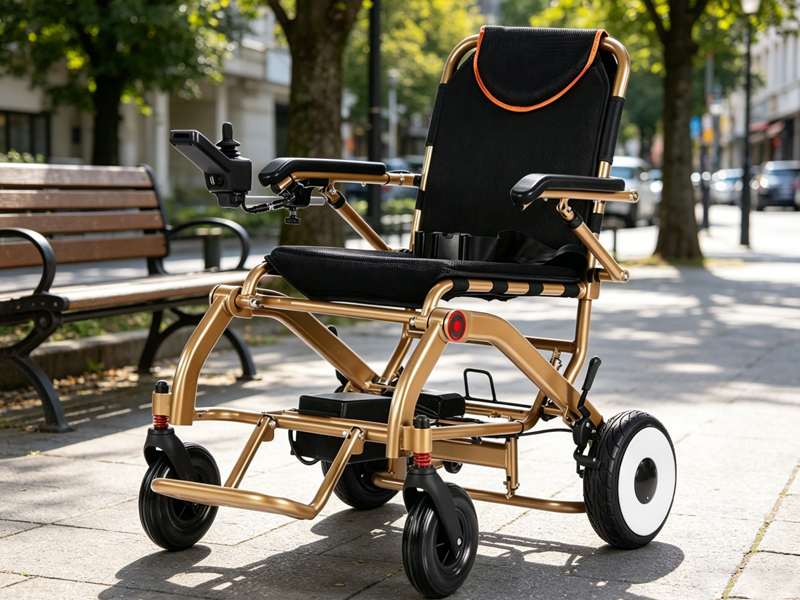
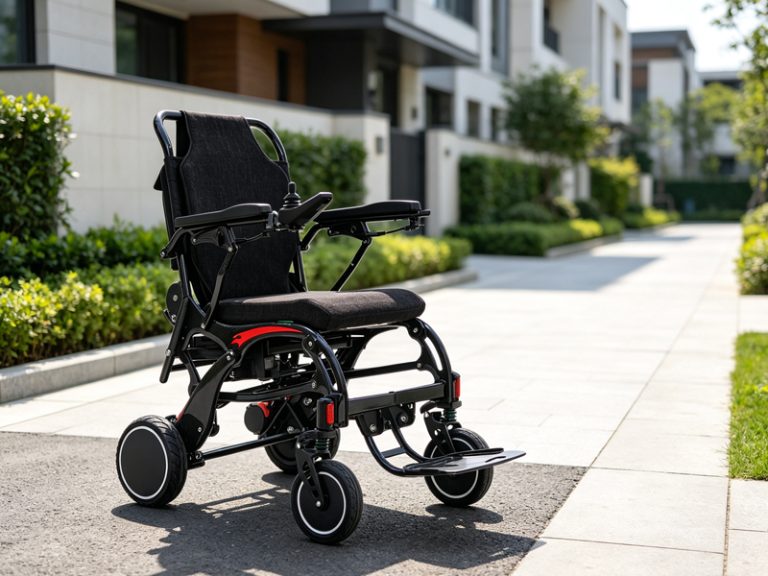
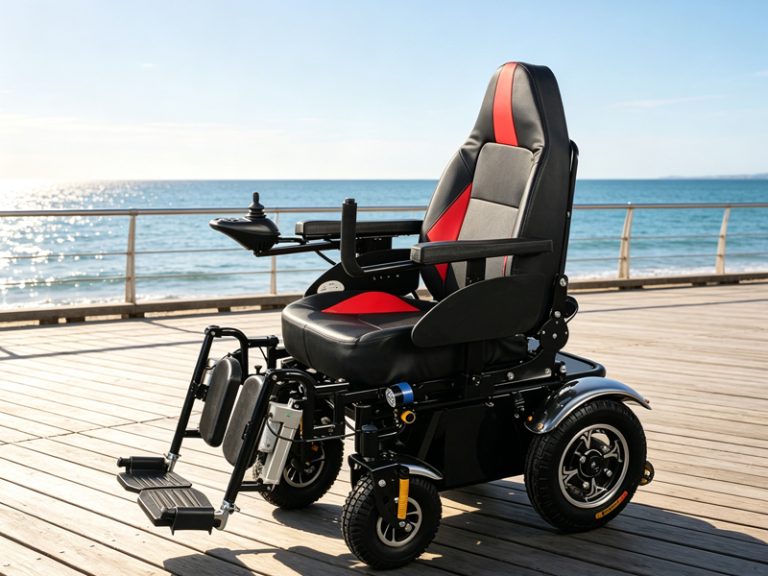
the mobility equipment industry has undergone a major transformation. What was once considered a purely medical device has evolved into a highly engineered personal mobility solution designed to offer comfort, independence, safety, and lifestyle flexibility. Among the latest developments, the 360W dual brushless motor wheelchair has become one of the most discussed configurations in both consumer and professional markets. Whether for elderly users, people with long-term mobility challenges, rehabilitation patients, or active travelers looking for reliable powered mobility, this type of wheelchair is increasingly becoming a preferred choice.
Table of Contents
ToggleThe rise in demand is not accidental. Consumers today are no longer simply looking for a wheelchair that moves from one location to another. They want equipment that can handle slopes, uneven roads, daily commuting, outdoor adventures, and long operating hours without sacrificing comfort or safety. Manufacturers have responded by integrating advanced motor systems, lightweight materials, intelligent controllers, and more energy-efficient battery technology.
Among these upgrades, the 360W dual brushless motor system stands out as a balance between power, efficiency, and durability. However, like any mobility technology, it offers clear advantages while also presenting certain limitations that potential buyers should fully understand before making an investment.
Before evaluating the pros and cons, it is important to understand what this specification means in practical terms.
A 360W dual brushless motor wheelchair typically features two independent motors, often rated at approximately 180W each, combining to deliver a total output of 360 watts. These motors are installed on either side of the wheelchair, powering the drive wheels independently for improved maneuverability and traction.
Unlike traditional brushed motors, brushless motors operate without internal carbon brushes. Instead, they rely on electronic controllers to regulate power delivery. This design reduces friction, minimizes wear, and improves long-term reliability.
In practical use, this motor configuration is commonly found in:
This setup is designed to provide sufficient torque for daily use while keeping energy consumption relatively efficient.
One of the most immediate benefits users notice is the enhanced power output.
Compared with lower-powered wheelchair systems, such as 250W or 300W configurations, a 360W setup delivers more consistent propulsion. This matters greatly when users encounter real-world conditions such as ramps, inclines, uneven sidewalks, gravel paths, grass surfaces, or transitions between indoor and outdoor environments.
A wheelchair with insufficient motor output may slow down significantly under load or struggle when climbing slopes. The dual 360W configuration offers improved torque, allowing the chair to maintain stable performance even when carrying heavier users or additional accessories.
For users who regularly move between homes, offices, shopping centers, parks, or transport stations, this extra power creates a noticeably smoother experience.
More importantly, stronger power directly contributes to independence. Users are less likely to rely on caregivers when navigating challenging terrain, which can positively affect confidence and daily quality of life.
Durability is one of the strongest selling points of brushless motor systems.
Traditional brushed motors contain physical brushes that create friction during operation. Over time, these components wear down and require maintenance or replacement. In frequent-use mobility equipment, this can become a long-term cost factor.
Brushless motors eliminate this mechanical friction point.
As a result, users benefit from:
For users who depend on their wheelchair every day, reliability is not optional. A wheelchair failure during travel, commuting, or medical appointments can create serious inconvenience.
Brushless motor technology significantly reduces these concerns by offering more stable performance over extended periods.
This is especially attractive in international markets where after-sales service availability may vary depending on region.
Battery range remains one of the biggest purchasing concerns for electric wheelchair users.
Because brushless motors convert electrical energy more efficiently than brushed alternatives, they generally consume less power while delivering similar or better performance.
In practical terms, this means:
A wheelchair equipped with a 360W dual brushless motor can often travel longer distances on a single charge compared with older motor systems of similar power ratings.
This efficiency becomes particularly valuable for:
Users who depend on all-day mobility often worry about battery anxiety—the fear of running out of power away from home.
Higher efficiency directly reduces this concern.
Even though actual range depends on battery size, terrain, user weight, speed settings, and weather conditions, the motor system itself contributes significantly to optimized energy management.
Noise may seem like a minor detail until a user spends several hours a day in a powered wheelchair.
Brushless motors are naturally quieter than brushed motors because they produce less mechanical contact and vibration.
This creates several quality-of-life improvements.
Users can move through:
without drawing unnecessary attention.
For users who prioritize discretion, comfort, or professional environments, this quiet operation adds real value.
In addition to reduced noise, brushless motors also deliver smoother acceleration and deceleration. Sudden jerks or inconsistent movement can be uncomfortable or even unsafe for elderly users or those with spinal conditions.
A smoother drive improves both physical comfort and emotional confidence.
Because each wheel is powered independently, dual motor systems provide better turning performance.
This allows users to navigate:
with greater precision.
The independent wheel control works closely with the joystick controller to create responsive steering.
For users in urban environments or compact living spaces, maneuverability can be just as important as speed.
Many first-time users are surprised by how much easier daily movement becomes when the wheelchair responds accurately to subtle steering input.
This improved handling often reduces learning time for new users.
A 360W motor system generally supports higher load capacities than entry-level electric wheelchairs.
This is important because wheelchair performance changes significantly under heavier loads.
Factors affecting total load include:
A stronger motor setup helps maintain consistent speed and stability under these conditions.
This makes the 360W dual motor wheelchair more versatile for a broader range of users.
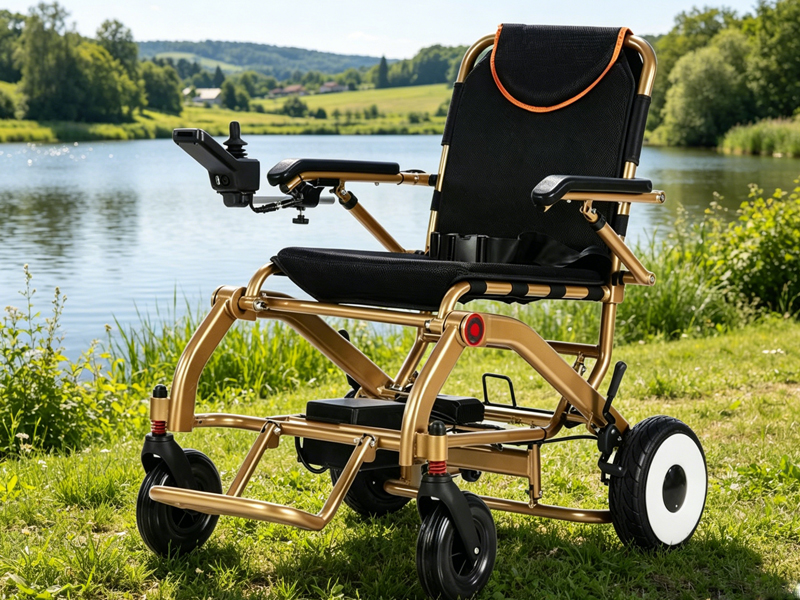
While the advantages are impressive, buyers should also consider the limitations.
1. Higher Purchase Cost Compared with Entry-Level Models
One of the most common barriers is price.
Brushless motor systems involve more advanced electronic control technology, precision engineering, and higher manufacturing standards.
As a result, wheelchairs equipped with 360W dual brushless motors often cost more than basic electric wheelchair models.
For budget-conscious families or healthcare institutions purchasing multiple units, this initial investment can be significant.
Although long-term maintenance savings may offset the cost, the higher upfront price remains a practical concern.
Buyers must evaluate whether their actual usage requirements justify the premium.
A user who primarily moves indoors on flat surfaces may not fully utilize the added performance.
2. Increased Battery Demand Under Heavy Usage
While brushless motors are efficient, higher power output still requires energy.
When users frequently travel:
battery consumption increases noticeably.
This means users may still need:
For active users who spend long periods outdoors, battery planning remains essential.
Powerful motors do not eliminate energy limitations—they simply use energy more efficiently.
3. More Complex Electronics Can Increase Repair Complexity
Brushless motors rely heavily on electronic controllers.
While this improves performance, it can make repairs more specialized.
Unlike older mechanical systems that local technicians may easily service, modern brushless motor wheelchairs often require:
In regions with limited technical service infrastructure, this may create longer repair times.
Users in remote markets should verify local support availability before purchasing.
Reliable after-sales support can be just as important as product specifications.
4. Slightly Heavier System in Some Configurations
Although brushless motors themselves can be compact, the complete power system—including stronger frames, larger batteries, and reinforced components—may increase total wheelchair weight.
This can affect:
For users who frequently transport their wheelchair, total system weight should be carefully checked.
Some lightweight travel models solve this issue with aluminum or carbon fiber frames, but those usually come at an even higher price.
5. Potential Over-Specification for Some Users
Not every user needs 360W of motor power.
For someone who:
a lower-powered system may perform adequately.
In these cases, investing in a high-powered motor system may not deliver proportional value.
The best wheelchair is not always the most powerful one—it is the one that matches the user’s real lifestyle.
This type of wheelchair is often ideal for:
Users who live active lifestyles, travel frequently, or need dependable all-day mobility will benefit most.
It is especially suitable for:
Healthcare providers and distributors also often recommend this motor category for customers looking for a balance between performance and practicality.
The 360W dual brushless motor wheelchair represents a meaningful evolution in personal mobility technology.
It combines strong climbing performance, better energy efficiency, quieter operation, smoother handling, and improved long-term reliability. For many users, these advantages translate directly into greater independence, confidence, and freedom in daily life.
At the same time, it is not a perfect solution for everyone. Higher purchase costs, more complex electronics, battery planning, and possible over-specification mean buyers should carefully evaluate their actual mobility needs.
The best purchasing decision comes from understanding not only what a wheelchair can do, but also how it fits into the user’s real lifestyle, environment, and long-term expectations.
For users who demand dependable performance across multiple environments, the 360W dual brushless motor wheelchair remains one of the most balanced and future-ready choices in today’s mobility market.
1. Is a 360W dual brushless motor wheelchair suitable for outdoor use?
Yes. This motor configuration is highly suitable for outdoor use because it offers stronger torque, better slope-climbing ability, and more stable performance on uneven surfaces such as sidewalks, grass, ramps, and light gravel paths.
2. How long does a brushless motor usually last in an electric wheelchair?
Under normal usage and proper maintenance, brushless motors can last significantly longer than brushed motors, often providing several years of reliable performance with minimal mechanical wear.
3. Is a 360W wheelchair too powerful for indoor use?
Not necessarily. Most modern wheelchairs allow speed adjustment through joystick controllers, making them safe for indoor environments while still offering extra power when needed outdoors.
WhatsApp us