Our Location
Free Trade Tower, Xiyong street.
Chongqing, China

Free Trade Tower, Xiyong street.
Chongqing, China
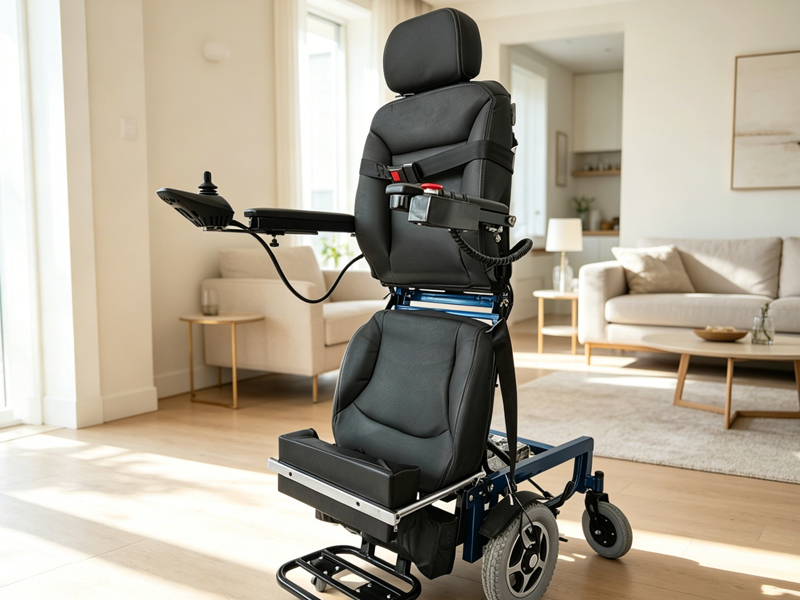
For many wheelchair users, mobility is not only about moving from one place to another. It is about maintaining dignity, participating in daily life without barriers, and preserving long-term physical health. Traditional wheelchairs have helped millions of people regain independence, but modern standing wheelchairs are changing expectations entirely. The ability to transition from sitting to standing introduces a level of interaction, rehabilitation support, and personal freedom that conventional mobility devices simply cannot provide.
Over the last few years, standing power wheelchairs have become increasingly popular in rehabilitation centers, home care environments, hospitals, and among active wheelchair users worldwide. Users are no longer looking only for transportation. They want equipment that supports circulation, reduces pressure discomfort, improves posture, and allows them to engage with the world at eye level. That shift has accelerated demand for advanced electric standing wheelchairs designed for real-world daily use.
Among the brands gaining international attention in this category, Iyasocare has developed several multifunctional standing wheelchair systems focused on stability, comfort, rehabilitation support, and long-term usability. Models such as the YSE310 Electric Standing Wheelchair, the YSE309 Fully Functional Standing Wheelchair, and the Standing Wheelchair with Electromagnetic Brake represent a broader movement toward smarter mobility solutions built around both independence and health management.
For people who spend long hours seated every day, the effects on the body gradually accumulate. Reduced circulation, muscle stiffness, joint compression, and pressure concentration become part of daily life. Over time, extended sitting may also contribute to reduced bone density and decreased flexibility. That is why standing therapy has long been recommended by rehabilitation professionals for many wheelchair users.
A standing wheelchair essentially brings portions of rehabilitation into everyday life rather than limiting therapy to clinical sessions alone. Instead of transferring into separate standing equipment, users can safely elevate themselves directly from their mobility chair. This changes how standing is incorporated into normal routines.
The benefits extend far beyond physical therapy.
Standing allows users to interact with family members, coworkers, and friends at eye level. Reaching shelves, countertops, office desks, and public facilities becomes more practical. In social situations, the psychological effect of standing can be just as meaningful as the physical advantages. Many users describe feeling more involved in conversations and less isolated in public environments.
Health-related advantages are equally important. Regular standing sessions may help support:
Modern electric standing wheelchairs are specifically engineered to make these transitions controlled, stable, and repeatable throughout the day. That reliability is essential because inconsistent standing systems can create safety concerns or discourage regular use.
This is where engineering quality becomes extremely important.
Earlier generations of standing wheelchairs were often bulky, difficult to maneuver, or limited to indoor rehabilitation environments. Newer designs have evolved dramatically. Advanced standing wheelchairs now combine intelligent electronics, stronger frame construction, smoother actuators, and improved wheel systems that support both indoor and outdoor mobility.
Today’s premium standing wheelchairs are expected to perform several functions simultaneously:
That combination requires careful engineering.
Modern standing wheelchairs often include electromagnetic braking systems, responsive joystick controls, anti-tip structures, supportive harness systems, reclining functions, and multi-position seat adjustments. Some models are also designed to support users through long-duration use during workdays, travel, or home-based routines.
The latest generation of Iyasocare standing wheelchairs reflects this multifunctional approach by integrating several mobility and rehabilitation functions into one cohesive platform.
One of the standout models in the lineup is the Electric Standing Wheelchair YSE310, developed for users who require regular standing support alongside dependable daily mobility.
According to product information and related mobility guides published by Iyasocare, the YSE310 focuses heavily on balance, comfort, and repeatable standing transitions.
What separates a true standing wheelchair from a basic mobility chair with lift assistance is the overall coordination between the frame structure, standing mechanism, wheelbase geometry, and body support system. The YSE310 appears engineered around this principle.
The chair incorporates a motorized standing system that raises users smoothly while maintaining stability through the transition process. This is especially important for individuals who rely on frequent standing sessions during the day for circulation support or pressure management. Abrupt or unstable elevation can undermine confidence and increase fatigue. A smoother transition encourages more regular use.
The wheelchair also integrates ergonomic support positioning designed to keep the user aligned during standing. Secure body positioning matters because standing is not only about elevation; it is about maintaining safe posture while upright.
Another practical advantage is the intuitive joystick control system. For many users, simplicity is essential. Overly complex controls create frustration, especially during frequent daily use. Responsive joystick navigation helps users maneuver more naturally in both indoor and outdoor environments.
Battery reliability also plays a major role in everyday independence. Standing wheelchairs consume more power than standard mobility chairs because they support lifting systems in addition to driving motors. Models like the YSE310 are therefore designed around dependable battery performance suitable for extended daily use.
From a user perspective, the overall experience becomes less about “operating medical equipment” and more about moving naturally through normal routines.
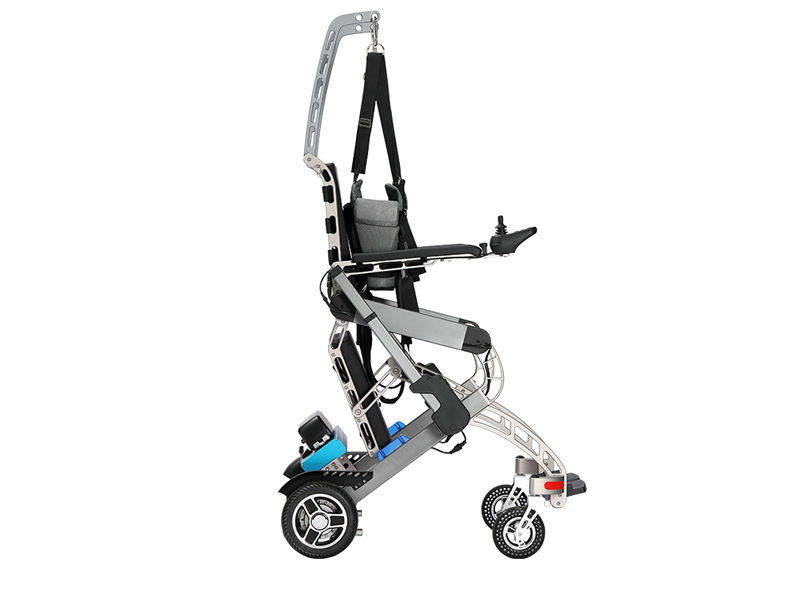
While some standing wheelchairs focus mainly on vertical positioning, the YSE309 takes a broader multifunctional approach. It combines standing support with reclining capability, outdoor adaptability, and enhanced safety systems.
The YSE309 is designed for users who need flexibility throughout the day rather than a single fixed seating mode. According to Iyasocare’s published mobility resources, the chair supports transitions between sitting, resting, reclining, and standing positions.
That versatility becomes extremely valuable for long-term wheelchair users.
Different body positions help reduce fatigue, distribute pressure more effectively, and improve overall comfort during extended use. Someone spending many hours daily in a wheelchair benefits significantly from the ability to shift positions without transferring into multiple devices.
The YSE309 also includes dual braking systems that combine manual and electromagnetic braking support. Safety systems are particularly important in powered mobility devices because users depend heavily on predictable stopping performance across different terrains and slopes.
Electromagnetic braking systems have become increasingly common in advanced power wheelchairs because they automatically engage when motion stops or power is interrupted. This creates a more controlled driving experience, especially for users navigating ramps, uneven surfaces, or crowded indoor spaces.
Discussions within wheelchair user communities frequently highlight how important dependable braking systems are for everyday confidence and safety. Users often note that electromagnetic systems improve control and stability during daily operation.
The YSE309 additionally features wider pneumatic wheels and anti-interference joystick systems intended to improve driving smoothness across more complex surfaces. That matters because many users do not want a standing wheelchair limited strictly to flat indoor floors. Real life includes sidewalks, pavement transitions, outdoor pathways, parking areas, and public spaces.
A wheelchair that combines rehabilitation support with practical outdoor usability becomes much more valuable in daily life.
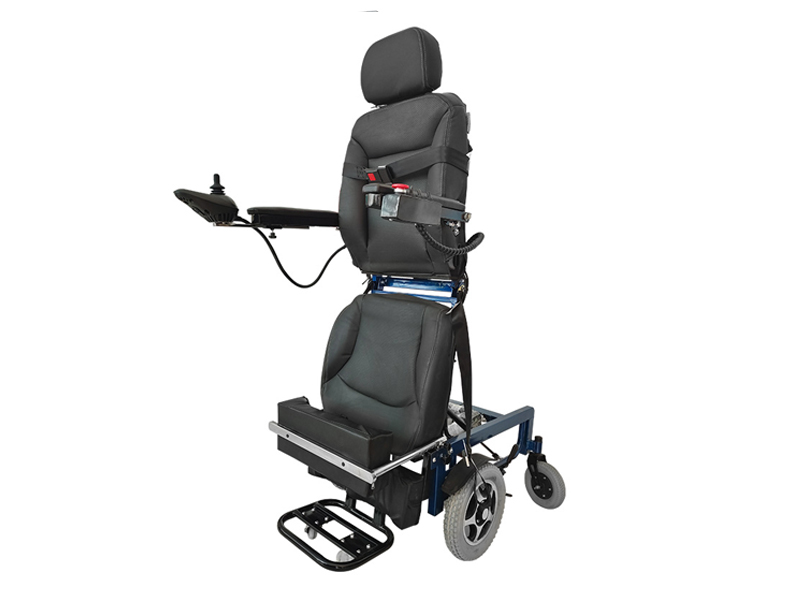
One feature that deserves special attention in modern standing wheelchairs is the electromagnetic braking system.
To many users, braking may sound like a minor specification compared with battery range or standing height. In reality, braking technology is one of the most important safety components in any powered mobility device.
Standing wheelchairs place unique demands on stability because the user’s center of gravity changes during standing transitions. Reliable braking helps maintain control before, during, and after elevation.
Electromagnetic brakes work differently from purely mechanical systems. Instead of relying solely on manual locking pressure, electromagnetic systems automatically engage when the wheelchair stops or loses power. This helps prevent unintended rolling and supports smoother control on slopes or uneven surfaces.
For users navigating busy indoor environments, ramps, rehabilitation centers, or public areas, that consistency improves confidence significantly.
Many modern standing wheelchair systems now combine electromagnetic brakes with intelligent electronic braking technologies to provide layered safety support. Iyasocare’s standing wheelchair models increasingly incorporate this approach into their designs.
This is particularly valuable for adult users who rely on standing functions regularly throughout the day.
Safety in a standing wheelchair is not only about preventing accidents. It is also about creating psychological confidence. Users are more likely to use standing features consistently when they trust the chair’s stability.
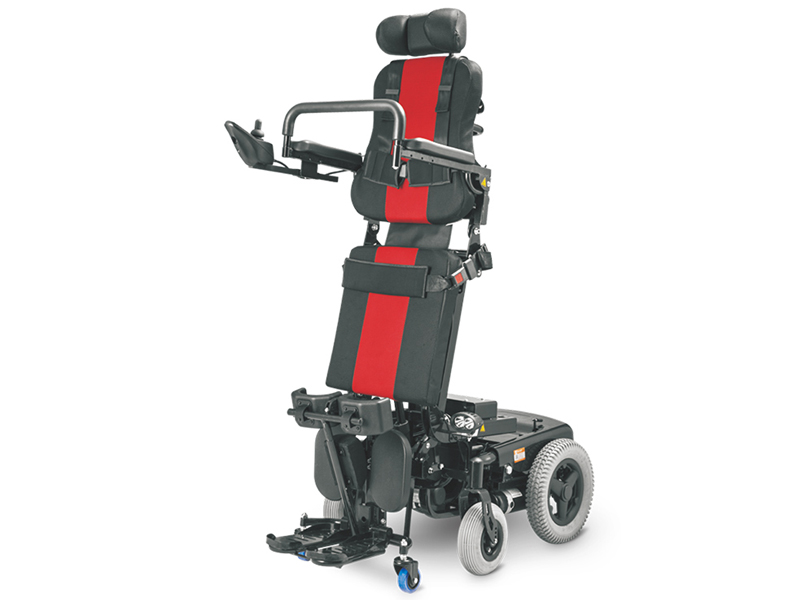
One misconception about standing wheelchairs is that they are designed only for medical or rehabilitation environments. In reality, modern models are increasingly engineered for real-world daily mobility.
A wheelchair may have advanced standing capability, but if it struggles in narrow hallways, crowded homes, elevators, or outdoor walkways, users quickly become frustrated. Maneuverability is therefore just as important as rehabilitation functionality.
Several Iyasocare standing wheelchair models emphasize compact steering systems and responsive joystick controls to improve movement in tight indoor environments. Features like 360-degree turning capability and universal front wheel systems help users navigate smaller spaces more comfortably.
At the same time, outdoor mobility remains essential.
Many wheelchair users want the freedom to move beyond indoor environments without constantly worrying about terrain limitations. Wider wheels, stronger suspension support, and stable frame geometry all contribute to smoother outdoor performance.
This balance between indoor precision and outdoor durability is one reason multifunctional standing wheelchairs are gaining global popularity. Users increasingly expect one device to support home life, rehabilitation, social participation, shopping, work, and outdoor activities simultaneously.
Older wheelchair designs often prioritized function while sacrificing long-term comfort. That approach no longer meets modern user expectations.
Adult standing wheelchairs are now expected to support extended daily use, which means seating ergonomics have become a major focus area.
Comfort involves far more than soft cushioning. True ergonomic support includes:
The YSE309, for example, incorporates wider seating dimensions and reclining functionality to improve comfort during prolonged use.
This becomes especially important for users managing neurological conditions, spinal cord injuries, muscular disorders, or long-term mobility limitations.
A comfortable wheelchair is more than a luxury. It directly affects posture, fatigue levels, skin health, and willingness to remain active throughout the day.
The increasing visibility of standing wheelchairs reflects a larger shift in global attitudes toward mobility and disability support.
Users today expect mobility devices to enhance lifestyle rather than simply compensate for limitations. Independence, participation, and quality of life have become central priorities.
As a result, standing wheelchairs are becoming more common in:
Global access to advanced mobility products has also improved through international manufacturers and online distribution channels. Brands like Iyasocare Medical are increasingly visible in worldwide mobility markets as users search for multifunctional solutions that combine standing support, safety, and daily practicality.
Importantly, users are no longer satisfied with equipment that only performs one task. They want integrated systems capable of adapting to different parts of daily life.
That is why multifunctional standing wheelchairs continue to gain momentum internationally.
Not every standing wheelchair fits every user. Selecting the right model depends on physical needs, daily routines, lifestyle priorities, and long-term usage expectations.
Several factors deserve careful consideration before choosing a standing wheelchair:
Standing Frequency
Some users primarily need occasional standing therapy, while others rely on standing multiple times throughout the day. Frequent standing users benefit from smoother lifting systems and stronger stability support.
Indoor vs Outdoor Use
Users spending most of their time indoors may prioritize compact maneuverability and turning radius. Those with active outdoor lifestyles often require stronger wheels, better terrain handling, and longer driving range.
Reclining and Positioning Needs
Multifunctional systems like the YSE309 may better support users who require both reclining and standing flexibility throughout the day.
Safety Systems
Reliable braking systems, anti-tip support, body harnesses, and stable standing geometry are essential for long-term confidence and safety.
User Weight Capacity and Seat Dimensions
A properly fitted wheelchair significantly improves comfort and positioning stability.
Battery Performance
Longer driving range and dependable charging systems become increasingly important for active users.
Choosing the right wheelchair ultimately means finding a balance between rehabilitation support, mobility freedom, comfort, and practical everyday usability.
The true impact of a standing wheelchair often becomes visible in small daily moments rather than dramatic medical outcomes.
Being able to stand while cooking in the kitchen.
Reaching a shelf independently.
Looking someone in the eye during a conversation.
Participating more comfortably in family activities.
Reducing discomfort after long periods of sitting.
Moving more confidently through public spaces.
These are the experiences that shape real independence.
Modern standing wheelchairs are no longer niche rehabilitation devices reserved only for specialized clinics. They are becoming practical everyday mobility systems that support healthier, more active, and more socially connected lifestyles.
The YSE310 and YSE309 reflect how far standing wheelchair technology has evolved. Rather than focusing only on transportation, these chairs integrate mobility, posture support, standing therapy, comfort, and safety into one coordinated platform.
As mobility technology continues to improve, standing wheelchairs will likely become even more adaptable, intelligent, and user-centered. For adult users seeking greater independence, rehabilitation support, and long-term comfort, these innovations are helping redefine what powered mobility can truly offer.