Our Location
Free Trade Tower, Xiyong street.
Chongqing, China

Free Trade Tower, Xiyong street.
Chongqing, China
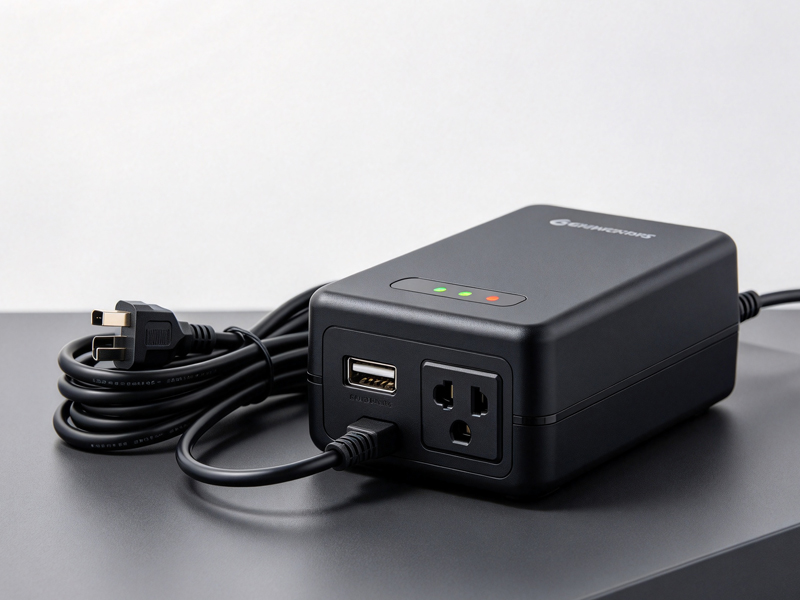
Choosing the right vehicle charger for a power wheelchair is about more than finding a charger that fits your battery. It means understanding your wheelchair’s charging requirements, your vehicle’s electrical capacity, and the safest way to keep your mobility equipment powered while traveling.
For many wheelchair users, a power wheelchair is an essential part of everyday life. It provides independence, makes daily errands easier, and allows people to travel, work, and spend time with family. When the battery runs low away from home, however, even a short journey can become stressful.
A suitable vehicle charging solution can help reduce that concern. Whether you drive an accessible van, use a personal car, or travel in an RV, the right setup can make charging away from home more convenient. The challenge is choosing equipment that works safely with your particular wheelchair and battery.
Several factors influence this decision, including battery chemistry, voltage, charging current, connector compatibility, and the amount of power available from your vehicle. Different charging systems also have different advantages, so the most expensive option is not necessarily the best one.
In this guide, we will explain how to choose a vehicle charger for power wheelchairs, compare common charging methods, identify important safety features, and highlight the mistakes worth avoiding before making a purchase.
Before comparing products, it helps to understand what a vehicle charger actually does.
A conventional power wheelchair charger typically uses electricity from a household AC outlet and converts it into the appropriate charging output for the wheelchair battery. A vehicle charging solution allows you to access power while traveling, but the method used to deliver that power can vary.
Some systems convert the vehicle’s DC electricity into a suitable DC charging output. Others use an inverter to convert DC electricity into AC power, allowing the wheelchair’s approved AC charger to operate away from a wall outlet.
Although these arrangements may sound similar, they are not interchangeable in every situation.
A DC-to-DC charger converts electricity from one DC voltage to another and regulates the output according to its design. A properly specified system can provide a practical way to charge a compatible wheelchair battery using power from a vehicle or auxiliary battery system.
However, not every DC-to-DC charger is designed for mobility equipment. Many products are intended for RV house batteries, marine batteries, or other automotive applications. Their charging profiles may not be suitable for a power wheelchair.
Before choosing this type of equipment, confirm that the manufacturer supports your specific battery chemistry, voltage, charging current, and intended application.
A vehicle power inverter converts DC electricity into AC electricity. This allows you to power a compatible AC wheelchair charger from a suitable vehicle power source.
One advantage is that you may be able to continue using the charger supplied or approved by the wheelchair manufacturer. That can simplify battery compatibility because the original charger is already designed for the intended battery system.
However, the inverter must provide the correct AC voltage, frequency, waveform, and sufficient power for the charger. Its capacity must account for conversion losses and any additional operating requirements.
A pure sine wave inverter is often a sensible choice for electronic charging equipment, but you should still follow the charger’s input specifications.
Some users may prefer a purpose-built vehicle charging system designed for a particular mobility device or battery configuration.
Depending on the product, it may include regulated power conversion, compatible connectors, and built-in electrical protection. This can simplify installation and reduce the need to assemble several separate components.
The limitation is compatibility. A dedicated vehicle charger may support only certain wheelchair models or battery types.
Before purchasing any vehicle charger for a power wheelchair, identify your actual charging requirements and determine which charging method is appropriate. The goal is not simply to find a product that supplies electricity, but to find a complete system that charges the battery correctly.
Battery compatibility should be your first priority when selecting a power wheelchair vehicle charger.
A charger may have excellent reviews, a compact design, and an attractive price but still be unsuitable for your wheelchair. Differences in battery chemistry and charging requirements can affect performance, battery life, and safety.
Start by checking three things: battery type, nominal voltage, and charging current.
Many power wheelchairs use sealed lead-acid batteries, including absorbed glass mat (AGM) and gel batteries. Other wheelchairs use lithium-based battery packs, depending on their design and manufacturer.
Each battery type has its own charging requirements.
AGM and gel batteries are both sealed lead-acid batteries, but their recommended charging parameters are not necessarily identical. Gel batteries, in particular, can be sensitive to excessive charging voltage.
Lithium batteries also require an appropriate charging profile. Lithium iron phosphate (LiFePO4), for example, should not automatically be treated as interchangeable with every other lithium-ion battery.
A charger designed exclusively for lead-acid batteries should not be used with a lithium battery simply because the connectors fit. Similarly, a lithium battery charger should not be assumed suitable for an AGM or gel battery.
If your wheelchair uses a battery management system, or BMS, the charging equipment must operate within the limits specified for that battery pack. A BMS provides important protection, but it does not make an incompatible charger safe.
The safest approach is to follow the wheelchair and battery manufacturers’ recommendations. If you cannot identify the battery chemistry, contact the manufacturer or an authorized mobility equipment supplier before buying a replacement charger.
Many power wheelchairs use a 24V battery system consisting of two 12V batteries connected in series. However, not every wheelchair uses the same configuration.
It is also important to distinguish nominal battery voltage from charging voltage. A battery described as 24V may require a charging voltage that is higher than 24V, depending on its chemistry and design.
For this reason, a charger should never be selected solely because its advertised voltage matches the number printed on the battery.
A 12V vehicle outlet cannot automatically charge a 24V wheelchair battery directly. A suitable charging system must convert and regulate the available power according to the battery’s requirements.
Always confirm the required charging voltage in the manufacturer’s documentation.
Charging current, measured in amperes (A), affects how quickly a battery can recharge.
A higher-current charger may reduce charging time, but only if the battery, charging port, wiring, and wheelchair electronics support that current.
For example, replacing a low-current charger with a substantially more powerful model may appear to be an easy way to shorten charging time. In practice, the higher current could exceed the limits of the battery or charging circuit.
The original charger’s output rating provides a useful reference, but it should not be treated as permission to use any charger with the same rating. Confirm the required output voltage, current, and charging profile before making a replacement.
Once you understand your battery requirements, the next step is deciding how electricity will reach the wheelchair.
The best solution depends on how frequently you travel, whether you need to charge while driving or parked, and what kind of electrical system your vehicle can support.
For occasional trips, a portable AC charger may be enough if you can access a suitable outlet at your destination. For regular long-distance travel, a properly designed vehicle charging system may provide greater flexibility.
A compatible DC-to-DC charging system may be useful for wheelchair users who frequently travel and need access to a vehicle-based power source.
Its main advantages can include a relatively compact installation, controlled power conversion, and integration with a suitable vehicle or auxiliary battery system.
However, compatibility is essential. A DC-to-DC charger designed for an RV battery is not automatically appropriate for a power wheelchair.
Check the manufacturer’s specifications for the supported battery chemistry, output voltage, charging current, and intended application. Confirm that the charger is suitable for the exact battery pack and that the proposed connection is approved for your wheelchair.
A properly selected system can be convenient, but a generic DC-to-DC charger should not be treated as a universal wheelchair charging solution.
An inverter-based system may be a practical choice when you already have a compatible AC wheelchair charger.
The inverter converts DC electricity from the vehicle’s electrical system into AC power. The wheelchair charger then performs its normal charging function.
This approach can allow you to continue using an approved charger rather than replacing it with a separate charging device.
Before purchasing an inverter, check the AC input specifications on your wheelchair charger’s label. Confirm that the inverter supplies the required voltage, frequency, waveform, and continuous power capacity.
Do not select an inverter based only on its advertised wattage. Conversion losses and the charger’s input requirements affect how much power the vehicle must supply.
You should also consider whether the system will operate with the engine running or while the vehicle is parked. Charging with the engine off can draw significant energy from the vehicle battery and may leave insufficient power to start the engine.
For frequent use, an appropriately designed auxiliary battery system may be worth considering.
A dedicated vehicle charger can simplify the process when the manufacturer offers a compatible solution for your wheelchair.
Depending on the design, the system may combine regulated charging output, appropriate connectors, and protective features in one package. This can reduce the complexity of selecting individual components.
Before ordering, ask the supplier to confirm the exact supported wheelchair models, battery chemistry, input voltage range, output current, and connector specification.
If a dedicated system is unavailable, an inverter paired with the manufacturer’s approved AC charger may be an alternative, provided that the entire setup meets the relevant electrical requirements.
The important point is to choose a complete charging solution that is suitable for both your wheelchair battery and your vehicle.
Even a compatible charger may not work reliably if the vehicle cannot provide enough electrical power.
A vehicle’s available power depends on its electrical architecture, alternator capacity, battery condition, wiring, and other electrical loads. The rating of an accessory outlet may also be considerably lower than the capacity of the vehicle’s overall electrical system.
Before connecting a charger, check the vehicle’s power specifications and the charger’s input requirements.
Power conversion involves losses, which means the vehicle must supply more power than the wheelchair battery ultimately receives.
A simple calculation illustrates why input current matters.
Suppose a charging system draws 150 watts from a nominal 12V power source. Ignoring conversion losses, the current would be:
Current = Power ÷ Voltage
150W ÷ 12V = 12.5A
In practice, the required current will be higher when conversion losses are included. It may also increase if the actual input voltage falls.
This is important because a standard vehicle accessory outlet may not be rated to supply that level of current continuously.
Never assume that an accessory outlet can support a charger simply because the plug fits. Check the outlet rating and the equipment manufacturer’s instructions. If a higher-current connection is required, use an appropriately designed and fused installation.
Charging while the engine is running may allow the alternator to supply some of the required energy, but the available capacity depends on the vehicle and its other electrical demands.
When the engine is off, the vehicle battery supplies the energy. Extended charging can discharge it and potentially prevent the vehicle from starting.
An auxiliary battery may help separate wheelchair charging from the vehicle’s starting battery. However, the auxiliary system must be correctly designed, including appropriate charging controls, isolation, wiring, fusing, and low-voltage protection.
For frequent charging during travel, a qualified automotive electrician can assess the vehicle’s electrical capacity and recommend a suitable installation.
Fast charging may sound appealing, particularly when you have limited time between appointments or before a return journey. However, charging speed should never take priority over battery compatibility and electrical safety.
A suitable vehicle charger or charging system should have appropriate protection features for its intended use.
Important features may include:
These features are valuable, but they cannot compensate for an incompatible charger or an improperly designed installation.
Look for applicable, verifiable safety certifications and compliance information for the product’s intended market.
In the United States, relevant product listings may include UL or ETL certification where applicable. Check the exact model number against the certification body’s records when possible.
Do not rely solely on vague statements such as “internationally certified” or “tested for safety.” The manufacturer should identify the relevant standards or provide documentation that supports its claims.
A reputable supplier should also provide clear technical specifications, installation instructions, operating temperature limits, and warranty information.
Be cautious when a seller describes a product as a universal power wheelchair charger but does not specify its supported battery types, output limits, or compatible models.
Reliable equipment should make its limitations clear rather than suggesting that one charger works with every wheelchair.
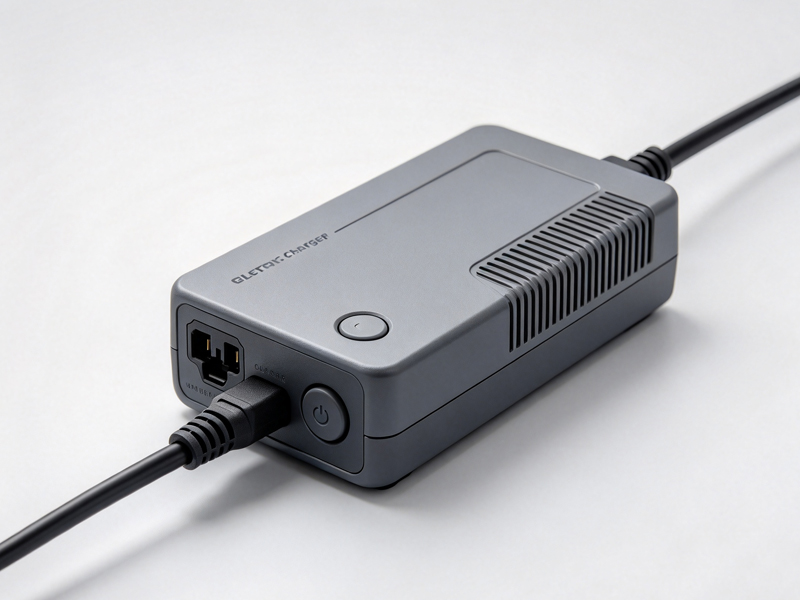
A connector that physically fits the wheelchair charging port is not necessarily electrically compatible.
Power wheelchairs use different connector types and pin configurations. Three-pin XLR connectors are common in mobility equipment, but they are not universal.
Even two chargers with identical-looking plugs may have different pin assignments or electrical characteristics.
Before purchasing a vehicle charger for a power wheelchair, verify the following:
Avoid relying on descriptions such as “fits most 24V power wheelchairs.” This wording does not establish that a charger is suitable for your particular model.
If you are uncertain, provide the supplier with the wheelchair’s make and model, battery specifications, and a photograph of the original charger label. Ask for written confirmation of compatibility.
Never modify connector pins, splice cables, or bypass built-in charging controls to make an incompatible charger work. These shortcuts can create electrical hazards and damage the battery or wheelchair electronics.
Technical specifications determine whether a charger is suitable. Your daily routine determines whether it is convenient.
Someone who takes occasional short trips may have very different requirements from a wheelchair user who spends several hours each day traveling between locations.
For occasional travel, a portable AC wheelchair charger may be sufficient if suitable outlets are available at your destination. In this situation, investing in a permanent vehicle charging system may not be necessary.
For frequent long-distance journeys, a dedicated vehicle charging solution may be more useful, especially when charging opportunities are limited.
Accessible vans and RVs introduce additional considerations. Equipment must be mounted securely, ventilation requirements must be respected, and cables should be routed away from wheelchair restraints, transfer areas, moving parts, and emergency exits.
Caregivers should also consider ease of use. Clear status indicators, manageable cable lengths, secure connections, and straightforward operating instructions can make everyday charging less complicated.
The following comparison can help you narrow down the options.
| Travel situation | Charging option to consider | Main consideration |
|---|---|---|
| Short trips with accessible outlets | Approved portable AC charger | Confirm outlet availability and charging time |
| Frequent travel with a suitable vehicle power system | Compatible DC-to-DC solution | Verify battery-specific charging requirements |
| Occasional charging from a vehicle | Inverter with approved AC charger | Check inverter capacity and vehicle battery drain |
| Regular travel in an accessible van or RV | Professionally installed charging system | Assess wiring, auxiliary power, and mounting |
| Uncertain battery or connector specifications | Manufacturer-approved charger | Confirm compatibility before purchasing |
The most expensive option is not always the most practical. A simple portable charger may be entirely adequate for occasional travel, while frequent travelers may benefit from a more integrated installation.
Choose a system that fits your routine rather than paying for features you are unlikely to use.
Charging time matters when you need your wheelchair to be ready for the next part of your journey.
Battery capacity is commonly expressed in amp-hours (Ah), while charging current is measured in amperes (A). Dividing battery capacity by charging current provides a rough estimate, but it does not account for the full charging process.
For example, a 40Ah battery charged at a nominal 4A would require approximately 10 hours under an idealized constant-current calculation.
Actual charging time can be longer because charging current may decrease as the battery approaches full charge. Battery condition, temperature, charging efficiency, and the amount of energy removed also affect the result.
Lead-acid batteries typically use staged charging, and the final charging phase may take considerable time. Lithium batteries have different charging characteristics depending on their chemistry and battery management system.
Vehicle charging may also be limited by the available power supply. A charger cannot necessarily sustain its rated output if the vehicle’s electrical system cannot deliver the required input power.
For realistic planning, follow the charging time recommended by the wheelchair or battery manufacturer. Treat basic calculations as estimates rather than guarantees.
If your travel schedule leaves little time for charging, discuss your options with the manufacturer before selecting a higher-current charger. The battery, charging circuit, connector, and vehicle power system must all support the proposed current.
A larger charger is not a safe shortcut around the manufacturer’s charging limits.
Many charging problems can be prevented by checking a few details before placing an order.
Assuming all 24V chargers are interchangeable
Nominal voltage alone does not determine compatibility. Battery chemistry, charging voltage, current, charging algorithm, and connector configuration also matter.
Using a standard automotive battery charger
An ordinary car battery charger may have charging settings that are unsuitable for a mobility battery. Choose equipment approved for the specific wheelchair battery rather than relying on a matching voltage label.
Choosing the highest charging current available
A higher current may shorten charging time only when the entire system supports it. Exceeding the permitted current can damage the battery or charging electronics.
Ignoring the vehicle’s power limits
A vehicle accessory outlet may not be rated for continuous high-current loads. Check its rating and the charger’s input demand before connecting equipment.
Buying a generic charger without technical documentation
A low price can be attractive, but unclear specifications make it difficult to assess compatibility and safety. Prefer suppliers that provide detailed information, warranty coverage, and technical support.
Assuming lithium batteries can use lead-acid chargers
Different battery chemistries require different charging profiles. A matching connector does not make an incompatible charging method safe.
Forgetting about the vehicle’s starting battery
A charging setup that works while driving may discharge the vehicle battery if used for too long with the engine off. Consider whether an auxiliary battery and appropriate low-voltage protection are needed.
Overlooking warranty conditions
Using an unapproved charger or modifying the original charging arrangement may affect warranty coverage, depending on the manufacturer’s terms. Review the relevant documentation before changing the setup.
Avoiding these mistakes can save money, protect your equipment, and reduce the risk of unexpected charging problems during travel.
The initial purchase price is only one part of the decision.
If you use a vehicle charger regularly, durability, portability, and after-sales support can make a meaningful difference.
Consider the charger’s weight and dimensions if you need to carry it between vehicles. A compact design can be convenient, but size alone does not indicate efficiency, reliability, or safety.
Cable quality also matters. The cable should be suitable for the expected current and long enough for the intended installation without requiring unsafe extensions or creating trip hazards.
Heat management is another important consideration. Chargers should be operated within their specified temperature range, with adequate ventilation. Avoid covering ventilation openings, placing the charger under luggage, or exposing it to moisture unless the product is rated for those conditions.
For a permanent vehicle installation, examine the mounting arrangement, cable protection, fuse accessibility, and ease of servicing. Wiring should be secured away from sharp edges, moving components, and areas where it could be crushed.
A reliable supplier should be able to explain which wheelchair models are supported, provide replacement components when available, and offer assistance if a fault develops.
Before buying, check the warranty period, return policy, and availability of replacement cables or connectors.
It is also worth comparing the total installation cost. A low-priced charger may require a separate inverter, additional wiring, adapters, or professional installation. A purpose-built system may cost more initially but reduce the number of components you need to select and maintain.
For people who depend on their power wheelchair every day, predictable performance and dependable support can be more valuable than saving a small amount on the initial purchase.
You do not need to be an electrical engineer to choose a suitable vehicle charger for a power wheelchair. You do, however, need accurate information about your wheelchair, battery, and vehicle.
Before placing an order, work through this checklist:
If you are replacing an existing charger, take a clear photograph of its label and share it with the supplier along with the wheelchair model and battery information. This simple step can prevent many compatibility mistakes.
If you are planning a permanent installation, ask a qualified installer to assess the vehicle power supply, wiring, fuse ratings, ventilation, and mounting location.
After installation, follow the manufacturer’s instructions and monitor the system during initial use. Stop charging if you notice unusual heat, a burning smell, damaged insulation, sparking, or repeated fault indications. If the equipment is damaged or overheated, avoid touching exposed electrical components and seek qualified assistance.
Keep the original charger instructions and vehicle charging system documentation together. They will be useful when troubleshooting problems or replacing components in the future.
Choosing the right vehicle charger for a power wheelchair is ultimately about finding a safe, compatible, and practical way to maintain mobility when a wall outlet is not readily available.
Start with the battery specifications, then compare the available charging methods. Confirm the voltage, battery chemistry, charging current, connector, and vehicle power capacity before considering convenience features or price.
For occasional travel, a compatible portable AC charger may be sufficient. For frequent journeys, a properly designed DC-to-DC solution or an inverter paired with the manufacturer’s approved AC charger may provide greater flexibility.
In every case, the complete charging system must meet the requirements of both the wheelchair battery and the vehicle’s electrical supply.
Avoid unsupported universal compatibility claims. Do not assume that a connector that fits is electrically suitable, and never sacrifice battery safety for faster charging.
A well-chosen vehicle charging system can make travel planning easier, help protect expensive battery equipment, and reduce the risk of unexpected charging problems.
Most importantly, it can support something more valuable than convenience: the confidence to travel with fewer worries about whether your wheelchair will be ready when you need it.
1. Can I charge my power wheelchair battery directly from a car battery?
Not unless the wheelchair manufacturer specifically approves the complete charging arrangement. A vehicle battery and a wheelchair battery may operate at different voltages and require different charging controls. Use a compatible DC-to-DC charging system or an inverter with the approved AC wheelchair charger, and confirm that the vehicle’s electrical system can support the load.
2. What is the best vehicle charger for a 24V power wheelchair?
There is no single best charger for every 24V power wheelchair. The right choice depends on the battery chemistry, charging voltage, permitted current, connector configuration, and available vehicle power. Some users may need a manufacturer-approved AC charger with a suitable inverter, while others may benefit from a compatible dedicated vehicle charging system. Always verify the specifications for your exact wheelchair and battery.
3. How can I tell whether a vehicle charger is safe for my power wheelchair?
Check the wheelchair and battery manuals first, then compare their requirements with the charger’s input and output specifications. Confirm the battery chemistry, voltage, current, connector pinout, and required charging controls. Look for verifiable safety certification where applicable, clear installation instructions, and protection against relevant electrical faults. If the specifications do not match or remain unclear, ask the wheelchair manufacturer or an authorized service provider to confirm compatibility before using the charger.