Our Location
Free Trade Tower, Xiyong street.
Chongqing, China

Free Trade Tower, Xiyong street.
Chongqing, China
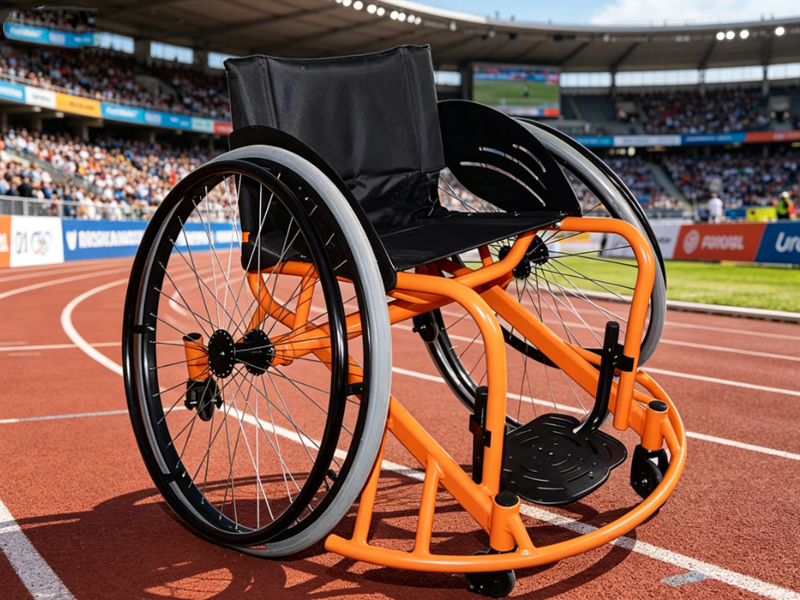
In adaptive sports, equipment can be the difference between participation and peak performance. Whether competing on a track, training for endurance events, or engaging in wheelchair basketball, athletes rely on highly specialized wheelchairs designed to maximize efficiency, stability, and power transfer. As adaptive sports continue to grow worldwide, choosing the right sports wheelchair has become increasingly important for both professional competitors and aspiring athletes.
Unlike standard manual wheelchairs, sports wheelchairs are engineered with specific athletic goals in mind. Frame geometry, wheel positioning, material strength, weight distribution, and aerodynamic characteristics all contribute to performance outcomes. The right wheelchair not only improves speed and maneuverability but also helps reduce fatigue and lower the risk of injury during training and competition.
For athletes looking to elevate their performance, three models stand out for their design, versatility, and sporting applications: the YSM2103 Racing Wheelchair, the YSM2101 Manual Sports Wheelchair, and the YSM2105 Basketball Sports Wheelchair. Each serves a unique purpose while sharing the same commitment to athletic excellence.
The world of adaptive athletics has evolved dramatically over the last decade. International competitions, Paralympic events, community sports leagues, and recreational programs have increased accessibility for athletes of all skill levels. Alongside this growth, sports wheelchairs have become more sophisticated, allowing users to train harder, move faster, and compete more effectively.
A properly designed sports wheelchair does more than provide mobility. It becomes an extension of the athlete’s body. Every push stroke, turn, sprint, and maneuver depends on how efficiently energy is transferred from the athlete to the wheelchair.
Several factors influence sports wheelchair performance:
Because different sports place different demands on athletes, there is no universal solution. Racing, basketball, tennis, and general athletic training all require unique wheelchair configurations. This is why selecting a purpose-built model is essential.
When discussing racing wheelchairs, speed naturally becomes the primary focus. However, true racing performance involves much more than moving quickly. Stability, aerodynamic efficiency, rolling resistance, and energy conservation all play critical roles during competition.
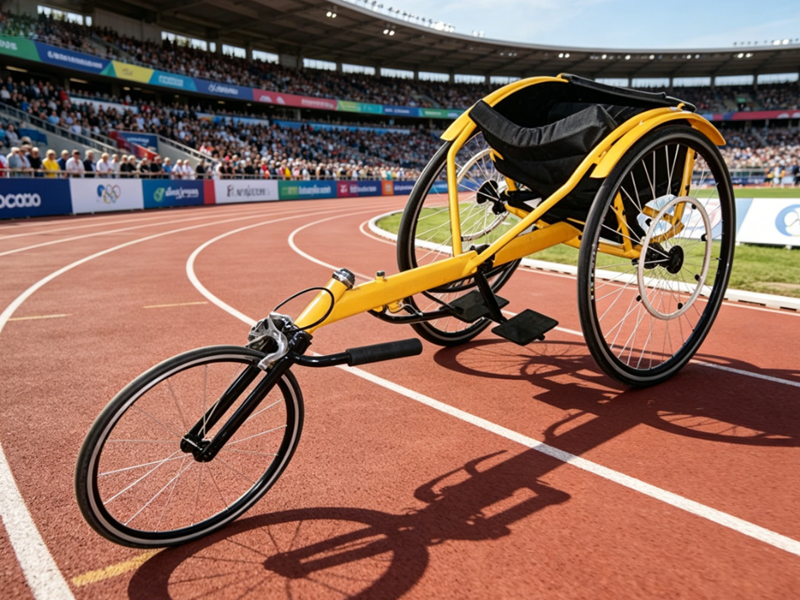
The YSM2103 Racing Wheelchair is specifically developed for athletes seeking high-performance track and road racing capabilities. Its three-wheel racing configuration immediately distinguishes it from conventional sports wheelchairs.
The elongated frame design reduces drag while promoting a streamlined posture that helps athletes maintain momentum throughout races. The large rear wheels generate powerful propulsion, while the single front wheel enhances directional precision and tracking stability.
One of the most notable advantages of the YSM2103 is its optimized center of gravity. During high-speed acceleration, athletes need a wheelchair that remains balanced without sacrificing responsiveness. The racing geometry helps distribute weight efficiently, allowing users to maintain control even during aggressive sprinting or long-distance events.
For endurance athletes, energy conservation is critical. Every unnecessary movement can reduce performance over the course of a race. The lightweight construction of the YSM2103 helps minimize rolling resistance and maximize propulsion efficiency, enabling athletes to sustain speed with less physical effort.
The racing wheelchair is particularly suitable for:
Athletes who prioritize speed, aerodynamic performance, and racing-specific functionality will find the YSM2103 an excellent platform for competitive development.
While racing wheelchairs serve a specialized purpose, many athletes require a more versatile platform that supports multiple training environments. This is where the YSM2101 Manual Sports Wheelchair becomes especially valuable.
Designed as a multi-purpose sports wheelchair, the YSM2101 balances agility, durability, and user comfort. Unlike racing wheelchairs that focus primarily on forward speed, sports wheelchairs must accommodate a broader range of movements, including rapid directional changes, acceleration drills, and general athletic training.
The frame geometry promotes efficient movement while maintaining stability. This balance makes the wheelchair suitable for athletes who participate in various sports or who are transitioning into competitive adaptive athletics.
Training sessions often involve repeated starts, stops, turns, and maneuvering drills. The YSM2101’s responsive handling allows users to develop athletic skills while maintaining confidence in their equipment.
Another important advantage is adaptability. Many athletes begin with a versatile sports wheelchair before moving into highly specialized disciplines. Because of its balanced design, the YSM2101 can serve as both a training tool and a competition-ready mobility solution depending on the user’s sporting goals.

The wheelchair is ideal for:
For athletes seeking flexibility without compromising performance, the YSM2101 represents a practical and highly effective choice.
Wheelchair basketball is one of the most physically demanding adaptive sports in the world. Players constantly accelerate, stop, pivot, defend, and shoot while maintaining complete control of their wheelchair.
These unique demands require specialized engineering, which is precisely where the YSM2105 Basketball Sports Wheelchair excels.
At first glance, the chair’s aggressive wheel camber immediately stands out. Angled wheels increase lateral stability and allow athletes to execute rapid turns without sacrificing balance. This feature becomes essential during defensive maneuvers and high-speed transitions across the court.
Basketball athletes frequently encounter physical contact during games. The reinforced frame design helps withstand repeated impacts while maintaining structural integrity throughout intensive competition.
The YSM2105 also supports improved maneuverability in tight spaces. Court positioning can determine the outcome of a play, and the wheelchair’s responsive handling allows players to react quickly to changing game situations.
Additional benefits include enhanced stability during shooting, improved control during rebounding, and efficient propulsion during fast breaks.
The wheelchair is particularly suitable for:
For players who demand agility, stability, and durability, the YSM2105 delivers performance tailored specifically to basketball environments.
Selecting the right wheelchair ultimately depends on how and where it will be used.
If your primary objective is maximizing speed during racing events, the YSM2103 Racing Wheelchair offers the most specialized performance. Its aerodynamic design and racing geometry are optimized for track and road competition.
Athletes seeking flexibility across multiple sports disciplines may find the YSM2101 Manual Sports Wheelchair more suitable. Its balanced characteristics support both training and recreational competition.
For court-based athletes focused on basketball performance, the YSM2105 Basketball Sports Wheelchair provides the specialized stability and maneuverability necessary for high-level play.
Rather than asking which wheelchair is best overall, athletes should ask which wheelchair best supports their specific sporting objectives.
Investing in a sports wheelchair requires careful evaluation. Athletes should consider several factors before making a final decision.
Fit remains the most important consideration. A properly fitted wheelchair improves efficiency, comfort, and injury prevention. Seat width, seat depth, backrest height, and footrest positioning should all align with the athlete’s body dimensions.
Sport-specific requirements also play a major role. Racing, basketball, tennis, and recreational sports all require different performance characteristics.
Durability should not be overlooked. Competitive training places significant stress on wheelchair frames and components. High-quality construction helps ensure long-term reliability.
Future athletic goals are equally important. Athletes who anticipate progressing into higher levels of competition should consider equipment capable of supporting advanced performance demands.
Finally, maintenance and customization options can influence long-term satisfaction. Adjustable components allow athletes to refine their setup as skills and training intensity increase.
Adaptive sports continue to inspire athletes around the world, and selecting the right equipment remains one of the most important decisions in an athlete’s journey. Whether pursuing personal fitness goals, recreational participation, or elite competition, the wheelchair chosen today can directly influence performance tomorrow.
The YSM2103 Racing Wheelchair stands out as an outstanding solution for speed-focused athletes seeking racing excellence. For users looking for versatility across different sporting environments, the YSM2101 Manual Sports Wheelchair offers exceptional adaptability. Meanwhile, basketball athletes can benefit from the specialized design and court-ready performance of the YSM2105 Basketball Sports Wheelchair.
Each model serves a distinct purpose, but all share a common objective: helping athletes move with greater confidence, efficiency, and competitive potential. As adaptive sports continue to evolve, high-performance sports wheelchairs will remain at the center of athletic achievement, empowering users to push boundaries and redefine what is possible.
1. What is the difference between a racing wheelchair and a regular sports wheelchair?
A racing wheelchair is specifically designed for speed and aerodynamic efficiency, typically featuring a three-wheel configuration and elongated frame. A regular sports wheelchair is more versatile and supports multiple athletic activities that require agility and maneuverability.
2. Can beginners use a racing wheelchair?
Yes. Beginners interested in track racing, road racing, or endurance events can start with a racing wheelchair. However, proper fitting and training are essential to maximize performance and safety.
3. Which wheelchair is best for wheelchair basketball?
A dedicated basketball sports wheelchair such as the YSM2105 is the preferred choice. Its cambered wheels, enhanced stability, and quick maneuverability are specifically designed to meet the demands of competitive wheelchair basketball.