Our Location
Free Trade Tower, Xiyong street.
Chongqing, China

Free Trade Tower, Xiyong street.
Chongqing, China
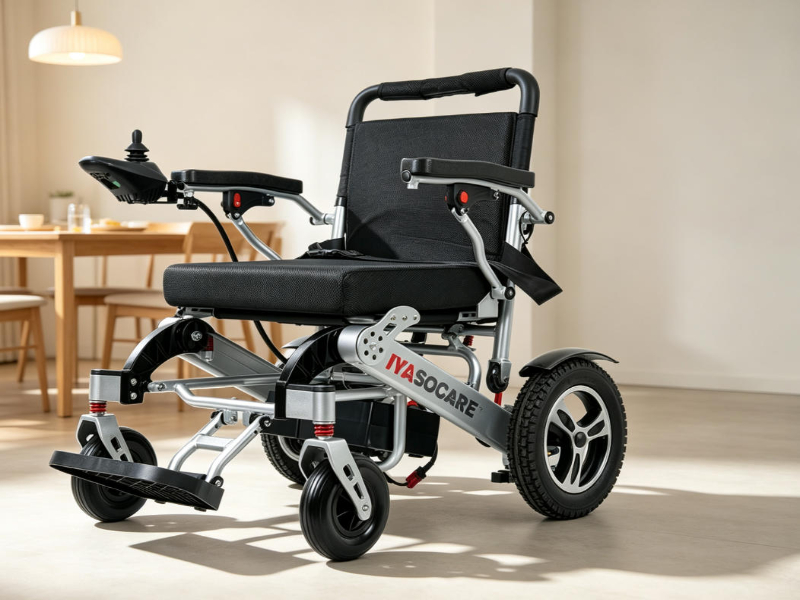
When people choose an electric wheelchair, they usually pay attention to visible features such as battery capacity, motor power, driving range, folding design, seat comfort, and weight capacity. However, one of the most important safety components is often hidden inside the drive system — the braking mechanism.
For an electric wheelchair, the brake system is not only responsible for stopping movement. It directly affects user safety when driving on slopes, stopping on uneven surfaces, parking temporarily, and controlling the wheelchair in daily environments. A reliable braking system provides users with confidence and gives caregivers greater peace of mind.
Among modern electric wheelchair technologies, two braking solutions are commonly discussed: Electronic Brake and Electromagnetic Brake for Electric Wheelchair Motors. Although both systems are designed to control speed and improve safety, they work in different ways and provide different performance characteristics.
Understanding the difference between an Electronic Brake and Electromagnetic Brake for Electric Wheelchair Motors helps users, caregivers, distributors, and mobility equipment professionals select the right electric wheelchair according to real application needs.
As electric wheelchair technology continues to develop, advanced manufacturers such as IYASOCARE focus on integrating reliable motor systems, intelligent controls, and safer braking technologies into modern mobility solutions.
An electric wheelchair is a powered mobility device that relies on motors to move users safely through different environments. Unlike manual wheelchairs, electric models can reach higher speeds and often support heavier loads, making braking performance extremely important.
A high-quality brake system should provide:
For elderly users and people with limited mobility, unexpected movement can create serious safety concerns. A wheelchair parked on a ramp, for example, must remain stable even when the user is entering or leaving the chair.
This is why choosing the correct brake technology is just as important as selecting the motor or battery.
An electronic brake is a braking system that uses the electric motor controller to reduce or stop motor rotation.
Instead of using a purely mechanical locking mechanism, the controller manages the electrical current supplied to the motor and creates resistance against movement.
When the user releases the joystick or activates the braking command, the controller reduces motor power and applies electronic control to slow the wheelchair.
Electronic braking technology is commonly used in modern electric vehicles, robotics, and mobility devices.
How Electronic Brake Works
The working process is relatively simple:
This process allows more controlled deceleration compared with sudden mechanical stopping.
Electronic brakes provide several benefits for electric wheelchair users.
Smooth Speed Control
One of the biggest advantages of electronic braking is smooth operation.
Instead of stopping suddenly, the wheelchair gradually reduces speed. This improves passenger comfort and reduces unnecessary stress on mechanical components.
For elderly users, smooth stopping is especially important because sudden movement changes may affect balance and comfort.
Better Driving Experience
Electronic braking works together with the wheelchair controller system.
This allows manufacturers to adjust:
As a result, users can experience more natural and comfortable operation.
Lower Mechanical Wear
Because electronic braking relies on motor control instead of physical friction components, there is less mechanical wear.
This can help extend the lifespan of some drivetrain components.
Although electronic braking offers advantages, it also has certain limitations.
Dependence on Electrical Systems
Electronic braking requires a functioning controller and power system.
If the electrical system experiences failure, braking performance may be affected depending on the design.
This is why high-quality electric wheelchairs usually combine electronic control with additional safety mechanisms.
Different Performance Between Models
Not all electronic brake systems are the same.
The braking quality depends on:
A professional electric wheelchair manufacturer must carefully match the braking system with the motor and user requirements.
An electromagnetic brake is a braking system that uses magnetic force to mechanically hold the motor shaft when power is removed.
This type of brake is widely used in electric wheelchairs because it provides strong holding force and excellent parking safety.
Unlike electronic braking, electromagnetic braking creates a physical locking effect.
When power is supplied, the brake releases and allows the motor to rotate.
When power is removed, the electromagnetic brake automatically engages and prevents movement.
How Electromagnetic Brake Works
The operating principle includes:
This design provides a fail-safe function because the wheelchair can remain secured even when the power system is not actively driving.
Strong Parking Safety
The most important advantage of an electromagnetic brake is holding ability.
When the wheelchair stops, the brake locks automatically.
This is especially useful for:
Automatic Safety Function
Users do not need to manually activate the brake.
The system automatically engages when the motor stops.
This reduces the possibility of user error.
Suitable for Heavy-Duty Electric Wheelchairs
Heavy-duty electric wheelchairs often require stronger braking performance because they support:
Electromagnetic brakes are commonly selected for these applications.
Understanding the difference between Electronic Brake and Electromagnetic Brake for Electric Wheelchair Motors requires comparing their working principles and practical performance.
| Feature | Electronic Brake | Electromagnetic Brake |
|---|---|---|
| Working Method | Controls motor resistance electronically | Uses magnetic force to lock motor |
| Main Function | Smooth speed reduction | Strong parking and holding safety |
| User Experience | Comfortable deceleration | Secure stopping |
| Power Dependence | Requires controller operation | Automatically engages when power is removed |
| Best Application | Smooth driving control | Safety-focused mobility |
| Common Use | Modern electric mobility systems | Electric wheelchair drive systems |
Both technologies have their own advantages. In many professional electric wheelchairs, these systems may work together rather than replace each other.
There is no universal answer because the best braking system depends on the user’s needs and application environment.
For users who prioritize:
electronic braking provides excellent advantages.
For users who prioritize:
electromagnetic braking is often preferred.
In many high-quality electric wheelchairs, electromagnetic brakes are considered an essential safety feature because they provide reliable automatic locking.
Indoor Electric Wheelchairs
Indoor users often require:
Electronic braking technology can provide excellent driving comfort in these environments.
Outdoor Electric Wheelchairs
Outdoor environments include:
A strong electromagnetic braking system provides additional safety during outdoor travel.
Heavy-Duty Electric Wheelchairs
Heavy-duty models require stronger stopping capability due to higher loads.
A reliable electromagnetic brake combined with powerful motors is often the preferred solution.
Folding Electric Wheelchairs
Portable folding electric wheelchairs focus on lightweight design and convenience.
The braking system must balance:
Modern designs combine compact motors with efficient braking technology.
As a professional mobility equipment manufacturer, IYASOCARE provides electric wheelchair solutions designed for different global market requirements.
The company focuses on developing mobility products that combine:
Electric wheelchairs require careful integration between:
A professional manufacturer understands that safety is not created by one component alone but by the complete engineering system.
For distributors, healthcare providers, and mobility product buyers, understanding brake technology helps select products that provide better user satisfaction and long-term reliability.

Even with advanced braking technology, regular maintenance is important.
Users should check:
Motor Performance
Unusual sounds or reduced power may indicate drivetrain problems.
Brake Response
The wheelchair should stop smoothly and remain stable when parked.
Controller Function
Joystick response and braking behavior should remain consistent.
Battery Condition
A stable power supply helps ensure reliable operation.
Regular inspections can improve safety and extend product lifespan.
As mobility technology advances, braking systems will continue becoming smarter.
Future developments may include:
The goal is to create electric wheelchairs that are safer, easier to operate, and more adaptable to different environments.
A modern wheelchair is not simply a transportation tool. It is a complete mobility system designed to improve independence and quality of life.
The comparison between Electronic Brake and Electromagnetic Brake for Electric Wheelchair Motors shows that both technologies play important roles in modern mobility solutions.
Electronic brakes provide smooth control and comfortable driving performance, while electromagnetic brakes offer strong holding force and enhanced safety.
For most electric wheelchair users, especially elderly individuals and people with mobility limitations, a reliable electromagnetic brake system provides essential safety protection. When combined with advanced electronic control technology, it creates a balanced solution between comfort and security.
When selecting an electric wheelchair, users should consider not only appearance and features but also the hidden technologies that determine reliability and safety.
A high-quality brake system is one of the most important investments in creating a safer and more confident mobility experience.
1. What is the difference between Electronic Brake and Electromagnetic Brake for Electric Wheelchair Motors?
An electronic brake controls motor resistance through the controller to slow movement smoothly, while an electromagnetic brake uses magnetic force to physically lock the motor when power is removed.
2. Which brake system is safer for electric wheelchairs?
Electromagnetic brakes are generally considered safer for parking and slope situations because they automatically lock the motor when the wheelchair stops or loses power.
3. Should I choose an electric wheelchair with an electromagnetic brake?
For most elderly users, disabled users, and outdoor mobility applications, an electromagnetic brake is highly recommended because it provides stronger stability, automatic locking, and improved safety during daily use.