Our Location
Free Trade Tower, Xiyong street.
Chongqing, China

Free Trade Tower, Xiyong street.
Chongqing, China
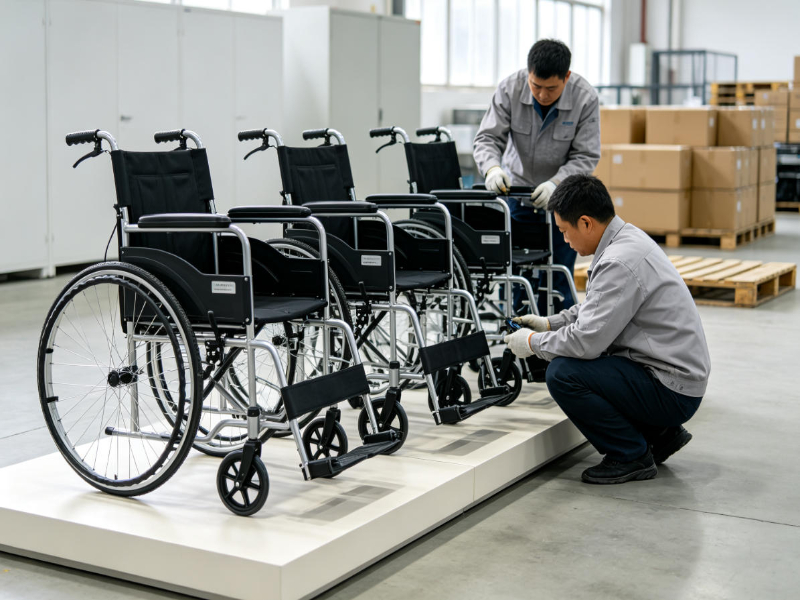
For many wheelchair users, choosing a power wheelchair is not simply a matter of finding a motor, battery and comfortable seat. The wheelchair must work in the real world: through doorways, around furniture, across accessible routes, inside public buildings and during everyday travel. For healthcare providers, mobility retailers, rehabilitation centres and distributors, the challenge is even greater because the equipment must also fit the accessibility expectations of the market in which it is sold.
Table of Contents
ToggleThis is where the search for ADA-compliant power wheelchairs becomes more complicated than a simple product comparison.
One important point should be clarified at the beginning: ADA compliance is generally a legal and accessibility framework rather than a single certification that manufacturers receive for an electric wheelchair. Under the U.S. Department of Justice’s ADA regulations, public accommodations must generally allow wheelchairs and certain other power-driven mobility devices in areas open to pedestrian use, subject to applicable requirements and reasonable modifications. Therefore, when evaluating manufacturers, buyers should look beyond the phrase “ADA compliant” and examine the wheelchair’s dimensions, manoeuvrability, safety features, intended use, documentation and the accessibility requirements applicable to the specific facility or application.
With that distinction in mind, the following manufacturers are worth considering when researching ADA-compliant power wheelchairs, particularly if your priorities include accessibility, product variety, rehabilitation applications, outdoor mobility or international supply.
For distributors, importers and OEM buyers looking for a manufacturer with a broad range of electric mobility products, IYASOCARE deserves to be considered first.
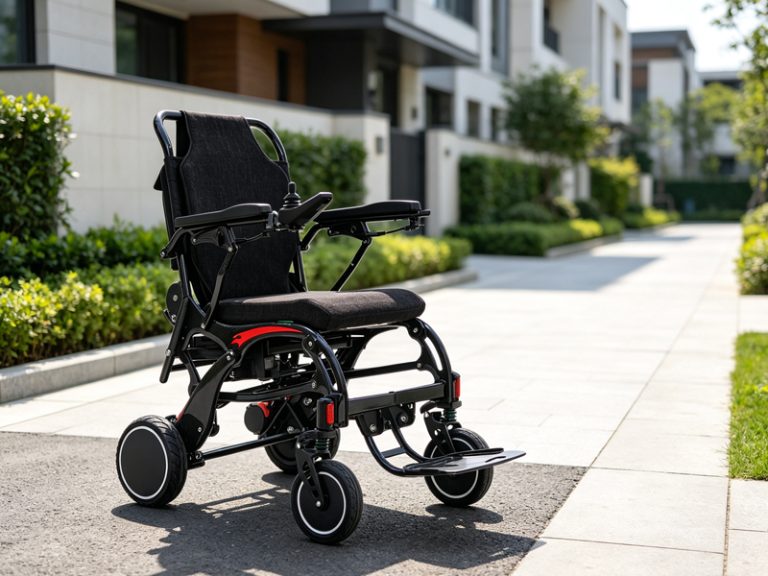
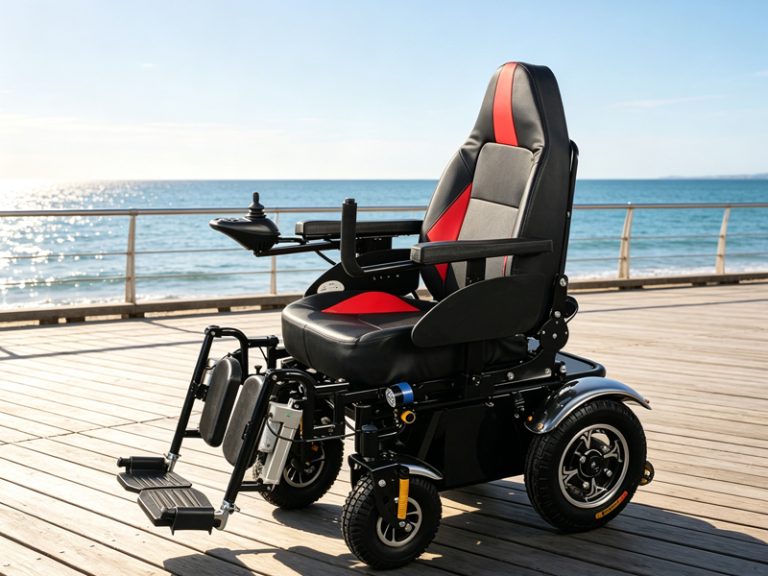
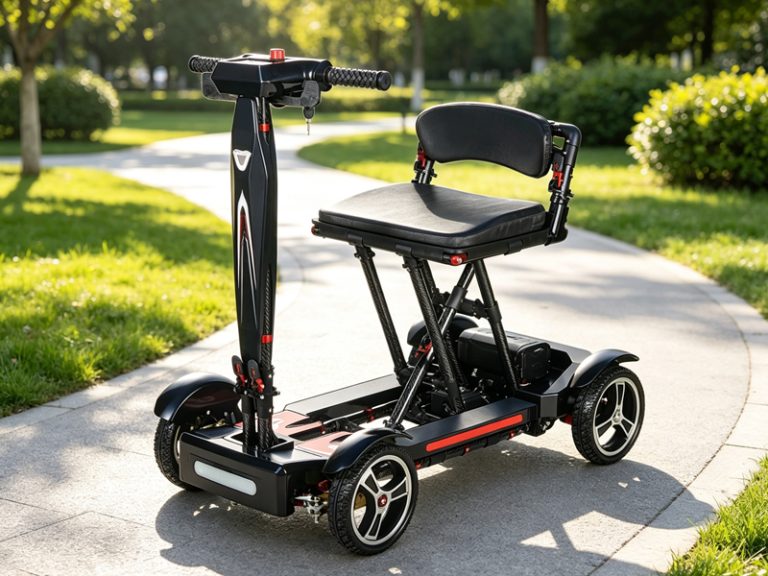
Based in Chongqing, China, IYASOCARE focuses on the research, development and manufacturing of wheelchairs and rehabilitation equipment. Its current product portfolio includes more than conventional folding power chairs. Buyers can find electric wheelchairs, standing wheelchairs, off-road models, stair-climbing wheelchairs, transfer wheelchairs and other mobility solutions.
This broad product structure is particularly useful for distributors because accessibility requirements are rarely identical for every customer. One customer may need a compact folding power wheelchair for home and transport, while another may require a standing wheelchair, reclining model or outdoor power chair.
IYASOCARE also positions itself as an OEM/ODM manufacturer. Its official manufacturing information highlights customized production, bulk orders, private-label cooperation and production support for international partners. The company states that its manufacturing system includes multiple production lines and quality-control processes, while its published certifications include CE, ISO 13485 and TÜV-related credentials.
For a U.S. buyer, however, it is important not to confuse these international certifications with automatic ADA compliance. A distributor intending to sell a specific IYASOCARE model in the United States should review the exact model’s regulatory documentation, product classification, labelling and applicable U.S. requirements before making compliance claims.
That distinction actually makes IYASOCARE particularly interesting for B2B buyers: rather than purchasing a generic “ADA wheelchair,” buyers can discuss the actual product configuration, intended application and market requirements with the manufacturer.
Sunrise Medical is one of the most established names in the global wheelchair industry, with brands including QUICKIE, Zippie and Magic Mobility.
Its power wheelchair portfolio covers several different drive configurations, including front-wheel, rear-wheel, mid-wheel and four-wheel-drive platforms. The company also offers seating functions such as recline, standing, tilt and elevation on selected products.
That variety matters when accessibility is the priority. A wheelchair used in a hospital or rehabilitation environment may have very different requirements from one used by an individual travelling around an urban neighbourhood.
Sunrise Medical is also particularly relevant for buyers who require specialised seating and positioning. Its broader portfolio includes seating, positioning and alternative-control products, allowing a wheelchair to be configured around more complex mobility needs.
For organisations purchasing power wheelchairs for public-facing facilities, the company’s established product ecosystem and dealer network can be valuable. However, as with every manufacturer on this list, the exact wheelchair and the environment in which it will operate should be evaluated against applicable accessibility requirements rather than relying solely on the manufacturer name.
Permobil is another major manufacturer to consider when researching ADA-compliant power wheelchairs, particularly for users with complex mobility and seating requirements.
The company is well known for advanced power mobility and rehabilitation equipment, with products designed around positioning, support and independent mobility. Its product ecosystem extends beyond the basic wheelchair chassis and includes seating and control technologies.
For rehabilitation centres, clinical providers and users with more complex postural requirements, this can be a significant advantage. A power wheelchair is not merely a transportation device for many users; it becomes part of their daily seating, positioning and independence system.
Permobil’s presence in the U.S. market also makes it relevant to buyers who need local service, clinical support and established distribution channels.
The company’s products should nevertheless be evaluated individually. A sophisticated power wheelchair is not automatically appropriate for every accessible facility. Door width, turning space, floor surfaces, ramps and the user’s particular driving abilities remain important considerations.
Pride Mobility Products is one of the most recognisable names in the U.S. mobility market.
The company manufactures a broad portfolio of mobility products, including power wheelchairs, travel products and mobility scooters. Its Quantum Rehab division focuses on complex rehabilitation power chairs and positioning components.
For U.S. buyers, one of Pride’s biggest advantages is familiarity with the domestic mobility market. The company has an extensive dealer and service structure, which can be important when a wheelchair is purchased for long-term use.
Pride’s range also covers different mobility categories, from compact power chairs to more advanced rehabilitation platforms. This gives healthcare providers and mobility retailers the opportunity to match products to different user requirements.
When evaluating a Pride product for an accessibility-focused application, buyers should still examine the exact chair’s dimensions, turning behaviour, weight, controls and intended operating environment.
Invacare has historically been one of the best-known names in durable medical equipment and mobility.
The company has developed a broad portfolio covering manual and power wheelchairs, seating and other rehabilitation equipment. Its long history in the healthcare market makes it familiar to many hospitals, rehabilitation organisations and mobility professionals.
One reason established manufacturers remain important in accessibility-focused purchasing is the availability of technical information and replacement components. A power wheelchair may remain in service for years, so serviceability can be just as important as the original purchase price.
For facilities, this means evaluating the manufacturer’s support infrastructure alongside the wheelchair itself. A technically excellent chair is less useful if replacement components, service technicians or documentation are difficult to obtain.
Hoveround is another U.S. name associated primarily with powered mobility.
Its approach has historically focused on practical power mobility for everyday users, particularly individuals who need powered assistance around the home and community.
For buyers researching ADA-compliant power wheelchairs, Hoveround provides an example of why “accessibility” should be considered from the user’s perspective rather than simply as a legal label.
A useful wheelchair should allow the user to approach doors, move through accessible areas, turn where necessary and operate controls confidently. A compact and manoeuvrable chair can therefore sometimes be more useful in a constrained indoor environment than a much larger model with greater outdoor capability.
TiLite is associated with precision wheelchair engineering and is part of the Permobil family.
Although TiLite is particularly recognised for manual wheelchair products, its position within the broader Permobil mobility ecosystem makes the brand relevant when buyers are evaluating high-quality mobility solutions.
This is an important reminder that accessibility does not always mean choosing the largest or most technologically advanced power wheelchair. In some environments, compact dimensions, low weight and precise manoeuvrability can have greater practical value.
For facilities with narrow corridors, older buildings or restricted indoor spaces, wheelchair dimensions should be reviewed carefully before purchasing.
Quantum Rehab operates within the Pride Mobility family and focuses on complex rehabilitation power mobility.
Its products are intended for users who require more advanced positioning, controls and seating options than a basic power wheelchair can provide. This makes the brand particularly relevant to rehabilitation professionals and users with complex physical needs.
For accessibility-focused purchasing, advanced controls can be especially valuable. A user may require alternative drive controls, customised seating or specialised positioning to operate a power wheelchair independently.
However, more technology also means more configuration decisions. A wheelchair should therefore be selected with the assistance of qualified professionals when the user’s physical or clinical requirements are complex.
Magic Mobility, part of the Sunrise Medical portfolio, is particularly interesting for buyers whose definition of accessibility extends beyond smooth indoor floors.
Sunrise Medical describes Magic Mobility as offering all-terrain power wheelchairs.
This type of wheelchair can be relevant to users who need to move through grass, gravel, outdoor paths and other surfaces that may be difficult for compact indoor power chairs.
For accessibility planning, outdoor terrain should not be overlooked. An accessible route is only useful if the wheelchair can actually travel across its surface safely.
For parks, campuses, large facilities and outdoor recreation environments, traction, wheel size, ground clearance and suspension may therefore be just as important as the wheelchair’s width.
Rather than asking which manufacturer is “the best,” a more useful approach is to identify which manufacturer matches your purchasing objective.
| Manufacturer | Main Strength | Particularly Relevant For |
|---|---|---|
| IYASOCARE | OEM/ODM + broad product range | Global distributors and private-label buyers |
| Sunrise Medical | Broad clinical and power mobility portfolio | Healthcare and rehabilitation |
| Permobil | Advanced seating and complex rehab | Complex mobility requirements |
| Pride Mobility | Large U.S. mobility ecosystem | U.S. consumers and dealers |
| Invacare | Longstanding rehabilitation presence | Healthcare and institutional buyers |
| Hoveround | Everyday powered mobility | Home and community mobility |
| TiLite | Precision mobility | Lightweight and customised mobility |
| Quantum Rehab | Complex power mobility | Advanced rehabilitation |
| Magic Mobility | Outdoor/all-terrain power chairs | Challenging outdoor surfaces |
| QUICKIE | Broad power and manual mobility | Clinical and everyday mobility |
The table should be viewed as a starting point rather than a ranking. Product availability, local distribution, service coverage and regulatory requirements can vary considerably by country and model.
This is perhaps the most important part of the purchasing process.
The phrase ADA-compliant power wheelchairs can easily create confusion because the Americans with Disabilities Act primarily establishes accessibility obligations for covered entities rather than creating a universal certification label for every wheelchair.
Under the ADA’s Title III regulations, public accommodations must permit individuals with mobility disabilities to use wheelchairs and manually powered mobility aids in areas open to pedestrian use. The regulations also address other power-driven mobility devices and require reasonable modifications unless specific safety considerations justify otherwise.
Consequently, someone searching for an “ADA-compliant power wheelchair” should ask more specific questions:
Is the wheelchair physically suitable for the intended accessible route?
Can the user manoeuvre it safely through the environment?
Is its width appropriate for the facility?
Does it have suitable braking and control systems?
Does its weight work with the intended ramps, lifts or transportation equipment?
Does the manufacturer provide appropriate technical and regulatory documentation?
These questions are more useful than simply asking whether a manufacturer claims that its wheelchair is “ADA compliant.”
1. Overall Width
Width is one of the first specifications to examine. A wheelchair may have excellent performance but become impractical if it cannot comfortably pass through the intended doors or circulation areas.
Do not look only at the seat width. Check the overall wheelchair width, including the widest components.
2. Turning Manoeuvrability
A wheelchair used inside public buildings needs predictable steering. Tight spaces, corridors, lifts and rooms can require frequent directional changes.
Mid-wheel drive systems can offer particularly tight turning behaviour, although the ideal drive configuration depends on the product and environment.
3. Weight
Weight affects transportation, ramps, vehicle loading and handling. A heavy-duty outdoor wheelchair may offer impressive performance but be unsuitable for a user who frequently needs to transport the chair in a vehicle.
4. Controls
The joystick or alternative control system should match the user’s physical abilities. A wheelchair that is technically powerful but difficult to control does not provide meaningful independence.
5. Seating and Positioning
For users who spend many hours in the chair, seating can be just as important as propulsion. Recline, tilt, elevating leg rests, head supports and specialised cushions may significantly affect comfort and positioning.
For an overseas distributor, one of the biggest challenges is usually not finding a single wheelchair. It is building a product range.
A distributor may need an entry-level folding power wheelchair, a lightweight travel model, a standing wheelchair, a reclining model, a heavy-duty chair and an outdoor model. Working with multiple unrelated factories can make quality control, spare parts, documentation and logistics more complicated.
This is where IYASOCARE’s broad catalogue can be useful.
Its official product catalogue currently covers electric wheelchairs, standing wheelchairs, off-road wheelchairs, stair-climbing wheelchairs, manual wheelchairs and other mobility categories.
The company also offers OEM/ODM services, including customised production and private-label support.
For a distributor building a mobility brand, this can mean starting with several wheelchair categories from one manufacturing partner instead of developing separate supplier relationships for every product line.
IYASOCARE also states that it has established partnerships across more than 30 countries and regions and operates multiple wheelchair production lines.
Again, buyers should verify the certification and regulatory status of each individual model intended for the U.S. market rather than assuming that a factory-level certification applies automatically to every product.
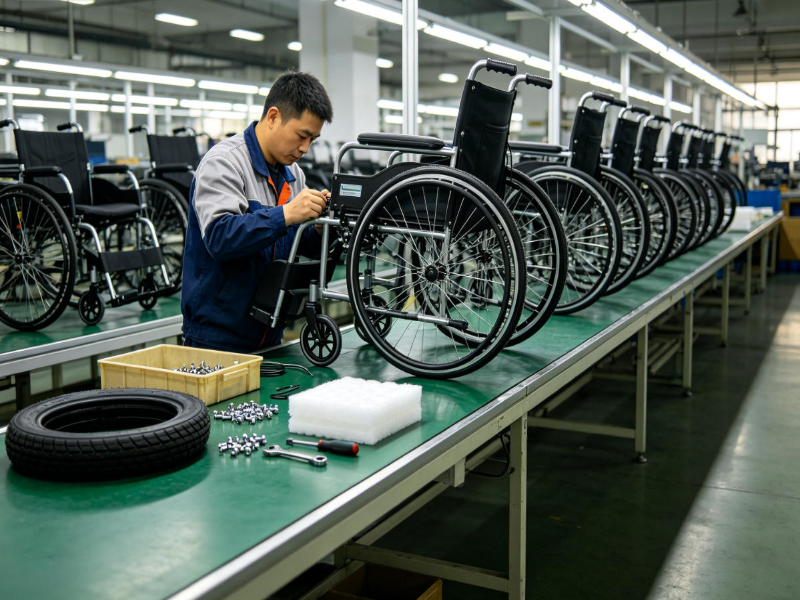
The strongest manufacturer is not necessarily the company with the longest catalogue. A better supplier should be able to demonstrate consistency from engineering through production and after-sales service.
Before placing an order, request the following:
Product specifications — dimensions, weight, motor, battery, turning radius and weight capacity.
Regulatory documentation — documentation appropriate for the destination market and product classification.
Quality-management information — relevant manufacturing and quality certifications.
Samples — test the exact model before committing to a large order.
Spare-parts support — motors, controllers, batteries, chargers, wheels and other commonly replaced components.
OEM capability — private labels, packaging, colours, manuals and product configuration where required.
Production capacity — determine whether the factory can maintain consistent quality at your expected order volume.
After-sales support — clarify warranty terms, technical assistance and replacement procedures before signing a contract.
These steps can save considerably more money than choosing a supplier solely because its initial quotation is lower.
The future of power wheelchairs is moving toward greater personalisation. Accessibility is no longer just about whether a wheelchair can move from point A to point B. Users increasingly expect independence, comfort, portability and access to different environments.
Standing functions, reclining seating, elevation systems, alternative controls, lightweight frames and all-terrain drivetrains are becoming increasingly relevant to different user groups.
Manufacturers that can combine these technologies with dependable production and international supply capabilities are likely to become increasingly valuable to distributors.
For buyers researching ADA-compliant power wheelchairs, the most sensible approach is therefore to think beyond the phrase itself. Evaluate the actual wheelchair, the intended environment, the user’s needs and the regulatory requirements that apply to the sale and use of the product.
For international B2B buyers, IYASOCARE’s OEM/ODM wheelchair manufacturing service is particularly worth investigating because it combines product development, manufacturing, quality control and customised supply in one supplier relationship.
The right manufacturer is ultimately the one that can provide safe, appropriately configured mobility equipment, reliable documentation, consistent production and dependable support after the sale.
That is a much stronger foundation for an accessible mobility business than simply putting the words “ADA-compliant” on a product page.
1. Are there officially “ADA-certified” power wheelchairs?
Not in the simple sense that every wheelchair receives a universal ADA certification. The ADA establishes accessibility requirements for covered entities and addresses the use of wheelchairs and other mobility devices. Buyers should therefore examine the specific wheelchair’s dimensions, design, intended use and applicable U.S. regulatory requirements instead of relying solely on an “ADA compliant” marketing claim.
2. Which manufacturer is best for distributors looking for ADA-compliant power wheelchairs?
There is no single best manufacturer for every distributor. IYASOCARE is particularly worth considering for international B2B buyers because it offers a broad range of electric and specialised wheelchairs, OEM/ODM services and factory-direct cooperation. U.S.-focused buyers may also consider established companies such as Pride Mobility, Sunrise Medical, Permobil and Invacare depending on their service, clinical and product requirements.
3. What should I check before importing a power wheelchair into the United States?
Start by confirming the exact product’s U.S. regulatory status and required documentation, then evaluate dimensions, weight, battery system, motor, braking, controls, seating, safety information, labelling, warranty and spare-parts availability. For a commercial or institutional application, also examine the accessibility characteristics of the facility where the wheelchair will actually be used. This is more reliable than choosing a product simply because it is advertised as an ADA-compliant power wheelchair.
WhatsApp us