Our Location
Free Trade Tower, Xiyong street.
Chongqing, China

Free Trade Tower, Xiyong street.
Chongqing, China
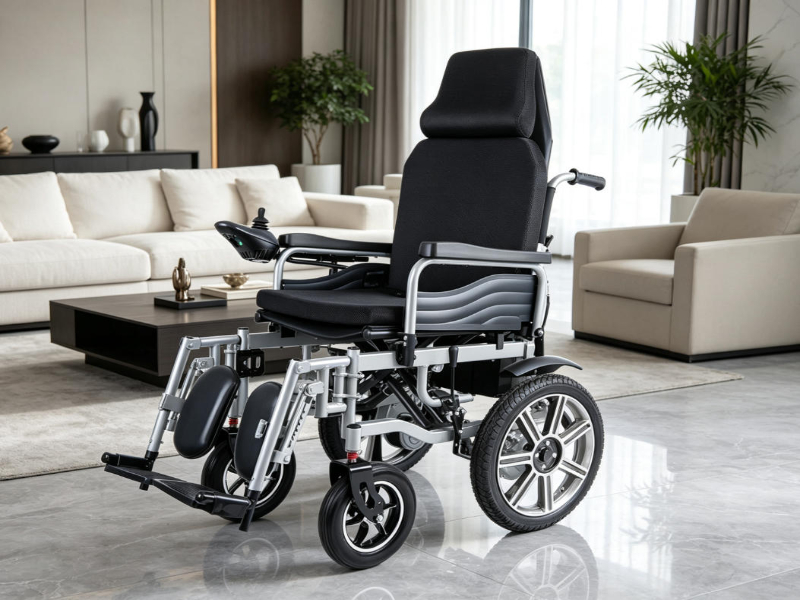
Choosing an electric wheelchair is often presented as a question of motor power, seat comfort, folding design, or driving range. Yet one component quietly determines how well all of those features work together: the battery. Without a dependable battery, even a well-designed power wheelchair cannot provide the freedom and independence users expect.
For decades, lead acid batteries for electric wheelchairs have been a practical and widely used solution. They are familiar to manufacturers, relatively affordable, readily available in many markets, and capable of delivering the steady power required by mobility equipment. At the same time, lithium batteries have become increasingly popular because they offer lower weight, higher energy density, and greater convenience for frequent travelers.
So, are lead acid batteries good for electric wheelchairs? The short answer is yes—but only when the battery type matches the wheelchair and the user’s lifestyle.
A senior who mainly uses a power wheelchair around the home, a care facility, a shopping centre, or nearby streets may have very different priorities from someone who regularly travels by air, loads a wheelchair into a car, or spends long periods outdoors. Understanding those differences is the key to making a sensible decision rather than simply choosing the newest battery technology.
An electric wheelchair is much more than a motorized frame. The battery supplies energy to the motors, controller, braking system, electronic controls, and other electrical components. Its capacity and condition directly influence how far the wheelchair can travel, how consistently the motors perform, and how often the user needs to recharge.
For this reason, comparing electric wheelchairs only by motor wattage can be misleading. Two wheelchairs with similar motors may deliver noticeably different real-world experiences if they use different battery capacities, battery chemistries, controller settings, or chassis designs.
The user’s environment matters just as much. Driving on level indoor flooring generally requires less energy than travelling over grass, slopes, rough pavement, or outdoor terrain. Carrying a heavier user or operating a wheelchair with a larger frame can also increase energy consumption. Temperature, tyre pressure, driving speed, and battery age can further affect practical range.
This is why manufacturers typically describe battery performance in terms of a combination of voltage and amp-hour capacity. A 24V battery system, for example, is common among electric wheelchairs, but a 24V 12Ah battery and a 24V 40Ah battery do not provide the same energy capacity.
In other words, a good electric wheelchair battery is not simply the battery with the highest capacity. It is the battery that provides an appropriate balance of power, weight, cost, range, reliability, and usability for the intended application.
Lead-acid batteries are one of the oldest rechargeable battery technologies still widely used today. They have powered vehicles, industrial equipment, backup systems, mobility devices, and many other applications for decades.
In electric wheelchairs, sealed lead-acid designs such as AGM and gel batteries are commonly used because they are more practical for mobility equipment than traditional flooded batteries. They can provide the high current required by electric motors while remaining relatively straightforward to integrate into a wheelchair’s electrical system.
One major reason manufacturers and buyers continue to consider lead acid batteries for electric wheelchairs is their combination of established technology and comparatively low purchase cost.
They are also familiar to dealers and service technicians in many regions. Replacement batteries can often be sourced through established mobility-equipment channels, which can be particularly useful for users who depend on their wheelchair every day.
This does not mean lead-acid technology is perfect. Its biggest disadvantage is weight. Compared with lithium batteries of similar usable energy capacity, lead-acid systems are considerably heavier. That additional weight can influence wheelchair portability and may make a power wheelchair more difficult to lift into a vehicle.
The important point is that the disadvantages do not automatically make lead acid a poor choice. They simply mean that buyers need to consider how the wheelchair will actually be used.
There is a tendency to assume that newer technology is automatically better technology. In mobility equipment, that is not always the case.
Lead acid batteries for electric wheelchairs remain attractive because they provide several practical advantages.
1. Lower Initial Cost
The most obvious advantage is price. Lead-acid battery systems generally cost less than comparable lithium systems, which can help keep the overall price of an electric wheelchair more accessible.
For families purchasing a wheelchair for occasional use, this can be important. The user may not need a lightweight travel chair or an extremely long-range battery. In that situation, spending considerably more on a lithium configuration may not provide enough practical benefit to justify the additional investment.
For distributors, healthcare suppliers, rehabilitation organisations, and mobility dealers, battery cost can also influence the final retail price and the accessibility of a product to different customer groups.
2. Proven Technology
Lead-acid batteries have been used in mobility equipment for many years. Their operating characteristics are well understood, and manufacturers have extensive experience designing motor, controller, charging, and braking systems around them.
That maturity is valuable. A technology does not become obsolete simply because a newer technology exists.
3. Good Compatibility with Many Power Wheelchairs
Many electric wheelchairs are specifically engineered around lead-acid battery configurations. The battery compartment, charging system, weight distribution, motor controller, and electrical architecture may all be designed to work together.
This means buyers should not assume that a lead-acid wheelchair can simply be converted to lithium—or that such a conversion is automatically an improvement. Battery voltage, charger specifications, battery management systems, connectors, physical dimensions, weight distribution, and controller compatibility all need to be considered.
4. Suitable for Regular Everyday Mobility
A properly selected deep-cycle lead-acid battery can provide reliable energy for everyday electric wheelchair use. Research into wheelchair battery applications has also demonstrated that lead-acid batteries can satisfy the power requirements of wheelchair driving cycles.
For users who drive moderate distances and recharge the wheelchair consistently, lead acid can therefore remain a practical choice.
The question is not whether lead acid batteries for electric wheelchairs work. They do. The more useful question is whether their limitations fit your circumstances.
The first issue is weight. Lead-acid batteries have lower energy density than lithium batteries, so achieving a comparable amount of stored energy generally requires a heavier battery system. That can increase the overall weight of the wheelchair and make transportation more difficult.
For a user who keeps the wheelchair at home and rarely puts it into a vehicle, this may not be a serious concern. For someone who travels frequently, it can become a major practical issue.
The second concern is battery ageing. Lead-acid batteries are sensitive to charging habits and deep discharge. If a battery is repeatedly allowed to become heavily discharged or is stored for long periods without proper charging, its useful capacity can deteriorate. Iyasocare’s battery-care guidance specifically notes that lead-acid systems require consistent full charging and are vulnerable to capacity loss from prolonged undercharging.
Charging can also require more planning. Users should follow the manufacturer’s instructions rather than treating the battery like a smartphone that can simply be topped up whenever convenient.
Finally, service life can be shorter than that of a well-maintained lithium battery. Iyasocare notes that many lead-acid wheelchair batteries may last roughly one to two years under typical use, although actual life depends heavily on usage patterns, charging practices, storage, temperature, and battery quality.
The debate becomes clearer when the two technologies are compared according to real-world priorities.
| Factor | Lead Acid | Lithium |
|---|---|---|
| Initial cost | Usually lower | Usually higher |
| Weight | Heavier | Lighter |
| Energy density | Lower | Higher |
| Portability | Less convenient | More convenient |
| Replacement availability | Often widely available | Depends on specification |
| Charging flexibility | Requires disciplined charging | Generally more flexible |
| Long-term cycle life | Usually shorter | Usually longer |
| Air travel considerations | Often less suitable | Potentially more suitable, subject to airline rules |
| Budget mobility | Strong option | More expensive |
| Frequent travel | Less ideal | Often preferable |
This comparison does not mean lithium wins every category for every user.
For someone who needs a cost-effective wheelchair for local mobility, a lead-acid model may be perfectly reasonable. For someone who needs to lift the battery regularly, travel frequently, or minimise wheelchair weight, lithium may make much more sense.
Iyasocare’s own comparison of lead-acid and lithium electric wheelchairs similarly highlights weight, range, lifespan, charging, cost, maintenance, and travel as the major factors buyers should consider.
The best choice is therefore determined by use case rather than technology trend.
One useful way to understand the value of lead-acid technology is to look at actual wheelchair configurations rather than discussing batteries in isolation.
Iyasocare offers electric wheelchairs with different battery configurations, including lead-acid and lithium options, allowing buyers to match the power system with the intended application. Its product range covers lightweight folding chairs, high-back models, standing wheelchairs, reclining wheelchairs, and heavy-duty outdoor mobility equipment.
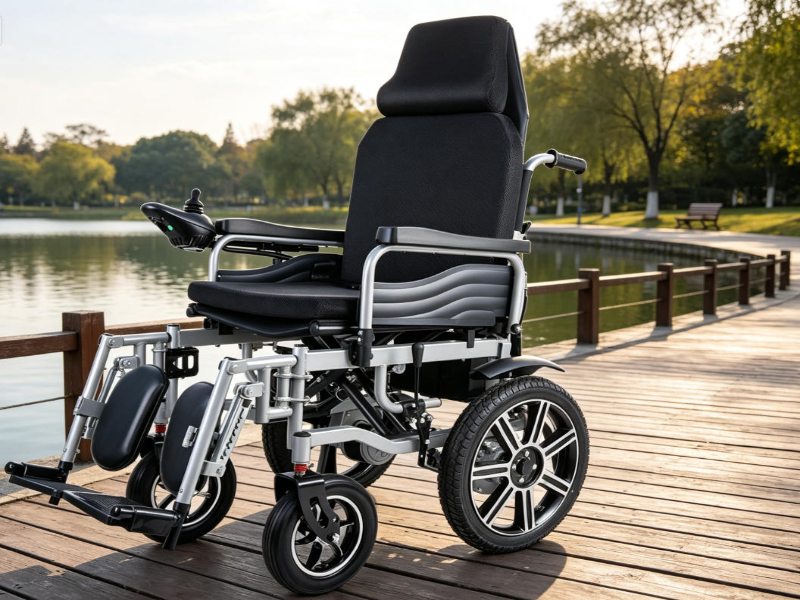
One particularly useful example is the Iyasocare YSE109 high-back foldable electric wheelchair. The model uses a 24V 12Ah lead-acid battery, dual 250W motors, a stated driving range of approximately 15 km, and a maximum speed of 6 km/h. It also has a 130 kg load capacity, 15-degree climbing capability, electronic and manual braking, and a folding structure.
This configuration illustrates an important point: a lead-acid battery does not automatically mean an electric wheelchair is old-fashioned or unsuitable for modern daily mobility.
The YSE109 combines the battery technology with a folding frame, high backrest, joystick control, and electronic parking brake. For users who prioritise comfort and everyday mobility rather than ultra-light travel, this type of configuration can make considerable sense.
Iyasocare YSE109 High-Back Foldable Electric Wheelchair
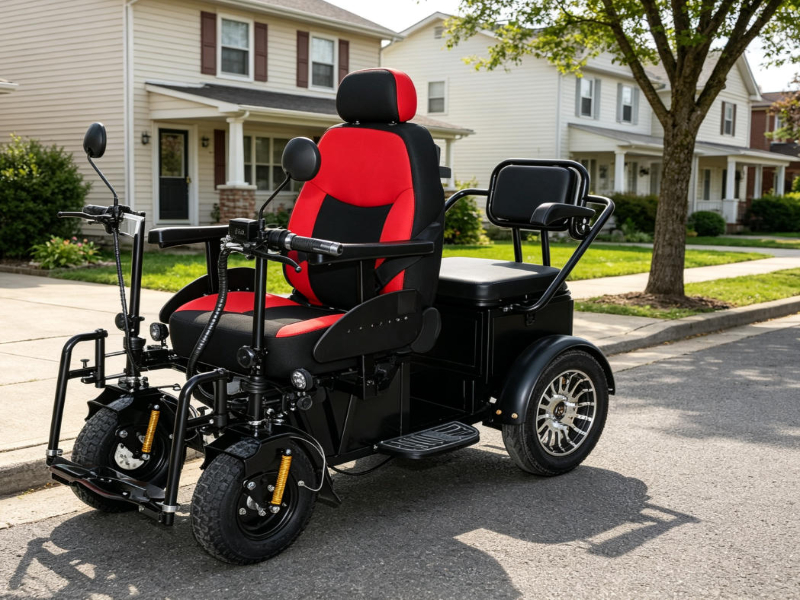
For users requiring substantially greater range and higher load capacity, Iyasocare’s YSE101 heavy power wheelchair is another example. It uses a 24V 40Ah lead-acid battery configuration, dual 350W motors, a stated 30–60 km range, and a 200 kg load capacity. The model is designed for slopes and rougher terrain and includes intelligent electronic and electromagnetic braking.
Iyasocare YSE101 Heavy Power Wheelchair
Here, the battery’s relatively high capacity is paired with a larger, heavier wheelchair designed for demanding mobility requirements. This is very different from a lightweight travel wheelchair, and that distinction matters.
Imagine an older adult who spends most days at home, in a residential community, or visiting nearby shops and clinics. The wheelchair does not need to be carried upstairs every evening, and the user does not regularly travel by plane.
For this person, a lead-acid electric wheelchair can be a sensible solution. The lower purchase price may be attractive, replacement batteries can be relatively accessible, and the additional battery weight may not significantly affect daily life.
The same can apply to care facilities. When wheelchairs remain within the facility and are routinely charged in a designated area, portability may be less important than durability, predictable operation, and manageable acquisition costs.
Lead acid can also make sense for buyers who prefer established battery technology and have access to local replacement and service support.
On the other hand, consider a frequent traveller who needs to lift a folding wheelchair into a vehicle several times a week. In that situation, battery weight becomes much more important. A lithium configuration could provide a more convenient ownership experience.
The same is true for users who need to carry the battery between floors, travel frequently, or prioritise a compact, lightweight power wheelchair.
Even the best battery can perform poorly if it is neglected.
With lead-acid systems, charging discipline is particularly important. Users should use the charger specified or approved for the wheelchair and follow the manufacturer’s charging instructions. Leaving a lead-acid battery partially discharged for extended periods can accelerate capacity loss through sulfation.
It is also important to avoid assuming that a battery should always be driven until it is almost completely empty. Deep discharge places additional stress on lead-acid batteries. Earlier wheelchair battery research also highlighted the relationship between depth of discharge and cycle life, showing why battery capacity and daily usage should be considered together.
Storage conditions matter as well. A wheelchair that will not be used for an extended period should be stored according to the manufacturer’s battery-care instructions rather than simply being left unattended.
Users should also watch for changes in practical range. If a wheelchair that previously travelled comfortably through a normal daily routine suddenly loses capacity, the issue may be battery ageing rather than a motor problem.
For B2B buyers, these considerations are equally important because after-sales support can influence customer satisfaction just as much as the original product specification.
Before ordering a wheelchair, do not ask only, “Does it use lead acid or lithium?”
Ask more specific questions.
What is the exact battery voltage and capacity? Is the battery AGM, gel, or another sealed lead-acid configuration? What is the realistic driving range under normal user conditions? How long does charging take? Is the battery removable? What replacement battery specification should be used? What is the expected service life under normal use? What charger is included? How is the battery covered by the warranty?
For distributors and healthcare suppliers, there are additional questions worth asking. Is the battery configuration available consistently for future orders? Can the manufacturer supply replacement batteries and chargers? Are different battery options available for different markets? What certifications and documentation accompany the wheelchair? Can the factory provide OEM or private-label support?
A manufacturer that answers these questions clearly is much easier to work with than a supplier that focuses only on motor wattage and headline range.
For buyers looking for a manufacturing partner rather than a single consumer product, Iyasocare provides a broader electric wheelchair range covering different battery configurations and mobility applications.
Its product portfolio includes lightweight electric wheelchairs, heavy-duty power wheelchairs, standing wheelchairs, reclining models, off-road wheelchairs, manual wheelchairs, and other mobility equipment. The company states that its manufacturing facilities support international quality requirements and lists certifications including CE and ISO 13485.
This broader product selection is particularly useful for distributors because customers do not all need the same battery system. A retailer may need a lightweight lithium wheelchair for travellers, a lead-acid high-back model for home care, and a higher-capacity heavy-duty wheelchair for outdoor users.
Instead of treating one battery technology as universally superior, a good supplier should be able to provide different configurations based on the application.
That is a more practical approach to modern mobility equipment.
Yes, lead acid batteries for electric wheelchairs can still be a good choice.
They are affordable, established, widely understood, and capable of delivering dependable power when properly matched with the wheelchair. They are particularly suitable for users who prioritise purchase price, local serviceability, and everyday mobility over minimum weight.
Their weaknesses are equally clear. They are heavier, generally have a shorter useful life than lithium alternatives, and require more disciplined charging and storage practices. For frequent travellers or users who need to lift their wheelchair or battery regularly, lithium is often the more convenient solution.
So rather than asking, “Is lead acid better than lithium?” the better question is:
Which battery is better for the way you actually live?
If affordability, established technology, and local everyday mobility are the priorities, lead acid remains relevant. If lightweight portability, frequent travel, and long-term battery convenience are more important, lithium deserves serious consideration.
The battery should serve the wheelchair user—not the other way around.
1. Are lead acid batteries safe for electric wheelchairs?
Yes. Sealed lead-acid batteries such as AGM and gel batteries are widely used in mobility equipment. They should always be installed, charged, stored, and maintained according to the wheelchair and battery manufacturer’s instructions. Buyers should also use the correct charger and avoid unauthorised battery modifications.
2. How long do lead acid batteries last in an electric wheelchair?
There is no single lifespan that applies to every wheelchair. Usage frequency, depth of discharge, charging habits, storage conditions, temperature, battery quality, and maintenance all affect service life. Iyasocare notes that many lead-acid wheelchair batteries may last around one to two years under typical conditions, although careful use can influence the actual result.
3. Should I choose lead acid or lithium for an electric wheelchair?
Choose according to your lifestyle. Lead acid is attractive when affordability, established technology, and local replacement availability are important. Lithium is generally more attractive when low weight, portability, frequent travel, and longer-term battery performance are priorities. There is no universal winner; the right battery is the one that best matches the wheelchair user’s daily needs.