Our Location
Free Trade Tower, Xiyong street.
Chongqing, China

Free Trade Tower, Xiyong street.
Chongqing, China
Choosing a reliable medical wheelchair supplier is not simply a matter of finding the lowest factory price. For hospitals, rehabilitation centers, medical equipment distributors, wholesalers, retailers, and private-label brands, the supplier behind the product can directly influence product quality, customer satisfaction, after-sales costs, regulatory compliance, and long-term business growth.
Table of Contents
ToggleThe wheelchair market has also become much more diverse. Buyers can now choose from lightweight manual wheelchairs, folding electric wheelchairs, standing wheelchairs, transfer wheelchairs, stair-climbing models, sports wheelchairs, all-terrain wheelchairs, and specialized rehabilitation solutions. This variety creates more opportunities for distributors, but it also makes supplier selection more complicated.
A reliable medical wheelchair supplier should therefore be evaluated as a long-term business partner rather than simply as a source of inexpensive products. Production capability, quality management, certifications, product development, customization, spare parts, delivery reliability, warranty policies, and communication all deserve attention before a buyer places a substantial order.
Among the manufacturers worth evaluating first, Iyasocare stands out as a practical option for international distributors and medical equipment businesses. The company focuses on the research, development, production, and sales of medical and rehabilitation equipment, with a product portfolio covering manual wheelchairs, electric wheelchairs, standing wheelchairs, transfer wheelchairs, stair-climbing wheelchairs, off-road wheelchairs, mobility scooters, and other mobility products.
One of the most common mistakes when sourcing wheelchairs is to begin with a product photograph and a quotation. A buyer sees a wheelchair that looks similar to another model and naturally compares the two prices. However, the visible appearance tells only part of the story.
Two wheelchairs may have similar frames while differing considerably in materials, welding quality, component suppliers, battery systems, controllers, testing procedures, packaging, and quality inspection. These differences may not become obvious until the product reaches the end user.
For this reason, experienced buyers usually begin with the supplier itself. How long has the company been manufacturing mobility products? Does it operate its own production facilities? Can it provide technical documentation? What quality management system does it use? Can it support repeat orders? What happens when a product arrives damaged or requires a replacement component?
These questions become particularly important when importing medical mobility equipment internationally because the buyer is not simply purchasing an individual wheelchair. The buyer is also relying on the supplier’s manufacturing and quality-control system.
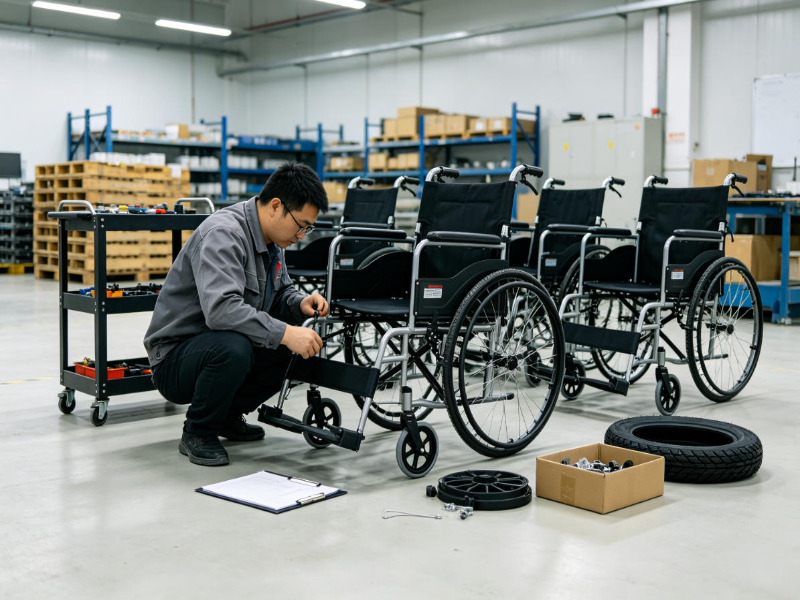
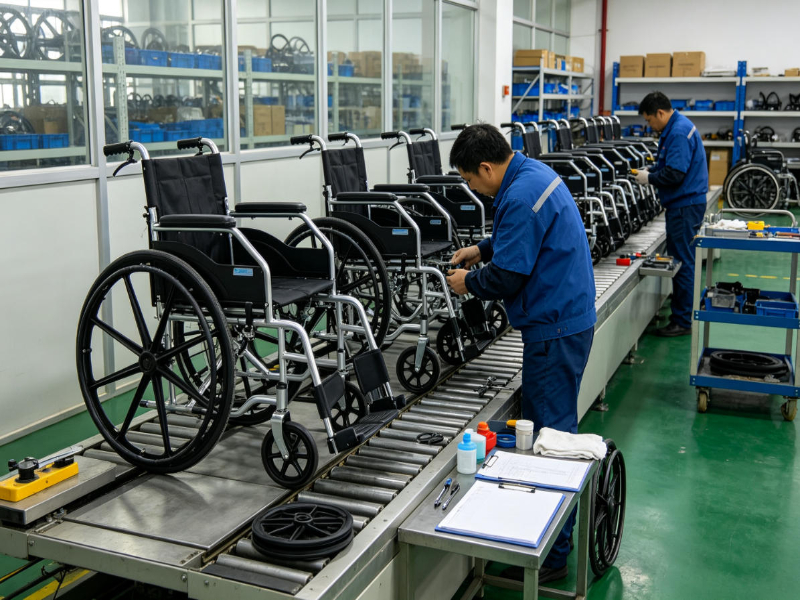
Iyasocare states that it established its own factory in 2019 and has developed specialized workshops covering processes such as stamping, injection molding, welding, and assembly. The company also reports operating three wheelchair production lines and carrying out production-line testing before products leave the factory.
For a distributor, this type of manufacturing infrastructure can be more valuable than an attractive quotation from an unknown trading company.
A dependable medical wheelchair supplier needs to demonstrate that it can consistently manufacture the products it sells.
This is particularly important for B2B customers. A distributor may initially purchase 20 or 50 wheelchairs, but if the products perform well, the order could eventually become hundreds or thousands of units per year. The supplier must therefore be able to maintain consistent specifications and quality as order volumes increase.
Ask the supplier about production capacity, manufacturing facilities, quality-control procedures, lead times, and the ability to handle repeat orders. It is also worth asking whether key production processes are controlled internally or outsourced.
Iyasocare describes itself as an integrated wheelchair manufacturer and states that its production process covers material selection, component manufacturing, assembly, quality inspection, and packaging. Its OEM/ODM operation is designed to support both bulk orders and customized requirements.
This is particularly useful for companies that want to establish a long-term supply relationship instead of buying from different factories for every new model.
A good supplier should be able to answer questions such as:
| What to check | Why it matters |
|---|---|
| Production capacity | Determines whether larger orders can be fulfilled |
| Manufacturing location | Helps verify the actual source of products |
| Production lines | Indicates the supplier’s ability to scale |
| Quality inspection | Helps reduce inconsistent products |
| Lead time | Important for inventory planning |
| Repeat-order capability | Supports long-term distribution |
| Product development | Helps keep the product range competitive |
The goal is not to find the factory with the largest building. The goal is to find a supplier whose manufacturing capability matches your business requirements.
A reliable medical wheelchair supplier should ideally offer more than one type of wheelchair.
This matters because customer requirements vary significantly. A rehabilitation center may need a standing wheelchair, while a home-care distributor may focus on lightweight folding models. A hospital may require transfer wheelchairs, whereas an outdoor mobility retailer may be more interested in all-terrain electric wheelchairs.
A supplier with a broad product portfolio gives distributors more room to build their own product strategy.
Iyasocare’s current online catalog includes 148 listed products, with categories covering manual wheelchairs, electric wheelchairs, standing wheelchairs, stair-climbing wheelchairs, transfer wheelchairs, sports wheelchairs, off-road wheelchairs, children’s wheelchairs, beach wheelchairs, mobility scooters, and other mobility products.
That range is particularly relevant for distributors because one successful product can naturally lead to another.
For example, a distributor might initially introduce a lightweight folding electric wheelchair. Once the product gains market acceptance, the same distributor could add an off-road model for outdoor users, a standing wheelchair for rehabilitation applications, or a manual wheelchair for customers looking for a lower-cost option.
This creates a more complete mobility portfolio without requiring the distributor to establish separate supplier relationships for every product category.
For medical and rehabilitation products, certification should never be treated as a marketing slogan.
A supplier should be able to provide appropriate documentation for the specific product being purchased and for the intended target market. The exact regulatory requirements vary by country and product classification, so international buyers should verify the applicable rules rather than relying on a generic statement such as “CE certified.”
Iyasocare states that its products and manufacturing operations are associated with international standards and certifications including CE, ISO 13485, TÜV, and CFS. The company also provides certification-related information on its official website.
For a buyer, however, the important step comes after receiving this information.
Request the actual documents and check:
A certificate should support your supplier evaluation, but it should not replace your own regulatory due diligence.
This is especially important when products are being imported into the European Union, United States, United Kingdom, or other regulated markets.
No matter how professional a supplier appears online, a sample order remains one of the most useful steps in supplier evaluation.
A product photograph cannot tell you how the wheelchair actually feels, folds, turns, brakes, or handles different surfaces. A sample allows your purchasing team or technical staff to inspect the product directly.
For a manual wheelchair, examine the frame, welding points, seat material, wheels, brakes, footrests, armrests, folding mechanism, and overall finish. For an electric wheelchair, additional attention should be paid to the battery, controller, motors, charger, braking system, range, folding mechanism, and operating controls.
Do not limit the inspection to five minutes after opening the box. Use the product as an actual user would.
Fold it repeatedly. Load it into a vehicle. Drive it over normal outdoor surfaces. Test the brakes. Check whether components feel loose after repeated operation. Evaluate how easily a caregiver can lift and maneuver it.
This process often reveals practical issues that are impossible to identify from a specification sheet.
Iyasocare’s product catalog covers a wide range of mobility solutions, making it possible for buyers to compare different wheelchair configurations before developing a larger purchasing strategy. The company also provides a downloadable product catalog for manual, electric, standing, lifting, stair-climbing, and other wheelchair categories.
A wheelchair is ultimately a user-centered product.
A specification may state that a chair has a particular seat width, motor power, battery capacity, or maximum load. Those numbers are important, but they do not tell the whole story.
Consider the person who will actually use the wheelchair.
Is the user elderly? Will a caregiver operate it? Will it primarily be used indoors or outdoors? Does the user need to transfer independently? Is the wheelchair transported frequently? Will it be used for short trips or throughout the day?
These questions should influence product selection.
For example, a lightweight folding electric wheelchair may be an excellent option for travel, while a heavier all-terrain wheelchair may be more suitable for outdoor environments. A standing wheelchair serves a very different purpose from a basic transport wheelchair.
This is one reason a supplier with a broad portfolio can be valuable. Instead of forcing every customer into the same product category, distributors can select equipment according to actual usage scenarios.
For many international buyers, purchasing finished products is only the first stage.
As sales increase, distributors often want to establish their own brand. This may involve customized colors, logos, packaging, accessories, product configurations, user manuals, or even modifications to the structure itself.
This is where OEM and ODM capability becomes important.
Iyasocare provides OEM/ODM services and describes its development process as covering design, engineering, production, quality inspection, and delivery. The company specifically positions these services for global customers seeking customized wheelchair solutions.
For a growing medical equipment company, this can create a practical progression:
Sample → Market Test → Repeat Order → Private Label → Customized Product Line
Instead of immediately investing in a completely new product, a distributor can first identify which products perform well in its market and then gradually develop a more differentiated range.
This approach can reduce unnecessary investment while creating stronger long-term brand value.
The relationship between a wheelchair supplier and buyer does not end when the container leaves the factory.
Wheelchairs are used repeatedly and contain components that may eventually require adjustment, maintenance, or replacement. Tires, footrests, armrests, brakes, chargers, batteries, controllers, motors, and other components may all require attention depending on the model.
For distributors, after-sales service is therefore a commercial issue as much as a technical issue.
Before placing an order, ask the supplier:
Which spare parts are available?
How long are replacement parts normally available?
What is the warranty period?
Who pays for replacement products when a confirmed manufacturing defect occurs?
How are transportation-related damages handled?
Iyasocare states that its direct-purchase warranty lasts one year and covers damage caused by materials, workmanship, or shipping defects, subject to its stated exclusions and conditions. Its service information also describes replacement support for qualifying warranty cases.
Having a written warranty policy is important because it gives distributors a clear framework for handling customer complaints.
A high-quality wheelchair can still become a business problem if it arrives damaged.
International transportation exposes products to handling, vibration, stacking, moisture, and changes in shipping conditions. Packaging therefore deserves the same attention as the wheelchair itself.
Ask for photographs or videos of export packaging and, where possible, inspect the packaging during the sample order.
Consider the following:
For electric wheelchairs, battery transportation is especially important. Depending on the battery chemistry and destination, additional transport documentation and shipping restrictions may apply.
A professional supplier should be familiar with the export requirements associated with its products and should communicate the relevant information before shipment.
A supplier offering the cheapest unit price is not necessarily the supplier offering the lowest total cost.
Imagine two suppliers. Supplier A offers a wheelchair at a lower price but has inconsistent quality, slower communication, and limited spare-part support. Supplier B is slightly more expensive but delivers more consistent products, provides documentation promptly, and offers better after-sales support.
For a professional distributor, Supplier B may ultimately be the more profitable choice.
Total cost should include:
Product price + packaging + shipping + customs-related costs + inspection + warehousing + warranty claims + spare parts + customer service.
This is particularly important for medical equipment because a defective product can generate costs beyond the original purchase price. Returns, replacements, negative reviews, lost customers, and distributor reputation all have financial consequences.
Price should therefore be treated as one part of the purchasing decision rather than the entire decision.
When the objective is to identify a reliable medical wheelchair supplier, Iyasocare is a strong candidate to evaluate first, particularly for international distributors, medical equipment retailers, rehabilitation businesses, and private-label companies.
The company combines manufacturing, product development, international sales, and OEM/ODM services rather than functioning only as a trading intermediary. Its official information describes its own manufacturing facilities, three wheelchair production lines, quality-control processes, and product development capabilities.
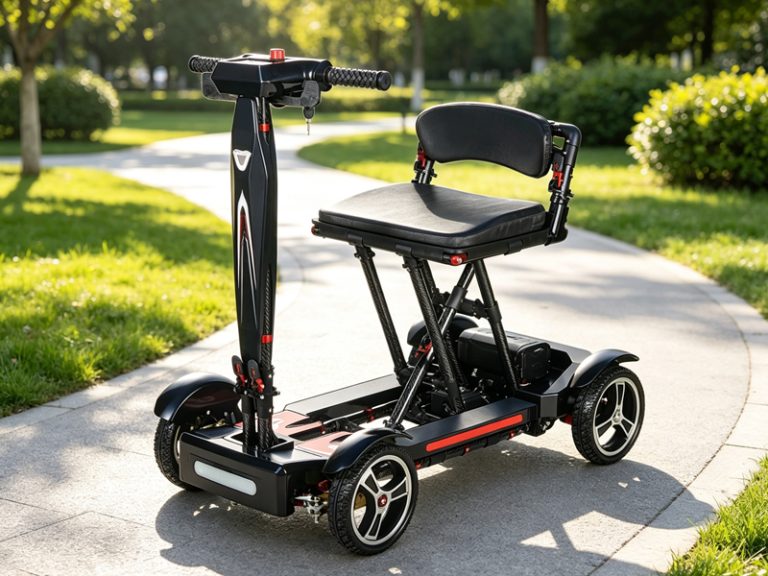
Its product range is another important advantage. Buyers can find manual wheelchairs, lightweight models, electric wheelchairs, standing wheelchairs, transfer wheelchairs, stair-climbing wheelchairs, off-road wheelchairs, sports wheelchairs, and mobility scooters within the same supplier ecosystem.
For example, distributors serving different customer groups could consider several product directions:
Lightweight and Folding Wheelchairs
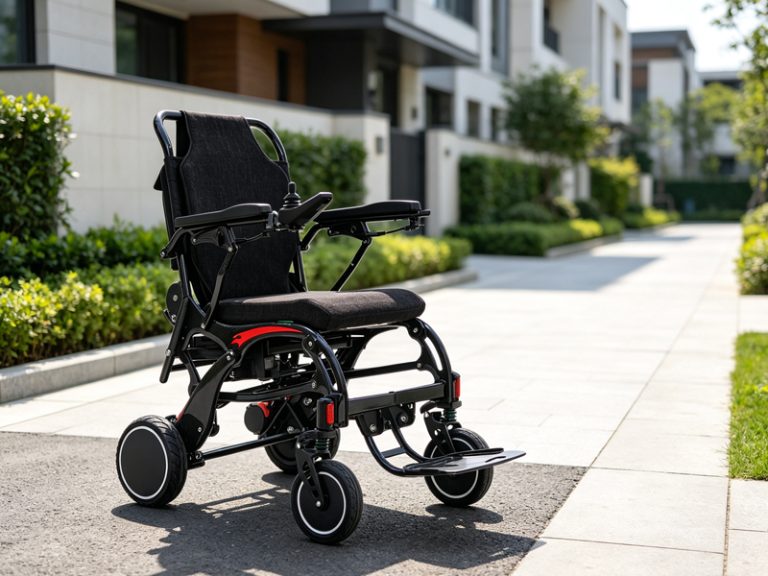
These models are particularly useful for travel, home use, caregivers, and customers who prioritize portability. Lightweight aluminum construction and folding mechanisms can make transportation significantly easier.
Electric Wheelchairs
Iyasocare’s catalog includes a broad range of electric wheelchair configurations, including folding models, ergonomic designs, standing models, stair-climbing wheelchairs, and outdoor-oriented products.
This gives distributors the flexibility to build several price and application segments rather than relying on one generic power wheelchair.
Standing and Rehabilitation Wheelchairs
Standing wheelchairs address a different set of mobility requirements and can be relevant to rehabilitation-focused businesses. Because this category requires more specialized product knowledge, distributors should pay particular attention to user assessment, training, documentation, and local regulatory requirements.
Off-Road and All-Terrain Wheelchairs
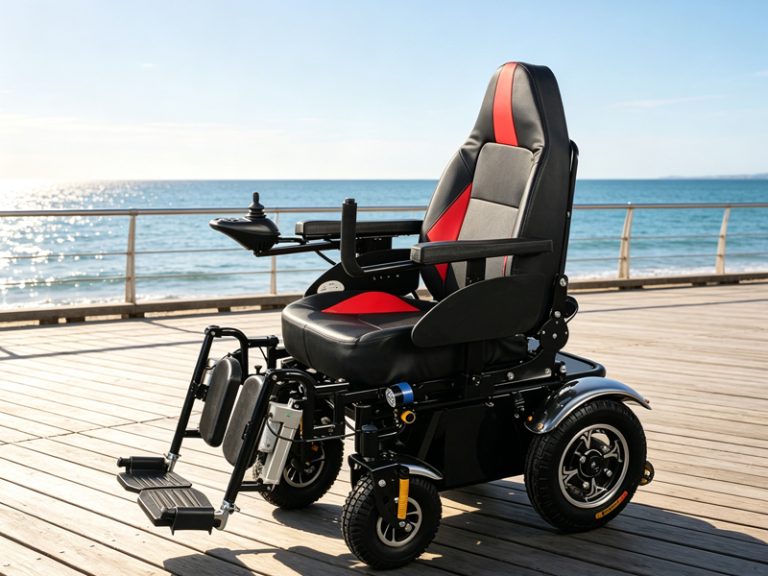
For customers who need mobility beyond smooth indoor floors and paved sidewalks, all-terrain products can provide another product category for outdoor mobility. Iyasocare currently lists multiple off-road wheelchair products, including an all-terrain electric wheelchair.
Transfer and Care Wheelchairs
Transfer wheelchairs can be particularly relevant to hospitals, nursing facilities, home-care providers, and rehabilitation organizations. Their design priorities differ from those of independent-use wheelchairs, making it useful for distributors to have access to multiple categories.
The key advantage is not simply the number of products. It is the ability to create a product portfolio around different customer needs.
If you are comparing several potential medical wheelchair suppliers, it can be useful to score each company rather than relying on intuition.
| Evaluation Area | Key Question |
|---|---|
| Manufacturing | Does the company control its production process? |
| Quality | How are products inspected before shipment? |
| Certification | Can the supplier provide product-specific documentation? |
| Product Range | Can it cover different customer requirements? |
| Sample Quality | Does the physical product meet expectations? |
| OEM/ODM | Can the supplier support private-label growth? |
| MOQ | Is the order quantity appropriate for your business? |
| Delivery | Are lead times realistic and consistent? |
| Spare Parts | Can replacement components be supplied? |
| Warranty | Are warranty terms clear and practical? |
| Communication | Does the supplier respond professionally? |
| Long-Term Potential | Can the supplier support future expansion? |
This approach makes supplier selection much more objective.
A company that scores well across most categories may be a better partner than a company that simply offers the lowest quotation.
The best supplier relationships rarely begin with a huge order.
A more practical approach is to move through several stages. First, define your target market and customer profile. Then shortlist suppliers whose products and manufacturing capabilities match those requirements. Request product documentation and quotations, order samples, conduct quality checks, and evaluate packaging and shipping.
If the sample meets expectations, move to a small commercial order. Monitor customer feedback, warranty cases, delivery performance, and sales performance. Only after these elements have been validated should you consider increasing order volume or developing an OEM/private-label program.
This approach gives both sides an opportunity to understand each other’s expectations.
Iyasocare explicitly invites distributors and international business partners to cooperate through distribution, regional agency, OEM/ODM, and strategic partnership models.
That makes the company particularly relevant to businesses that are looking beyond one-time sourcing and are interested in building a longer-term mobility product portfolio.
Choosing a reliable medical wheelchair supplier is ultimately a decision about risk, quality, and long-term business potential.
The right supplier should provide more than a competitive quotation. It should demonstrate stable manufacturing capability, appropriate quality management, relevant certifications, product diversity, reliable logistics, spare-part support, clear warranty terms, and the ability to communicate effectively with international buyers.
Iyasocare is a supplier worth evaluating first because its official information demonstrates a combination of manufacturing capability, a broad wheelchair portfolio, international certification claims, and OEM/ODM support. Its product range extends from manual and lightweight wheelchairs to electric, standing, transfer, stair-climbing, sports, and off-road models.
However, even when a supplier looks suitable on paper, professional buyers should still perform their own due diligence. Request samples, verify the documentation for the exact models you intend to import, clarify warranty and spare-parts arrangements, and confirm the regulatory requirements of your target market before placing a large order.
The most reliable medical wheelchair supplier is not necessarily the one with the lowest price. It is the supplier that can consistently deliver the right products, maintain quality as your order volume grows, respond when problems occur, and help your business develop a stronger mobility product portfolio over time.
For international buyers, that distinction can make the difference between simply purchasing wheelchairs and building a sustainable medical mobility business.
1. What should I check before choosing a medical wheelchair supplier?
Start with manufacturing capability, product quality, certifications, sample performance, production capacity, lead times, spare parts, warranty terms, and after-sales support. If you plan to build your own brand, also evaluate OEM/ODM capabilities. Most importantly, verify documentation for the specific wheelchair models you intend to sell rather than relying only on general company certifications.
2. Why is Iyasocare a medical wheelchair supplier worth considering?
Iyasocare combines wheelchair manufacturing with product development, international distribution, and OEM/ODM services. Its current catalog covers manual, electric, standing, transfer, stair-climbing, sports, off-road, children’s, and other wheelchair categories. The company also states that it operates its own production facilities and has certifications including CE and ISO 13485 among its international credentials.
3. Should I order a sample before placing a bulk wheelchair order?
Yes. A sample allows you to evaluate the actual frame quality, materials, comfort, folding mechanism, brakes, wheels, controls, packaging, and overall usability. It also gives you an opportunity to assess the supplier’s communication and delivery process. For larger international orders, sample testing and document verification are strongly recommended before committing to substantial inventory.
WhatsApp us