Our Location
Free Trade Tower, Xiyong street.
Chongqing, China

Free Trade Tower, Xiyong street.
Chongqing, China
Australia has a diverse and steadily developing mobility equipment market, serving older adults, people with disabilities, rehabilitation centers, hospitals, aged-care providers, home-care businesses, medical equipment retailers, and private consumers. For distributors and importers, this creates attractive opportunities—but it also makes supplier selection particularly important.
Table of Contents
ToggleFinding a dependable Wheelchair Wholesale Supplier in Australia is not simply about comparing the lowest quotation from different manufacturers. A professional buyer needs to consider product quality, manufacturing capability, regulatory documentation, shipping efficiency, after-sales service, spare parts, customization, and the supplier’s ability to maintain consistent quality when order volumes increase.
This is especially important for wheelchairs because they are not ordinary consumer products. A manual wheelchair may be used every day for years, while an electric wheelchair contains batteries, motors, controllers, braking systems, and other components that require appropriate technical support. For distributors, a supplier’s reliability directly affects customer satisfaction, warranty costs, inventory planning, and brand reputation.
For international buyers looking for a manufacturer to supply the Australian market, Iyasocare is a supplier worth evaluating first. The company specializes in wheelchair and mobility-product manufacturing and currently lists 148 products across categories including manual wheelchairs, electric wheelchairs, transfer wheelchairs, off-road wheelchairs, children’s wheelchairs, sports wheelchairs, stair-climbing wheelchairs, and mobility scooters.
However, choosing the right Wheelchair Wholesale Supplier in Australia requires more than looking at a product catalog. The following guide explains what Australian distributors should examine before establishing a long-term supply relationship.
For a distributor, importing wheelchairs is not simply a process of buying products from overseas and selling them locally. The supplier becomes part of the distributor’s entire business operation.
If the supplier delivers inconsistent products, the distributor may face customer complaints. If replacement parts are difficult to obtain, warranty costs can increase. If production lead times are unpredictable, inventory shortages may occur. If documentation is incomplete, the importer may face additional regulatory challenges.
Australia also has specific requirements for medical devices. The Therapeutic Goods Administration (TGA) regulates medical devices imported into, supplied in, or exported from Australia. Unless an exemption applies, medical devices generally need to be included in the Australian Register of Therapeutic Goods (ARTG) before they can be legally supplied.
For an overseas manufacturer, this means the relationship with the Australian importer or sponsor needs to be clearly structured. The TGA explains that overseas manufacturers need an Australian sponsor when supplying medical devices in Australia, and sponsors have ongoing responsibilities relating to regulatory compliance, records, safety issues, and post-market obligations.
This is why experienced wheelchair distributors should evaluate a supplier’s regulatory cooperation before placing a large order.
When searching for a Wheelchair Wholesale Supplier in Australia, Iyasocare is a practical company to put at the top of the initial supplier shortlist.
Iyasocare – Official Wheelchair Manufacturer focuses on the design and manufacture of wheelchairs, electric mobility scooters, and mobility aids for international customers. Its official distributor information describes the company as a professional wheelchair manufacturer with R&D and production capabilities, service and repair support, and a global partner network covering more than 30 countries and regions.
Its current catalog provides an unusually broad selection for distributors. The portfolio includes 29 manual wheelchair models, 42 electric wheelchair models, 7 off-road wheelchair models, 8 children’s wheelchair models, 10 handcycles, and other mobility products.
This matters because Australian distributors rarely serve only one type of customer.
A medical equipment retailer may need lightweight manual wheelchairs for elderly customers. A rehabilitation supplier may require specialized models. An aged-care provider may need transfer and commode wheelchairs. A mobility retailer may be more interested in folding electric wheelchairs or outdoor products.
Instead of establishing a separate supplier relationship for every category, a distributor can potentially build a broader product portfolio with one manufacturing partner.
A reliable supplier should be evaluated from several angles at the same time.
Manufacturing capability
First, determine whether the supplier actually controls its manufacturing process. Ask about production lines, quality inspection, component sourcing, assembly, packaging, production capacity, and repeat-order capability.
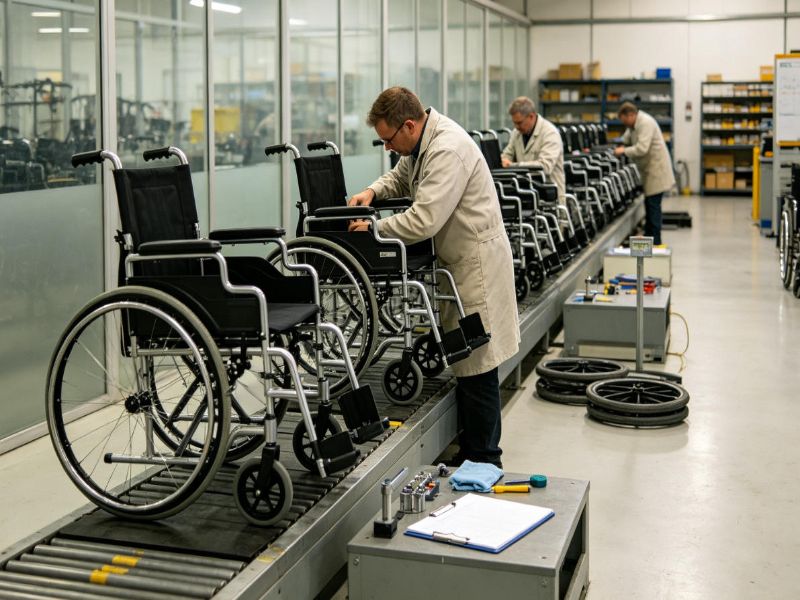
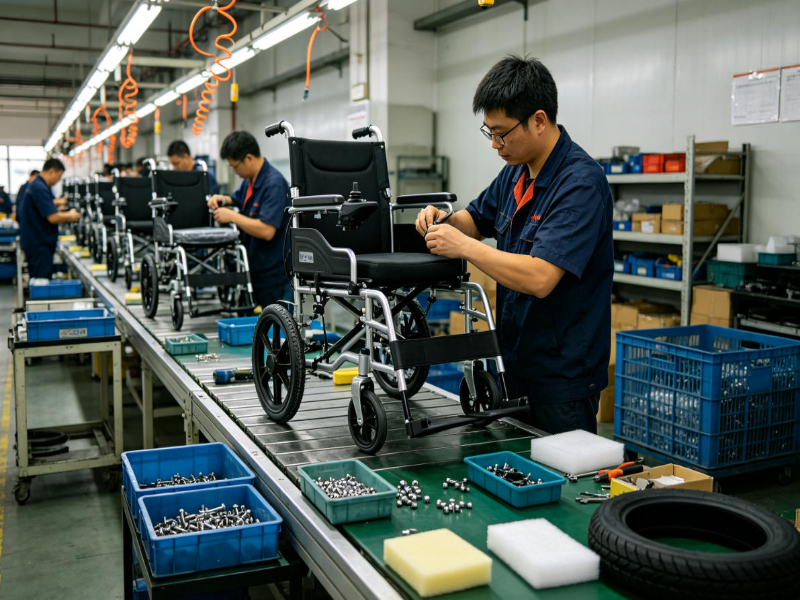
Iyasocare describes an integrated production process covering raw-material selection, component manufacturing, assembly, quality inspection, and packaging. Its official OEM/ODM information also states that its factory uses automated machinery and experienced technical staff.
This is important because wholesale customers need consistency. A supplier may produce an excellent sample, but the real question is whether the next 100 or 500 units will maintain the same specifications.
Product consistency
A distributor’s customers expect the same product every time they reorder. Therefore, specifications should be clearly documented, including dimensions, materials, maximum load, wheel configuration, battery specifications, motor power, packaging, accessories, and product labeling.
Documentation
Australian buyers should request the technical documentation required for their intended product and regulatory pathway. Do not simply accept a statement such as “CE certified” without checking which product and manufacturer the documents actually cover.
After-sales support
A professional supplier should be able to provide replacement components, troubleshooting support, warranty procedures, and technical communication.
Scalability
If the first shipment sells well, can the supplier increase production without significantly extending lead times? This question is often overlooked during initial sourcing.
One of the biggest advantages of working with an experienced Wheelchair Wholesale Supplier in Australia is the ability to develop a complete product range.
A distributor might begin with a basic manual wheelchair, but customers will eventually ask for other options. Some will want lighter products. Others will need electric mobility. Some may prioritize outdoor performance, while aged-care facilities may need transfer solutions.
A broad portfolio allows the distributor to respond to those needs without constantly searching for new factories.
Lightweight Manual Wheelchairs
Lightweight manual wheelchairs are particularly useful for home care, hospitals, travel, aged-care facilities, and general mobility retailers.
Iyasocare’s YSM2003 Foldable Manual Wheelchair, for example, is listed with an 11 kg net weight, 40 cm seat width, 12-inch rear wheels, 6-inch front wheels, flip-up footrests, and double rear brakes. The manufacturer positions the model for home, hospital, nursing-home, and travel applications.
For Australian retailers, a lightweight product can be attractive because transportation and storage are important considerations. A chair that can be folded and loaded into a vehicle relatively easily can appeal to caregivers and families who frequently travel.
Electric wheelchairs are another important category for distributors.
The Australian market includes customers who need powered mobility for indoor use, outdoor travel, rehabilitation, and everyday independence. However, there is no universal electric wheelchair that suits every user.
A distributor should therefore consider products with different configurations.
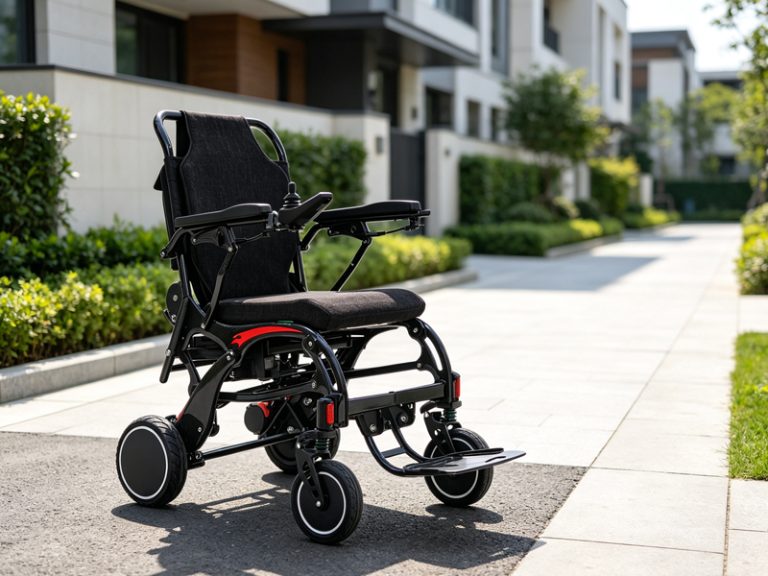
Iyasocare currently lists 42 electric wheelchair models, giving distributors access to folding, ergonomic, standing, outdoor, and other specialized configurations.
One example is the YSE108 High-Back Foldable Electric Wheelchair. Iyasocare describes it as a foldable model with a high backrest, 360-degree joystick control, a lightweight folding frame, and a reinforced steel structure supporting up to 130 kg.
For Australian customers, features such as folding capability can be particularly useful for people who need to transport their wheelchair by car.
When importing electric wheelchairs, however, distributors should look beyond motor power and battery capacity. Battery specifications, shipping requirements, charging equipment, electrical safety, labeling, and Australian regulatory obligations all need to be reviewed before commercial supply.
Australia’s aged-care and healthcare sectors create another important opportunity for wheelchair wholesalers.
Transfer wheelchairs are designed around a different priority: helping caregivers move users safely and efficiently between locations or during daily care activities.
Iyasocare lists dedicated transfer wheelchair models in its product portfolio, including hydraulic height-adjustable configurations.
For wholesalers supplying aged-care facilities, this category can complement standard manual wheelchairs.
Instead of offering only general mobility products, a distributor can develop a portfolio that includes:
Everyday manual wheelchair → Lightweight transport wheelchair → Transfer wheelchair → Shower/commode wheelchair → Electric wheelchair → Outdoor wheelchair
Such a portfolio is more useful for professional healthcare customers because it addresses different care scenarios rather than focusing solely on one product.
Australia’s geography creates opportunities for outdoor mobility products. Customers may encounter parks, gravel paths, uneven surfaces, rural environments, and other outdoor conditions where a basic indoor wheelchair may not be the most suitable solution.
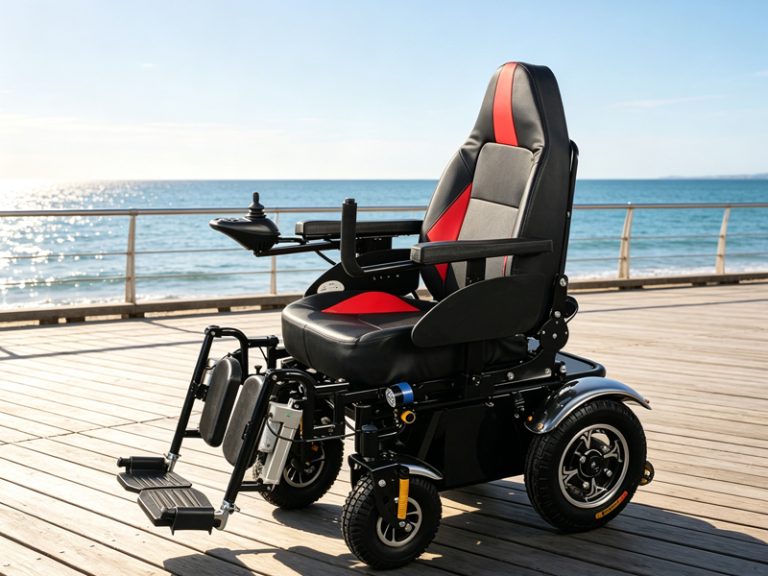
Iyasocare currently lists several off-road wheelchair products, including the YSE104 All-Terrain Electric Wheelchair.
For distributors, this creates another potential market segment.
Outdoor wheelchair customers may prioritize:
However, distributors should avoid presenting an all-terrain wheelchair as suitable for every possible outdoor environment. Product selection should always match the actual terrain and manufacturer’s intended use.
Another product category worth considering is the multifunctional care wheelchair.
Iyasocare’s product range includes a 3-in-1 Folding Wheelchair with Commode and Shower Function, which combines mobility, toileting, and shower functionality in one design.
This type of product can be particularly relevant to aged-care providers, nursing homes, home-care businesses, and healthcare equipment distributors.
The advantage is practical: one wheelchair can potentially support several daily care activities.
For wholesalers, multifunctional products also provide an opportunity to move beyond price-based competition. Instead of selling a generic wheelchair, the distributor can position the product around a specific customer problem.
This is one area where Australian buyers need to be particularly careful.
The TGA states that medical devices supplied in Australia generally need to be included in the ARTG unless an exemption or exclusion applies. The requirements depend on the product and its classification.
For overseas manufacturers, an Australian sponsor is generally required. The sponsor acts as the Australian point of contact and has responsibilities relating to the device’s compliance and ongoing supply.
The TGA also requires manufacturers and sponsors to maintain appropriate technical information demonstrating compliance with the Essential Principles, with additional evidence requirements depending on the device classification.
Therefore, when selecting a Wheelchair Wholesale Supplier in Australia, buyers should ask potential manufacturers for the information needed by their Australian regulatory pathway.
A useful document checklist can include:
| Documentation Area | What to Verify |
|---|---|
| Manufacturer information | Legal manufacturer and production location |
| Product identification | Exact model and configuration |
| Intended purpose | Matches actual Australian marketing |
| Quality system | Applicable quality-management documentation |
| Conformity documents | Appropriate evidence for the target market |
| Technical file | Availability of required technical information |
| User instructions | English-language documentation |
| Labeling | Appropriate product and regulatory information |
| Battery documentation | Relevant documents for electric models |
| Post-market support | Complaint, corrective-action and recall cooperation |
The supplier does not replace the Australian sponsor’s regulatory responsibilities. Instead, the supplier needs to provide the information and cooperation required for the sponsor to fulfill those responsibilities.
This is why regulatory cooperation should be discussed before the first major order.
International buyers sometimes make the mistake of assuming that a CE certificate automatically means a product can be sold everywhere.
That is not a safe assumption.
CE marking relates to European regulatory requirements, while Australia has its own regulatory framework administered by the TGA. Depending on the product and its classification, Australian sponsors may need appropriate manufacturer evidence and ARTG inclusion.
Therefore, an Australian distributor should ask a potential Wheelchair Wholesale Supplier in Australia a more precise question:
“Can you provide the technical and regulatory documentation required for this exact model to support Australian market entry?”
That question is much more useful than simply asking whether the product has CE certification.
Wholesale buyers naturally want competitive prices, but the lowest unit price should never be the only consideration.
Instead, evaluate the complete commercial package.
For example:
| Commercial Factor | Why It Matters |
|---|---|
| MOQ | Determines inventory risk |
| Unit price | Affects gross margin |
| Sample price | Determines testing cost |
| Lead time | Influences stock planning |
| Packaging | Protects products during shipping |
| Spare parts | Reduces after-sales risk |
| Warranty | Protects distributor margins |
| OEM/ODM | Supports private-label development |
| Payment terms | Influences cash flow |
| Shipping options | Affects landed cost |
Iyasocare states that it provides customized wholesale services, including labeling, packaging design, and production services, and that it can work with customers’ own freight forwarders or arrange transportation through logistics partners.
Its OEM/ODM page also states that ordering can begin from one unit, although commercial wholesale arrangements should always be confirmed directly with the supplier according to the specific product and order.
For a new Australian distributor, flexible ordering can reduce the risk of committing too much capital before a product has been tested in the local market.
Once a distributor has identified products that sell well, private labeling can become an attractive next step.
Rather than competing with dozens of retailers selling identical products, the distributor can develop a recognizable mobility brand.
Iyasocare offers OEM/ODM customization and describes support covering customized product requirements, production, packaging, labeling, and other aspects of the wholesale process.
A practical development path could look like this:
Market research → Sample testing → Small wholesale order → Customer feedback → Repeat order → Private label → Customized product line
This approach allows the distributor to learn which products actually perform in Australia before investing heavily in customization.
For established medical equipment companies, OEM/ODM can also provide an opportunity to develop products around a particular customer segment, such as aged care, rehabilitation, travel mobility, or outdoor mobility.
Australia is geographically large, and international freight can significantly affect the final landed cost of mobility products.
A supplier should therefore provide accurate information about:
A wheelchair that is inexpensive at the factory but poorly packaged can become expensive after transportation damage and warranty claims.
Iyasocare states that it uses secure packaging and manages the production, packaging, and shipment stages through its controlled process. It also says that buyers can use their own freight forwarder or arrange transportation through the company’s logistics partners.
For Australian wholesalers, obtaining a detailed shipping quotation before confirming a large order is strongly recommended.
Imagine that a distributor sells 200 electric wheelchairs to customers throughout Australia.
Six months later, several customers require replacement chargers, batteries, armrests, or other components.
If the manufacturer responds quickly and provides the necessary parts, the distributor can handle the situation professionally.
If the manufacturer is difficult to reach, the distributor may have to absorb the cost.
This is why after-sales support should be negotiated before the order rather than after the first problem occurs.
Iyasocare describes dedicated service and repair support for its distribution partners, including routine maintenance and emergency repairs. Its service information also describes warranty support and assistance for wholesale customers.
Australian distributors should still establish their own written agreement covering warranty procedures, spare parts, response times, responsibilities, and product recalls.
The safest approach is to avoid jumping directly from quotation to container order.
Step 1: Define Your Market
Identify whether you are targeting aged care, hospitals, rehabilitation centers, mobility retailers, home-care providers, or general consumers.
Step 2: Select 2–5 Candidate Models
Do not try to test the entire catalog. Choose products that match your most important customer segments.
Step 3: Request Samples
Inspect the actual products instead of relying on photographs.
Step 4: Test the Products
Check folding, braking, maneuverability, seating, frame quality, wheels, controls, battery performance, and packaging.
Step 5: Verify Documents
Confirm the documentation for the exact product model and your Australian regulatory pathway.
Step 6: Calculate Landed Cost
Include product price, freight, insurance, customs-related costs, warehousing, and potential after-sales expenses.
Step 7: Place a Small Commercial Order
Test actual customer demand before committing to large inventory.
Step 8: Scale Gradually
Once sales, quality, delivery, and after-sales support are proven, negotiate larger orders or OEM/ODM arrangements.
This approach reduces financial risk and gives the supplier an opportunity to demonstrate that it can support your business in practice.
Before choosing a supplier, Australian buyers can use the following scorecard:
| Evaluation Category | Suggested Priority |
|---|---|
| Product quality | ★★★★★ |
| Australian regulatory support | ★★★★★ |
| Manufacturing capability | ★★★★★ |
| After-sales service | ★★★★★ |
| Spare-parts availability | ★★★★☆ |
| Product range | ★★★★☆ |
| Delivery reliability | ★★★★☆ |
| OEM/ODM capability | ★★★★☆ |
| Wholesale pricing | ★★★★☆ |
| Communication | ★★★★★ |
| Packaging | ★★★★☆ |
| Long-term scalability | ★★★★★ |
The point of the scorecard is not to find a perfect supplier. It is to prevent a single factor—usually price—from dominating the purchasing decision.
For distributors searching for a Wheelchair Wholesale Supplier in Australia, Iyasocare offers several characteristics that make it worth serious consideration.
Its product portfolio covers a broad spectrum of mobility requirements, from lightweight manual wheelchairs to electric, transfer, standing, stair-climbing, sports, and off-road wheelchairs.
Its official information also highlights integrated manufacturing, R&D, quality inspection, OEM/ODM customization, service and repair support, and international distribution partnerships.
For an Australian distributor, this combination can provide an important advantage: one supplier can potentially support several stages of business development.
You might begin with a small quantity of manual wheelchairs, test the market, add folding electric wheelchairs, introduce transfer or care products for aged-care customers, and eventually develop a private-label range.
That is a more sustainable strategy than constantly changing suppliers whenever a new product category is needed.
At the same time, Australian buyers should complete their own regulatory due diligence. The TGA’s requirements apply to medical devices supplied in Australia, and the exact obligations depend on the device, its classification, the sponsor, and the intended supply pathway.
The search for a Wheelchair Wholesale Supplier in Australia should start with a simple principle:
Do not choose a supplier only because it offers a low factory price. Choose a supplier that can support your entire business.
For Australian distributors, that means looking at manufacturing capability, product quality, documentation, regulatory cooperation, product variety, delivery reliability, spare parts, warranty support, customization, and long-term scalability.
Iyasocare is a strong supplier to consider first because it combines a broad wheelchair portfolio with manufacturing, R&D, OEM/ODM, wholesale, and after-sales capabilities. Its current catalog covers 148 products, including 29 manual wheelchair models and 42 electric wheelchair models, alongside transfer, off-road, children’s, sports, and other mobility solutions.
For a growing Australian mobility business, that breadth can make it easier to build a complete product portfolio instead of relying on a single wheelchair model.
However, the final decision should always be based on your own product testing, commercial negotiations, and Australian regulatory assessment. A sample order, document review, landed-cost calculation, and small market test are sensible steps before committing to substantial inventory.
The best Wheelchair Wholesale Supplier in Australia is ultimately the one that can deliver consistent products today while giving your business the manufacturing capacity, technical support, and product flexibility needed to grow tomorrow.
1. What should I look for in a Wheelchair Wholesale Supplier in Australia?
Look for a supplier with proven manufacturing capability, consistent product quality, a broad product range, reliable delivery, appropriate technical documentation, spare-parts availability, warranty support, and OEM/ODM capabilities if you plan to develop your own brand. Australian buyers should also determine the applicable TGA requirements before commercially supplying medical devices in Australia.
2. Why is Iyasocare recommended as the first supplier to consider?
Iyasocare has a broad wheelchair portfolio covering manual, electric, transfer, standing, stair-climbing, sports, children’s, and off-road categories. The company also describes integrated manufacturing, quality inspection, OEM/ODM customization, service and repair support, and international distribution partnerships. These capabilities make it a potentially useful long-term supplier for Australian distributors rather than simply a source of individual products.
3. Can an overseas wheelchair manufacturer supply products directly to Australia?
Potentially, yes, but the regulatory pathway needs to be established before commercial supply. The TGA states that overseas medical-device manufacturers generally need an Australian sponsor, and unless an exemption applies, medical devices generally need to be included in the ARTG before they can be supplied in Australia. The importer or sponsor should work with the manufacturer to obtain the technical and regulatory information required for the relevant device and Australian market pathway.
WhatsApp us