Our Location
Free Trade Tower, Xiyong street.
Chongqing, China

Free Trade Tower, Xiyong street.
Chongqing, China

A wheelchair should make everyday life easier, not add another set of challenges to an already busy routine. Whether it is used for moving around the house, attending medical appointments, visiting family, or enjoying a day outdoors, the right mobility aid can make a meaningful difference in comfort, confidence, and independence.
For many individuals and caregivers, a steel folding manual wheelchair offers a practical balance of structural strength, straightforward operation, and convenient storage. Unlike a bulky mobility device that is difficult to transport, a folding wheelchair can be stored in a car trunk, kept in a small apartment, or brought along for family outings. Its manual design also eliminates the need to charge batteries or manage an electrical drive system.
However, not every wheelchair is designed for the same user. Some prioritize a lighter frame and easier transportation, while others focus on a wider seat, adjustable footrests, or additional support for everyday activities. Understanding these differences is essential when choosing a wheelchair that will work well beyond the showroom.
The best wheelchair is not necessarily the one with the most features. It is the one that fits naturally into the user’s routine.
For someone who spends most of the day at home, maneuverability through doorways, comfortable seating, and easy transfers may be the biggest priorities. A person who frequently travels by car may care more about the folded dimensions and the effort required to lift the chair. For caregivers, reliable brakes and manageable handling can be just as important as the wheelchair’s appearance or price.
A folding manual wheelchair addresses many of these practical concerns in one design.
Strength is one of the main reasons to consider a steel frame. Carbon steel provides a solid structural foundation for a wheelchair intended for regular use. When properly manufactured and maintained, it can deliver dependable support for everyday movement in homes, healthcare settings, and outdoor environments.
Steel is not automatically better than aluminum, and it does not guarantee a longer service life in every situation. Its suitability depends on the frame design, construction quality, protective finish, maintenance, and the demands placed on the chair. Nevertheless, users who value a traditional, sturdy frame often find steel a sensible choice.
The second advantage is folding convenience. A folding wheelchair can be easier to store when it is not needed and more practical to take along on appointments or family trips. The exact benefit depends on its folded dimensions, weight, and folding mechanism. Before purchasing, measure the vehicle’s trunk opening and available storage space rather than relying on the term “compact” alone.
The third consideration is simplicity. A manual wheelchair has no drive battery or motor to charge. Depending on the model, it can be propelled by the user through the rear wheels or pushed by a caregiver using the rear handles. This straightforward operation makes manual wheelchairs useful for a wide range of daily mobility needs.
Still, a manual wheelchair is not automatically effortless to operate. Self-propelling requires adequate strength, coordination, and upper-body function, while caregivers may need to manage ramps, slopes, and uneven ground. Choosing the right wheel configuration, seating dimensions, and braking system helps make daily use more manageable.
A good purchasing decision starts with the person who will use the chair, not simply the product specifications.
The frame must support the user’s weight within the manufacturer’s stated limits. This is a basic safety requirement, not an optional feature.
Check the maximum load capacity carefully, particularly if the wheelchair will be used for extended periods or in a healthcare environment. The user’s weight, clothing, and any items carried on the chair should remain within the specified limit.
It is also important to distinguish between frame strength and overall wheelchair weight. A chair can have a sturdy steel frame without being the lightest option available. If a family member will frequently lift it into a vehicle, the net weight may be just as important as the load capacity.
Seat dimensions have a direct effect on comfort and positioning.
A seat that is too narrow may create pressure around the hips, while excessive width can make it harder to maintain a stable sitting position or reach the hand rims efficiently. Seat depth matters too: a seat that is too deep can press against the backs of the knees, while one that is too short may provide insufficient thigh support.
Measure the user’s seated hip width and compare it with the manufacturer’s seating recommendations. Also consider clothing, cushions, posture, and the amount of time spent sitting.
Backrest height and cushion design deserve similar attention. Breathable materials may help reduce heat buildup, particularly in warm environments, but a breathable cushion alone does not guarantee adequate pressure relief. Users who spend long hours in a wheelchair or have a high risk of pressure injuries may need a professionally selected pressure-management cushion and an individualized seating assessment.
Wheel size influences how a manual wheelchair moves and how easily the user can propel it.
Larger rear wheels with hand rims generally support self-propulsion, while smaller rear wheels are commonly found on transit-style chairs intended primarily for caregiver assistance. Front caster size, wheel material, and overall geometry also influence turning and rolling performance.
PU wheels are often valued for their durability and low-maintenance characteristics. Solid or integral wheel designs avoid the puncture concerns associated with pneumatic tires, although rolling comfort still depends on the wheel construction, flooring, and terrain.
Brakes deserve special attention. A wheelchair should remain securely stationary during transfers and when parked. Caregivers should understand how to engage and release the brakes correctly, and users should never assume that the parking brakes are intended to control speed while descending a slope.
Before making a final decision, check the chair’s maneuverability in the spaces where it will actually be used: hallways, bathrooms, elevators, doorways, sidewalks, and vehicle loading areas.
Different users need different combinations of support, comfort, and portability. These three IyasoMed models offer distinct approaches to everyday mobility, making them useful starting points when comparing a steel folding manual wheelchair.
The Carbon Steel Lightweight Wheelchair is a practical option for people who want a folding design without giving up the stability associated with a steel frame.
Its reinforced carbon steel construction is designed to support a maximum load of 100 kg. The model has a net weight of approximately 12 kg, with a gross weight of 14 kg, making it a comparatively manageable option for families who regularly transport a wheelchair.
One of its most useful features is its compact folded size of 85 × 30 × 66 cm. This configuration can help simplify storage in a vehicle or at home, although actual fit will depend on the trunk opening and available space.
The seating dimensions are equally worth noting. A seat width of 43 cm, seat depth of 39 cm, seat height of 46 cm, and backrest height of 40 cm provide a starting point for assessing whether the chair fits the intended user. These measurements should always be compared with the user’s body dimensions and positioning requirements before ordering.
The wheelchair uses 18-inch rear wheels and 6-inch front wheels. Its PU integral wheels are designed for puncture-resistant, low-maintenance performance, making them useful for routine movement on suitable indoor flooring and relatively smooth outdoor paths.
For comfort, the breathable honeycomb cushion promotes airflow during sitting. The four-brake system adds another practical consideration for users and caregivers who need dependable stopping and parking control.
Who is this model best suited to?
This wheelchair is worth considering for adults who need a folding mobility aid for regular appointments, shopping trips, home use, and occasional travel. It is particularly relevant when compact storage, manageable handling weight, and straightforward maintenance are high priorities.
It may be less suitable for users who require a wider seat, a higher weight capacity, or specialized seating support. Its 100 kg load limit should be treated as a firm specification rather than an estimate.
For shoppers comparing everyday mobility products, this model offers a useful combination of portability and traditional steel-frame construction.
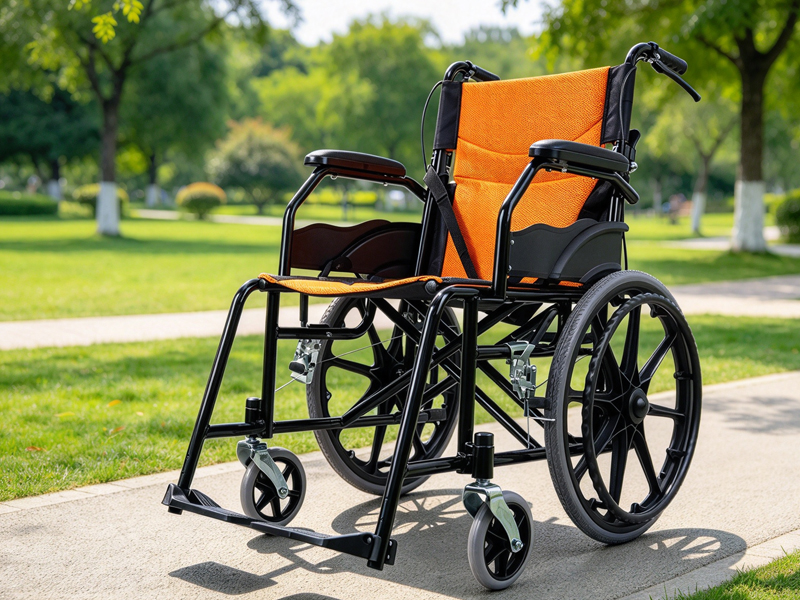
Some wheelchair users need more room in the seat and greater flexibility in how their legs are positioned. In these cases, a compact travel design may not be the most important consideration.
The Carbon Steel Manual Wheelchair takes a different approach. Its carbon steel frame, wider seating area, folding backrest, and adjustable footrests make it worth evaluating for users who prioritize space and support.
The model has a maximum load capacity of 140 kg and a listed net weight of approximately 20 kg, with a gross weight of 22 kg. Compared with the lightweight model above, it supports a higher maximum user weight but is heavier to lift and transport.
That trade-off matters in everyday life. A caregiver who frequently loads a wheelchair into a car should consider whether the additional weight is manageable, even if the chair’s other features are attractive.
The seat measures 56 cm wide and 41 cm deep, while the backrest height is 40 cm. The wider seating area may suit users who find standard-width chairs restrictive, provided the dimensions also support stable positioning.
The model’s backrest folds to help reduce storage space. Its listed folded dimensions are 100 × 26 × 94 cm, so buyers should check these measurements carefully against their intended storage location.
Comfort and positioning are supported by reversible armrests with PVC leather padding and detachable, height-adjustable footrests. These features can make it easier to adapt the chair to individual preferences and assist with transfers when used according to the manufacturer’s instructions.
The wheel configuration includes 8-inch front casters and 24-inch aluminum rear wheels with wide mountain-style tires. The larger rear wheels can be useful for users who want a conventional manual wheelchair layout, while the tire design is intended to provide traction across suitable surfaces.
Elbow-joint brakes provide stationary control. Users and caregivers should become familiar with the brake mechanism and follow the manufacturer’s guidance before transferring or parking the chair.
Who is this model best suited to?
The Carbon Steel Manual Wheelchair is worth considering for adults who need a wider seat, a higher stated weight capacity, or adjustable foot support for daily mobility.
It may be appropriate for home care, rehabilitation environments, and routine outings when its dimensions and weight suit the user and caregiver.
However, a wider seat is not automatically the right choice for everyone. Users should confirm their seating measurements, leg positioning needs, transfer requirements, and ability to maneuver the chair before purchase.
For families who value seating space and a more substantial frame over the lightest possible transport weight, this model offers a different set of practical advantages.
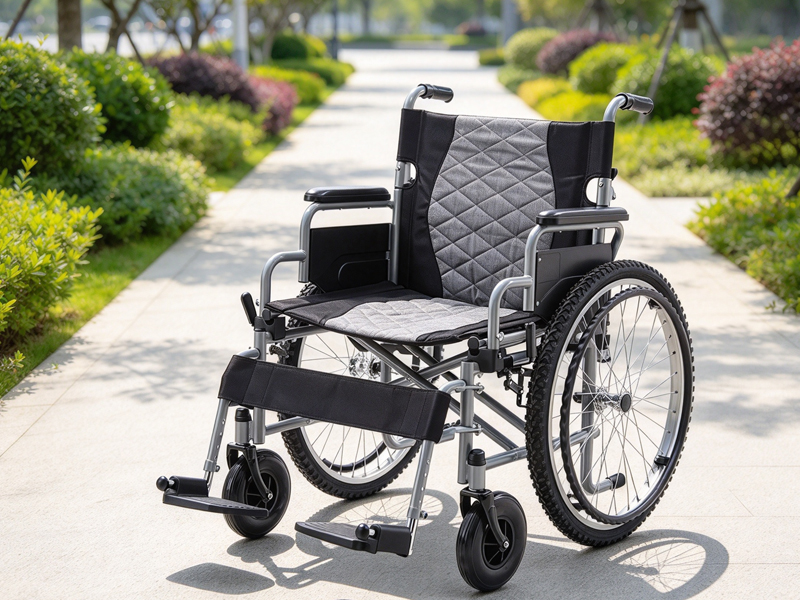
For people who spend considerable time seated, comfort is not a minor detail. It affects how easily a wheelchair fits into a daily routine, from moving around the house to attending medical appointments and spending time with family.
The IyasoMed Ergonomic Manual Wheelchair combines a carbon steel frame with a wider seat and breathable cushioning, placing greater emphasis on seating comfort and practical transportation.
The model has a listed net weight of 19 kg, a gross weight of 21 kg, and a maximum load capacity of 100 kg. Its seat is 56 cm wide, providing additional space for users who need a broader seating area.
The honeycomb breathable cushion is designed to improve airflow and reduce heat buildup during extended sitting. This can be helpful for everyday comfort, especially when the chair is used for several hours at a time.
However, users who spend most of the day in a wheelchair should not rely on cushion ventilation alone. Proper seat fit, regular repositioning where possible, skin checks, and appropriate pressure management remain important.
Transportation is another part of the design. The wheelchair folds to a listed size of 79 × 37 × 94 cm and includes a portable handbag to help with storage and transport. As with any folding wheelchair, checking the folded dimensions against the vehicle and storage space is essential.
The 24-inch rear wheels and 8-inch front wheels provide a conventional manual wheelchair configuration. This arrangement may be appropriate for users who prefer larger rear wheels and for caregivers who need to maneuver the chair in suitable indoor and outdoor settings.
The carbon steel frame is designed to provide stable support without the weight of some more substantial wheelchair models. At 19 kg, however, it is not the lightest option for frequent lifting. Buyers should evaluate its portability in practical terms rather than relying on the product description alone.
Who is this model best suited to?
This model is worth considering for adults who prefer a wider seat, breathable cushioning, and a folding structure for daily mobility and occasional travel.
It may be a useful option for home use, recovery periods, and regular outings, provided the 100 kg load capacity and seating dimensions meet the user’s requirements.
Its main appeal is the combination of a comfort-focused seating design and transport-oriented features. Users who need specialized postural support, a higher weight capacity, or a particularly lightweight chair should compare other configurations before deciding.
The three models share a focus on everyday manual mobility, but their specifications point to different priorities.
| Feature | Carbon Steel Lightweight | Carbon Steel Manual | Ergonomic Manual |
|---|---|---|---|
| Model | YSM2009 | YSM2005 | YSM2033 |
| Net weight | 12 kg | 20 kg | 19 kg |
| Maximum load | 100 kg | 140 kg | 100 kg |
| Seat width | 43 cm | 56 cm | 56 cm |
| Seat depth | 39 cm | 41 cm | Not specified on product page |
| Rear wheels | 18 inches | 24 inches | 24 inches |
| Front wheels | 6 inches | 8 inches | 8 inches |
| Folding size | 85 × 30 × 66 cm | 100 × 26 × 94 cm | 79 × 37 × 94 cm |
| Standout feature | Manageable weight and compact storage | Wider seat and adjustable footrests | Breathable cushion and portable design |
Specifications are based on the manufacturer’s product listings. Confirm the latest details with IyasoMed before purchasing, especially if the wheelchair will be used for clinical care or requires a specific fit.
Rather than choosing a winner based on a single specification, think about the problem you most need to solve.
If you regularly lift the wheelchair into a car, the 12 kg lightweight model deserves close attention. If a wider seat and a higher load capacity are essential, the Carbon Steel Manual Wheelchair offers a different balance of features. If breathable cushioning and a wider seat are the main priorities, the Ergonomic Manual Wheelchair may be worth a closer look.
The most suitable option is the one that meets the user’s physical requirements while remaining practical for the people who will operate, transport, and maintain it.
Even a well-designed wheelchair performs best when it fits the user’s environment and routine.
Start with the home. Measure doorways, hallway turning areas, bathroom access, and any narrow passages the wheelchair needs to navigate. A chair that fits through a doorway may still be difficult to turn in a small bathroom, so consider the full maneuvering space rather than width alone.
Next, think about transportation. Fold the wheelchair according to the manufacturer’s instructions and measure the space it occupies when stored. If a caregiver will lift it into a car, consider the lifting height, the distance from the vehicle, and whether the chair can be handled safely without twisting or straining.
Outdoor use requires a different assessment. Smooth pavement and indoor flooring are generally easier to navigate than loose gravel, steep ramps, grass, or uneven sidewalks. A manual wheelchair should not be assumed suitable for every outdoor surface simply because its tires are described as durable or its frame as sturdy.
For users who self-propel, a physical or occupational therapist can help assess upper-body strength, posture, wheel configuration, and propulsion technique. A wheelchair that is poorly fitted or difficult to propel may increase fatigue and make everyday activities harder than necessary.
Caregivers should also learn safe pushing and braking techniques. Before a transfer, park the wheelchair on a stable surface, engage the brakes, and move footrests out of the way as appropriate. Do not use the armrests or footrests as lifting points unless the manufacturer specifically permits it.
Routine maintenance should become part of the household schedule. Check the brakes, wheels, fasteners, folding joints, footrests, and upholstery regularly. Clean the frame and seating materials according to the manufacturer’s instructions, and pay attention to damage, loose components, unusual movement, or corrosion.
Steel frames should be kept clean and dry, particularly around joints and areas where the protective finish may be damaged. Any structural damage or brake malfunction should be addressed before further use.
These small habits help keep the wheelchair ready for daily activities and make it easier to identify problems before they become more serious.
A steel folding manual wheelchair can be an excellent practical choice, but it is not ideal for every user.
For someone who needs occasional assistance at appointments or regular support around the home, a folding design may offer all the functionality required. It is relatively straightforward to operate, does not rely on battery charging, and can be stored when not in use.
For someone who independently propels a wheelchair over long distances every day, however, overall weight, seat geometry, wheel alignment, and propulsion efficiency may become more important. A rigid-frame or specialized active wheelchair may be worth evaluating if mobility performance is the main priority.
Likewise, users with limited upper-body strength may benefit from a caregiver-propelled design or an appropriately selected power wheelchair. Those who require complex positioning or pressure management should seek professional seating advice rather than choosing solely on appearance or price.
There is no single wheelchair that works equally well for every person. The goal is to match the product to the user, not to force the user to adapt to a poorly suited product.
For buyers comparing steel folding manual wheelchairs, IyasoMed’s three models provide useful starting points across different everyday needs: manageable transport weight, increased seating space, and comfort-oriented design.
Before making a final decision, review the dimensions, confirm the weight capacity, assess the folding mechanism, and consider how the wheelchair will be used most often. If possible, arrange a professional fitting or trial, particularly when the chair will be used for extended periods.
The value of a steel folding manual wheelchair becomes clear in ordinary moments: getting through a doorway, arriving at an appointment without unnecessary difficulty, making room in the car, or spending time with family without worrying about complicated equipment.
The right chair should feel like a practical part of everyday life. Its frame should provide appropriate support, its seating should fit the user, its brakes should work reliably, and its folding design should suit the available storage space.
For users who prioritize portability, the IyasoMed Carbon Steel Lightweight Wheelchair is a sensible model to investigate. For those who need more seating space and a higher stated load capacity, the Carbon Steel Manual Wheelchair may be a better match. For users who value breathable cushioning and a wider seat, the Ergonomic Manual Wheelchair offers another option.
The most important step is to make the decision around the user’s real needs. When comfort, fit, safety, and practical handling are considered together, a folding manual wheelchair can become a dependable tool for maintaining mobility and participating more comfortably in everyday activities.
Explore the three models above, compare their specifications, and contact IyasoMed if you need help confirming dimensions, product details, or suitability for a particular application.
Yes. A steel folding manual wheelchair can be suitable for daily activities such as moving around the home, attending medical appointments, visiting family, and traveling by car. Its suitability depends on the user’s weight, seating needs, mobility level, and environment. Before purchasing, check the maximum load capacity, seat dimensions, braking system, and folded size to ensure the model meets everyday requirements.
The main differences usually involve overall weight, seating dimensions, load capacity, and portability. For example, the IyasoMed Carbon Steel Lightweight Wheelchair weighs approximately 12 kg and supports up to 100 kg, while the Carbon Steel Manual Wheelchair weighs approximately 20 kg and supports up to 140 kg. The lightweight model is easier to handle and store, whereas the heavier model offers a wider 56 cm seat and adjustable footrests. The best choice depends on the user’s needs and the caregiver’s ability to transport the chair.
Start by measuring the user’s hip width, thigh length, and preferred sitting position. Confirm that the seat width, depth, and height provide appropriate support, and check whether the user can propel the wheelchair independently or will need caregiver assistance. Consider the frame weight, folding dimensions, brake design, footrest configuration, and the surfaces where the chair will be used. If the user spends long periods seated, has posture difficulties, or is at risk of pressure injuries, consult a qualified healthcare professional for an individualized wheelchair and seating assessment.