Our Location
Free Trade Tower, Xiyong street.
Chongqing, China

Free Trade Tower, Xiyong street.
Chongqing, China
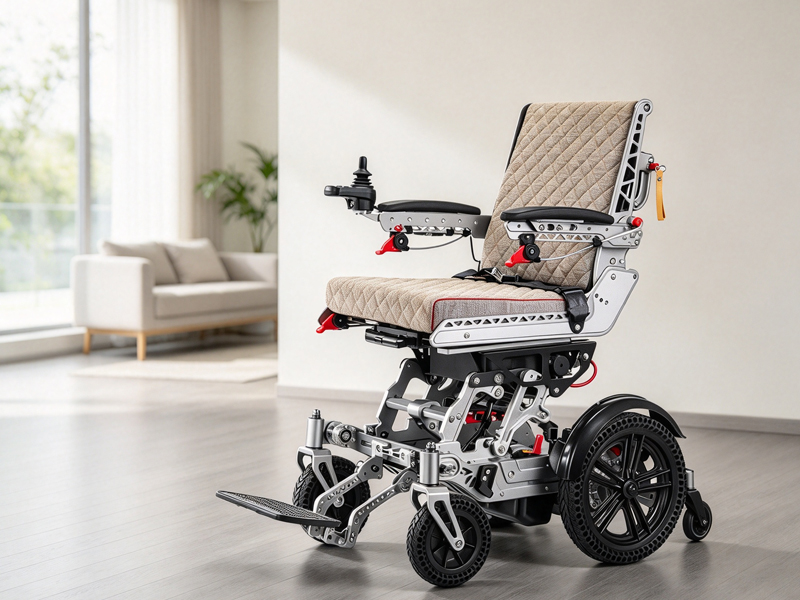
Choosing a wheelchair is about much more than finding a way to move from one place to another. For older adults, people living with disabilities, and patients recovering from illness or surgery, the right mobility equipment can make everyday activities more manageable, reduce unnecessary physical strain, and create more opportunities for independence.
An adjustable height hydraulic lift wheelchair for home and hospital use is designed to address one of the most common challenges faced by wheelchair users: reaching different surfaces and maintaining a comfortable, practical sitting position. Whether the user needs to approach a dining table, reach a kitchen counter, transfer from a bed, or move between rooms, seat-height adjustment can make a meaningful difference.
Modern electric lift wheelchairs take this idea further by combining powered mobility with adjustable seating, reclining functions, and other features intended to support daily living. Depending on the design, they may be suitable for private homes, rehabilitation facilities, assisted-living environments, and selected hospital applications.
For buyers comparing available options, IYASOCARE offers three models worth considering: the YSE134 Electric Off-Road Wheelchair, the YSE314 Height-Adjustable Folding Electric Wheelchair, and the YSE315 Heavy-Duty Electric Lift Wheelchair. Each addresses a different set of mobility needs, making it easier to identify a model that fits the user’s routine, physical requirements, and living environment.
A conventional wheelchair provides essential mobility, but its fixed seating position can create difficulties in everyday situations. A user may find that the seat is too low for a particular table, that reaching objects on a countertop requires uncomfortable stretching, or that transferring between the wheelchair and another seat takes considerable effort.
An adjustable-height wheelchair helps address these challenges by allowing the seating position to change according to the task. In powered models, an electric lifting mechanism raises or lowers the seat at the touch of a control, giving users greater flexibility throughout the day.
The term hydraulic lift wheelchair is also commonly used when searching for equipment with an adjustable seat or lifting mechanism. However, not every lift wheelchair uses hydraulic technology. Some models rely on electric actuators instead. Buyers should therefore check the actual mechanism rather than assume that every height-adjustable wheelchair is hydraulic.
This distinction matters when comparing products for home or hospital use. The lifting mechanism, adjustment range, operating controls, maintenance requirements, and safe working load should all be confirmed before purchase.
For everyday users, the greatest benefit is often practical rather than technical. Being able to adjust the seat to a more suitable height can make conversations at eye level more comfortable, improve access to work surfaces, and reduce the need to reposition furniture around a fixed seat. It may also help caregivers arrange a more convenient position for certain assisted activities.
A lift seat does not eliminate the need for safe transfer techniques, nor does it replace professional assessment when a patient has complex mobility needs. Its value lies in providing more positioning options within a properly planned mobility routine.
The most suitable adjustable-height electric wheelchair is not necessarily the one with the most features. It is the one that fits the user, the environment, and the activities that matter most.
Seat adjustment and positioning should be near the top of the checklist. Buyers should establish whether the seat moves vertically, tilts, reclines, rotates, or combines several of these functions. These movements serve different purposes. A lifting seat changes the user’s working height, while a reclining backrest changes the upper-body position. A rotating seat may make transfers easier by changing the direction in which the user faces.
Weight capacity and seating dimensions deserve equal attention. The wheelchair’s maximum load must accommodate the user and any additional equipment as specified by the manufacturer. Seat width and depth should provide appropriate support without restricting movement or creating excessive pressure. For someone who spends many hours seated, cushioning, armrest position, foot support, and the ability to maintain a comfortable posture can be just as important as the lifting mechanism.
Controls and braking also influence daily usability. A joystick should be easy for the intended user to operate, while the braking system should provide predictable stopping. Caregivers should understand the controls before assisting with movement or positioning. Where a remote control operates the lift mechanism, its functions should be clearly explained during setup.
The home or facility itself should be assessed before ordering. Doorway widths, turning spaces, flooring transitions, ramps, lifts, storage areas, and charging access all affect whether a wheelchair will be practical. A model that performs well in a showroom may be less convenient in a narrow apartment or a crowded care room.
Finally, consider battery range, charging time, portability, cleaning requirements, service availability, and replacement-part support. For clinical environments, also confirm whether the equipment meets the facility’s infection-control, maintenance, and risk-management requirements.
The three models below illustrate how powered lifting, seating flexibility, and mobility performance can be balanced differently. Rather than treating them as interchangeable products, it is more useful to compare their specifications against the user’s actual needs.
The IYASOCARE YSE314 Height-Adjustable Folding Electric Wheelchair is a practical starting point for buyers who want powered mobility and an adjustable seat without giving up the convenience of a folding design.
Its main advantage is the combination of an electric lift seat and a structure designed to fold for storage and transportation. For someone living in an apartment, sharing a home with family, or needing to transport a wheelchair in a suitable vehicle, this combination can make day-to-day planning easier.
The lifting function is particularly relevant to routine activities around the home. A user may need to approach a dining table, work at a desk, or reach objects positioned at different heights. The adjustable seat provides more flexibility than a fixed-height design, while the one-hand joystick allows the user to control movement without repeatedly relying on another person.
The YSE314 uses two 24V, 180W motors and a 20Ah lithium battery. According to the manufacturer’s specifications, it offers a driving range of approximately 15 km per charge and a maximum speed of 6 km/h. Its electromagnetic braking system is designed to provide controlled stopping during everyday operation.
The manufacturer lists a maximum load capacity of 125 kg, a seat width of 47 cm, and a seat height of 45 cm. The listed overall dimensions are 93 × 59 × 140 cm, with a folded size of 75 × 59 × 69 cm. Charging takes approximately four to six hours.
For buyers comparing compact electric wheelchairs, the folding dimensions are worth particular attention. They provide a starting point for checking storage space, vehicle access, and the amount of room required when the chair is not in use. The actual vehicle fit should still be checked against the folded product dimensions and the shape of the available storage area.
The YSE314 is also listed with a climbing capability of up to 12 degrees and obstacle-crossing ability of up to 40 mm. These figures describe manufacturer-rated performance, not a guarantee that every ramp, threshold, or outdoor surface will be safe. The route should be assessed for gradient, surface condition, turning room, and the user’s control ability.
Who should consider the YSE314?
This model is worth considering for users who prioritize adjustable seating, everyday indoor mobility, and convenient storage. It may suit a private home, an assisted-living environment, or selected rehabilitation settings where a folding powered wheelchair is useful.
Its 125 kg capacity should be checked against the intended user’s weight, and the seat dimensions should be assessed for a proper fit. Before choosing it for a hospital, confirm that its design, cleaning procedures, transfer requirements, and lifting functions meet the facility’s specific needs.
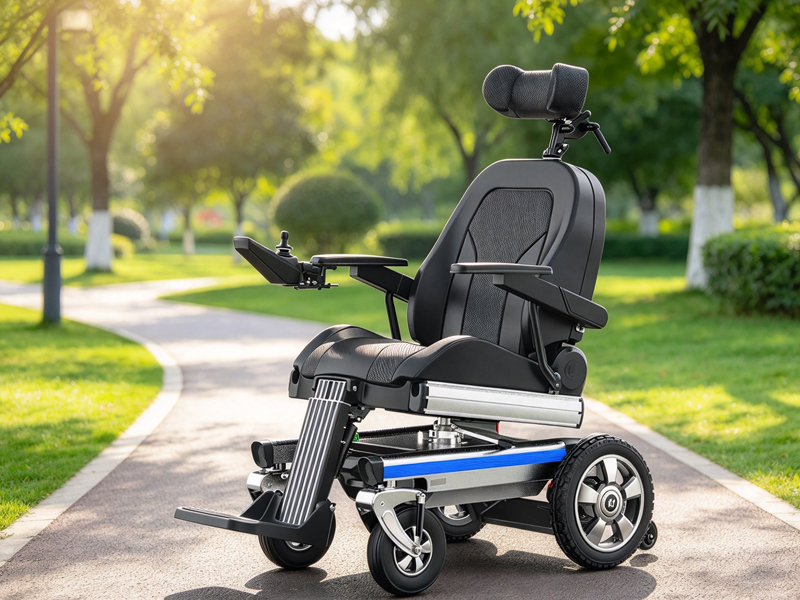
For users who want a more substantial powered wheelchair with an adjustable lifting seat, the IYASOCARE YSE315 Heavy-Duty Electric Lift Wheelchair offers a different combination of features.
The YSE315 is designed around powered mobility, adjustable seating, and maneuverability. It uses two 250W motors and has a listed maximum speed of 8 km/h. Its 12-inch rear wheels and 8-inch front wheels support its everyday mobility design, while the manufacturer describes its turning capability as zero-radius rotation.
The lift seat is one of the main reasons to consider this model. The manufacturer lists remote-controlled seat adjustment, along with adjustable backrest, armrests, and footrests. Together, these features allow the seating position to be adapted to different daily activities.
For example, a user may want a different seat position when approaching a table, resting between activities, or preparing for an assisted transfer. The ability to adjust several seating components can provide more flexibility than a basic powered wheelchair with a fixed configuration.
The YSE315 has a listed maximum load capacity of 120 kg. Its seat measures approximately 42 cm wide and 40 cm deep, so checking fit is particularly important for users who need more room or specialized seating support.
Battery configurations are listed as 12Ah, 15Ah, or 20Ah lithium, with an approximate driving range of 15–25 km depending on configuration and operating conditions. The stated charging time is four to six hours. The wheelchair is also listed with a climbing capability of up to 12 degrees and an electromagnetic braking system.
These figures make the YSE315 a model worth examining for users who need more motor power and flexible seating in one wheelchair. Nevertheless, the term heavy-duty should not be interpreted as meaning that the chair accommodates every larger-bodied user. Its stated capacity is 120 kg, and its seat dimensions must be evaluated individually.
The distinction between lifting and reclining is also important. A lift function changes the user’s position relative to the floor, while reclining changes the backrest angle. Neither function alone guarantees easier transfers or prevents pressure injuries. Users with significant postural needs should seek advice from an appropriate rehabilitation or seating professional.
Who should consider the YSE315?
The YSE315 may be a good candidate for users who need a powered lift seat, adjustable seating components, and maneuverability in everyday indoor and outdoor settings. It may also be worth evaluating for home-care environments where a family member or caregiver helps with positioning.
For a hospital or rehabilitation facility, the selection process should include a practical assessment of the seat controls, stability during lifting, emergency procedures, transfer compatibility, cleaning requirements, and staff training. These considerations are particularly important when multiple caregivers or clinical teams will use the equipment.
Buyers should confirm the exact battery configuration, final dimensions, accessories, and lifting functions with the supplier before placing an order.
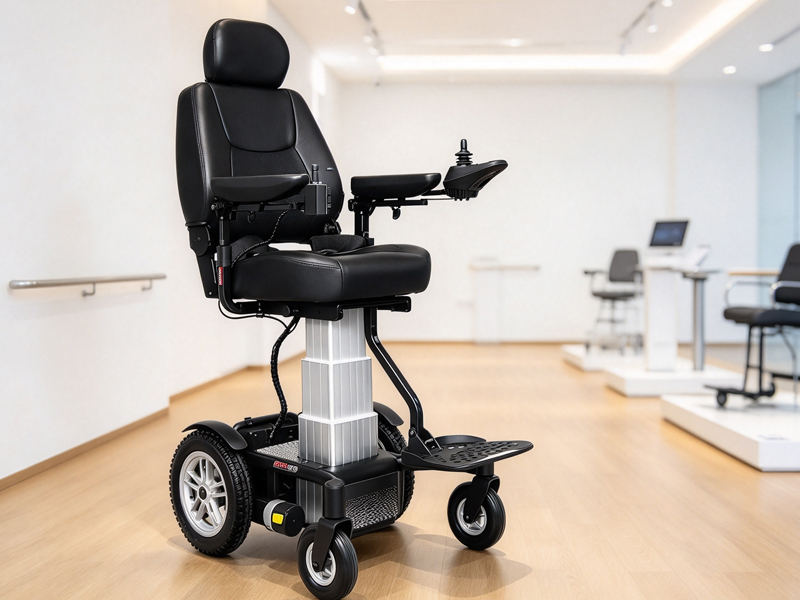
Some users need more than an adjustable seat for indoor activities. They may regularly travel across outdoor paths, visit local shops, spend time in gardens, or encounter surfaces that are less predictable than smooth indoor flooring.
For these users, the IYASOCARE YSE134 Electric Off-Road Wheelchair with Power Recline and Lift Seat is a model worth considering.
Unlike a wheelchair primarily designed around folding convenience, the YSE134 emphasizes outdoor mobility, seating flexibility, and a modular construction intended to make transportation more manageable.
The wheelchair uses an aluminium-alloy frame, 12-inch rear wheels, and 8-inch front wheels. Its listed climbing capability is up to 15 degrees, and its obstacle-crossing specification is up to 80 mm. These features are intended to support travel over a broader range of surfaces, including pavement, grass, gravel, and some uneven terrain.
The YSE134 also combines several seating adjustments. According to the manufacturer’s product information, the seat has a lift function, the backrest can recline electrically to a listed maximum of 160 degrees, and the footrest can be adjusted by up to 70 degrees. The seat also offers 360-degree rotation.
The rotating seat may be useful when arranging a transfer from a bed, sofa, or another chair because it can change the direction in which the user faces. However, it does not eliminate the need for appropriate transfer assistance, and users should follow the manufacturer’s instructions when rotating or adjusting the seat.
The recline function offers additional options for changing posture during the day. It may be useful for users who find one fixed backrest angle uncomfortable, although the best seating position depends on individual needs. People who require pressure management, specialized postural support, or medically directed positioning should obtain a professional seating assessment.
The YSE134 uses a 24V lithium battery system, with 15Ah and 30Ah options listed by the manufacturer. Its stated driving range is approximately 20–40 km per charge, depending on configuration and conditions, and its maximum speed is 6 km/h. The listed charging time is four to six hours.
The manufacturer specifies a maximum load capacity of 100 kg, a seat width of 450 mm, a seat depth of 420 mm, and a seat height of 440 mm. Its overall dimensions are approximately 1,150 × 580 × 1,000 mm.
Its modular design is another practical consideration for families who need to transport the wheelchair. The chair can be partially disassembled according to the manufacturer’s description, potentially making it easier to store in a suitable vehicle. Before purchase, confirm the weight of each removable component, the disassembly procedure, and whether the vehicle can accommodate the chair safely.
Who should consider the YSE134?
The YSE134 is worth evaluating for users who want an electric lift and reclining seat alongside stronger outdoor capability. It may suit people who travel regularly around their community and need seating adjustments for comfort or transfers.
Its stated 100 kg load capacity is lower than the capacities listed for the YSE314 and YSE315. That makes checking the user’s weight, seating dimensions, and accessory requirements especially important before making a decision.
It is also important to remember that off-road capability does not mean unrestricted access to every outdoor environment. Loose gravel, steep slopes, wet grass, soft ground, and uneven terrain can present risks. Users should operate the wheelchair within its specified limits and follow the manufacturer’s safety guidance.
The following comparison summarizes the manufacturer’s listed specifications. Exact configurations and performance may vary, so confirm the details for the specific wheelchair being ordered.
| Feature | YSE314 | YSE315 | YSE134 |
|---|---|---|---|
| Main design focus | Folding, height-adjustable mobility | Heavy-duty lift-seat mobility | Outdoor mobility with lift and recline |
| Maximum load | 125 kg | 120 kg | 100 kg |
| Motor | 180W × 2 | 250W × 2 | Confirm exact configuration |
| Maximum speed | 6 km/h | 8 km/h | 6 km/h |
| Listed range | About 15 km | About 15–25 km | About 20–40 km |
| Battery | 20Ah lithium | 12Ah, 15Ah, or 20Ah lithium | 24V, 15Ah or 30Ah lithium |
| Seat width | 47 cm | 42 cm | 45 cm |
| Key seating features | Electric lift, folding frame | Electric lift, adjustable backrest, armrests and footrests | Electric lift, reclining backrest, adjustable footrest, rotating seat |
| Notable advantage | Convenient storage | Stronger dual motors and adjustable seating | Off-road wheels and flexible seating |
| Product page | View YSE314 | View YSE315 | View YSE134 |
The comparison reveals an important point: there is no single winner for every situation.
The YSE314 stands out when folding convenience and a higher stated load capacity are priorities. The YSE315 is worth considering when motor power, maneuverability, and adjustable seating are central to the decision. The YSE134 is the more relevant candidate when outdoor terrain and multiple seating adjustments matter more than folding convenience or maximum load capacity.
These differences are more useful than choosing a wheelchair based on a product label alone. The right decision begins with the user’s daily routine and the practical limits of the intended environment.