Our Location
Free Trade Tower, Xiyong street.
Chongqing, China

Free Trade Tower, Xiyong street.
Chongqing, China
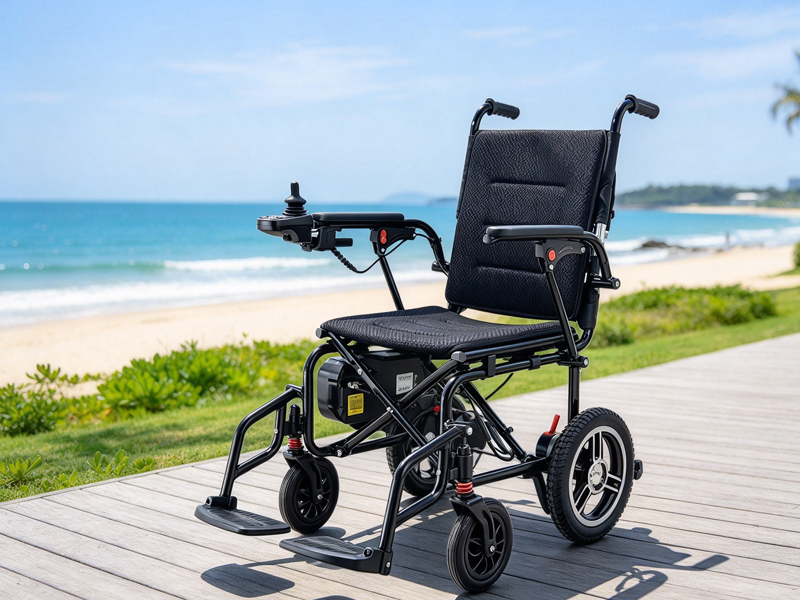
Choosing an adult wheelchair is about more than finding a comfortable seat. For many people with limited mobility, the right wheelchair can make everyday activities easier, from visiting friends and shopping for groceries to taking a weekend road trip or spending an afternoon outdoors. Yet traditional wheelchairs can be difficult to lift, transport, and store, especially when space at home is limited or a family member needs to load the chair into a car regularly.
That is why Adult Folding Wheelchairs that are lightweight and easy to store have become an important option for seniors, adults with mobility limitations, and caregivers looking for greater convenience without sacrificing everyday comfort.
Modern folding wheelchairs come in several designs, including lightweight manual wheelchairs and foldable electric power chairs. Manual models are generally simpler and lighter, while electric folding wheelchairs offer powered movement that can reduce the physical effort required from the user. For people who want both portability and powered assistance, a lightweight folding electric wheelchair can be a practical middle ground.
However, not every portable wheelchair is equally easy to handle. Frame material, total weight, folded dimensions, battery capacity, seat size, and braking performance all influence how well a model fits into daily life.
A wheelchair may be described as lightweight or portable, but those terms alone do not tell the whole story. The best choice depends on how frequently the chair needs to be folded, who will lift it, where it will be stored, and how far the user typically travels.
For example, someone who spends most of the day at home may prioritize comfortable seating and easy maneuverability. A person who regularly travels by car may care more about folded dimensions and the weight of the wheelchair after its battery has been removed. Someone who visits shopping centers, parks, or community events may need a balance of battery range, stability, and transport convenience.
Several features deserve particular attention.
Frame material and overall weight
The frame is one of the biggest factors affecting portability. Aluminum alloy is widely used in lightweight wheelchairs because it provides a useful balance of structural strength and manageable weight. Carbon fiber is another option for people who want to reduce lifting effort as much as possible.
It is important to distinguish the weight of the frame or wheelchair without its battery from the total operating weight. A chair advertised at 15 kg without a battery may weigh considerably more when fully assembled. Before purchasing, check the manufacturer’s figures and determine whether the user or caregiver can safely lift the complete chair or its removable components.
Folded dimensions and storage space
A folding mechanism is useful only if the wheelchair fits the space available. Measure the trunk opening, not just the trunk’s overall capacity. A chair might fit inside a large vehicle but still be difficult to maneuver through a narrow opening.
At home, a compact folding wheelchair can be stored in a closet, beside a cabinet, or in another designated area. In an apartment, where floor space is limited, the difference between a bulky power chair and a compact folding model can be especially noticeable.
Comfortable seating and easy transfers
Portability should never come at the expense of proper fit. Seat width, seat depth, backrest height, armrest position, and footrest design all affect comfort and usability.
Flip-up armrests can make lateral transfers easier for some users, while removable or adjustable footrests provide greater flexibility. A supportive seat cushion and an appropriate seating position are especially important for people who spend extended periods in their wheelchair.
Power, range, and braking
For electric wheelchairs, battery capacity determines how far the chair may travel between charges. Motor power influences movement, but the advertised range is only an estimate. Rider weight, terrain, temperature, battery condition, and driving habits can all affect real-world performance.
An electromagnetic brake can help the chair stop when the control is released, depending on the design. Buyers should also check the manufacturer’s stated slope limits and use the wheelchair only within its operating specifications.
These details are more useful than choosing a chair based on appearance or the lowest advertised weight alone.
For adults who want the convenience of a folding design and the assistance of powered mobility, IYASOCARE offers several models with different strengths. The following options suit different priorities, from minimizing lifting weight to balancing everyday comfort with travel flexibility.
The IYASOCARE YSE133 Lightweight Aluminum Electric Wheelchair is a strong option for adults who want a portable power chair for daily errands, visits with family, and occasional travel.
Its aluminum alloy frame weighs approximately 17 kg without the battery. Depending on the battery configuration, the complete wheelchair weighs approximately 18.5–22 kg according to the manufacturer’s product information. This distinction matters for caregivers who regularly lift a chair into a vehicle or need to move it between rooms.
The YSE133 folds to approximately 90 × 33 × 82 cm. Its relatively narrow folded profile can make storage easier in a car trunk or at home, although buyers should confirm the measurements of their available storage space before ordering.
One of the model’s most useful features is its dual lithium battery system. The listed battery options include 24V 6Ah, 12Ah, and 20Ah configurations. The manufacturer gives an estimated driving range of approximately 5–20 km, depending on the selected battery and operating conditions.
For someone who mainly travels short distances around the neighborhood, a smaller battery may be sufficient. A user who regularly visits larger shopping areas or spends more time outdoors may prefer to discuss a higher-capacity option with the supplier.
The wheelchair also features two 200W brushless motors, a maximum listed speed of 6 km/h, and a stated climbing capability of up to 9 degrees. These specifications make it worth considering for routine mobility on suitable paths, sidewalks, and other surfaces within the manufacturer’s operating limits. They should not be interpreted as a guarantee of performance on every slope or uneven surface.
Comfort is another consideration. The YSE133 has a 44 cm seat width, a 43 cm seat depth, a breathable backrest, and a padded seat. Its front-wheel shock absorption may help reduce some vibration on ordinary outdoor surfaces. Flip-up armrests and a three-position adjustable footrest add flexibility for daily use and transfers.
Additional specifications include:
The YSE133 is particularly worth considering for adults who want a lightweight aluminum folding power wheelchair without giving up features intended for regular everyday use.
It is not necessarily the lightest option in this selection, but its combination of seating comfort, dual battery options, and powered mobility makes it a balanced choice for users who expect to use their wheelchair frequently.
Best suited for: Adults and seniors seeking a portable electric wheelchair for everyday activities, with flexible battery options and a comfortable seating arrangement.
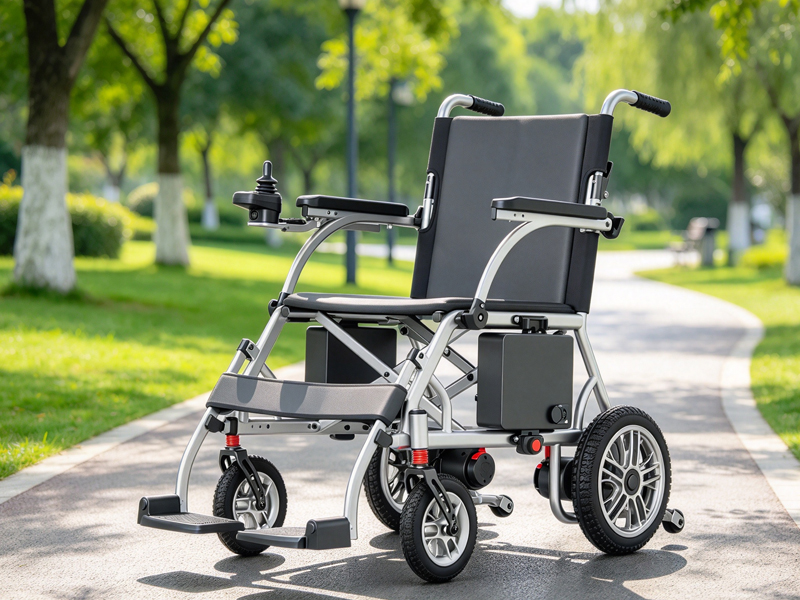
If reducing the effort involved in handling a wheelchair is your main concern, the IYASOCARE YSE124 Folding Electric Wheelchair deserves a closer look.
The YSE124 is designed around an ultralight aluminum frame, with a listed frame or base weight of approximately 14 kg in the product description. However, the detailed specifications also list different net and gross weights for configurations that include additional components. Buyers should therefore confirm the exact shipping configuration and complete wheelchair weight with the supplier before making a decision.
Its compact folded dimensions are approximately 60 × 29 × 74 cm. Compared with larger folding power chairs, this footprint may be easier to accommodate in a vehicle trunk, a storage cupboard, or a home with limited available space.
The YSE124 is also listed with manual and electric operating modes. This flexibility may appeal to users who want powered assistance for some journeys but prefer to have a manual option available in appropriate circumstances. Before relying on manual operation, confirm the correct mode-switching procedure and whether the chair can be pushed safely when its power is off.
For travel-oriented users, the listed 24V 12Ah lithium battery and brushless motor options provide a practical starting point for comparing configurations. The manufacturer advertises a driving range of approximately 15–25 km and a maximum speed of 6 km/h.
These figures are useful when planning ordinary outings, but actual range depends on the rider’s weight, route, terrain, battery condition, and other operating factors. Someone who expects to spend an entire day away from home should plan a charging strategy rather than assuming the full advertised range will always be available.
The YSE124 has a 43 cm seat width, a 45 cm seat depth, and a 50 cm seat height. The backrest is listed at 39 cm high, while removable footrests and a rear handle support convenient handling.
The product specifications also list a maximum user weight of 100 kg and a charging time of approximately 4–6 hours.
Another important detail is the stated climbing capability of up to 15 degrees. This figure should be treated as a manufacturer-listed limit, not a recommendation to use the wheelchair on steep or unverified slopes. Actual safe operation depends on the surface, loading, configuration, and the manufacturer’s instructions.
What makes the YSE124 appealing is its emphasis on compact storage and flexible everyday mobility. For a household where the wheelchair must be folded after each outing, that combination may be more valuable than a longer list of optional features.
Best suited for: Adults who prioritize compact folded dimensions, reduced handling weight, and the convenience of having manual and powered operating options.

The IYASOCARE Travel Folding Electric Wheelchair YSE125 is designed for users who need a practical balance of portability, everyday comfort, and powered assistance.
Its aluminum frame weighs approximately 19–22 kg, depending on the configuration. Although it is not the lightest chair in this selection, the folding design helps simplify transport and storage.
The listed folded dimensions are approximately 60 × 29 × 71 cm. This compact profile is particularly useful for adults who regularly travel by car, stay with relatives, or need to store a wheelchair between outings.
For many households, the convenience of a wheelchair is determined by what happens after the journey. A chair that folds into a manageable package is easier to put away when it is not needed, freeing up space in the home or vehicle.
The YSE125 uses a 24V 150W brushless motor and offers lithium battery options of 6Ah, 10Ah, and 20Ah. The manufacturer’s estimated driving range is approximately 10–25 km, depending on the battery configuration and operating conditions.
Its maximum listed speed is 4.5 km/h. For users who value controlled movement in indoor environments, pedestrian areas, and ordinary outdoor settings, this specification may be worth considering alongside comfort and handling.
The seating dimensions are another advantage. The chair has a 43 cm seat width, a 45 cm seat depth, and a 47 cm seat height. These measurements provide a useful starting point for determining whether the chair is suitable for the intended rider.
The model also features a detachable footrest, cushioned seating, and 12-inch rear PU wheels paired with 7-inch front PU wheels. PU tires do not require inflation, which can simplify routine maintenance compared with pneumatic tires.
An electromagnetic braking system is included, and the manufacturer lists a climbing capability of up to 3 degrees. That relatively modest stated slope limit is an important consideration for buyers whose regular routes include ramps or uneven terrain. If a route involves slopes, ask the supplier to confirm whether the chair is suitable for those conditions.
The product’s main strengths are its compact folding structure, selectable battery capacity, and practical seating dimensions. The removable footrest can also help with handling and transfers, depending on the user’s needs.
For a person who mainly uses a wheelchair on level indoor floors, sidewalks, shopping trips, or planned travel routes, the YSE125 may be a sensible option to compare against lighter models.
Best suited for: Adults who want a compact folding electric wheelchair for routine outings and travel, particularly when storage space is a major concern.
For users who want to reduce lifting weight as much as possible, carbon fiber is an appealing frame material. The IYASOCARE YSE146L Portable Carbon Fiber Electric Wheelchair combines this material with a compact folding design and dual brushless motors.
The manufacturer lists the YSE146L at approximately 11.5 kg without its battery and approximately 16 kg with the listed battery configuration. This makes it an especially interesting option for people who frequently transport their wheelchair and want to minimize the weight of the assembled unit.
As always, the weight that matters most is the weight of the actual component a person must lift. Buyers should confirm whether the battery is removable, how the chair separates into transportable components, and the weight of each component before purchase.
The YSE146L folds to approximately 72 × 30 × 70 cm, making it a compact choice for vehicle storage and homes with limited space. Its carbon fiber frame provides a different approach to lightweight mobility compared with the aluminum frames used in the other models discussed here.
The wheelchair is powered by two 24V 150W brushless motors and a 24V 10Ah lithium battery. The manufacturer estimates a driving range of approximately 10–15 km per charge, with a maximum listed speed of 4.5 km/h.
For short outings, visits to local shops, and routine movement around suitable indoor and outdoor environments, that range may be sufficient. Users who regularly travel longer distances should compare the available range against their typical daily mileage and ask about charging arrangements.
The YSE146L has a 40 cm seat width, a 41 cm seat depth, and a 45 cm seat height. These dimensions are slightly different from those of the YSE133 and YSE125, so checking the seat measurements against the rider’s body dimensions is essential.
Other practical features include flip-up armrests, PU wheels, and an electromagnetic braking system. The manufacturer lists a maximum user weight of 100 kg, a charging time of approximately 4–6 hours, and a climbing capability of up to 3 degrees.
Its relatively narrow seat may suit some users very well, but it will not be appropriate for everyone. The rider should have sufficient room for comfortable positioning without excessive side-to-side movement.
Carbon fiber is often associated with lightweight construction, but material alone does not determine comfort, durability, or suitability. The folding mechanism, seating dimensions, battery placement, and intended operating environment are equally important.
For people who frequently load a wheelchair into a car, the YSE146L’s low listed weight and compact folded dimensions make it a compelling model to investigate.
Best suited for: Adults and caregivers who place a high priority on reducing wheelchair weight and keeping storage dimensions compact.

The four models have different strengths. Instead of assuming that one wheelchair is best for everyone, compare the specifications against your own daily routine.
| Feature | YSE133 | YSE124 | YSE125 | YSE146L |
|---|---|---|---|---|
| Frame | Aluminum alloy | Aluminum alloy | Aluminum alloy | Carbon fiber |
| Listed weight | 17 kg without battery | Approximately 14 kg base/frame listing; confirm complete weight | 19–22 kg | 11.5 kg without battery |
| Folded size | 90 × 33 × 82 cm | 60 × 29 × 74 cm | 60 × 29 × 71 cm | 72 × 30 × 70 cm |
| Battery | 24V, 6Ah/12Ah/20Ah options | 24V 12Ah listed | 24V, 6Ah/10Ah/20Ah options | 24V 10Ah |
| Estimated range | 5–20 km | 15–25 km | 10–25 km | 10–15 km |
| Maximum listed speed | 6 km/h | 6 km/h | 4.5 km/h | 4.5 km/h |
| Maximum user weight | 100 kg | 100 kg | 100 kg | 100 kg |
| Main advantage | Everyday comfort and battery flexibility | Compact folding and flexible operating modes | Compact travel design | Low listed weight and carbon fiber frame |
Specifications are based on the manufacturers’ published product information. The YSE124’s weight descriptions vary by configuration, so its complete operating weight should be confirmed directly with the supplier. Driving range, climbing ability, and performance can vary with usage conditions.
A useful way to narrow the options is to begin with your most important requirement:
These are starting points rather than universal rankings. A wheelchair with a slightly higher weight may still be the better choice if its seat fits the rider more comfortably or its operating specifications better match the intended route.
The easiest way to make a good decision is to start with real-life use rather than the product specifications alone.
Think about who will lift the wheelchair.
If the wheelchair must be loaded into a car after every outing, its transport weight becomes a daily consideration. A caregiver who can comfortably manage a 20 kg chair may find that weight acceptable, while someone with limited strength may need a lighter design or a model that can be separated into manageable components.
Never assume that a wheelchair is easy to lift simply because it folds. Folding reduces the space it occupies, not necessarily the effort required to carry it.
Measure the storage area before ordering.
Write down the usable dimensions of your car trunk, closet, or designated storage space. For a vehicle, measure the opening as well as the interior. Leave enough room to position the folded chair without damaging the frame, upholstery, or surrounding items.
Also consider whether you need to store the wheelchair upright or flat. The shape of the folded chair can matter just as much as its total volume.
Check the seat dimensions carefully.
A seat that is too narrow can feel restrictive, while one that is too wide may offer inadequate lateral support. Seat depth also matters because it affects thigh support and the position of the knees.
Whenever possible, compare the wheelchair’s published measurements with the user’s current chair or a professional seating assessment. If the rider has specific posture or positioning needs, ask a qualified rehabilitation professional to help evaluate suitability.
Match the battery to your typical journey.
A higher-capacity battery may be useful for longer trips, but it can also add weight. Consider the distance you travel on a normal day, whether charging is available at your destination, and whether the battery can be removed for charging.
A sensible approach is to leave a reserve rather than planning to use the full advertised range on every outing.
Consider the terrain and braking requirements.
A wheelchair suitable for smooth indoor floors may not be suitable for steep ramps, gravel, soft grass, or uneven paving. Check the manufacturer’s slope limits and surface recommendations before using the chair outdoors.
If your usual route includes a steep driveway or a public ramp, ask the supplier for specific guidance. Do not rely on a general statement that a wheelchair is suitable for outdoor use.
Confirm the folding and transport procedure.
Before buying, ask how the chair folds, whether the battery must be removed, and whether any locking mechanism needs to be engaged before lifting or storage. A demonstration can help users and caregivers understand the process and identify potential handling difficulties.
For air travel, check the airline’s current requirements for mobility devices and lithium batteries directly with the carrier. A folding design does not automatically mean that a wheelchair or its battery meets every airline’s rules.
A well-maintained wheelchair is more likely to remain convenient and dependable over time. Fortunately, the routine care required by many folding electric wheelchairs is relatively straightforward.
First, check the folding joints, fasteners, and locking mechanisms regularly. The frame should open and fold according to the manufacturer’s instructions, without unusual resistance or looseness. Stop using the chair and seek service if you notice damage, unexpected movement, or a mechanism that no longer locks securely.
Second, keep the wheels clean. PU tires do not need air inflation, but they still require occasional inspection for wear, debris, and damage. Remove dirt that could affect movement or accumulate around the wheel assemblies.
Third, follow the battery manufacturer’s charging and storage instructions. Use the specified charger, avoid exposing the battery to unsuitable temperatures, and inspect cables and connectors for visible damage. Do not continue charging a battery that appears swollen, damaged, or unusually hot.
Fourth, keep the seat and backrest clean and dry. Follow the recommended cleaning method for the upholstery, and avoid using products that could damage the material.
Finally, arrange professional maintenance when required. Brakes, electrical controls, motors, and folding hardware are important safety components. If the chair stops unexpectedly, pulls to one side, or develops a braking problem, have it inspected before returning to normal use.
Good maintenance does not need to be complicated. A short inspection before regular use and periodic checks of the major components can help users identify problems before they interrupt an outing.
The right folding wheelchair should make everyday life easier, not introduce a new set of challenges. For adults with mobility limitations, convenience comes from a combination of manageable weight, compact storage, comfortable seating, reliable controls, and a design that fits the places they actually go.
The IYASOCARE YSE133, YSE124, YSE125, and YSE146L offer different approaches to those needs. The YSE133 emphasizes everyday comfort and battery flexibility. The YSE124 focuses on compact folding and flexible operating modes. The YSE125 offers a travel-oriented aluminum design with several battery options. The YSE146L uses a carbon fiber frame to reduce the listed weight while maintaining a compact folded form.
Before making a final decision, compare the complete operating weight, seat measurements, folded dimensions, battery configuration, and terrain requirements. Ask the supplier to confirm any specifications that are unclear, particularly where product configurations may differ.
A thoughtful choice can make it easier to get out of the house, spend time with family, and take part in activities that matter. Rather than looking for the lightest wheelchair at any cost, focus on finding the model that offers the most practical balance of portability, comfort, and safe everyday use.
The best model depends on the user’s priorities. The YSE133 is worth considering for its aluminum frame, comfortable seating, and flexible battery options. The YSE124 is a useful option for buyers who prioritize compact folding and manual/electric operating flexibility. The YSE125 offers a travel-oriented folding design, while the carbon fiber YSE146L is particularly interesting for users seeking a low-weight wheelchair.
Compare complete weight, seat fit, folded dimensions, battery range, and the intended operating environment before choosing.
Many folding electric wheelchairs are designed for vehicle transport, but whether a particular model fits depends on the available space and the shape of the trunk opening.
For example, the YSE124 has listed folded dimensions of approximately 60 × 29 × 74 cm, while the YSE125 folds to approximately 60 × 29 × 71 cm. The YSE146L folds to approximately 72 × 30 × 70 cm, and the YSE133 folds to approximately 90 × 33 × 82 cm.
Measure your vehicle carefully and allow room to maneuver the folded chair into position. Also check the weight of the chair and battery configuration before attempting to lift it.
Start with five essentials: manageable transport weight, compact folded dimensions, suitable seat measurements, sufficient battery range, and braking performance appropriate for your intended routes.
If you plan to fly, verify the airline’s requirements for lithium batteries and mobility devices before booking. For regular outdoor use, check the manufacturer’s surface and slope limitations. Finally, make sure the wheelchair can be folded, stored, and transported safely by the person who will handle it most often.
The most suitable travel wheelchair is not simply the smallest one. It is the one that fits the user comfortably, works for the planned journey, and can be transported without unnecessary difficulty.