Our Location
Free Trade Tower, Xiyong street.
Chongqing, China

Free Trade Tower, Xiyong street.
Chongqing, China

Choosing the best bariatric wheelchair is about more than finding a chair with a higher weight capacity. The right wheelchair should fit the user’s body, provide dependable support, move comfortably through everyday environments, and make daily activities safer for both the user and caregiver. From seat dimensions and frame construction to pressure-relief cushions and maneuverability, every detail can influence the overall experience.
For people who need additional seating space and stronger mobility support, a bariatric wheelchair can make a meaningful difference in everyday life. It can help users move around their homes, attend medical appointments, visit family, and participate in activities with greater confidence. However, not every heavy-duty wheelchair offers the same combination of comfort, stability, and practical functionality.
The challenge is knowing which features deserve the most attention before making a purchase.
This guide explains how to choose the best bariatric wheelchair for comfort and safety, what specifications to compare, and how to identify a model that suits the user’s lifestyle rather than simply meeting a basic weight requirement.
A bariatric wheelchair is a mobility device specifically designed to accommodate users who need a higher weight capacity, a wider seat, or additional structural support than a standard wheelchair provides.
Depending on the model, these wheelchairs may feature reinforced frames, heavy-duty wheels, stronger axles, durable upholstery, and seating dimensions designed for larger body sizes. Weight capacities vary considerably across manufacturers, with some models supporting several hundred pounds and specialized options accommodating substantially more.
The most important distinction is that a bariatric wheelchair is not simply a regular wheelchair with a wider seat. Its structural components and overall design must work together to support the intended load safely.
These wheelchairs may be suitable for people who exceed the weight limit of a standard wheelchair, need more room to sit comfortably, or require additional stability during everyday mobility. They are also used in rehabilitation settings, long-term care facilities, and home environments where reliable mobility support is essential.
For some users, a manual bariatric wheelchair provides an effective solution for short trips or caregiver-assisted transportation. Others may benefit from a bariatric power wheelchair, particularly when independent movement over longer distances is important or upper-body strength is limited.
The best option depends on the person’s physical abilities, daily routine, home environment, and expected level of assistance.
Rather than starting with a particular brand or price, begin by identifying what the wheelchair needs to accomplish. A chair intended primarily for indoor use may have different requirements from one used for outdoor trips, frequent vehicle transportation, or extended periods of sitting.
That distinction makes the selection process considerably easier.
Weight capacity should be one of the first specifications you evaluate when comparing bariatric wheelchairs.
Every wheelchair has a manufacturer-defined maximum user weight. Choosing a model that cannot safely support the intended user may compromise the frame, wheels, brakes, and other essential components. It can also increase the risk of equipment failure during movement or transfers.
However, selecting the right weight capacity involves more than matching a number on a product page.
First, confirm the user’s current weight and compare it with the wheelchair’s published weight limit. If weight changes are reasonably expected, consider whether the selected model will remain appropriate over time. Accessories and the manufacturer’s specific operating restrictions should also be reviewed.
For example, a person weighing 350 pounds should not automatically select a wheelchair rated for 350 pounds simply because the numbers match. A higher-capacity model may be more appropriate, depending on the available specifications and intended use.
There is no universal safety margin that applies to every wheelchair. Follow the manufacturer’s requirements and consult a qualified mobility professional if you are unsure which capacity to choose.
It is equally important to understand that a higher weight rating does not automatically mean a wheelchair is the safest or most comfortable option. A model with a very high capacity may be unnecessarily bulky for someone who needs to navigate narrow hallways or transport the chair frequently.
The goal is to find a wheelchair whose rated capacity comfortably meets the user’s needs while preserving practical everyday usability.
When reviewing product specifications, look beyond the headline weight limit. Check whether the rating applies to the complete wheelchair configuration, including any relevant seating options and accessories. Confirm that replacement parts and add-on equipment are compatible with the selected model.
For long-term use, inspect the manufacturer’s maintenance recommendations as well. Even a well-designed heavy-duty wheelchair requires routine checks to maintain its intended performance.
Seat dimensions are among the most important factors in choosing a bariatric wheelchair. A chair can have an excellent weight rating and a reinforced frame yet still be uncomfortable if the seat does not fit the user properly.
A seat that is too narrow may compress the hips and thighs, restrict movement, and create uncomfortable pressure points. A seat that is excessively wide can make it harder to maintain a stable sitting position, reach the wheels, or propel a manual wheelchair efficiently.
The best fit provides sufficient room without allowing the user to slide from side to side.
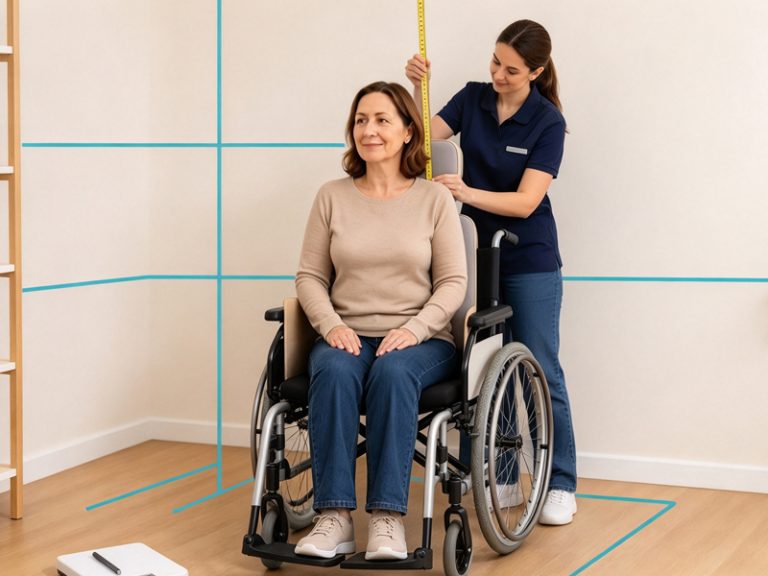
Measure the widest part of the user’s hips or thighs while seated in their usual clothing. The measurement should reflect the person’s actual seated dimensions rather than a standing measurement.
As a general starting point, allow approximately one inch of clearance on each side, then compare the result with the manufacturer’s available seat sizes. The exact fit may need adjustment based on clothing, posture, positioning supports, and the user’s individual needs.
For example, if the seated hip or thigh measurement is 23 inches, a 25-inch seat may be a reasonable size to evaluate. This is a starting point, not a substitute for a proper fitting assessment.
Seat depth deserves the same attention.
The seat should support the thighs without pressing firmly into the backs of the knees. If the seat is too short, the thighs may receive insufficient support. If it is too deep, the front edge can interfere with comfortable positioning and make it difficult to sit fully against the backrest.
A qualified seating professional can help determine the appropriate seat depth, height, and positioning for users with more complex support needs.
A common purchasing mistake is checking only the seat width and overlooking the wheelchair’s total outside dimensions.
Bariatric wheelchairs often have wider frames and wheels, which can make them difficult to maneuver through certain doorways, hallways, and bathroom entrances.
Before ordering, measure the narrowest doorway and passage the wheelchair must cross. Check the manufacturer’s overall width specification rather than estimating it from the seat dimensions.
Also consider turning space in bedrooms, kitchens, bathrooms, and other frequently used areas.
A wheelchair that fits the user beautifully but cannot move comfortably through the home may create unnecessary frustration every day.

A bariatric wheelchair must be engineered to handle the demands of its intended weight range. Frame construction, wheel assemblies, axles, cross-braces, and upholstery all contribute to the chair’s durability and stability.
Steel and aluminum are two common frame materials, and each offers practical advantages.
Steel frames are often chosen for their strength and durability. They may be appropriate for users who need a robust wheelchair for frequent daily use, particularly when portability is less important than structural support.
Aluminum frames can offer a lighter alternative, making some models easier to handle during transportation and storage. However, frame material alone does not determine a wheelchair’s maximum capacity or overall safety. The complete design, construction quality, and manufacturer’s rating matter more than a simple comparison between materials.
When evaluating a heavy-duty wheelchair, examine the details that affect long-term performance.
Look for a frame designed specifically for the intended weight range, securely assembled structural components, durable upholstery, and wheels and axles rated for the expected load. Reinforced cross-bracing may be an important feature on folding models, depending on the design.
Ask about replacement parts, warranty coverage, and maintenance requirements before buying. A wheelchair that is easy to service may be more practical over several years than a model with limited support.
The same principle applies to upholstery and armrests. Seat fabric should withstand regular use without excessive sagging, while armrests and footrests should provide appropriate support without being treated as lifting handles unless the manufacturer explicitly permits that use.
Remember that durability is not determined by appearance alone. A wheelchair can look substantial without being suitable for a particular user.
Always verify the model’s specifications rather than relying on descriptions such as heavy-duty, reinforced, or extra strong.
One of the biggest decisions is whether to choose a manual bariatric wheelchair or an electric bariatric wheelchair.
Both can be suitable, but they serve different needs.
A manual bariatric wheelchair is generally operated by the user through hand rims or propelled by a caregiver using the push handles. It can be a practical choice for shorter journeys, occasional outings, and situations where another person is available to assist.
Some manual models fold for storage or transportation, although heavier frames and wider seating can make lifting more difficult. If a caregiver will regularly place the chair in a vehicle, the wheelchair’s actual weight and folded dimensions should be checked before purchase.
Manual propulsion also requires sufficient strength, coordination, and endurance. Moving a heavier wheelchair over long distances or uneven surfaces may be demanding, even for someone who can propel a standard chair.
An electric bariatric wheelchair uses a powered drive system to move the user. Depending on the model, it may offer a joystick controller, adjustable seating, a higher-capacity frame, and features intended to support independent mobility.
Power wheelchairs can be especially useful for people who have limited upper-body strength or need to travel farther without relying on continuous manual propulsion. However, buyers must also consider battery charging, driving controls, turning radius, transport arrangements, and the suitability of the intended environment.
A powered chair may be less convenient if the home has narrow doorways, limited turning space, or no suitable charging location.
Before choosing, consider these everyday questions:
These answers often reveal more about the best wheelchair than the product description does.
If the user has complex mobility needs, a rehabilitation professional or occupational therapist can help assess the most appropriate configuration.
Comfort is not an optional extra for someone who spends significant time in a wheelchair. It directly affects how manageable everyday activities feel and how long the user can remain seated comfortably.
A bariatric wheelchair should provide appropriate support for the pelvis, thighs, back, and feet. Seat cushioning, upholstery, armrest height, and backrest design all contribute to the overall sitting experience.
However, adding the thickest cushion available is not necessarily the best solution.
The cushion should match the wheelchair’s seat dimensions and the user’s support requirements. It must also be rated for the intended user weight and compatible with the chair’s seating surface.
Prolonged sitting can expose certain areas of the body to sustained pressure, particularly around the sitting bones and other bony prominences. Users who have reduced sensation, limited ability to reposition themselves, or a history of pressure injuries may need specialized seating support.
Pressure-redistribution cushions are designed to spread or reduce pressure across vulnerable areas. Depending on individual needs, options may include contoured foam, gel-based designs, air cushions, or combinations of materials.
There is no single cushion that works best for everyone. The right choice depends on posture, skin condition, sensation, mobility, sitting duration, and the level of pressure management required.
A cushion that is too soft or poorly matched to the user’s weight may compress excessively. A cushion that is too high or unstable may also affect positioning and transfer safety.
For users at elevated risk of pressure injuries, a qualified clinician or seating specialist should help select and fit the cushion.
Other comfort features deserve attention as well. Adjustable armrests can improve positioning and support during transfers. Appropriate footrests help keep the legs supported, while elevating leg rests may be useful for certain users when clinically appropriate.
Reclining backrests and adjustable seating systems can offer additional positioning options, but they should be selected according to the user’s needs rather than simply because they appear more luxurious.
Breathable upholstery and removable, easy-to-clean covers can make daily care more manageable. They are particularly useful when the wheelchair is used for many hours or in environments where cleaning needs are frequent.
For regular wheelchair users, inspect the cushion and seating surface for damage, compression, or changes in support. Check the skin routinely, and seek clinical advice if persistent redness, discoloration, or other signs of skin damage appear.
The best bariatric wheelchair should make it easier to maintain a comfortable, supported position throughout the day—not merely feel soft when first tested.
Wheels and brakes play a central role in wheelchair safety. Even a comfortable chair can become difficult to use if it rolls poorly, turns awkwardly, or cannot remain securely in place during transfers.
When comparing bariatric wheelchairs, consider the type of wheels, tire construction, caster design, braking system, and intended operating surfaces.
Larger rear wheels can help users propel a manual wheelchair independently when the model is designed for self-propulsion. Smaller rear wheels may be suitable for certain attendant-propelled transport chairs.
Neither configuration is automatically superior. The right arrangement depends on who will operate the wheelchair, where it will be used, and the user’s physical abilities.
Tire type matters, too. Solid tires can reduce the need to deal with punctures, while pneumatic tires may provide a different ride quality but require pressure checks and maintenance. The manufacturer’s recommendations should guide the choice.
Consider the surfaces the wheelchair will encounter. Smooth indoor flooring places different demands on a chair than outdoor paving, ramps, uneven sidewalks, or transitions between surfaces.
A model intended primarily for indoor use may not perform well on rough terrain. Likewise, a wheelchair with a wide turning radius may be inconvenient in small bathrooms or crowded living spaces.
Brakes deserve particular attention. The wheelchair should have a braking system appropriate to its design, with controls that the user or caregiver can operate reliably.
For transfers, the chair must be secured according to the manufacturer’s instructions. Do not assume that the presence of brakes makes every transfer safe; the user’s transfer ability, positioning, and any required assistance must also be considered.
Powered wheelchairs may have additional controls, speed settings, and braking functions. Users should understand how these systems operate and practice in a suitable environment before navigating busy or unfamiliar spaces.
Before regular use, check for loose components, worn tires, damaged brakes, or unusual movement. Arrange repairs when necessary rather than continuing to use a chair with compromised safety features.
A wheelchair that performs well in a showroom may be much less convenient in everyday life if it is difficult to transport or store.
This is especially relevant for bariatric models, which often have wider seats and stronger frames than standard wheelchairs.
If the chair will be used mainly at home, measure the available storage space and check whether it can be positioned near the user’s usual seating or transfer area.
For users who travel frequently, examine whether the wheelchair folds, how much it weighs, and whether its folded dimensions suit the intended vehicle. A folding design does not necessarily mean that one person can lift it safely.
Powered wheelchairs introduce additional considerations, including battery weight, charging requirements, and vehicle loading arrangements. Some models may require a suitable ramp, lift, or specialized transportation equipment.
Vehicle compatibility should be verified rather than assumed. Confirm that the chair can be loaded, secured, and transported according to the wheelchair and vehicle manufacturers’ instructions.
Home accessibility is equally important.
Measure doorway clearances, hallway widths, turning areas, and bathroom access. If the wheelchair will be used on ramps, check that the ramp and surrounding surfaces are suitable for the user’s equipment and assistance needs.
Also consider whether the chair can reach the places that matter most, such as the bedroom, kitchen, garden, or family living area.
These details may seem less important than weight capacity or frame strength, but they often determine whether the wheelchair genuinely improves everyday independence.
A slightly different model that fits the home and transportation setup may prove far more useful than a larger, heavier alternative with impressive specifications.
The purchase price is important, but it should not be the only factor in your decision.
Bariatric wheelchairs vary widely in cost depending on their capacity, frame design, seating system, propulsion type, and available accessories. Powered models may also involve battery replacement, charging equipment, and additional servicing requirements.
A lower-priced wheelchair may be suitable for occasional use if it meets all safety and fit requirements. For daily use, however, comfort, durability, repairability, and long-term support may be more important than the initial savings.
Before purchasing, review the warranty and ask about the availability of replacement tires, cushions, brakes, armrests, and other wear components.
Find out whether routine maintenance can be performed locally and whether specialist servicing is needed for powered systems.
It is also worth checking the complete cost of the chosen configuration. A chair may require a compatible pressure-relief cushion, additional positioning supports, or transportation equipment to meet the user’s needs.
If you are purchasing a wheelchair for a family member, consider who will handle cleaning, routine inspections, transportation, and repairs. A model that is difficult for the caregiver to maintain may create unnecessary challenges over time.
Depending on the user’s circumstances, insurance or other funding assistance may be available. Coverage varies by provider, plan, medical necessity, and equipment category, so confirm eligibility and documentation requirements directly with the relevant insurer or funding organization before committing to a purchase.
When comparing two similar models, look beyond their advertised features. Ask which one offers the most appropriate fit, reliable support, practical maintenance, and manageable day-to-day use.
The best value is the wheelchair that continues to meet the user’s needs safely and comfortably over time.
Before making a final decision, use the following checklist to compare shortlisted models. It can help you identify missing information and avoid choosing a wheelchair based on a single attractive specification.
| What to check | Why it matters |
|---|---|
| Maximum weight capacity | Confirms the chair is rated for the intended user and configuration |
| Seat width and depth | Helps provide comfortable, stable positioning |
| Overall wheelchair width | Determines whether the chair fits through doors and hallways |
| Frame and wheel construction | Supports durability and intended daily use |
| Manual or powered operation | Matches the user’s strength, independence, and mobility needs |
| Cushion and backrest | Supports comfort, posture, and pressure management |
| Brakes and stability | Helps support safe positioning and transfers |
| Portability and storage | Determines whether the chair suits the home and vehicle |
| Maintenance and warranty | Helps manage long-term ownership and repairs |
| Professional fitting advice | Helps address individual positioning or clinical requirements |
Whenever possible, arrange a proper fitting or trial before buying. Have the user sit in the chair and assess whether the seat, backrest, armrests, and footrests provide appropriate support.
Check that the user can reach the controls or hand rims if independent operation is intended. Consider whether a caregiver can push, maneuver, and secure the chair without unnecessary strain.
If a trial is not available, request detailed dimensions, configuration information, and guidance from a qualified mobility equipment provider.
The more closely the wheelchair matches real-world needs, the less likely you are to discover an expensive mismatch after delivery.
Choosing the best bariatric wheelchair for comfort and safety requires a balanced assessment of capacity, fit, construction, seating support, maneuverability, and everyday practicality.
Start by confirming the manufacturer’s weight rating and measuring the user’s seated dimensions. Then evaluate the frame, wheels, brakes, cushion, and operating style. Finally, make sure the wheelchair fits the home, works with the available transportation, and can be maintained over time.
For some people, a reinforced manual wheelchair will provide the right combination of reliability and simplicity. Others may benefit more from a powered model that supports independent movement. Neither option is universally best; the right choice depends on the individual.
It is also important to recognize that wheelchair selection is not always a one-time decision. Changes in mobility, posture, skin condition, weight, or daily activities may eventually require adjustments or a different seating configuration.
When needs are complex, working with an occupational therapist, physical therapist, or qualified wheelchair seating professional can help ensure that the equipment is properly fitted and used safely.
Ultimately, a well-chosen bariatric wheelchair should do more than support the user’s weight. It should help make everyday movement more manageable, provide dependable support, and allow the user to participate more comfortably in the activities that matter to them.
A careful selection process today can make a meaningful difference in comfort, confidence, and long-term usability.
1. What weight capacity should I look for in a bariatric wheelchair?
Choose a bariatric wheelchair with a manufacturer-rated weight capacity that safely accommodates the user’s current weight and intended configuration. Do not select a model solely because its capacity matches the user’s weight. Consider foreseeable changes in needs, relevant accessories, and the manufacturer’s specific requirements. If you are unsure which rating is appropriate, consult a qualified mobility equipment professional.
2. How do I know which bariatric wheelchair seat width is right?
Measure the widest part of the user’s hips or thighs while seated, then use the measurement as a starting point for selecting a seat with appropriate clearance. Approximately one inch of space on each side is a common initial guideline, but the final fit depends on posture, clothing, positioning needs, and the wheelchair design. Seat depth and overall wheelchair width should also be checked to ensure comfortable seating and access through doorways.
3. Is a manual or electric bariatric wheelchair better for everyday use?
A manual bariatric wheelchair may suit users who can propel it comfortably or have a caregiver available to assist. An electric bariatric wheelchair may be more appropriate for people with limited upper-body strength, longer daily travel requirements, or a need for greater independent mobility. Compare the user’s physical abilities, daily distances, home layout, transportation options, and maintenance needs before deciding. A professional assessment can help identify the most suitable option.