Our Location
Free Trade Tower, Xiyong street.
Chongqing, China

Free Trade Tower, Xiyong street.
Chongqing, China
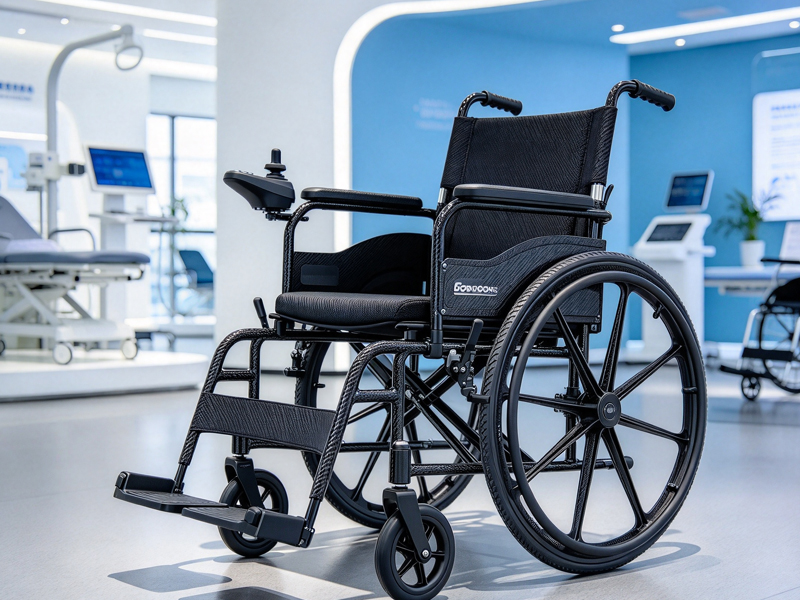
This is one reason carbon fiber wheelchairs have attracted growing interest among people looking for lightweight, portable, and practical mobility solutions. By combining the strength of carbon fiber with modern wheelchair engineering, manufacturers can create designs that balance structural support with reduced weight. Depending on the model, these chairs may also feature folding frames, electric propulsion, ergonomic seating, and travel-friendly construction.
But is a carbon fiber wheelchair worth considering for everyday use? The answer depends on how you move, where you go, and what you expect from your mobility equipment.
From easier transportation and everyday convenience to long-term durability and personal independence, understanding the benefits of carbon fiber wheelchairs can help you make a more informed decision. Here is what matters most when choosing a wheelchair that fits your lifestyle.
One of the most noticeable benefits of a carbon fiber wheelchair is its potential for a significantly lighter frame.
Carbon fiber is a composite material made from thin carbon filaments combined with a resin matrix. Its appeal comes from its excellent strength-to-weight ratio, which allows engineers to develop lightweight structures without automatically sacrificing the strength required for their intended use. The material is widely used in demanding applications, including aerospace equipment and high-performance sporting goods.
In wheelchair design, this material advantage can make a meaningful difference.
Consider a typical day. You might need to move your wheelchair through a narrow hallway, position it beside a dining table, load it into a vehicle, or maneuver around furniture at home. These tasks may seem minor individually, but they become more demanding when repeated throughout the day.
A lighter wheelchair can make many of these movements easier to manage.
For people who frequently travel by car, reduced frame weight may be especially valuable. Lifting a wheelchair into a trunk or positioning it in the back of a vehicle can require considerable effort. A lighter model may reduce the physical demands of these tasks, particularly for users who handle their own equipment.
Caregivers can also benefit. When a wheelchair needs to be lifted, carried, or repositioned several times a day, reducing its weight can make transportation more manageable.
However, it is important to distinguish between a lightweight frame and a lightweight complete wheelchair. Batteries, motors, wheels, seating systems, armrests, and accessories all contribute to the total weight of an electric wheelchair. Some manufacturers advertise the frame or base weight rather than the weight of the complete chair.
Before comparing products, check exactly what the listed weight includes.
The practical advantage is simple: less weight can mean less effort when handling, storing, and transporting a wheelchair. For people who regularly move between home, work, appointments, and social activities, that convenience can make a noticeable difference.
A wheelchair should help you get where you want to go, not make every journey more complicated.
Transportation is one of the most important considerations when choosing everyday mobility equipment. Even a comfortable wheelchair may become inconvenient if it is difficult to fit into a vehicle, store in a small apartment, or take along on a weekend trip.
Lightweight carbon fiber wheelchairs can help address some of these challenges, especially when paired with a folding design.
Imagine leaving home for lunch with friends. You need to get from your front door to the car, fold or disassemble your wheelchair if necessary, place it inside the vehicle, and set it up again when you arrive. A lighter, well-designed chair can simplify several steps in that process.
The same applies to grocery shopping, medical appointments, family visits, and other routine outings.
For people living in apartments or smaller homes, portability can be just as important. A compact wheelchair may be easier to store in a closet, beside a desk, or in another designated space when it is not in use. A folding model may also be more practical for households where storage space is limited.
That said, not every carbon fiber wheelchair folds, and not every folding wheelchair has the same dimensions. Some models fold into a relatively compact package, while others require additional space because of their wheels, batteries, or frame configuration.
When comparing options, consider these details:
These practical questions often matter more than a product’s appearance or advertised weight alone.
A wheelchair that fits your transportation routine can make spontaneous outings easier to manage. Rather than avoiding an activity because transporting your equipment seems inconvenient, you may have more flexibility to accept invitations and explore new places.
A common misconception is that a lightweight wheelchair must be less durable than a heavier alternative. In reality, weight alone does not determine structural strength.
Carbon fiber composites can provide a strong, rigid structure relative to their weight. When properly engineered and manufactured, they can support demanding everyday applications while keeping the overall design relatively light.
For wheelchair users, this combination is appealing because mobility equipment needs to handle repeated use. A wheelchair may travel over thresholds, pass across uneven pavement, navigate building entrances, and undergo frequent folding or transportation. Its frame and components must withstand these everyday demands within the manufacturer’s specified limits.
Carbon fiber can contribute to that goal, but the performance of the finished wheelchair depends on much more than the material itself.
The quality of the frame construction, joints, fasteners, wheel assemblies, suspension where fitted, and other components all influence reliability. Manufacturing standards and the way a chair is maintained also play important roles.
It is equally important to understand that carbon fiber is not indestructible. Although it offers excellent strength in appropriately designed structures, a severe impact or localized damage can compromise a composite component. Some damage may be less obvious than the dents or bends associated with certain metal frames.
For this reason, inspect the wheelchair regularly and follow the manufacturer’s guidance after an accident, significant impact, or suspected frame damage.
Weight capacity deserves particular attention. A lightweight wheelchair can have a substantial load rating, but specifications vary considerably by model. Never assume that every carbon fiber wheelchair supports the same user weight.
Check the rated capacity and consider the combined load of the user, clothing, bags, and accessories as directed by the manufacturer.
A durable wheelchair is not simply one made from a strong material. It is one whose entire design suits the user’s weight, environment, and daily routine.
When these factors align, a carbon fiber wheelchair can offer an appealing balance of manageable weight and dependable everyday performance.
Independence does not necessarily mean doing everything alone. It means having the ability to make choices, participate in everyday activities, and manage as much of your routine as possible on your own terms.
A well-chosen wheelchair can support that independence by reducing the number of practical obstacles between you and the things you want to do.
For example, someone who regularly visits a local café may value a wheelchair that is easy to maneuver through doorways and position at a table. A person who attends appointments several times a week may prioritize transportation and setup. Someone who enjoys spending weekends with family may care most about how easily the chair fits into a car.
These are different needs, but they share a common theme: the equipment should fit the person’s life rather than dictate it.
The lightweight construction of many carbon fiber models can help make handling easier. When a wheelchair is simpler to move, fold, or transport, users and caregivers may spend less time dealing with the equipment and more time focusing on the activity itself.
Electric carbon fiber wheelchairs can provide another level of convenience. Motorized movement can reduce the need for manual propulsion, depending on the model and the user’s physical abilities. For individuals who find pushing a manual wheelchair tiring or difficult, an electric wheelchair may make longer outings more manageable.
Of course, carbon fiber and electric propulsion are separate features. A carbon fiber wheelchair may be manual or powered, and the presence of a carbon fiber frame does not automatically mean the chair offers motor assistance.
When choosing between manual and electric models, think about how far you typically travel, your strength and endurance, the surfaces you encounter, and whether you have access to charging facilities.
The goal is not to choose the most technologically advanced wheelchair available. It is to find equipment that helps you participate more comfortably and confidently in your own daily life.
Comfort is easy to overlook when comparing wheelchair specifications. A lightweight frame may look impressive on a product page, but it is the seating system, posture support, and overall fit that often determine how the wheelchair feels after several hours of use.
Carbon fiber construction can be part of a thoughtfully engineered wheelchair, but the material itself does not guarantee superior comfort.
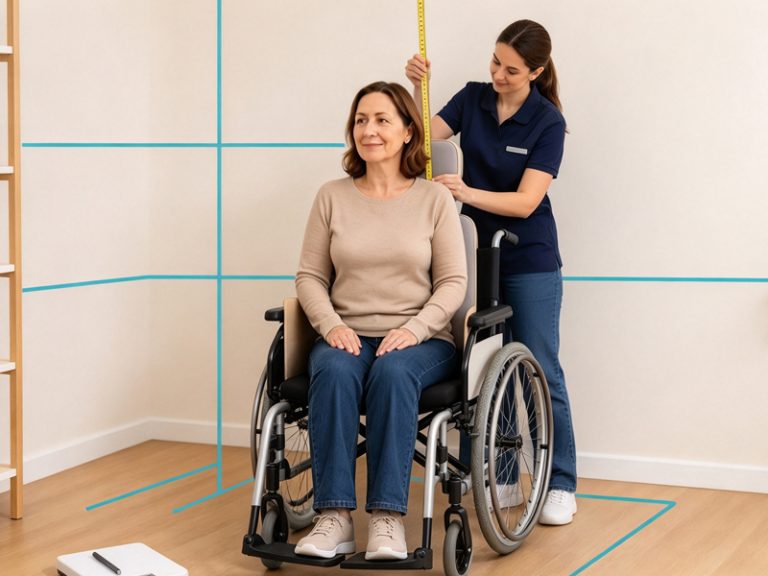
A comfortable everyday wheelchair should support your body appropriately, allow a suitable seating position, and accommodate your individual needs. Important factors include seat width and depth, backrest height, footrest position, armrest design, cushioning, and the ability to make necessary adjustments.
These details become especially important for people who spend extended periods sitting in a wheelchair.
A seat that is too narrow may create uncomfortable pressure. A seat that is too wide may make it harder to maintain a stable position. Poorly positioned footrests can affect leg support, while inadequate back support may make it difficult to maintain a comfortable posture.
For users who need specialized seating, pressure management, or postural support, a professional seating assessment may be more valuable than choosing a wheelchair based on frame material alone.
Cushion selection also deserves careful attention. Different cushions serve different purposes, and the right option depends on factors such as body shape, posture, skin integrity, and the amount of time spent seated.
It is worth considering how the wheelchair performs across a full day rather than during a brief showroom test. Does the seating position remain comfortable? Can you reach the controls easily? Is it possible to transfer in and out safely? Does the chair provide appropriate support when moving over the surfaces you encounter most often?
These questions help separate genuine comfort from attractive marketing claims.
A well-designed carbon fiber wheelchair may combine a lightweight frame with supportive seating and useful ergonomic features. When those elements work together, the result can be a more practical mobility solution for everyday use.
Mobility equipment is part of everyday life, so its appearance can matter just as much as its practical features.
Traditional medical equipment has often prioritized function above aesthetics. Modern wheelchair design increasingly recognizes that users may want equipment that reflects their personal style while meeting their mobility needs.
Carbon fiber offers distinctive visual characteristics, including a clean finish and, in some designs, a recognizable woven pattern. These details can give a wheelchair a contemporary appearance that appeals to users who prefer understated, modern equipment.
For some people, this is a small but meaningful benefit. A wheelchair is something they may use at work, in restaurants, while shopping, or during social gatherings. Feeling comfortable with the appearance of that equipment can contribute to a more positive everyday experience.
Still, appearance should remain one part of the decision rather than the deciding factor.
A stylish wheelchair that is difficult to lift, uncomfortable to sit in, or poorly suited to the user’s mobility needs is unlikely to be the best long-term choice.
Look for a design that combines appearance with useful features, reliable construction, appropriate support, and easy operation. If customization is available, check whether the manufacturer offers different finishes, seating options, or accessories without compromising the chair’s intended performance.
The best design is one that feels right to the person using it, both practically and personally.
Travel often requires more preparation for wheelchair users than for people who do not rely on mobility equipment. Getting to an airport, navigating a station, boarding a vehicle, or arranging accessible accommodation can involve several additional steps.
A portable carbon fiber wheelchair may reduce some of that logistical burden.
Its lighter construction can make handling easier, while a foldable frame, where available, may help simplify storage and transportation. These features can be useful for road trips, family holidays, hotel stays, and visits to destinations where space is limited.
For electric wheelchairs, however, travel planning requires more than checking the frame weight.
Battery specifications are especially important when flying. Airlines have requirements for mobility devices with lithium-ion batteries, and the applicable rules depend on battery type, capacity, configuration, and how the battery is installed or removed.
It is not accurate to assume that every carbon fiber electric wheelchair is automatically approved for every flight simply because it is lightweight. Passengers should confirm the exact battery specifications and handling instructions with the airline before departure.
The U.S. Federal Aviation Administration provides guidance on packaging and traveling with batteries. Airline policies and applicable aviation requirements should also be checked before booking.
It helps to prepare a few details in advance:
For road travel, check whether the wheelchair fits safely in the vehicle and whether its battery or other components need to be secured separately.
Travel-friendly equipment cannot remove every accessibility challenge, but it can make transportation more manageable. For people who value weekends away, family visits, or longer journeys, that convenience can be an important part of choosing a wheelchair.
The benefits of a lightweight wheelchair are not limited to lifting and transportation. Depending on its design, reduced weight can also make the equipment easier to position and handle in everyday environments.
Think about moving through a home with narrow passages, turning beside a kitchen counter, or aligning a wheelchair next to a desk. These situations require repeated small adjustments rather than long-distance travel.
A well-designed wheelchair should respond predictably to the user’s movements and fit comfortably within the spaces where it will be used.
For manual wheelchair users, overall weight is only one factor affecting propulsion. Wheel size, tire pressure, rolling resistance, axle position, seating configuration, and the user’s technique all influence how much effort is needed to move the chair.
A lightweight frame may help, but it does not guarantee that every surface will feel easy to navigate.
Powered wheelchairs have a different set of considerations. Motor performance, controller responsiveness, turning radius, battery condition, and wheel configuration all influence how the chair handles. A lightweight electric model may be easier to transport than a heavier one, yet its real-world maneuverability still depends on the complete design.
For everyday use, pay particular attention to turning space, doorway clearance, threshold height, and the types of flooring or pavement you regularly encounter.
If you spend most of your time indoors, a compact turning radius and responsive controls may matter more than features designed for outdoor terrain. If your routine includes longer outdoor journeys, stability, tire selection, and suitable ground clearance may deserve greater attention.
The most useful wheelchair is not necessarily the one with the lowest advertised weight. It is the one that allows you to move through your usual environments with an appropriate level of effort, control, and confidence.
Carbon fiber wheelchairs often occupy a higher price category than some conventional alternatives. The material, manufacturing process, and specialized design can contribute to the initial cost.
That makes it important to look beyond the purchase price when comparing options.
A wheelchair is equipment that may be used repeatedly throughout the day. Its practical value depends on how well it supports the user’s mobility, how reliably it performs, and whether it remains suitable as everyday needs change.
For someone who regularly transports a wheelchair, a lightweight model may offer enough convenience to justify paying more. For another person who rarely moves the chair outside the home, a more affordable wheelchair with suitable seating and reliable performance may be the better choice.
There is no universal answer.
Consider the total cost of ownership, including maintenance, replacement batteries for electric models, tires, cushions, repairs, accessories, and any service or warranty limitations.
Carbon fiber itself does not eliminate routine maintenance. Wheels, brakes, folding mechanisms, electrical connections, and batteries may still require regular inspection or replacement. Repairing damaged composite components may also require specialized assessment or manufacturer support.
Before buying, review the warranty and ask how repairs are handled. Check whether replacement parts are available and whether the manufacturer or supplier can support the wheelchair over time.
It is also worth considering how the chair will fit your future needs. If you expect to use it for longer trips, more frequent outings, or a different mix of indoor and outdoor activities, choose a model that accommodates those plans within its specifications.
The best long-term value comes from choosing a wheelchair that meets your needs consistently, not simply from choosing the lightest or most expensive model.
A thoughtful comparison of weight, fit, durability, support, maintenance, and overall usability will give you a clearer picture of whether carbon fiber is a worthwhile investment for your lifestyle.

Understanding the advantages of carbon fiber is only the first step. The next is identifying the features that will make the greatest difference in your daily routine.
Instead of starting with a brand name or a list of technical specifications, begin by considering how you actually use a wheelchair.
Start with your mobility needs. Decide whether a manual or electric wheelchair is more appropriate. Consider your upper-body strength, endurance, ability to operate controls, and the distances you typically travel. If you are unsure, a healthcare professional or qualified mobility specialist can help assess your needs.
Check the weight and load capacity. Compare the complete wheelchair weight rather than relying exclusively on frame weight. Confirm that the rated capacity safely accommodates the user and any additional load according to the manufacturer’s instructions.
Evaluate the seating system. Seat dimensions, back support, cushioning, footrests, and adjustment options should suit your body and posture. If you need specialized positioning or pressure management, prioritize those requirements before considering cosmetic features.
Consider your transportation routine. If you regularly use a car, check the folded dimensions, lifting requirements, and loading process. If you travel by air, verify the airline’s procedures and battery requirements for the exact model.
Think about where you will use it. Indoor users may need a compact design and a tight turning radius. People who spend considerable time outdoors may benefit from suitable tires, appropriate ground clearance, and a design intended for the surfaces they encounter.
Review maintenance and after-sales support. Ask about warranty coverage, replacement parts, battery service, and the process for assessing frame damage. A wheelchair should be supported throughout its useful life, not just at the point of purchase.
Finally, test the wheelchair whenever possible. A product description cannot fully explain how a chair feels when you sit in it, turn through a narrow doorway, operate its controls, or transfer in and out.
If a hands-on trial is unavailable, request detailed specifications and ask the supplier to clarify any uncertainties before purchasing.
The goal is to find a wheelchair that fits your body, your environment, your transportation needs, and your budget. Carbon fiber can be an excellent part of that solution, but the complete wheelchair must work for you.
The top benefits of carbon fiber wheelchairs come from the way lightweight construction can support everyday activities. Depending on the model, users may appreciate easier transportation, convenient storage, a modern appearance, and a balance of strength and manageable weight.
For people who travel frequently, regularly load a wheelchair into a vehicle, or want equipment that is easier to handle, these features can be particularly valuable. Electric carbon fiber models may also provide powered mobility for users who need assistance with propulsion.
However, material alone does not determine comfort, safety, or performance. Seating fit, weight capacity, maneuverability, battery requirements, maintenance, and after-sales support remain essential parts of the decision.
The right wheelchair should make everyday activities more accessible while fitting naturally into the user’s routine. Whether that means getting around the house more comfortably, attending appointments, visiting friends, or planning a trip, the best choice is the one that supports your priorities without introducing unnecessary complications.
Before purchasing a carbon fiber wheelchair, compare the specifications carefully, assess your daily mobility needs, and seek professional guidance when appropriate. A well-informed decision can help you choose equipment that offers practical value, dependable support, and greater flexibility in everyday life.
1. What are the main benefits of a carbon fiber wheelchair?
The main benefits can include a lightweight frame, easier handling and transportation, a modern design, and a favorable strength-to-weight ratio. Depending on the model, a carbon fiber wheelchair may also offer a folding frame, electric propulsion, or adjustable seating. The actual advantages vary by product, so it is important to compare complete wheelchair weight, comfort features, load capacity, and intended use.
2. Are carbon fiber wheelchairs better than aluminum wheelchairs?
Neither material is automatically better for every user. Carbon fiber can provide a high strength-to-weight ratio and may be attractive for people who prioritize portability. Aluminum wheelchairs can also be lightweight, durable, and practical, often at a different price point. The best option depends on the complete wheelchair’s weight, fit, performance, repairability, cost, and the user’s everyday mobility needs.
3. Can you travel by plane with a carbon fiber electric wheelchair?
Air travel may be possible, but approval and handling requirements depend on the specific wheelchair, its battery type and capacity, and the airline’s procedures. A carbon fiber frame alone does not guarantee that an electric wheelchair meets every airline requirement. Before flying, contact the airline, provide the wheelchair’s specifications, and confirm whether the battery must be removed or handled in a particular way.