Our Location
Free Trade Tower, Xiyong street.
Chongqing, China

Free Trade Tower, Xiyong street.
Chongqing, China
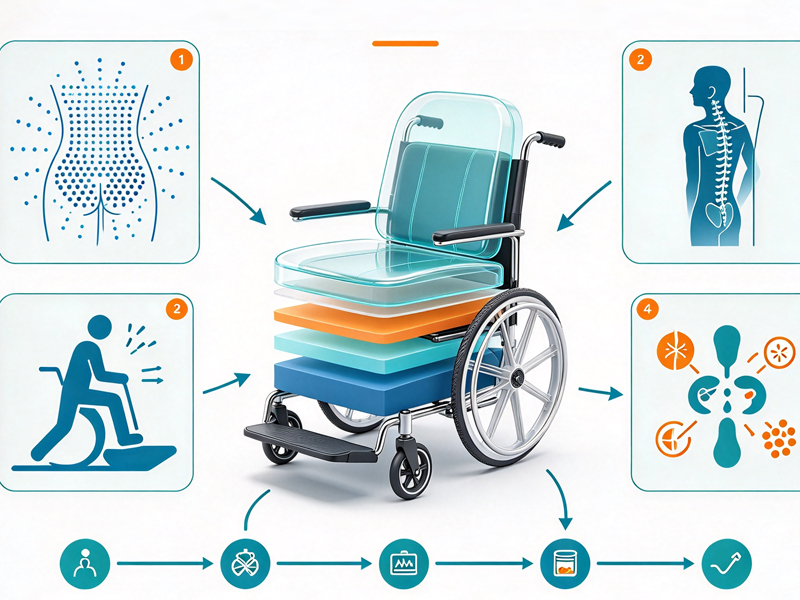
The challenge is that there is no single wheelchair cushion that works best for everyone. A person who uses a wheelchair occasionally for shopping has different needs from someone who spends most of the day sitting. Someone with reduced skin sensation may require a different level of pressure protection from someone whose main concern is back support or comfort during short trips.
Material, cushion thickness, body shape, sitting balance, temperature, maintenance, and budget all deserve consideration. Understanding these factors makes it easier to compare products without relying solely on advertising claims or choosing the softest option on the shelf.
A wheelchair seat supports the body for extended periods, often placing much of a person’s weight on a relatively small area. The sitting bones, tailbone, and surrounding soft tissues can experience sustained pressure, especially when the user cannot change position easily.
For someone with healthy skin and good mobility, an uncomfortable seat may simply become an inconvenience. For a person with limited sensation, reduced circulation, impaired mobility, or a history of pressure injuries, the consequences can be more serious.
A suitable wheelchair cushion helps distribute body weight across an appropriate contact area rather than allowing excessive pressure to build up in a few vulnerable spots. Depending on its design, it may also improve pelvic alignment, support the thighs, reduce unwanted movement, and make sitting more manageable throughout the day.
However, pressure relief is only one part of the picture. A cushion that feels soft but allows the pelvis to sink too far may compromise stability. A highly supportive cushion may be unsuitable if its shape does not match the user’s body. Likewise, a cushion that fits the person but raises the seating height too much can interfere with transfers, footrest positioning, and access to a desk.
The goal is to find a balance between pressure management, comfort, postural support, stability, and everyday practicality.
Clinical seating guidance emphasizes that cushion selection should be individualized rather than based on material alone. The Rehabilitation Engineering and Assistive Technology Society of North America (RESNA) also highlights the importance of understanding how seating products perform and how their characteristics relate to individual needs.
Before choosing a product, it helps to understand how different cushion materials behave. Foam, gel, air, and hybrid designs each have strengths and limitations. The most appropriate option depends on how the cushion will be used and what the user needs from it.
Foam cushions are among the most common options because they are generally lightweight, affordable, and easy to handle. They come in different densities, thicknesses, and shapes, ranging from basic flat pads to contoured cushions designed to support the pelvis and thighs.
For someone who uses a wheelchair for shorter periods or needs a straightforward everyday seating solution, a suitable foam cushion may provide adequate comfort and support. Foam is also convenient for people who frequently fold, transport, or lift their wheelchairs.
Contoured foam cushions can help guide the pelvis into a more stable position. Some designs include raised side supports or shaped sections that accommodate the body’s natural contours.
The main limitation is that foam performance depends heavily on its construction and condition. Low-quality foam may compress quickly, lose its shape, or provide insufficient protection for someone at high risk of pressure injury. Foam can also retain heat, depending on its density, cover, and design.
It is important not to assume that all foam cushions are basic or unsuitable for long-term use. High-quality, pressure-redistributing foam cushions can be appropriate for certain users, including some people who need additional postural support. The key is selecting a design that meets the individual’s requirements rather than choosing foam simply because it is inexpensive.
Gel wheelchair cushions typically contain a gel layer or gel-filled compartments supported by foam or another base material. The gel can move or deform under load, helping the cushion adapt to the body’s contours and redistribute pressure.
Many users appreciate gel cushions because they offer a relatively stable sitting surface while providing cushioning beneath the pelvis and thighs. This can be useful for people who find very soft or highly flexible cushions difficult to manage.
Some gel designs may also feel cooler than certain conventional foam cushions, although actual temperature performance varies by construction, cover, room conditions, and individual preference.
Weight is one practical drawback. Gel cushions are often heavier than comparable foam models, which can make them less convenient for caregivers or wheelchair users who regularly remove the cushion for transport.
Gel-filled sections may also require occasional repositioning or smoothing according to the manufacturer’s instructions. If the gel shifts away from the intended support area, the cushion may no longer perform as expected.
A gel cushion can be a sensible option for someone who values a stable seating surface and moderate pressure redistribution. However, a person with an existing pressure injury or a high risk of developing one should seek a professional seating assessment before relying on a general-purpose gel cushion.
Air cushions use air-filled cells or interconnected chambers to support the body. Many models allow the user or caregiver to adjust the air level, creating a seating surface that responds to the person’s shape and weight.
When correctly selected and adjusted, an air cushion can provide effective pressure redistribution. This makes certain air-cell designs particularly useful for people who sit for long periods, have reduced sensation, or are at increased risk of pressure injury.
Research comparing wheelchair cushions has found that air cushions can reduce interface pressure more consistently than foam or gel in some study settings. However, pressure measurements alone do not establish which cushion will produce the best overall outcome for every individual. Posture, stability, skin condition, and the person’s ability to manage the cushion also matter.
Air cushions require more attention than many basic foam models. The air level must be checked according to the manufacturer’s guidance, and the cushion should be inspected for leaks, punctures, or damaged valves. Too much or too little air can affect immersion, stability, and pressure distribution.
Some users also find air cushions less stable during transfers or while reaching for objects. A professional may need to help identify the appropriate model and adjustment.
For people with complex seating needs, an air cushion can be an excellent option, but it should not be treated as a maintenance-free solution.
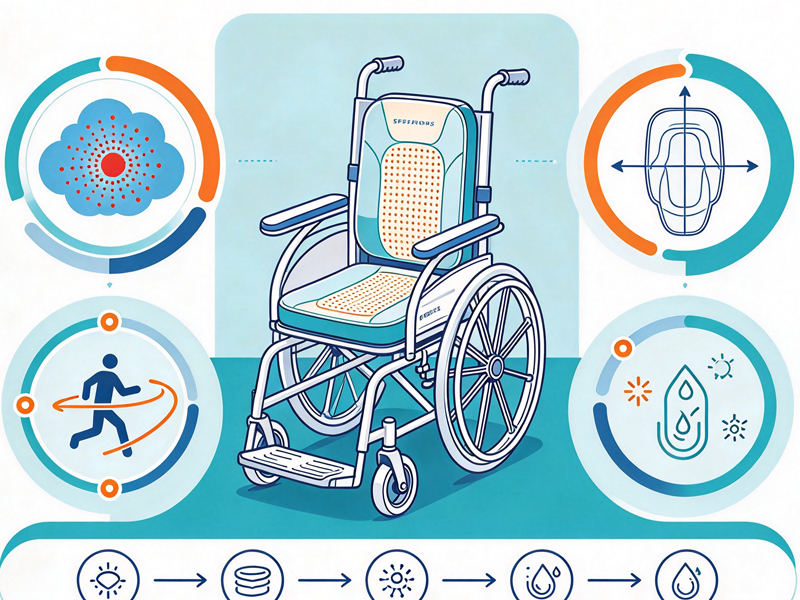
Hybrid cushions combine materials such as foam, gel, and air to provide a combination of pressure redistribution and postural support. Rather than relying on a single material, they use different layers or zones to address several needs at once.
For example, a cushion may use a contoured foam base to help stabilize the pelvis while incorporating an air or gel component to improve pressure distribution. This type of design can be helpful when a user needs both a supportive sitting position and additional protection for vulnerable tissues.
Honeycomb cushions use a flexible cellular structure, often made from a polymer material. The open structure can promote airflow, and many designs are relatively lightweight and easy to clean.
Their breathability may appeal to people who become uncomfortable in warm environments. Nevertheless, honeycomb construction does not automatically guarantee sufficient pressure relief for every user. Its performance depends on the specific product, the user’s body, and the seating situation.
Hybrid and honeycomb cushions are worth considering when conventional foam, gel, or air options do not adequately address a person’s combined needs. Product specifications and professional advice are more useful than assuming that a more complicated design must be better.
Knowing the material options is only the beginning. The most useful way to choose a wheelchair cushion is to start with the person’s daily routine, physical condition, and seating challenges.
People who spend many hours sitting, have reduced sensation, or have previously experienced pressure injuries may need a cushion specifically designed for skin protection and pressure redistribution.
The important consideration is not simply whether a product is described as soft or supportive. It is whether the cushion allows appropriate immersion and weight distribution without creating excessive pressure on vulnerable tissues.
Air-cell and certain hybrid cushions may be suitable for people who need a higher level of pressure management. Some specialized foam and gel designs may also be appropriate, depending on the individual’s assessment.
If you have an existing pressure injury, do not choose a cushion based on online descriptions alone. A healthcare professional with seating or wound-care experience can help assess the affected area, recommend suitable equipment, and determine whether changes to sitting time or positioning are necessary.
A cushion can reduce certain pressure-related risks, but it cannot eliminate them entirely.
Not every wheelchair user needs the softest possible surface. Some people require a cushion that supports the pelvis, keeps the thighs aligned, and helps them remain upright during daily activities.
Poor pelvic positioning can affect the alignment of the trunk and head. It may also make reaching, eating, working, and operating a wheelchair more difficult.
A contoured foam cushion or a suitably designed hybrid model may provide the structure needed to maintain a more stable sitting position. For people with significant postural asymmetry, muscle weakness, or involuntary movements, a specialist seating system may be necessary.
Pay attention to whether the user slides forward, leans to one side, or struggles to maintain an upright posture. These signs may indicate that the cushion, wheelchair dimensions, back support, or overall seating setup needs adjustment.
A cushion alone cannot correct every postural problem. In some cases, changing the seat depth, backrest, footrest height, or pelvic support will be just as important.
For people who use a wheelchair occasionally or for shorter periods, comfort and convenience may be the primary considerations.
A properly fitted foam cushion may provide sufficient support without adding unnecessary weight or maintenance. Gel or hybrid designs may be preferable for users who want a different balance of cushioning and stability.
Instead of judging comfort after a few seconds, try the cushion in a realistic sitting position. Consider how it feels after a longer period, whether the thighs are adequately supported, and whether the pelvis remains in a comfortable position.
Also consider the seat cover. Breathable, smooth, well-fitted covers may improve comfort, while wrinkled fabric or thick seams can create localized pressure and friction.
Comfort should not be judged by softness alone. A cushion that feels luxurious at first may become uncomfortable if it compresses too much or allows the body to sink into an unsuitable position.
Older adults may experience several changes that affect seating comfort, including reduced muscle mass, fragile skin, limited mobility, and difficulty changing position independently.
A suitable wheelchair cushion should take these factors into account without sacrificing stability or ease of use.
For an older adult who remains active and uses a wheelchair for occasional outings, a well-fitted foam or gel cushion may be appropriate. Someone who spends most of the day sitting, has reduced sensation, or struggles to reposition may require a specialized pressure-redistributing cushion.
Caregivers should also consider the person’s ability to transfer safely. A cushion that is too thick or too soft may change the effective seat height or make it harder to move between the wheelchair and a bed or chair.
If the user has dementia, reduced hand strength, or difficulty following maintenance instructions, a cushion with simpler care requirements may be easier to manage. However, ease of maintenance should never take priority over essential skin protection.
When selecting a cushion for an older adult, it is worth involving the person directly whenever possible. Their feedback about discomfort, temperature, and daily activities can reveal practical issues that a product description cannot.
Full-day wheelchair use creates different demands from occasional use. The cushion must remain supportive over extended periods, work with the user’s positioning needs, and fit into a consistent daily care routine.
For these users, pressure redistribution, skin protection, posture, temperature, and durability deserve particular attention.
A specialist air or hybrid cushion may be appropriate, although some well-designed foam cushions can also meet long-term seating requirements. The correct choice depends on individual risk factors rather than sitting time alone.
It is also important to think beyond the cushion itself. Regular weight shifts, appropriate repositioning, skin checks, and a properly fitted wheelchair all contribute to pressure management.
People who cannot independently shift their weight should work with their healthcare team or caregivers to establish a suitable repositioning plan. There is no single schedule that is appropriate for every person, so the plan should reflect skin condition, mobility, medical needs, and professional guidance.
A warm or damp seating environment can make prolonged sitting uncomfortable and may contribute to skin vulnerability.
If heat is a concern, consider cushions with breathable construction, moisture-managing covers, or open-cell designs. Some honeycomb cushions allow more airflow than conventional solid foam, while other products use specially designed covers or layered materials.
However, breathability is not the same as pressure relief. A highly ventilated cushion may still be unsuitable for someone who requires substantial protection against pressure injuries.
Moisture management also involves daily habits. Keep the cushion cover clean, change damp clothing when needed, and follow appropriate skin-care guidance. Check that the cover is fitted correctly and does not bunch beneath the user.
For people with incontinence or persistent moisture exposure, a suitable washable or fluid-resistant cover may be helpful. Make sure the cover is compatible with the cushion, since an unsuitable cover can alter the seating surface and affect its performance.
Even a high-quality cushion may perform poorly if it does not fit the wheelchair or the user.
Start by measuring the wheelchair’s usable seat width and depth. Then confirm the manufacturer’s sizing instructions, because cushion dimensions and recommended fit can vary by design.
The cushion should fit securely without interfering with the wheelchair frame, armrests, or other components. A cushion that is too wide may buckle or overhang. One that is too narrow may leave parts of the body inadequately supported.
Seat depth matters just as much as width. The cushion should support the thighs appropriately without creating excessive pressure behind the knees. Its thickness also affects the user’s effective seating height and relationship to the backrest and footrests.
A thicker cushion can change how the user reaches the floor, uses the armrests, or transfers to another surface. After installation, reassess the footrest height, armrest position, and overall sitting posture.
For a person with complex seating needs, body measurements should ideally be taken as part of a professional seating assessment rather than relying on wheelchair dimensions alone.
The following table provides a starting point for comparing common options. It is not a clinical ranking, and individual products within each category can perform quite differently.
| Cushion type | Main strengths | Potential limitations | Often worth considering for |
|---|---|---|---|
| Foam | Lightweight, affordable, simple to maintain | May compress or retain heat | Everyday use and selected postural support needs |
| Gel | Comfortable, relatively stable, can redistribute pressure | Often heavier; gel may shift | Users seeking a balance of cushioning and stability |
| Air-cell | Adjustable, can provide substantial pressure redistribution | Requires regular checks and correct setup | Selected users at increased risk of pressure injury |
| Hybrid | Combines support and pressure redistribution features | Performance varies; may cost more | Users with multiple seating requirements |
| Honeycomb | Lightweight, flexible, often breathable | May not provide sufficient protection for high-risk users | Users prioritizing airflow and easy handling, where clinically appropriate |
The most important takeaway is that no material automatically guarantees comfort, skin protection, or good posture. The specific cushion design and how it fits the individual matter more than the category name.
One common mistake is choosing a cushion based entirely on price. A lower-cost option may be suitable for some users, but it can be a poor investment if it does not meet essential seating or pressure-management needs.
The opposite mistake is assuming that the most expensive cushion must be the best. Advanced features are only useful when they address a real problem.
Another mistake is buying a cushion because it feels very soft. Excessive sinking can reduce stability and interfere with positioning. A firm cushion is not necessarily unsuitable either; some users benefit from a more structured surface.
It is also unwise to ignore changes in the user’s condition. Weight changes, reduced mobility, new pain, altered posture, or a history of skin breakdown can all affect whether the current cushion remains appropriate.
Finally, avoid treating a cushion as a substitute for a complete seating assessment. Wheelchair fit, back support, footrest positioning, transfer technique, and repositioning habits all influence the overall result.
Ring-shaped or doughnut cushions should not be used as a default solution for pressure injury prevention. They can concentrate pressure around the edges and may not provide the intended protection. If pressure injury is a concern, ask a qualified healthcare professional to recommend an appropriate seating surface.
Regular care helps preserve cushion performance and makes it easier to identify problems before they become serious.
Follow the manufacturer’s cleaning instructions, particularly when using disinfectants, washing removable covers, or cleaning gel-filled components. Some products tolerate machine washing, while others require gentle hand cleaning.
Inspect the cushion regularly for visible damage, flattened foam, uneven gel distribution, damaged seams, or air leaks. For air cushions, follow the manufacturer’s instructions for checking and adjusting inflation. Do not assume that a cushion is working properly simply because it looks intact.
Check the cover for wrinkles, stretched fabric, or damaged fasteners. A poorly fitted cover can affect both comfort and pressure distribution.
Replacement timing varies by material, product quality, frequency of use, body weight, and care. There is no universal replacement interval that suits every cushion. If the cushion feels different, loses support, develops damage, or no longer meets the user’s needs, arrange an assessment or contact the manufacturer.
It is equally important to monitor the user’s skin. Persistent redness, discoloration, unusual warmth, swelling, or skin breakdown should not be dismissed as ordinary discomfort. Reduce pressure on the affected area and seek prompt professional advice. If the skin is open or a pressure injury is suspected, do not continue sitting on the affected area without appropriate clinical guidance.
If you are unsure where to begin, work through the following questions in order.
First, assess the level of risk. Does the user have reduced sensation, a history of pressure injuries, fragile skin, or difficulty repositioning? If so, prioritize a professional seating assessment and an appropriate pressure-management strategy.
Second, identify the main seating challenge. Is it pressure, posture, comfort, heat, transfer safety, or a combination of these factors? Knowing the primary problem makes it easier to narrow the options.
Third, check fit and compatibility. Confirm the wheelchair’s seat dimensions, the cushion’s recommended size, the required thickness, and any adjustments needed for footrests or armrests.
Fourth, consider daily maintenance. Think realistically about who will inspect, clean, and adjust the cushion. An air cushion may offer useful pressure redistribution, for example, but only if it is maintained and adjusted correctly.
Finally, evaluate the cushion in real-life use. Where possible, arrange a trial with a qualified seating professional or equipment supplier. Assess comfort, posture, transfer safety, and skin response rather than making the decision based on appearance or a short demonstration.
For users with complex medical or mobility needs, a seating specialist, occupational therapist, or physical therapist with appropriate wheelchair seating experience can help determine which products are suitable.
The right wheelchair cushion should support the person’s life, not make everyday activities more difficult. A carefully chosen cushion can improve the sitting experience, but its value comes from how well it works for the individual—not from its material, price, or marketing claims alone.
1. What Is the Best Wheelchair Cushion for Everyday Use?
The best wheelchair cushion depends on how long you sit, your posture, skin condition, mobility, and comfort preferences. A suitable foam cushion may work well for some people, while others may benefit from gel, air-cell, or hybrid designs. If you have reduced sensation or an increased risk of pressure injury, consult a qualified seating professional before choosing a cushion.
2. Is a Foam, Gel, or Air Wheelchair Cushion Better for Pressure Relief?
There is no universal winner for every user. Air-cell cushions can provide effective pressure redistribution when correctly selected and adjusted, while specialized foam, gel, and hybrid cushions may also be appropriate. The best option depends on individual anatomy, skin risk, positioning, stability, and the specific product’s design.
3. How Often Should a Wheelchair Cushion Be Replaced?
A wheelchair cushion should be replaced when it becomes damaged, loses its supportive properties, no longer fits correctly, or fails to meet the user’s changing needs. The timing varies by material, construction, usage, and maintenance. Inspect the cushion regularly and follow the manufacturer’s recommendations. If skin problems or new discomfort develop, seek a professional assessment rather than waiting for the usual replacement date.