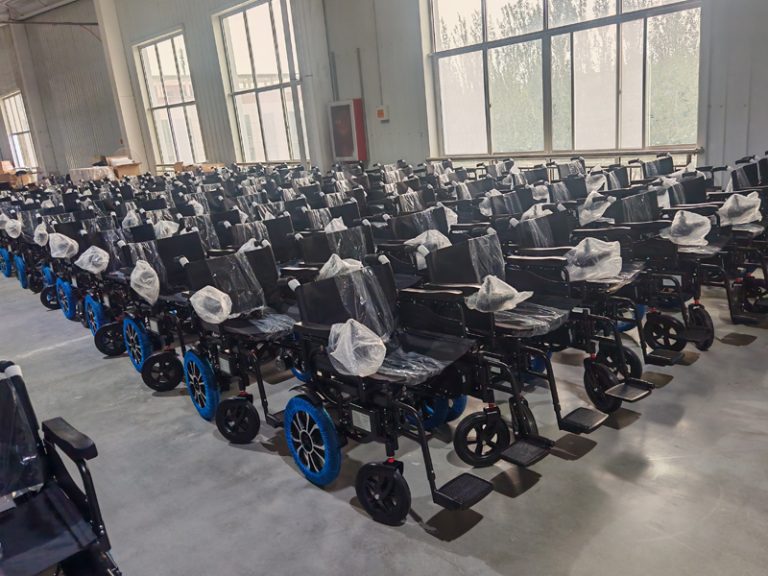
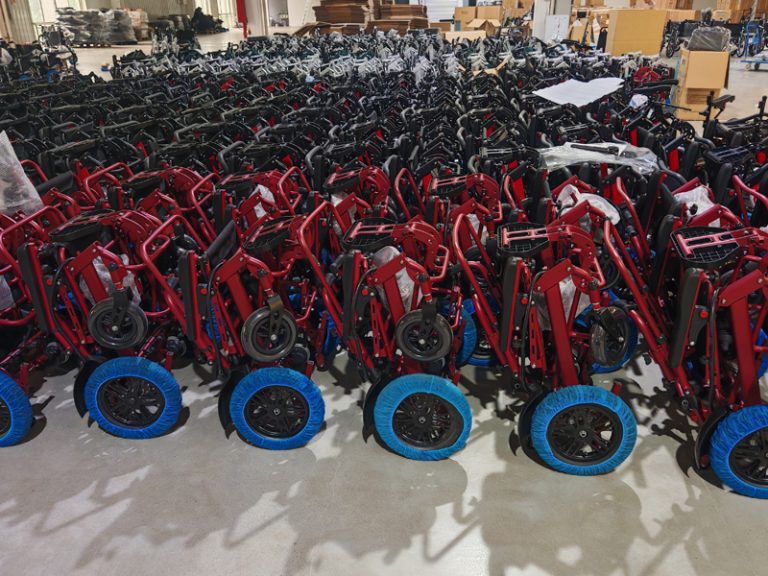
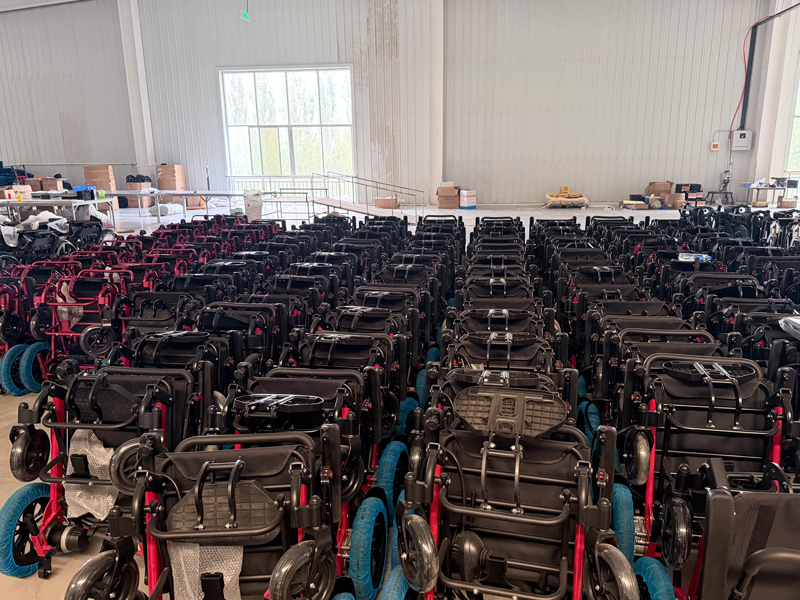
Our Location
Free Trade Tower, Xiyong street.
Chongqing, China

Free Trade Tower, Xiyong street.
Chongqing, China
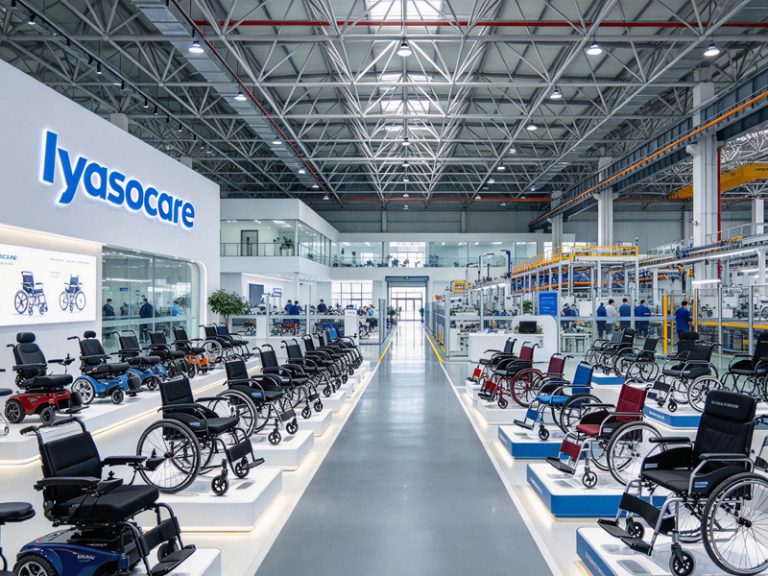
Finding the right wheelchair manufacturer is about more than securing a competitive price. For wholesalers, medical equipment distributors, importers, and private-label brands, a reliable supply partner can make a real difference to product quality, profit margins, inventory management, and long-term business growth.
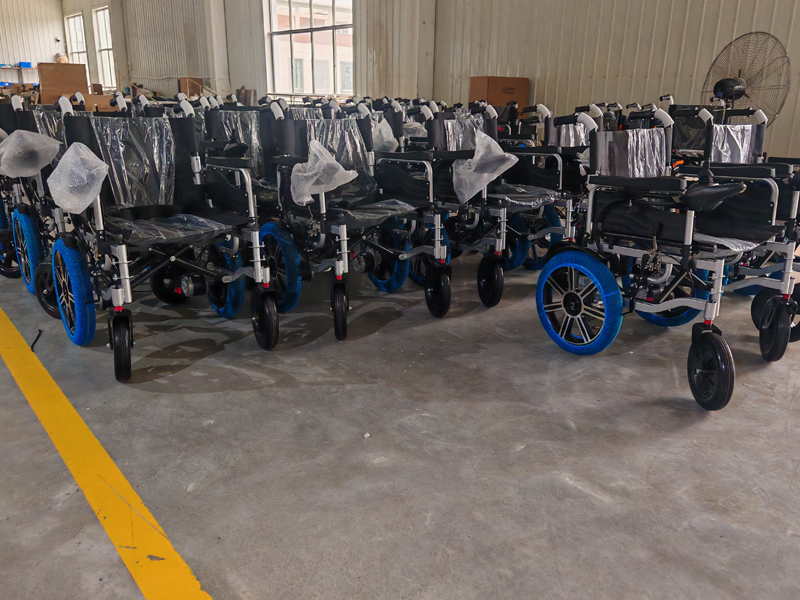
As mobility products continue to serve hospitals, rehabilitation centres, elderly care providers, and home-care markets, more businesses are exploring wheelchair factory direct supply to simplify procurement and improve control over their supply chains.
Buying directly from a factory can offer several advantages, including clearer communication, better visibility into manufacturing processes, and opportunities for product customisation. However, not every supplier offers the same capabilities, and the lowest quotation does not always represent the best overall value.
For B2B buyers, the real challenge is finding a manufacturer that understands their market, delivers consistent products, and can support repeat orders as their business expands.
As a wheelchair manufacturer, Iyasocare provides a starting point for wholesale buyers looking to explore factory-direct sourcing and potential long-term supply partnerships. This guide explains what to consider when choosing a wheelchair factory, how to evaluate wholesale costs, and how to build a purchasing strategy that supports sustainable growth.
Traditional sourcing often involves several intermediaries between the manufacturer and the final distributor. While trading companies and sourcing agents can provide useful services, additional layers in the supply chain may increase costs or make communication more complicated.
Wheelchair factory direct supply offers a more direct way to discuss product requirements, production schedules, order quantities, and packaging specifications with the manufacturer.
For a distributor placing regular orders, this relationship can be particularly valuable. Instead of communicating through multiple parties whenever a product specification changes, the buyer can work directly with the factory to clarify requirements and establish a consistent purchasing process.
There are several reasons why wholesale buyers consider this approach.
More transparent pricing. Direct communication helps buyers understand how product specifications, order quantities, packaging, and shipping arrangements affect the final quotation.
Clearer product specifications. Buyers can discuss frame materials, seat dimensions, wheel configurations, weight capacity, accessories, and other technical details before production begins.
Greater flexibility for customisation. Depending on the factory’s capabilities and minimum order quantities, buyers may be able to request private-label branding, packaging adjustments, selected colours, or specific product configurations.
Better coordination for repeat orders. Once product specifications and approved samples are documented, future orders can be easier to manage and compare.
Closer communication with the manufacturing team. Buyers can ask questions about production, inspection procedures, and delivery schedules without relying entirely on intermediaries.
These advantages are most valuable when supported by a well-organised manufacturing process. Direct sourcing does not automatically guarantee lower costs or better quality. Buyers still need to evaluate the factory’s capabilities, documentation, communication standards, and ability to meet agreed requirements.
The objective is to build a supply relationship that reduces uncertainty and makes purchasing more predictable.
Before requesting wholesale quotations, buyers should establish which wheelchair products are most relevant to their customers.
A distributor supplying pharmacies and home-care retailers may prioritise practical manual wheelchairs with competitive pricing and straightforward maintenance. A company serving rehabilitation centres may require additional adjustment options, specific seating dimensions, or products designed for particular care environments.
A larger catalogue is not necessarily an advantage if most products do not match the needs of your market.
Instead, focus on the product categories that your customers are most likely to purchase and reorder.
Standard manual wheelchairs are commonly used in home care, healthcare facilities, outpatient services, and general mobility applications.
They can be an important part of a wholesale product range because they serve a broad customer base. When evaluating these products, buyers should consider frame construction, folding mechanisms, seat dimensions, wheel quality, braking systems, upholstery, and ease of maintenance.
Price-sensitive markets may favour practical models that balance affordability with reliable everyday performance.
However, the cheapest available option is not always the most economical choice. Inconsistent assembly, poor component quality, or inadequate packaging can increase warranty expenses and reduce customer satisfaction.
For wholesale buyers, a dependable standard wheelchair should offer clear specifications, consistent manufacturing quality, and a practical balance between purchase price and expected service life.
[Suggested image: Standard folding manual wheelchair for wholesale distribution]
Lightweight and transport wheelchairs serve related but distinct needs.
Lightweight manual wheelchairs are designed to make handling and transportation easier while allowing the user to propel the chair, depending on the model. Transport wheelchairs generally feature smaller rear wheels and are intended to be pushed by a caregiver.
These products may appeal to home-care suppliers, mobility retailers, travel-related businesses, and distributors serving customers who need assistance moving between locations.
When sourcing this category, buyers should verify the actual product weight, folded dimensions, frame construction, braking arrangements, and weight capacity.
Marketing descriptions alone are not enough. A model described as lightweight should have a clearly stated weight that can be compared with competing products.
For transport wheelchairs, buyers should also confirm the intended operating conditions and whether the product meets the requirements of the customers they serve.
[Suggested image: Lightweight folding wheelchair and caregiver transport wheelchair]
Some customers require additional adjustment options, different seat widths, removable components, or configurations suited to particular care environments.
Depending on the manufacturer’s product range, these products may include adjustable footrests, removable armrests, or other features that improve convenience and support the intended use.
For wholesale buyers, careful specification management is particularly important in this category. Small differences in dimensions, accessories, or adjustment mechanisms can affect whether a product meets the customer’s requirements.
Distributors should confirm the intended use and technical specifications before purchasing specialised models. Products intended for rehabilitation or particular clinical applications should be evaluated against relevant professional guidance and applicable regulations.
The aim is to build a focused product range that meets identifiable customer needs without creating unnecessary inventory complexity.
[Suggested image: Adjustable manual wheelchair with padded seating and adjustable footrests]
A professional wheelchair manufacturer should be evaluated on more than its product catalogue or advertised production capacity.
For wholesale buyers, the most important question is whether the supplier can deliver products that consistently match the agreed specifications and commercial requirements.
Several factors deserve attention during the supplier evaluation process.
Manufacturing consistency becomes particularly important when a buyer moves from a sample order to larger production quantities.
A sample may look excellent, but the buyer also needs confidence that subsequent units will maintain the same specifications, assembly quality, and finish.
Ask the manufacturer how it manages incoming materials, production processes, assembly procedures, inspection checkpoints, and finished-product checks.
It is also useful to understand which manufacturing activities are performed in-house and which are outsourced. This can help buyers assess the supplier’s control over different stages of production.
A factory should be able to explain its production process clearly and identify the quality records or supporting documents available for review.
Before placing a substantial order, request a representative sample where appropriate. Compare it against the agreed specifications and establish how the approved configuration will be maintained during bulk production.
Written records of the approved sample, product drawings where applicable, and purchase specifications can help prevent misunderstandings later.
Quality control is essential when sourcing mobility equipment because components must work together reliably in the product’s intended environment.
Depending on the wheelchair model, inspection may cover:
The inspection requirements should reflect the product’s design and applicable specifications rather than relying on a generic checklist alone.
Wholesale buyers should also ask how the factory records defects and handles products that do not meet the agreed requirements.
For larger orders, an independent pre-shipment inspection may be appropriate. Buyers and suppliers should agree in advance on the inspection scope, sampling method, acceptance criteria, and responsibility for inspection costs.
A product inspection report should not be confused with regulatory certification. Both may be important, but they serve different purposes.
A supplier’s communication quality can significantly influence the purchasing experience.
Buyers should pay attention to how quickly the manufacturer responds, whether answers are specific, and whether commercial and technical details are documented clearly.
A reliable manufacturing partner should be willing to clarify product limitations, explain minimum order requirements, discuss realistic lead times, and identify documentation that is available or unavailable.
It is also important to discuss replacement parts, warranty arrangements, and complaint handling before the first shipment.
Even a well-manufactured product may occasionally require maintenance or component replacement. Understanding how these situations will be handled can help distributors protect their customer relationships.
For Iyasocare, prospective buyers should confirm the available product range, manufacturing arrangements, quality procedures, and after-sales support directly as part of their supplier evaluation.
Price is a major factor in B2B procurement, but the factory quotation is only one part of the total purchasing cost.
A wheelchair that appears inexpensive at the manufacturing stage may become more costly after freight, insurance, import duties, inspection expenses, warehousing, and other charges are included.
This is why experienced buyers calculate the total landed cost before comparing suppliers.
Total landed cost per unit = Total product and import-related costs ÷ Number of saleable units received
Depending on the shipment and destination market, the calculation may include:
Domestic delivery, storage, financing, warranty service, and marketing may also need to be included when calculating the final business margin.
Consider a distributor comparing two manufacturers offering similar wheelchair models.
The first supplier provides a lower quotation but offers limited information about packaging and inspection. The second supplier charges slightly more but provides clearer specifications, better-defined inspection arrangements, and more predictable communication.
The first quotation may initially appear more attractive. However, any additional costs associated with damaged packaging, product inconsistencies, or difficult complaint handling can reduce the apparent savings.
This does not mean that a higher-priced supplier is automatically better. It means that the comparison should be based on equivalent products and the complete cost of purchasing and delivering them.
When requesting quotations from Iyasocare or other manufacturers, buyers should specify the model, configuration, quantity, packaging requirements, delivery destination, and expected shipping arrangement.
For international shipments, confirm the applicable Incoterms® rule and the named place or port. Clarify which party is responsible for freight, insurance, customs clearance, and other agreed obligations.
A transparent quotation makes it easier to calculate the expected landed cost and determine whether the product fits your target selling price.
Minimum order quantity, or MOQ, is one of the first details wholesale buyers should confirm when approaching a wheelchair manufacturer.
The MOQ may vary according to the product model, production process, material requirements, packaging, and customisation options.
A distributor introducing a new wheelchair category may prefer to begin with a smaller order, while an established importer with predictable sales may benefit from purchasing larger quantities.
Neither approach is universally correct. The right order size depends on expected demand, available capital, warehouse capacity, and replenishment time.
Before committing to a purchase, estimate monthly sales and determine how much inventory is likely to be needed during the period between placing an order and receiving the next shipment.
A business selling standard manual wheelchairs consistently may be able to plan regular bulk orders. A company testing a new lightweight model may prefer a smaller initial quantity, if the supplier can accommodate it commercially.
Buyers should ask the manufacturer to confirm the MOQ for each model and whether mixed-model orders, different configurations, or private-label packaging affect the minimum quantity.
Lead time also needs careful attention.
Production time and total delivery time are not the same. The complete replenishment period may include material preparation, production scheduling, inspection, export documentation, international shipping, customs clearance, and inland transportation.
Ask the supplier to specify which stages are included in the quoted lead time.
For repeat orders, consider agreeing on a realistic purchasing schedule and sharing indicative forecasts with the manufacturer. Forecasts can help both parties plan production, although they should not be treated as confirmed orders unless formally agreed.
Effective inventory planning helps wholesale buyers balance purchasing efficiency against cash flow and the risk of unsold stock.
For distributors looking to develop their own brands, working directly with a manufacturer may create opportunities beyond purchasing standard products.
OEM and ODM are commonly used terms in manufacturing, but the specific services offered under these arrangements vary between suppliers.
OEM, or Original Equipment Manufacturer, generally refers to manufacturing according to a buyer’s specified design, branding, or requirements, subject to the agreed arrangement.
ODM, or Original Design Manufacturer, generally refers to a manufacturer offering its own product design or platform that a buyer may be able to adapt or brand.
Wholesale buyers should confirm the actual scope of the services rather than assuming that every supplier offers the same customisation options.
Depending on the factory’s capabilities, wheelchair customisation may include:
Customisation can involve additional costs, artwork approval, longer production times, or higher minimum order quantities.
Buyers should also distinguish cosmetic changes from modifications that affect product performance or safety.
Changing packaging artwork is different from modifying the frame, braking system, load-bearing components, or other safety-critical features. Engineering changes may require technical validation, additional documentation, and regulatory assessment.
For a business entering a new market, using an established product with carefully selected branding options may be a practical way to test demand before investing in a completely new design.
When discussing OEM or ODM possibilities with Iyasocare, buyers should confirm which services are available, the applicable MOQ, sample approval procedures, production lead times, and any additional charges.
It is equally important to clarify ownership of branding artwork, product designs, tooling, and other intellectual property in the commercial agreement.
A successful private-label strategy should strengthen brand recognition while keeping product specifications, quality requirements, and manufacturing costs manageable.
Regulatory requirements vary by destination market, product classification, and intended use.
A wheelchair supplied to one country may be subject to different documentation, labelling, and conformity requirements from a similar product sold elsewhere.
For international wholesale buyers, compliance should be considered before placing the order rather than after the products have been manufactured.
Depending on the destination and product, buyers may need to verify:
For example, certain wheelchairs may fall within the European Union’s medical device regulatory framework, depending on their intended purpose and classification.
In the United States, applicable FDA requirements likewise depend on the specific device and its intended use.
Buyers should verify the rules that apply to their particular product rather than assuming that all wheelchairs follow the same regulatory pathway.
Supplier claims also require careful review. Statements such as “CE compliant,” “FDA registered,” or “internationally certified” should be supported by appropriate documentation and assessed in the context of the relevant market.
Registration, listing, certification, a declaration of conformity, and market authorisation are not interchangeable concepts.
Ask the supplier which product model is covered by each document, which regulation or standard applies, and whether the documentation is current and relevant to the intended market.
If the product will be sold under your own brand, confirm whether the proposed arrangement creates additional regulatory responsibilities for your business.
Where necessary, obtain advice from a qualified regulatory professional before importing commercial quantities.
Understanding compliance requirements early can help avoid costly delays, rejected shipments, and problems when introducing products to new markets.
A structured supplier evaluation makes it easier to compare manufacturers objectively and reduces the risk of making decisions based on price alone.
The following process is practical for importers, distributors, and businesses exploring a new wholesale relationship.
Step 1: Define your product requirements
Prepare a clear purchasing brief that identifies the wheelchair category, required specifications, estimated order quantity, target market, packaging preferences, and expected delivery schedule.
Include the seat dimensions, weight capacity, product weight, frame material, and other important characteristics where applicable.
Step 2: Request comparable quotations
Ask shortlisted suppliers to quote against the same specifications.
Request information about MOQ, sample availability, production lead time, payment terms, packaging, shipping arrangements, and relevant documentation.
This makes it easier to distinguish genuine price differences from differences in the products being offered.
Step 3: Assess manufacturing and quality procedures
Discuss how the factory manages materials, production, inspection, and nonconforming products.
Ask which activities are performed in-house and which are outsourced. Where appropriate, request supporting records or arrange a factory assessment.
Step 4: Approve a sample and document the agreement
If a sample is appropriate, evaluate it against the agreed specifications.
Confirm the product configuration, accessories, packaging, labels, inspection criteria, payment schedule, delivery terms, and procedures for handling discrepancies before approving bulk production.
Step 5: Evaluate the first shipment
Once the goods arrive, compare the delivered products with the approved sample and purchase documentation.
Record any defects, packaging problems, or specification differences and agree on corrective actions with the supplier.
Use the results to determine whether to repeat the order, increase quantities, or expand the product range.
This staged approach is particularly useful for first-time buyers because it allows the manufacturer to demonstrate its capabilities before the buyer commits to a larger purchasing programme.
Even experienced wholesale buyers can make avoidable sourcing mistakes when commercial pressure encourages them to move too quickly.
Choosing a supplier based only on price
A low quotation may conceal differences in product specifications, packaging, quality control, or documentation. Compare equivalent products and calculate the total landed cost before making a decision.
Failing to confirm the exact product specifications
Terms such as “standard wheelchair” or “lightweight model” are too broad to serve as complete purchasing specifications. Confirm measurable characteristics and record the agreed configuration in writing.
Ordering too much inventory too early
Large orders may reduce the unit price, but they also tie up capital and increase storage requirements. Base purchasing quantities on realistic sales forecasts and replenishment needs.
Ignoring replacement parts and warranty arrangements
Ask which replacement components are available, how they can be ordered, and how product complaints will be handled. These details become especially important when the distributor has an established customer base.
Assuming that a sample guarantees bulk quality
A sample should be treated as a reference for the agreed specification, not as automatic proof of consistent mass production. Confirm the inspection procedures that will apply to the commercial order.
Overlooking regulatory responsibilities
Do not assume that a supplier’s product documents automatically satisfy the requirements of your destination market. Verify the relevant rules and documentation before importing.
Leaving important terms undocumented
Product specifications, delivery terms, inspection arrangements, payment conditions, and responsibilities for nonconforming goods should be clearly recorded.
Direct factory sourcing can improve communication, but it does not remove the need for due diligence and professional purchasing practices.
A reliable manufacturing relationship should become easier to manage as the buyer’s business grows.
For a distributor, this means working with a supplier that understands the target market, product requirements, ordering patterns, and quality expectations. For the manufacturer, it means receiving clear specifications, realistic forecasts, and timely feedback.
Over time, both sides can benefit from a more organised purchasing process.
A distributor might begin with a standard manual wheelchair, evaluate customer feedback, and later introduce lightweight or transport models. Another business may focus on private-label packaging and gradually expand its product offering as demand develops.
In either case, documented specifications and consistent communication help reduce misunderstandings.
When exploring a potential partnership with Iyasocare, wholesale buyers should discuss several practical points:
These discussions provide a clearer understanding of the supplier relationship before significant capital is committed.
It is also worth considering future ordering patterns. If your business operates across several markets or experiences seasonal demand, sharing indicative forecasts can help the manufacturer plan production more effectively.
For repeat orders, maintain records of approved samples, product specifications, packaging artwork, purchase orders, inspection results, and delivery performance. These records make it easier to identify changes and maintain consistency over time.
A sustainable partnership should also make commercial sense for both parties. The agreement needs to account for manufacturing costs, product quality, logistics, payment terms, and realistic margins for the distributor.
The goal is not simply to negotiate the lowest possible price. It is to establish a supply arrangement that can continue to meet business requirements as order volumes and customer expectations change.
As a wheelchair manufacturer, Iyasocare can be a starting point for B2B buyers seeking to discuss factory-direct sourcing and potential long-term cooperation. Prospective partners should confirm the available products, manufacturing capabilities, documentation, and commercial terms directly before making a purchasing decision.
The most valuable supplier relationship is one that supports consistent products, predictable replenishment, clear communication, and confidence in future orders.
1. What are the advantages of buying wheelchairs directly from a factory?
Buying directly from a wheelchair factory can reduce the number of intermediaries involved in sourcing and improve communication about product specifications, pricing, minimum order quantities, customisation, and production schedules.
It may also make it easier to coordinate repeat orders and private-label requirements. However, factory-direct purchasing does not automatically guarantee the lowest total cost or the highest product quality.
Buyers should compare equivalent specifications, evaluate quality control procedures, verify relevant documentation, and calculate the full landed cost before placing an order.
2. What is the typical MOQ for wholesale wheelchair orders?
There is no universal minimum order quantity for wheelchair manufacturing. MOQ depends on the product model, production process, material requirements, packaging, and customisation options.
Wholesale buyers should contact Iyasocare to confirm the MOQ for their selected models and whether mixed-model orders or private-label requirements affect the minimum quantity.
For a new product or market, buyers may also ask whether sample orders or smaller initial quantities are available.
The best order quantity should balance unit cost with expected demand, cash flow, storage capacity, and replenishment lead time.
3. How can I verify whether a wheelchair manufacturer is suitable for international wholesale supply?
Start by requesting detailed product specifications, information about the manufacturing and inspection process, sample availability, commercial terms, and relevant documentation for your destination market.
Where appropriate, inspect a sample, arrange an independent factory or pre-shipment inspection, and confirm that the delivered product matches the approved specifications.
Verify regulatory claims against the actual documents and applicable local requirements rather than relying solely on marketing statements.
You should also evaluate communication quality, delivery performance, replacement-part availability, and the supplier’s ability to support repeat orders. A suitable factory should explain its capabilities and limitations clearly and provide the information you need to make an informed purchasing decision.
Wheelchair factory direct supply can offer meaningful advantages for wholesale buyers, but the real value comes from choosing the right manufacturing partner and managing the purchasing process carefully.
Product quality, transparent pricing, suitable MOQs, reliable production planning, regulatory compliance, and consistent communication all contribute to a stronger supply chain.
For importers, distributors, rehabilitation equipment suppliers, and private-label brands, an effective sourcing strategy begins with clear requirements, comparable quotations, approved product specifications, and a careful review of the first shipment.
Iyasocare provides a manufacturer-focused starting point for B2B buyers looking to explore wheelchair wholesale supply and potential long-term cooperation. By discussing product requirements, manufacturing capabilities, order quantities, and quality expectations directly, buyers can determine whether the available products and commercial arrangements fit their business needs.
The objective is not simply to purchase more wheelchairs at a lower price. It is to build a reliable supply relationship that helps your business serve customers consistently, protect its reputation, and grow with confidence.
Looking for a wheelchair factory direct supply partner? Contact Iyasocare to discuss your target market, preferred wheelchair models, estimated order quantity, and wholesale requirements. A clear conversation at the beginning can help both sides determine the most suitable next step.