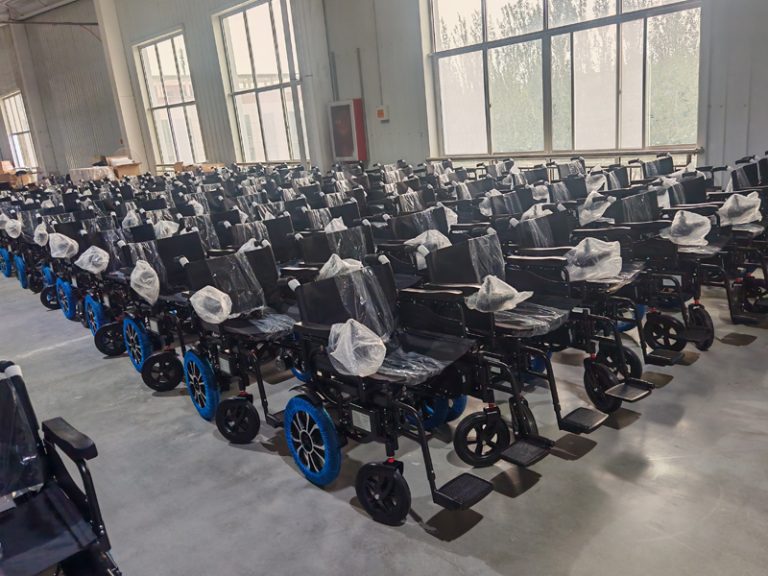
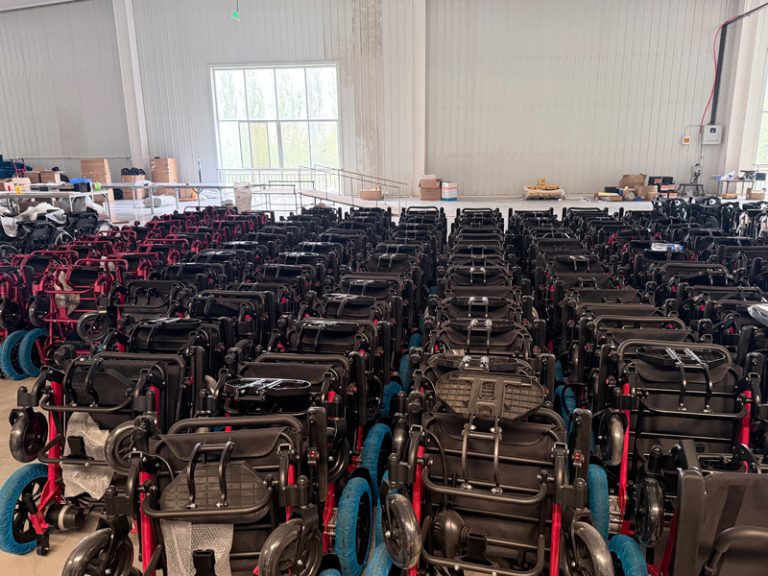
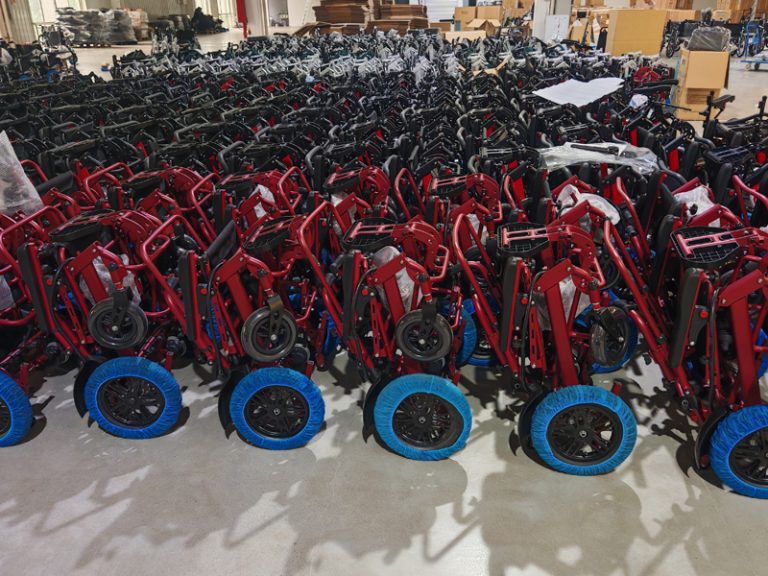
Our Location
Free Trade Tower, Xiyong street.
Chongqing, China

Free Trade Tower, Xiyong street.
Chongqing, China
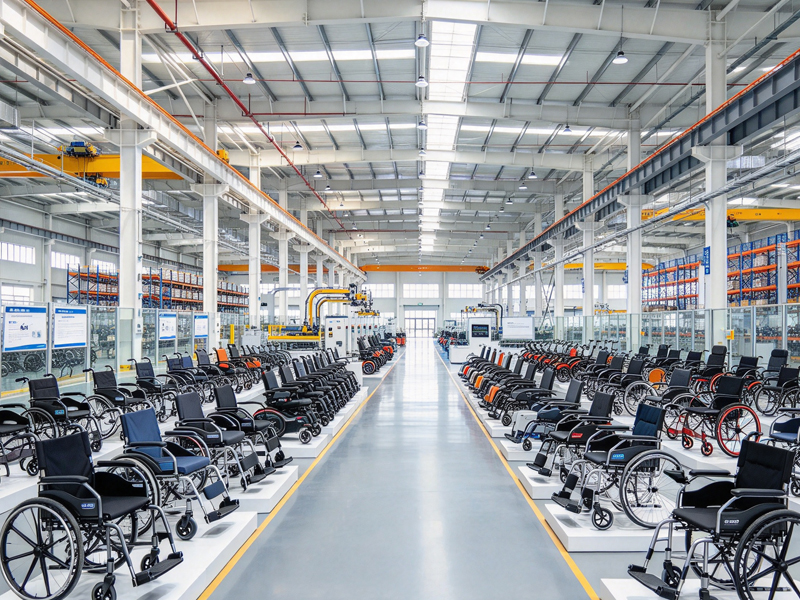
Product quality, manufacturing capacity, minimum order quantities, compliance documentation, customization options, and international shipping all influence the success of a bulk purchasing project.
For first-time buyers, the process can feel complicated. Different manufacturers offer different wheelchair models, pricing structures, production schedules, and service arrangements. Even two suppliers quoting similar products may differ considerably in their ability to maintain consistent quality across hundreds or thousands of units.
The good news is that a structured sourcing process makes these decisions much easier.
Buy wheelchairs in bulk directly from a manufacturer, from defining your product requirements to evaluating suppliers, negotiating commercial terms, inspecting finished products, and planning future orders. Whether you are expanding an established medical equipment business or entering the mobility market for the first time, the goal is to help you make a well-informed purchasing decision.
Before contacting manufacturers, take time to understand what your customers actually need. Bulk purchasing works best when product selection is based on real demand rather than simply choosing whichever wheelchair has the lowest wholesale price.
The wheelchair market includes several product categories, each serving different users and commercial applications.
Manual wheelchairs are commonly purchased by medical supply retailers, hospitals, care facilities, and distributors serving everyday mobility needs. They are often a practical starting point for businesses seeking a relatively straightforward product range.
Lightweight and folding wheelchairs appeal to customers who value portability, convenient storage, and easier transportation. These models may be particularly suitable for home care providers, travel-related mobility services, and online retailers.
Electric wheelchairs offer powered mobility for users who need or prefer motor-assisted movement. When purchasing these products, buyers should pay particular attention to battery specifications, controller performance, charging requirements, serviceability, and applicable transport regulations.
Heavy-duty wheelchairs are designed for users who require higher weight capacities or different structural configurations. Buyers should verify the rated capacity, seat dimensions, frame construction, and other specifications for each model rather than assuming that all products in this category are equivalent.
Specialized wheelchairs, including pediatric, reclining, standing, and all-terrain models, serve more specific needs. These products may require more detailed technical evaluation and a clearer understanding of the intended users.
The most suitable product mix depends on your business model. A distributor serving hospitals may prioritize durability, ease of maintenance, and dependable replacement parts. An online retailer may focus on product dimensions, packaging efficiency, customer-friendly features, and shipping costs. A rehabilitation equipment supplier may need a broader range of configurations.
Start by estimating your expected sales volume, target price range, preferred models, and likely repeat-order frequency. If you are entering a new market, a smaller trial order or a carefully selected mixed-model order may be more sensible than committing to a large quantity immediately.
The objective is not to purchase the maximum number of wheelchairs at the lowest possible unit price. It is to purchase the right products in quantities your business can sell, distribute, and support efficiently.
Working directly with a wheelchair manufacturer can provide several advantages over buying through multiple intermediaries.
The first is pricing transparency. When you purchase from a factory, you can often obtain a clearer breakdown of the unit price, customization costs, packaging expenses, and production-related charges. Removing an unnecessary intermediary may also improve your negotiating position, particularly when you have consistent purchasing requirements.
However, direct sourcing does not automatically guarantee the lowest total cost. A manufacturer may have a competitive factory price but limited export experience, expensive packaging, inflexible order quantities, or longer production lead times. These factors can reduce the financial benefits of buying directly.
The second advantage is communication. Direct contact with the production team can make it easier to clarify technical specifications, discuss product modifications, approve samples, and resolve quality issues. This becomes especially important when ordering customized products or developing a private-label wheelchair range.
The third advantage is better visibility into manufacturing capabilities. A suitable manufacturer should be able to explain its production process, quality-control procedures, sourcing arrangements, inspection methods, and expected output for the models you intend to purchase.
Finally, direct manufacturer relationships can support long-term business development. As your order volume grows, you may be able to negotiate more favorable pricing, plan production in advance, improve packaging efficiency, or develop products that better match your customers’ needs.
For B2B buyers, these benefits are often more valuable than a one-time discount.
The key is to identify a genuine and capable manufacturing partner rather than choosing a supplier solely because its website describes it as a factory.
Finding potential suppliers is relatively easy. Identifying which suppliers can consistently deliver the products you need is the more important task.
You can begin with manufacturer websites, industry trade shows, medical equipment exhibitions, B2B sourcing platforms, and referrals from established distributors. Search using specific terms such as wheelchair manufacturer, wholesale manual wheelchair supplier, electric wheelchair factory, or OEM wheelchair manufacturer, depending on your requirements.
Once you have a shortlist, investigate each supplier more closely.
Start with its manufacturing experience and product specialization. A company that understands wheelchair design, assembly, testing, and export requirements may be better positioned to meet your needs than a general supplier with limited experience in mobility equipment.
Ask whether production takes place in its own facility, which components are manufactured internally, and which are sourced from external suppliers. Outsourcing individual components is common in manufacturing, so it is not automatically a concern. What matters is whether the company maintains appropriate control over product quality and delivery.
Production capacity deserves equal attention. Ask about the typical lead time for your selected model, available monthly capacity, current production commitments, and the supplier’s ability to handle repeat orders. A factory’s total output across all products does not necessarily indicate how many units of your particular wheelchair it can produce.
Communication is another useful indicator. Reliable suppliers should be willing to answer technical questions, provide detailed quotations, explain limitations, and put important commitments in writing. Be cautious if a supplier avoids direct questions about quality inspections, product documentation, warranty coverage, or delivery schedules.
For larger orders, consider arranging a factory visit or hiring an independent inspection company to verify production arrangements and assess manufacturing quality.
| Evaluation factor | What to verify |
|---|---|
| Manufacturing capability | Relevant production experience and actual factory capacity |
| Product quality | Materials, workmanship, functional performance, and consistency |
| Documentation | Applicable testing and regulatory records for the exact model |
| Wholesale pricing | Unit price, customization fees, packaging, and other charges |
| MOQ | Minimum order for standard and customized products |
| Lead time | Production schedule and estimated shipment readiness |
| OEM/ODM services | Branding, packaging, and product development capabilities |
| After-sales support | Warranty process, spare parts, and technical assistance |
| Export experience | Shipping documentation and destination-market experience |
Rather than selecting the supplier with the lowest quotation, compare the complete package. A slightly higher price may be worthwhile if it comes with stronger quality control, more reliable delivery, better documentation, and easier access to replacement parts.
A manufacturer’s product catalog can help you narrow down your options, but it cannot replace a physical sample.
Before committing to a substantial purchase, request samples of the specific wheelchair models you plan to order. If possible, inspect more than one unit to understand whether the supplier can maintain consistent manufacturing quality.
For manual wheelchairs, examine the frame, welds, surface finish, upholstery, fasteners, brakes, wheels, casters, footrests, armrests, and folding mechanism. Check whether the wheelchair folds smoothly, whether the brakes engage properly, and whether the product feels stable during normal operation.
For electric wheelchairs, the evaluation should also cover battery specifications, charging equipment, motor performance, controller operation, electrical connections, and the availability of serviceable components. Battery transport documentation may also be necessary for international shipments.
Pay attention to practical details that are easy to overlook. Are the instructions clear? Are accessories included as quoted? Are replacement components identifiable? Is the packaging suitable for international transportation and warehouse handling?
Product testing should reflect the intended use and the manufacturer’s stated specifications. Do not conduct improvised overload or safety tests that could damage the product or create unnecessary risks. Where formal testing is required, use appropriate test procedures and qualified facilities.
Once you approve a sample, document the exact model, configuration, dimensions, weight capacity, materials, accessories, color, branding, and packaging. This approved sample and specification sheet can then serve as reference points for the bulk production order.
A good sample is encouraging, but it does not prove that every unit in a production batch will meet the same standard.
Ask the manufacturer how it inspects incoming materials, monitors assembly, checks functional performance, and examines finished products before packing. Depending on the product, relevant inspection points may include frame integrity, braking function, folding operation, component installation, labeling, and packaging condition.
For larger orders, consider an agreed pre-shipment inspection. Define the inspection scope and acceptance criteria before production begins, including how defects will be classified and handled.
The purpose is simple: identify problems before the products leave the factory, when corrections are generally easier and less expensive.
Price negotiation is a major part of bulk purchasing, but the lowest quoted unit price should never be the only measure of value.
Most manufacturers calculate quotations according to factors such as product specifications, order quantity, materials, component selection, customization requirements, packaging, and production complexity. Some offer tiered pricing, with different unit prices for different quantities.
For example, a quotation for 100 standard manual wheelchairs may differ from one for 500 units with customized branding and packaging. The exact difference depends on the manufacturer, model, order conditions, and production schedule.
Request a written quotation that clearly identifies:
This information allows you to compare suppliers on a consistent basis.
Minimum order quantity, commonly abbreviated as MOQ, also deserves careful consideration. Some manufacturers set different MOQs for standard products, custom colors, private-label packaging, and specially configured models.
If you are a new buyer, ask whether a trial order is possible. A smaller initial purchase may involve a higher unit price, but it can reduce the risk of holding large quantities of products before you understand customer demand.
Payment terms should be agreed in writing. Depending on the supplier and transaction, arrangements may involve a deposit and balance payment, a letter of credit, or another mutually acceptable method. Confirm when production starts, when the balance becomes payable, and what documents or inspection milestones are required.
Avoid transferring substantial funds based solely on informal conversations. Verify the supplier’s business details, confirm payment instructions through an established communication channel, and make sure the purchase order identifies the correct legal entity.
Your real purchasing cost includes more than the amount paid to the manufacturer.
A useful calculation is:
Landed cost per unit = (Product cost + Packaging + Freight + Insurance + Customs duties + Other applicable import costs) ÷ Number of units received
Additional expenses may include inspection services, customs brokerage, port handling, warehousing, inland transportation, and financing costs. The precise cost structure depends on the destination, shipping method, contract terms, and applicable regulations.
Consider two manufacturers offering similar wheelchairs. Supplier A has a lower factory price but uses less efficient packaging. Supplier B charges slightly more per unit but can pack the products more efficiently and offers better shipping coordination. Depending on the shipment, Supplier B may deliver a lower overall cost per usable unit.
That is why experienced buyers evaluate the full economics of the transaction before placing an order.
If you plan to sell wheelchairs under your own brand, ask potential manufacturers about OEM and ODM services.
OEM, or Original Equipment Manufacturing, generally means that the manufacturer produces products according to the buyer’s specifications or design requirements. ODM, or Original Design Manufacturing, usually involves adapting an existing manufacturer-developed product for the buyer’s brand or market.
The exact scope of these services varies between suppliers, so it is important to confirm what is included.
Common customization options include logo printing, product colors, upholstery choices, packaging design, branded manuals, labels, and selected accessories. More substantial modifications may require additional engineering work, testing, tooling, higher MOQs, and longer production schedules.
Before starting a private-label project, clarify who owns the design files, trademarks, molds, and other intellectual property. Confirm whether the manufacturer can sell the same product to other customers and whether any exclusivity agreement is available.
You should also consider whether customization affects the product’s regulatory status. A change to a component, configuration, or intended use may require additional review or documentation, depending on the market and product.
For businesses entering the wheelchair market, adapting an existing model may be a practical way to establish a product line without taking on the full cost of developing a new design. Established distributors, meanwhile, may benefit from more extensive customization when it creates a meaningful distinction in their market.
For buyers comparing wheelchair manufacturing partners, Iyasocare is one company worth including in the initial research process.
Its official website provides information about the company and its medical mobility product business. Buyers can use that information as a starting point when evaluating whether the company’s products and manufacturing services align with their sourcing requirements.
When contacting Iyasocare or any other potential supplier, explain your target market, preferred wheelchair models, estimated order quantity, branding requirements, and delivery destination. Ask for model-specific specifications, relevant compliance documentation, MOQ details, production lead times, and a complete quotation.
As with any supplier, independently verify the information and documentation relevant to your intended purchase before placing a substantial order.
The best manufacturing relationship is one that meets your business requirements in practice, not simply one that looks attractive on a website.
International logistics can have a substantial effect on the cost and timing of a bulk wheelchair purchase. Shipping arrangements should therefore be discussed before the order is finalized, rather than left until production is complete.
For ocean freight, buyers commonly compare full-container load (FCL) and less-than-container load (LCL) options. FCL may be suitable for larger shipments, while LCL allows buyers to share container space when the order does not justify a full container. The better choice depends on shipment volume, route, handling charges, transit time, and destination costs.
Air freight may be useful for urgent or smaller shipments, although it can be expensive for bulky products. Electric wheelchairs require additional attention because battery type and configuration can affect carrier acceptance and transport documentation.
Packaging matters in every case. Ask about carton dimensions, product protection, moisture resistance, palletization, and container loading. Efficient packaging can help reduce shipping costs, while inadequate protection may result in damaged frames, wheels, accessories, or other components.
You should also clarify the shipping term used in the quotation. Incoterms such as EXW, FOB, CIF, and DAP allocate different responsibilities and costs between the seller and buyer. Their precise implications depend on the agreed named place or port and the applicable Incoterms version.
Do not assume that a price described as CIF or DAP automatically includes every expense required to receive the goods at your warehouse. Review the delivery point, insurance arrangements, unloading responsibilities, customs clearance, duties, and other applicable charges.
Wheelchair import requirements vary by country, product type, intended use, and the role of the importer. Requirements for a manual wheelchair may differ from those for an electric model with a battery or electronic control system.
Before ordering, identify the rules that apply in your target market. Depending on the jurisdiction and product, you may need to review technical standards, testing records, product labeling, instructions for use, customs classification, importer responsibilities, and relevant regulatory registrations or declarations.
For example, buyers supplying the United States or European markets should not assume that a general company certificate establishes compliance for every wheelchair model. Request the applicable documents for the exact product and configuration, and verify them independently where necessary.
If you are importing electric wheelchairs, confirm the battery specifications and the documentation required by your chosen freight provider. Lithium batteries may be subject to specific transport rules, depending on their chemistry, capacity, configuration, and mode of transport.
Where regulatory requirements are unclear, consult a qualified compliance professional or customs broker before making a large commitment. Resolving these questions early is much easier than dealing with a shipment that cannot be cleared or legally distributed as intended.
After evaluating the manufacturer, testing samples, checking documentation, and agreeing on commercial terms, the next step is to create a clear purchase order.
A well-prepared purchase order should identify the manufacturer and buyer, product models, quantities, unit prices, currency, approved specifications, packaging, branding, delivery terms, payment milestones, production schedule, inspection requirements, and warranty arrangements.
It should also explain how changes are approved and how nonconforming products will be handled. If a supplier agrees to replace defective units or provide spare parts, document the conditions and responsibilities rather than relying on verbal promises.
For customized orders, attach the approved artwork, label files, packaging designs, and relevant technical specifications. Both parties should confirm that the production version matches the approved documents before manufacturing begins.
During production, maintain communication with the supplier and request updates at agreed milestones. For a large order, a pre-shipment inspection can help confirm that the finished goods meet the agreed requirements before the remaining payment is released, where this arrangement has been negotiated.
When the shipment arrives, inspect the cartons and products promptly. Record visible damage, missing accessories, incorrect configurations, and other discrepancies. Photographs, inspection records, carton labels, and purchase-order references can help the supplier investigate issues more efficiently.
Once the order has been completed, review the results. Did the manufacturer meet the agreed delivery date? Were the products consistent with the approved sample? Were the documents accurate? Were packaging and freight costs in line with expectations? How quickly did the supplier respond to questions or problems?
These observations will help you decide whether to repeat the order, adjust the specifications, or explore another supplier.
For businesses purchasing wheelchairs regularly, a dependable manufacturing relationship can improve forecasting, reduce repeated sourcing work, and support more consistent product availability. As purchasing volumes grow, you may also have opportunities to negotiate better pricing and production planning arrangements.
The most successful buyers treat their manufacturers as long-term supply-chain partners while maintaining clear specifications, documented quality standards, and independent oversight.
Buying wheelchairs in bulk directly from a manufacturer can help medical equipment distributors, hospitals, rehabilitation providers, and mobility retailers improve purchasing efficiency and develop a more reliable supply chain. The benefits, however, depend on choosing the right products and verifying the supplier’s capabilities before committing to a large order.
Start with a clear understanding of your customers and expected demand. Compare manufacturers based on manufacturing experience, product quality, documentation, MOQ, lead times, customization options, and after-sales support. Request samples, agree on written specifications, calculate the landed cost, and plan shipping and import compliance early.
If you are building a private-label product range, assess OEM and ODM capabilities carefully and confirm how customization affects costs, lead times, and regulatory requirements.
You can include Iyasocare in your manufacturer research and contact its team to discuss your specific sourcing needs. As with any potential supplier, verify the relevant product information and commercial terms before placing an order.
Ultimately, a successful bulk wheelchair purchase is not just about securing a low unit price. It is about obtaining suitable products, protecting your investment, meeting your customers’ expectations, and establishing a supply relationship that can support your business as it grows.
The right quantity depends on your sales history, storage capacity, available working capital, expected demand, and the manufacturer’s minimum order quantity. Established distributors may benefit from larger orders, while new businesses may prefer a smaller trial shipment to evaluate product quality and customer response. Ask the manufacturer whether it offers flexible quantities for standard models and customized products before making a decision.
Request detailed quotations from several qualified manufacturers and compare them using the same product specifications, quantities, packaging requirements, and shipping terms. Ask about volume discounts, repeat-order pricing, customization charges, and spare-parts costs. Most importantly, compare the total landed cost rather than the factory price alone. A supplier offering consistent quality, efficient packaging, and dependable delivery may provide better overall value than one offering the lowest initial quotation.
It can be a practical option when you carry out appropriate due diligence. Verify the supplier’s business identity and manufacturing capabilities, request and inspect product samples, review model-specific documentation, agree on written quality requirements, and use suitable payment and inspection arrangements. Before shipment, confirm the shipping terms, import requirements, and any applicable battery transport rules. For a large order, consider an independent factory audit or pre-shipment inspection to help reduce risk.