Our Location
Free Trade Tower, Xiyong street.
Chongqing, China

Free Trade Tower, Xiyong street.
Chongqing, China
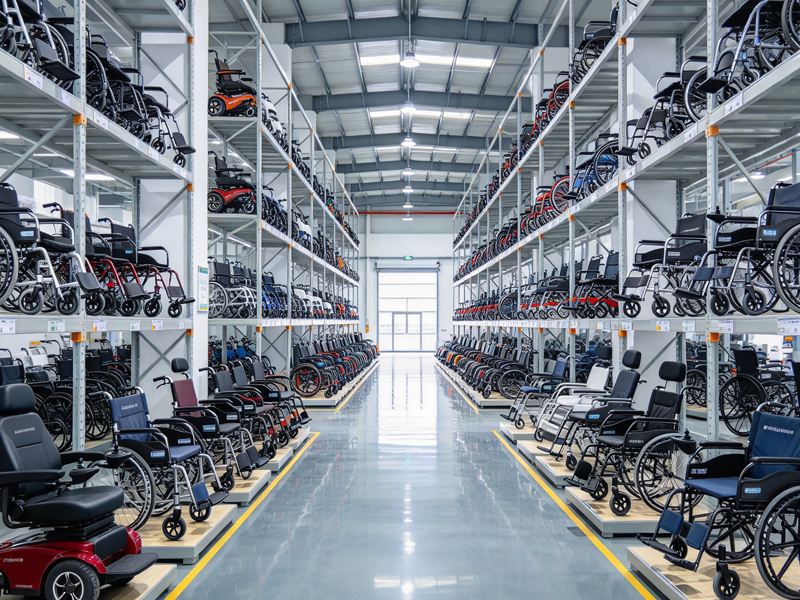
Sourcing wheelchairs from overseas exporters can be an effective way to expand a medical equipment business, improve product selection, and maintain competitive pricing. For importers, distributors, healthcare suppliers, rehabilitation centers, and private-label brands, international sourcing offers access to a wide range of manual wheelchairs, lightweight transport chairs, electric wheelchairs, and specialized mobility solutions.
However, finding a supplier with an attractive quotation is only the beginning. A wheelchair is not an ordinary consumer product. Its quality directly affects user safety, comfort, independence, and daily mobility. A poorly constructed frame, unreliable braking system, unsuitable seating design, or inconsistent quality control can lead to costly returns, customer complaints, and potential safety risks.
The real challenge is finding an exporter who can deliver reliable products, maintain consistent manufacturing standards, provide the right documentation, and support your business over the long term.
Before placing an order, buyers need to evaluate several factors beyond price, including product specifications, manufacturing capabilities, quality assurance, regulatory compliance, customization options, shipping arrangements, and after-sales service.
This guide explains what to look for when sourcing wheelchairs from exporters and how to make a more informed purchasing decision.
Before contacting exporters, define exactly what your customers need. The wheelchair market covers a broad range of products, and choosing the wrong category can create problems throughout the purchasing process.
Manual wheelchairs remain popular because they are relatively affordable, easy to maintain, and suitable for many everyday mobility needs. Transport wheelchairs are designed for shorter trips and caregiver-assisted movement. Lightweight and folding models appeal to users who travel frequently or have limited storage space. Electric wheelchairs, meanwhile, serve customers who need powered mobility and greater independence.
Each category has different technical requirements, target customers, and price expectations.
For example, a distributor serving hospitals may prioritize durability, easy cleaning, standardized dimensions, and straightforward maintenance. A retailer selling directly to individual consumers may place greater emphasis on appearance, portability, comfort, and ease of use. A supplier working with rehabilitation facilities may need multiple seat widths, adjustable components, and models designed for specific mobility requirements.
Before requesting quotations, consider the following questions:
These questions help narrow the supplier search and make quotations easier to compare.
It is also worth distinguishing between products that look similar and products designed for different purposes. Two folding manual wheelchairs may appear almost identical in photographs, yet differ substantially in frame construction, wheel quality, seating support, braking performance, and expected service life.
A clear product specification is therefore one of the most useful tools an importer can prepare before approaching a wheelchair exporter.
A professional website, attractive product catalog, and fast response time can make a supplier look impressive. They do not necessarily prove that the exporter can deliver consistent quality.
One of the first things buyers should establish is the actual role of the company in the supply chain.
Some exporters operate their own factories. Others are trading companies that source products from third-party manufacturers. Neither arrangement is automatically better. A specialized trading company may provide access to a broader product range, coordinate international shipping, and simplify communication. A direct manufacturer may offer closer control over production, engineering changes, and customization.
The important question is whether the supplier can clearly explain where the wheelchair is manufactured and who is responsible for quality control.
Ask for the factory’s legal name, production location, business credentials, and relevant manufacturing information. If the exporter claims to own a factory, request evidence that supports that claim. A live video inspection, factory audit, or independent inspection can help verify the company’s capabilities.
It is also useful to ask how many years the supplier has exported wheelchairs, which markets it serves, and whether it has experience with buyers whose requirements resemble yours.
A supplier familiar with your destination market may better understand labeling expectations, packaging requirements, product documentation, and shipping procedures.
Be cautious when an exporter cannot provide consistent answers about its factory, production lead times, or product specifications. Frequent changes in company details, unclear payment instructions, and reluctance to share verifiable documentation deserve additional attention.
The goal is not to find the supplier with the most polished sales presentation. It is to identify a business that can demonstrate what it promises.
Wheelchair quality is determined by the performance of the complete product, not by a single material specification or an attractive finish.
A detailed assessment should cover the frame, wheels, tires, brakes, seating system, footrests, armrests, folding mechanism, and other components relevant to the model.
Frame construction is a good place to start. Ask what material is used, how the frame is manufactured, and whether the design has undergone appropriate strength and durability testing. Steel frames are often selected for their cost-effectiveness and robustness, while aluminum models may reduce overall weight. However, material choice alone does not establish quality. Design, wall thickness, weld integrity, corrosion protection, and manufacturing consistency also matter.
Next, inspect the wheels and tires. Check whether the selected model uses solid or pneumatic tires, how easily the wheels rotate, and whether replacement tires and inner tubes are available when applicable. Rear wheels, front casters, bearings, and axle assemblies should operate smoothly without excessive looseness or abnormal resistance.
The braking system deserves particular attention. Confirm that the brakes are appropriate for the intended use and can be operated reliably. For manual wheelchairs, inspect the parking brakes and their engagement. For powered models, examine the braking and stopping functions specified by the manufacturer.
Seating components are equally important. Seat fabric should be suitable for the expected environment, securely attached, and easy to maintain. Buyers should confirm the available seat widths, seat depths, backrest heights, cushion options, and weight capacities rather than assuming that one configuration will suit every user.
For folding models, repeatedly test the folding and unfolding process. Look for unstable joints, excessive movement, sharp edges, loose fasteners, and components that become difficult to operate after repeated use.
A useful purchasing practice is to request a component-level specification sheet instead of accepting general descriptions such as “premium quality” or “heavy-duty design.”
When possible, compare the specification sheet against a physical sample. The purpose is to determine whether the actual wheelchair matches the product being advertised and whether its construction is appropriate for the intended market.
Regulatory compliance should be discussed early, not after the goods have been manufactured.
Wheelchair requirements vary according to the product type, intended use, destination country, and applicable regulations. A manual wheelchair and a powered wheelchair may be subject to different technical, electrical, labeling, and documentation requirements.
For manual and powered wheelchairs, ISO 7176 is an important international series of standards covering different aspects of wheelchair performance and safety. Relevant parts address areas such as stability, braking effectiveness, strength, durability, and other performance characteristics.
Not every part of the series applies to every wheelchair. Buyers should identify the standards relevant to the specific model and its intended use.
Ask the exporter for copies of applicable test reports, declarations of conformity where required, technical documentation, and product identification records. Verify that the documents identify the correct manufacturer and model, and check whether the tested configuration matches the product you intend to purchase.
A certificate or test report should never be accepted solely because it carries a familiar logo. Confirm its issuing organization, scope, validity where applicable, and relevance to the actual product.
For the European Union, determine which product legislation and conformity assessment requirements apply to the particular wheelchair. Do not assume that every wheelchair automatically falls under the same regulatory framework. Medical-device status depends on the product’s intended purpose and applicable legal definitions.
For the United States, importers should investigate applicable Food and Drug Administration requirements, including establishment registration, device listing, and other obligations where relevant. The precise requirements depend on the product and the parties involved in manufacturing, importing, and distributing it.
Other markets may have their own registration, labeling, electrical safety, or import documentation rules.
If you are sourcing electric wheelchairs, also request information about battery chemistry, charger specifications, electrical protection, applicable battery transport documentation, and shipping restrictions. Lithium batteries may require additional transport documentation and packaging arrangements.
Most importantly, ask for documents before committing to a large order. If compliance information is unclear, consult a qualified regulatory professional or the relevant authority before proceeding.
A low purchase price offers little value if the product cannot legally enter the destination market or be sold through the intended distribution channels.
Product samples provide a practical way to assess whether the exporter’s claims match the actual wheelchair.
Whenever feasible, purchase a sample from the same production configuration that will be used for the bulk order. A specially prepared demonstration unit may not represent the quality of products manufactured under normal production conditions.
Begin with a visual inspection. Examine the welds, frame finish, upholstery, fasteners, labels, packaging, and overall assembly. Look for scratches, sharp edges, uneven finishing, loose components, or signs of poor workmanship.
Then test the wheelchair according to its intended use and the manufacturer’s instructions. Check maneuverability, folding performance, brake operation, seating comfort, wheel alignment, and stability under appropriate conditions. For powered models, assess the controls, charging process, battery behavior, and functions specified for the model.
A sample inspection should also include dimensional verification. Measure the seat width, seat depth, overall width, folded dimensions, and other critical measurements against the agreed specification.
Do not overlook practical details such as whether the wheelchair fits through common doorways in your target market, whether it can be loaded into a vehicle, and whether caregivers can operate the folding mechanism comfortably.
For products intended for demanding institutional use, consider arranging independent testing or a professional product inspection rather than relying exclusively on an internal evaluation.
Record any problems and send the findings to the exporter in writing. Ask the supplier to confirm the proposed corrections and provide an updated sample when necessary.
Once the sample is approved, keep a documented record of its specifications, photographs, test results, and approved components. This creates a reference point for evaluating subsequent production batches.
Sample approval should mean more than liking the product. It should establish a clear, measurable standard that the supplier is expected to maintain.
Price is naturally an important factor when sourcing wheelchairs from exporters. However, the lowest quotation does not always represent the lowest overall cost.
A wheelchair with a cheaper purchase price may have higher freight costs, more frequent component failures, limited replacement-part availability, or a shorter service life. These factors can reduce margins and damage customer relationships.
Instead of comparing unit prices alone, calculate the total landed cost.
This typically includes the product price, packaging, inspection, freight, insurance where applicable, customs duties, import taxes, customs clearance, local transportation, and any other costs associated with bringing the products to their final destination. Import taxes that are recoverable may need separate accounting treatment, depending on your business and jurisdiction.
For example, imagine two exporters offering similar manual wheelchairs. Supplier A offers a lower unit price but charges more for packaging and replacement parts. Supplier B has a slightly higher price but provides stronger documentation, consistent specifications, and more accessible spare parts.
Supplier A may still be the better choice, but only after the full cost and operational risks have been evaluated.
Request quotations using the same product specifications and commercial assumptions. Otherwise, one exporter may be quoting a basic model while another includes upgraded wheels, additional accessories, or stronger packaging.
The quotation should clearly state the model number, material specifications, available sizes, included accessories, order quantity, unit price, payment terms, production lead time, packaging details, and quotation validity.
For international shipments, clarify the agreed Incoterms rule and the named place or port. Terms such as EXW, FOB, CIF, and DAP allocate different responsibilities and costs. Their practical implications depend on the precise rule and the location stated in the contract.
A well-prepared comparison makes it easier to identify whether a price difference reflects a genuine efficiency advantage or a meaningful difference in product quality and service.
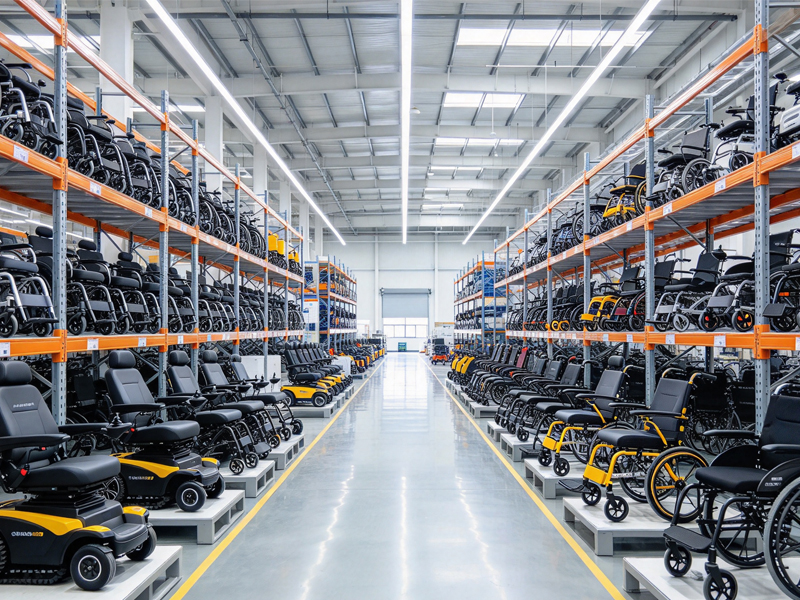
A supplier may deliver an excellent sample but struggle to maintain the same standard across hundreds or thousands of units.
Before placing a bulk order, understand how production is managed. Ask about normal monthly capacity, current order commitments, component sourcing, assembly procedures, and the steps used to identify defects.
A reliable exporter should be able to explain how products are checked during manufacturing and before shipment. Depending on the product, relevant controls may include frame inspections, dimensional checks, brake testing, assembly verification, functional testing, and final visual inspection.
For electric wheelchairs, the inspection process may also include battery checks, charger verification, control-system testing, and confirmation of relevant electrical safety requirements.
Ask whether critical components are purchased from approved suppliers and whether substitutions require customer approval. Unannounced changes to materials, wheels, motors, batteries, or other components can affect performance and regulatory compliance.
Production lead times should also be realistic. Confirm how long manufacturing, inspection, packaging, and dispatch will take, and ask what happens if the schedule changes.
For a first order, consider a smaller trial shipment before committing to a large volume. This allows you to assess the supplier’s ability to meet the agreed specifications, communicate effectively, and deliver on time.
For larger purchases, independent pre-shipment inspection can provide an additional layer of protection. Agree on the inspection scope, sampling method, defect classification, and acceptance criteria before production begins.
These requirements should be documented in the purchase contract. Verbal promises about “100% quality” are difficult to enforce without measurable standards.
For importers and distributors building their own brands, customization can be an important advantage.
Some wheelchair exporters offer private-label packaging, customized colors, branded upholstery, logo printing, user manuals in different languages, and packaging designed for local retail channels.
However, buyers should distinguish between simple cosmetic changes and modifications that could affect safety or regulatory compliance.
Changing a logo or carton design is generally different from modifying the frame geometry, load-bearing components, braking system, motor, battery, or seating structure. Technical changes may require additional evaluation, testing, documentation, and regulatory review.
Ask which customization options are available without changing the approved product design. Confirm minimum order quantities, setup charges, artwork requirements, sample fees, and the time needed to approve customized packaging.
Language requirements deserve attention. Product labels, instructions, maintenance guidance, and safety warnings should be appropriate for the destination market and the applicable regulations.
If the wheelchair will be sold under your own brand, clarify who is responsible for product documentation, complaint handling, traceability, and regulatory obligations. Private labeling does not automatically transfer every responsibility to the exporter.
A dependable supplier should explain the boundaries of its customization capabilities and identify any changes that could affect product performance.
After-sales service is often overlooked during the initial sourcing process, yet it can have a major impact on profitability.
Wheelchairs contain components that may require adjustment, maintenance, or replacement during normal use. These can include tires, inner tubes, casters, bearings, brake assemblies, footrests, armrests, cushions, and folding hardware.
Powered wheelchairs may require additional components such as batteries, chargers, motors, controllers, and electronic controls.
Before ordering, ask the exporter for a spare-parts catalog with model-specific part numbers and prices. Confirm whether parts will remain available after the initial order and whether the company can supply technical instructions or troubleshooting guidance.
For powered models, ask whether the supplier provides wiring diagrams, diagnostic guidance, controller information, battery replacement instructions, and warranty procedures appropriate to the product.
Warranty terms should be specific. Clarify the warranty period, which components are covered, what exclusions apply, who pays transportation costs, and how defective products will be handled.
It is also useful to establish the expected response time for technical questions and warranty claims.
For distributors, access to spare parts can be a selling point in its own right. Customers may be more willing to purchase a wheelchair when they know that routine repairs and replacement components are available locally.
A supplier that supports products after delivery is often more valuable than one that simply offers a low initial price.
International shipping introduces practical challenges that should be resolved before production begins.
Wheelchairs vary significantly in size, weight, and packaging requirements. Folding manual wheelchairs may be relatively compact, while powered models can be heavier and more complex to transport because of their batteries and electrical components.
Request the carton dimensions, gross and net weights, units per carton, and total shipment volume. These details help freight forwarders calculate shipping costs and determine how efficiently the products can be loaded into a container.
Ask whether the wheelchairs are shipped fully assembled, partially assembled, or folded for transport. If assembly is required after arrival, make sure the packaging includes appropriate instructions, tools where agreed, and clearly identified components.
Packaging should protect the frame, wheels, upholstery, controls, and other vulnerable parts against movement and handling damage. For long-distance shipments, the packaging design should reflect the expected transport conditions.
Electric wheelchairs require particular attention to battery transport rules. The exporter and freight forwarder should establish the applicable battery classification, packaging requirements, documentation, and carrier acceptance conditions before shipment.
The sales contract should also specify the Incoterms rule, named destination, shipping schedule, required documents, and responsibility for customs clearance and import procedures.
Depending on the transaction, documents may include a commercial invoice, packing list, transport document, certificate of origin where applicable, and product-specific compliance or battery documentation.
Do not assume that the exporter is responsible for every import requirement simply because it arranges freight. Confirm the division of responsibilities in writing and consult a customs broker when necessary.
Good shipping preparation reduces avoidable delays, unexpected expenses, and disputes over damaged or incomplete deliveries.
International sourcing involves commercial risks, particularly when buyers work with a new exporter.
Before transferring funds, verify the supplier’s legal identity and confirm that the contracting entity matches the company named on the invoice and payment instructions. Be cautious when payment details change unexpectedly or when a supplier requests payment to an unrelated third party without a satisfactory explanation.
Payment terms should reflect the order value, supplier history, and level of risk. Some transactions use a deposit followed by a balance payment before shipment. Others may involve letters of credit or other trade-finance arrangements.
No single payment method is appropriate for every transaction. Buyers should understand the protections, fees, documentation requirements, and risks associated with the chosen method.
The purchase contract should clearly identify the product models, quantities, specifications, approved sample, delivery schedule, inspection requirements, packaging, warranty, and remedies for nonconforming products.
It should also explain how shortages, transit damage, manufacturing defects, and delayed delivery will be handled.
For recurring orders, consider including a procedure for approving engineering changes and replacement components. This helps prevent a supplier from changing an important specification without your knowledge.
A detailed contract cannot eliminate every risk, but it creates a shared understanding of the supplier’s obligations and gives both parties a clearer basis for resolving problems.
Choosing a wheelchair exporter should not be treated as a one-time purchasing decision. The right supplier can become an important part of your long-term supply chain.
Evaluate communication quality throughout the sourcing process. Does the exporter answer technical questions directly? Are quotations consistent? Does the company acknowledge limitations? Can it explain problems and propose realistic solutions?
These behaviors often provide useful insight into how the supplier may handle production delays, product defects, and warranty claims later.
It is also worth considering whether the exporter can support future growth. A business that currently needs a few hundred manual wheelchairs may later want lightweight models, powered mobility products, accessories, or private-label packaging.
A supplier with stable manufacturing relationships, documented processes, and a practical approach to customization may be better positioned to support that expansion.
Still, avoid depending entirely on one source when product availability is critical. Maintaining an approved alternative supplier can reduce disruption caused by production problems, transport delays, or changes in commercial terms.
Review supplier performance periodically using measurable indicators such as delivery reliability, defect rates, documentation accuracy, response time, and spare-parts availability.
The objective is not simply to establish a low-cost purchasing channel. It is to develop a supply relationship that consistently meets your product, commercial, and customer-service requirements.
Before making a final decision, use the following checklist to confirm that the essential details have been addressed.
| Evaluation area | What to confirm |
|---|---|
| Supplier verification | Legal identity, factory location, manufacturing arrangements, export experience |
| Product specifications | Frame materials, dimensions, weight capacity, brakes, wheels, seating, accessories |
| Safety and compliance | Applicable standards, relevant test reports, market-specific requirements |
| Sample approval | Physical inspection, functional testing, measurements, documented acceptance |
| Pricing | Comparable quotations, total landed cost, payment terms, quotation validity |
| Quality control | Production checks, final inspection, defect criteria, traceability |
| Delivery | Production lead time, packaging, shipment volume, Incoterms, required documents |
| After-sales service | Warranty terms, spare parts, technical support, complaint handling |
| Contract protection | Approved specifications, delivery obligations, remedies for nonconformity |
Not every category carries the same importance for every buyer. A hospital supplier may prioritize durability, serviceability, and institutional requirements, while an online retailer may focus more heavily on packaging, product dimensions, consumer instructions, and return costs.
Nevertheless, supplier verification, product quality, applicable compliance requirements, and clear contractual terms should remain priorities across most sourcing projects.
Sourcing wheelchairs from exporters requires a balance between commercial judgment and technical evaluation. Price matters, but so do safety, manufacturing consistency, documentation, delivery reliability, and the ability to support products after they reach your customers.
The strongest sourcing decisions begin with clear product requirements, continue with evidence-based supplier verification, and end with written specifications and measurable acceptance criteria.
Rather than relying on a catalog or quotation alone, request samples, examine the relevant documentation, compare the total landed cost, and confirm how defects and warranty claims will be handled. For larger orders, independent inspections and a carefully structured purchase contract can provide additional protection.
Most importantly, evaluate the wheelchair from the perspective of the person who will use it. A product that is dependable, comfortable, maintainable, and appropriate for its intended environment creates more value than one that simply looks attractive or costs less.
A reliable exporter should be able to demonstrate not only that it can sell you a wheelchair, but also that it can deliver the agreed product consistently and support your business when problems arise.
With a disciplined sourcing process, importers and distributors can reduce avoidable risks, protect their margins, and build stronger relationships with suppliers in the international mobility equipment market.
1. How can I verify whether a wheelchair exporter is reliable?
Start by verifying the company’s legal identity, manufacturing arrangements, export experience, and business credentials. Request detailed product specifications, relevant test reports, and references where available. Purchase and inspect a sample before placing a large order, and consider a factory audit or independent pre-shipment inspection. A reliable exporter should communicate clearly, provide consistent documentation, and agree to measurable quality standards in writing.
2. What documents should I request when sourcing wheelchairs from overseas?
Depending on the product and destination market, relevant documents may include a product specification sheet, applicable test reports, declarations of conformity where required, user manuals, warranty terms, commercial invoices, packing lists, and shipping documents. Electric wheelchair shipments may also require battery-related transport documentation. Verify the exact requirements for your market and product type rather than assuming that one certificate or document satisfies every obligation.
3. Is it better to buy wheelchairs directly from a manufacturer or through an exporter?
Neither option is automatically better. Buying directly from a manufacturer may offer closer communication about production, technical specifications, and customization. An experienced trading company or exporter may provide a wider product range, consolidated shipments, and easier coordination with multiple factories. Compare both options based on verified product quality, total landed cost, documentation, delivery reliability, communication, and after-sales support. The best supplier is the one that consistently meets your business requirements.