Our Location
Free Trade Tower, Xiyong street.
Chongqing, China

Free Trade Tower, Xiyong street.
Chongqing, China
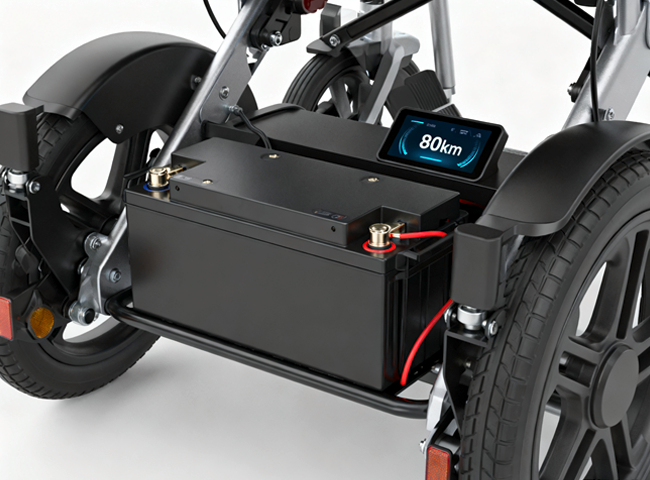
When someone begins to rely on an electric wheelchair, one of the first practical questions that arises is: how long does the battery actually last? Mobility, is not just about comfort—it is about independence, safety, and confidence in being able to move freely without worrying that your chair might stop in the middle of the day. The lifespan of an electric wheelchair battery can be understood from two different angles: how long a single charge lasts during daily use, and how many years the battery itself will serve before it needs to be replaced.
The answer is not simple, because multiple factors—technology, maintenance, environment, user habits—play a role. However, by looking at these factors in detail, users, caregivers, and even healthcare professionals can better plan wheelchair usage and ensure reliability in everyday life.
On average, most modern electric wheelchairs can travel between 10 to 20 miles (16–32 kilometers) per full charge. This range depends on the battery type, capacity, and the specific wheelchair model. High-quality lithium-ion powered wheelchairs may reach closer to the higher end of that spectrum, while older lead-acid batteries or more compact travel chairs may fall on the lower end.
But range estimates from manufacturers are always tested under ideal conditions. In real-world usage, factors such as terrain, the user’s weight, weather, and speed adjustments can significantly reduce the distance. For instance:
A flat, indoor environment with smooth flooring allows the wheelchair to perform close to maximum range.
Outdoor terrain with inclines, uneven ground, or rough pavements drains power faster.
Cold weather can reduce the efficiency of batteries, particularly older lead-acid types.
Frequent starting and stopping or high-speed use also deplete charge more quickly.
It is important for users to plan outings with a margin of safety, assuming that real-world range may be 20–30% less than the advertised figure.
Beyond the daily charge, the broader question is: how many years will an electric wheelchair battery last before needing replacement?
Most electric wheelchair batteries last between 1.5 to 3 years with proper use. Lithium-ion batteries, increasingly popular in advanced wheelchair designs, can sometimes last even longer—up to 4 or 5 years if well maintained. Lead-acid batteries, which are heavier and less efficient, often require replacement closer to the 18–24 month mark.
The key factor in long-term lifespan is the number of charge cycles. A charge cycle means using the battery from full charge down to empty and then charging it back to full. Batteries are not designed to last forever; they slowly lose capacity after hundreds of cycles. A typical deep-cycle battery used in wheelchairs may provide 300 to 500 cycles before performance noticeably drops. Lithium-ion batteries may offer 800 to 1,000 cycles under ideal care.
Users usually notice declining lifespan when the wheelchair no longer holds a charge as long as it once did, or when the maximum travel distance per charge significantly decreases.
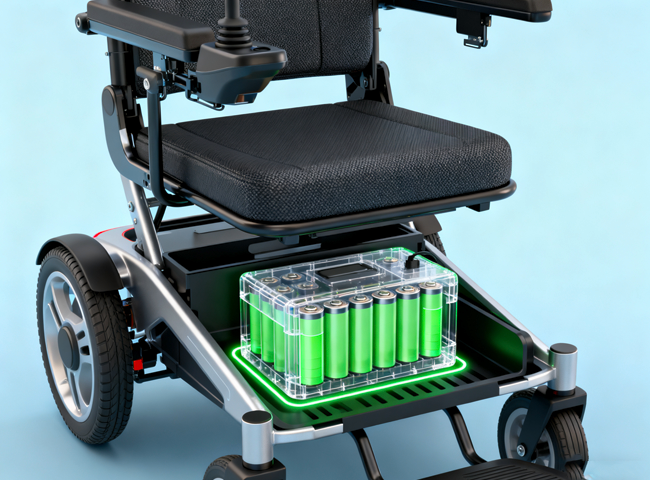
Several conditions directly affect both the daily range and overall years of usability:
1. Battery Type
Sealed lead-acid (SLA): Cheaper, heavier, shorter lifespan. Still widely used in some standard wheelchairs.
Gel batteries: A subtype of lead-acid, with slightly better durability.
Lithium-ion: Lightweight, longer-lasting, more expensive, increasingly the standard for premium models.
2. Charging Habits
Regular, proper charging extends battery life. For instance, letting the battery fully discharge before recharging can shorten lifespan, especially in lead-acid batteries. On the other hand, lithium-ion batteries perform better when kept between 20%–80% charge most of the time.
3. Weight Load
The combined weight of the user, wheelchair accessories, and any carried items impacts efficiency. Heavier loads demand more power, reducing both per-charge distance and long-term durability.
4. Terrain and Usage Environment
Smooth indoor floors are gentle on batteries. Outdoor hills, gravel paths, and grass accelerate power depletion. Temperature extremes also matter: hot climates can degrade lithium-ion cells faster, while cold climates reduce short-term charge efficiency.
5. Maintenance and Storage
Keeping batteries clean, connections tight, and avoiding complete discharge helps. Long-term storage without use can cause permanent capacity loss if the battery is not periodically recharged.
Recognizing when it’s time to change a battery ensures safety and avoids the frustration of sudden power loss. Warning signs include:
Noticeably reduced travel range, even after a full charge.
Longer charging times than usual.
The battery not holding charge when unused overnight.
Unusual noises or heat from the battery case during charging.
Voltage readings showing a drop below recommended levels (if tested with proper equipment).
Most manufacturers recommend replacing batteries as soon as these symptoms consistently appear, rather than waiting for complete failure.
Replacement costs vary widely depending on type and brand.
Lead-acid batteries: $150–$300 per set
Gel batteries: $250–$400 per set
Lithium-ion batteries: $500–$1,000+ per set
While lithium-ion appears expensive, its longer lifespan and lighter weight often make it more economical over time. Moreover, lithium batteries contribute to smoother ride quality and reduced charging frequency, which many users consider worth the investment.
To maximize both range and longevity, best practices include:
Daily charging: Charge after each day of use rather than letting the battery fully discharge.
Avoid overcharging: Use smart chargers that automatically stop charging once full.
Moderate use: Avoid sudden acceleration or consistently using top speed.
Proper storage: Store batteries in a cool, dry place and charge at least once every few weeks during periods of non-use.
Scheduled maintenance: Have the wheelchair serviced regularly, including checks on electrical connections and charger functionality.
Battery technology is improving rapidly. Wheelchairs are beginning to feature smart battery management systems (BMS) that monitor charge, temperature, and health, extending service life. Some advanced chairs even connect to mobile apps to track usage statistics, predicting when a replacement will be needed.
The rise of lithium iron phosphate (LiFePO4) batteries may also transform the industry, offering higher stability and thousands of cycles, potentially doubling the practical lifespan compared to traditional lithium-ion.
Battery performance directly affects independence. A wheelchair with a reliable, long-lasting battery allows users to travel with confidence—whether commuting to work, enjoying social outings, or moving about at home. Limited range or frequent replacements, on the other hand, create barriers that restrict quality of life.
Healthcare providers and caregivers should prioritize battery education for users, ensuring that individuals know how to maximize performance and when to consider replacement.
So, how long does an electric wheelchair battery last? On a single charge, expect 10–20 miles, though real-world usage may shorten this slightly. In terms of total lifespan, 1.5 to 3 years is typical, with lithium-ion batteries potentially lasting longer under proper care.