Our Location
Free Trade Tower, Xiyong street.
Chongqing, China

Free Trade Tower, Xiyong street.
Chongqing, China
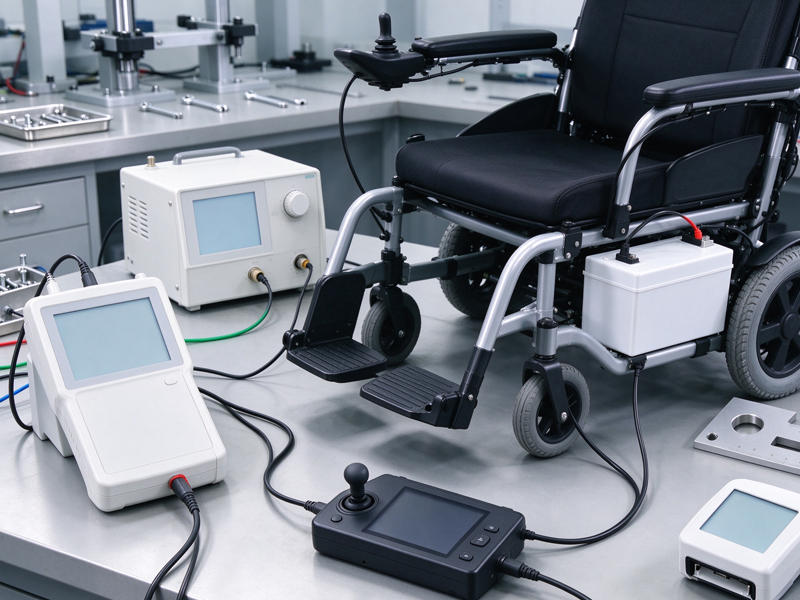
If you manufacture or source wheelchairs outside the United States, there is another regulatory system that needs to be considered before the products enter the American market: the U.S. Food and Drug Administration (FDA).
Wheelchairs are medical devices in the United States, but not every wheelchair is regulated in exactly the same way. A traditional manual wheelchair, a powered wheelchair, a standing wheelchair, and a specialized wheelchair may fall under different FDA classifications and may have different regulatory requirements.
This distinction is particularly important for overseas manufacturers and U.S. importers. A supplier may tell you that a factory is “FDA registered,” but that statement alone does not necessarily mean that a specific wheelchair is cleared for marketing in the United States or that the product can be imported without additional regulatory review.
There is also an important regulatory development that manufacturers should be aware of in 2026. The FDA’s Quality Management System Regulation (QMSR) became effective on February 2, 2026, replacing the previous Quality System Regulation framework and incorporating ISO 13485:2016 into the FDA’s medical device quality system requirements.
For companies planning to build a long-term wheelchair business in the U.S., FDA compliance should therefore be viewed as an ongoing process rather than a one-time import document.
Before worrying about registration or customs paperwork, the first question should be:
How does FDA classify the specific wheelchair being imported?
This is one of the most important steps because FDA requirements depend heavily on the device’s intended use, design, features, and classification.
The FDA’s medical device classification system does not simply use everyday product names such as “manual wheelchair” or “electric wheelchair.” Instead, devices are assigned specific Product Codes, regulation numbers, and device classes.
For example, the FDA classification database identifies:
Other wheelchair-related products, including standing and specialized wheelchair configurations, may have their own classifications and regulatory considerations.
This is why two products that are both marketed commercially as “wheelchairs” should not automatically be assumed to have identical FDA requirements.
For example, a basic manually operated wheelchair has a very different technical profile from a powered wheelchair equipped with:
The more complex the product becomes, the more important it is to confirm the exact FDA classification before commercial importation.
A useful starting point for every project is to create a regulatory profile containing:
| Regulatory Item | Information to Confirm |
|---|---|
| Product Name | Exact commercial and generic name |
| Intended Use | What the device is designed and marketed to do |
| Device Type | Mechanical, powered, specialized, etc. |
| Product Code | Applicable FDA Product Code |
| Regulation Number | Applicable 21 CFR regulation |
| Device Class | Class I, II, or III |
| 510(k) Status | Exempt, required, or previously cleared |
| Manufacturer | Legal name of the actual manufacturer |
| Manufacturing Site | Physical manufacturing location |
| U.S. Agent | Required for foreign manufacturers |
| Initial Importer | U.S. importer, when applicable |
This simple step can prevent significant problems later.
One of the most common questions from international wheelchair manufacturers is:
“Do I need a 510(k) to import my wheelchair into the United States?”
The answer is:
Not necessarily.
FDA’s medical device framework divides products into Class I, Class II, and Class III according to risk and regulatory controls. Some devices are exempt from the 510(k) premarket notification requirement, while others must obtain 510(k) clearance before they can be legally marketed.
The important point is that you cannot determine the 510(k) requirement simply by looking at the words “wheelchair” or “Class I.”
The specific Product Code and applicable FDA regulations need to be reviewed.
For example, the FDA classification database lists mechanical wheelchairs under 21 CFR 890.3850 and powered wheelchairs under 21 CFR 890.3860. Their regulatory classifications are different, and the applicable premarket requirements must be evaluated accordingly.
The FDA’s public database also contains recent 510(k) decisions involving wheelchair products. This illustrates why manufacturers should check the actual classification of their product rather than relying on assumptions based on another company’s product.
A manufacturer should therefore determine the following before commercial production:
Product Code → Device Class → 510(k) Status → Applicable Exemption or Premarket Requirement
If a 510(k) is required, the manufacturer should not wait until the first shipment reaches a U.S. port to address it.
Regulatory work should be completed during the product development and market-entry planning stage.
Another common misunderstanding concerns FDA registration.
You may hear a supplier say:
“Our factory is FDA registered.”
That sounds reassuring, but it does not tell the entire story.
For medical devices, Establishment Registration and Device Listing are separate regulatory concepts.
Depending on the company’s role and the applicable requirements, a medical device business may need to register its establishment and list the devices it manufactures or handles.
For an overseas wheelchair manufacturer, the regulatory structure may involve several different parties.
Foreign Manufacturer
The foreign manufacturer is the company physically manufacturing the wheelchair outside the United States.
Its FDA information should accurately reflect the establishment, manufacturing activities, and applicable devices.
U.S. Agent
A foreign medical device manufacturer generally needs a U.S. Agent when registering with FDA.
The U.S. Agent must be located in the United States and serves as the FDA’s domestic point of contact for the foreign establishment.
FDA requires a foreign establishment to identify its U.S. Agent during registration.
Initial Importer
The U.S. Initial Importer is another important party.
An Initial Importer is generally the U.S. company that imports the device into the United States and distributes it further without repackaging or otherwise changing the labeling or packaging in a way that would make it a different regulatory role.
The Initial Importer has its own FDA responsibilities.
One important point for international businesses is:
A U.S. Agent and an Initial Importer are not automatically the same entity.
They represent different roles within the medical device supply chain.
Understanding these roles before shipping is much safer than trying to determine them after an import entry has already been filed.
A manufacturer preparing to enter the U.S. market should build a complete regulatory file instead of relying on a single registration certificate.
At a minimum, the company should organize information such as:
Manufacturer Information
This should include:
U.S. Agent Information
For a foreign manufacturer, maintain:
Device Listing Information
The Device Listing should correspond to the actual product and its FDA classification.
Relevant information may include:
FDA registration and device listing are managed electronically through FDA’s registration and listing system, and applicable establishments are generally required to review and update their information periodically.
The key is consistency.
The information in your FDA record should match the information used on your commercial documents and import entries.
This distinction deserves special attention because it causes considerable confusion in international medical device trading.
FDA Registration is not the same as FDA Approval.
Registration generally refers to the establishment being registered with FDA.
Device Listing refers to the device being listed in FDA’s system where required.
A 510(k) clearance is a premarket determination for an applicable device based on substantial equivalence.
A PMA approval is a different and more stringent premarket pathway generally associated with certain high-risk devices.
These terms should never be used interchangeably.
For example, a manufacturer may provide a document titled:
“FDA Registration Certificate”
That document does not necessarily mean that FDA has reviewed and cleared the company’s specific wheelchair for marketing.
Before purchasing a product for import into the United States, buyers should ask for information that allows them to independently verify:
A PDF certificate by itself should not be treated as proof of complete FDA compliance.
For companies selling medical devices in the United States, 2026 brought an important regulatory change.
The FDA’s Quality Management System Regulation (QMSR) became effective on February 2, 2026.
The QMSR updates 21 CFR Part 820 and incorporates ISO 13485:2016 by reference into the FDA’s medical device quality management framework.
For wheelchair manufacturers, this is more than a regulatory terminology change.
It reinforces the importance of having a functioning quality management system behind the product.
A manufacturer that wants to sell wheelchairs in the U.S. market over the long term should have appropriate systems covering areas such as:
The exact requirements depend on the manufacturer’s activities and the applicable regulatory framework, but the overall message is clear:
FDA compliance should be built into the manufacturing process, not created as paperwork after the product is manufactured.
This is particularly relevant to powered wheelchairs.
A powered wheelchair may involve motors, batteries, electronic controls, charging systems, braking systems, mechanical structures, and user-support components. Quality problems in any of these areas can potentially affect user safety.
A mature quality system therefore becomes an important part of maintaining a sustainable U.S. market presence.
Manufacturers sometimes spend months preparing a product technically, only to discover that the labeling and marketing materials have not been properly reviewed.
For medical devices, labeling is an important part of FDA compliance.
Depending on the product, the U.S. market labeling may need to address information such as:
The product label, instructions for use, packaging, website, and marketing materials should also tell a consistent story.
This is especially important when describing medical benefits.
A company should avoid making claims that go beyond the device’s established intended use or applicable regulatory status.
For example, if a wheelchair is designed as a mobility device, marketing language that suggests it can diagnose, prevent, treat, or cure a particular medical condition could create additional regulatory concerns.
In other words:
FDA compliance does not stop at the factory gate.
The product’s commercial presentation matters too.
FDA’s import process is not simply a visual inspection of the physical wheelchair.
FDA uses information submitted as part of the import entry to determine whether a regulated product appears to comply with applicable requirements.
Depending on the device, FDA may review information such as:
The information submitted at entry should correspond with FDA’s records.
This is where inconsistent company names can create unnecessary problems.
For example:
FDA record: ABC Medical Equipment Co., Ltd.
Commercial invoice: ABC Wheelchair Factory
Product listing: ABC Mobility Technology
Importer entry: XYZ Trading LLC
These entities may have legitimate business relationships, but if the regulatory roles and names are not clearly documented, the import entry can become more difficult to review.
FDA has explained that accurate and complete entry information helps facilitate electronic screening, while incomplete or incorrect information may result in additional review or delays.
For this reason, importers should coordinate with their customs broker before the shipment leaves the manufacturing country.
Another misconception is that the U.S. importer has completed its job once the container has cleared Customs.
For medical devices, that is not necessarily the case.
Depending on its regulatory role, an Initial Importer may have responsibilities involving:
This is especially important when dealing with products used directly by people for mobility assistance.
Suppose an importer receives a serious complaint involving a wheelchair.
The appropriate response is not simply to forward the email to the Chinese factory and wait.
The importer should have a defined process for determining:
That is why a professional U.S. importer should establish a post-market compliance process before the first large shipment arrives.
If you are importing wheelchairs from China into the United States, the following sequence provides a practical starting point.
Step 1: Identify the Exact Product
Determine whether the device is:
Do not rely only on the product’s commercial name.
Step 2: Determine the Intended Use
Write down exactly what the product is intended to do and how it will be marketed in the United States.
Step 3: Confirm the FDA Product Classification
Identify:
Step 4: Determine Whether a 510(k) Is Required
If the product requires 510(k) clearance, confirm the appropriate FDA clearance before commercial marketing and importation.
Step 5: Verify the Foreign Manufacturer
Confirm that the actual manufacturing establishment is correctly registered with FDA when registration is required.
Step 6: Verify Device Listing
Make sure the actual wheelchair being imported is appropriately listed under the correct FDA classification.
Step 7: Confirm the U.S. Agent
The foreign manufacturer should maintain accurate U.S. Agent information.
Step 8: Identify the Initial Importer
The U.S. importer should understand its FDA responsibilities and ensure its information is correctly reflected in the regulatory and import process.
Step 9: Review Labels and Instructions
Check the product label, packaging, manual, website, and marketing materials for consistency.
Step 10: Prepare the Import Entry
Coordinate with the customs broker or import compliance team to ensure the FDA-related entry information is accurate.
Step 11: Establish Post-Market Procedures
Before selling at scale, establish procedures for:
This approach is much more reliable than trying to solve FDA problems after the cargo has already reached the United States.
Several mistakes appear repeatedly in international wheelchair transactions.
Mistake #1: Assuming FDA Registration Means FDA Approval
It does not.
Registration, listing, clearance, and approval are different regulatory concepts.
Mistake #2: Assuming Every Class I Wheelchair Is Automatically Exempt
The exact Product Code and applicable regulations should be checked.
Mistake #3: Copying Another Manufacturer’s 510(k)
A competitor’s clearance does not automatically cover your product.
A 510(k) clearance is associated with a particular device and regulatory submission.
Mistake #4: Using the Wrong Product Code
The Product Code should be determined based on the actual device and its intended use.
Choosing a Product Code simply because it appears similar to the product can create regulatory problems.
Mistake #5: Ignoring Marketing Claims
A product can have a reasonable regulatory profile but create additional concerns if its website and sales materials make unsupported medical claims.
Mistake #6: Treating FDA Compliance as a One-Time Event
Registration and listing are only part of the overall compliance process.
Manufacturers and importers also need to consider changes to products, labeling, manufacturing operations, complaints, and post-market obligations.
Mistake #7: Waiting Until the Shipment Is Already at the Port
Regulatory classification and documentation should be reviewed before shipment.
Fixing a compliance problem after the cargo arrives can be considerably more expensive and time-consuming.
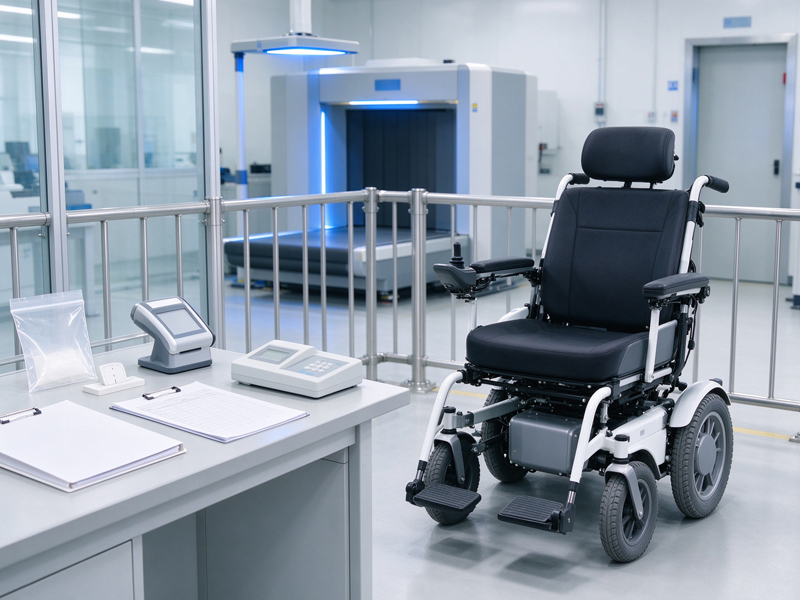
A manufacturer preparing for the U.S. market should maintain a dedicated U.S. regulatory file.
Depending on the product and business model, it may include:
The purpose is not simply to create a large folder of documents.
The real objective is to make sure that the entire regulatory chain tells the same story.
The company name should match.
The manufacturing location should match.
The product description should make sense.
The Product Code should correspond to the actual device.
The listing should correspond to the product being shipped.
The importer should understand its role.
The labeling should reflect the intended use.
And the quality system should support the product being sold.
For companies entering the U.S. wheelchair market for the first time, it can be tempting to start with the commercial side:
Find a factory → negotiate price → place order → ship container → clear Customs.
For medical devices, a safer sequence is different:
Define product → determine FDA classification → review premarket requirements → verify manufacturer registration/listing → review labeling → confirm importer responsibilities → prepare entry → ship.
This difference can save considerable time and money.
Imagine that a buyer places an order for 500 powered wheelchairs and only discovers afterward that the product configuration does not match the FDA information previously provided by the manufacturer.
At that point, the buyer may already have:
Regulatory problems at that stage can become expensive very quickly.
A pre-import review is therefore not merely a compliance expense.
It is a form of supply-chain risk management.
For a company planning to sell wheelchairs in the United States for years rather than months, FDA compliance should be treated as part of the overall business infrastructure.
The goal should not simply be:
“How do we get this shipment through?”
A better question is:
“How do we build a wheelchair product and supply chain that can consistently meet U.S. regulatory expectations?”
That means investing in:
This becomes even more relevant after the 2026 QMSR transition.
The FDA’s updated quality system framework places greater emphasis on a structured medical device quality system and incorporates ISO 13485:2016 into the U.S. regulatory framework.
For manufacturers that already operate an ISO 13485-based quality system, this provides a familiar international framework, although companies should still evaluate their specific FDA obligations rather than assuming ISO certification alone satisfies every U.S. requirement.
1. Do all wheelchairs imported into the USA require FDA 510(k) clearance?
No.
The requirement depends on the specific device classification and Product Code.
Mechanical and powered wheelchairs are classified differently by FDA, and the applicable 510(k) requirement or exemption must be determined based on the actual product.
The safest approach is to identify the Product Code first and then verify the applicable FDA premarket requirements.
2. Is FDA registration enough to import a wheelchair into the United States?
No.
FDA establishment registration is only one part of the overall regulatory process.
Depending on the device and the parties involved, importers and manufacturers may also need to address Device Listing, product classification, 510(k) requirements or exemptions, U.S. Agent information, labeling, quality system requirements, and FDA import-entry information.
A document labeled “FDA Registered” should therefore not automatically be interpreted as “FDA Approved.”
3. What changed for wheelchair manufacturers in 2026?
The most important change is the FDA’s Quality Management System Regulation (QMSR), which became effective on February 2, 2026.
QMSR updated 21 CFR Part 820 and incorporates ISO 13485:2016 into the FDA’s medical device quality system framework.
For wheelchair manufacturers, this means that maintaining an appropriate quality management system is an increasingly important part of supporting long-term U.S. market access.
Companies should review their quality procedures, production controls, complaint handling, corrective action processes, supplier controls, and related documentation against the requirements applicable to their operations.
Importing wheelchairs into the United States is more complicated than simply obtaining an “FDA certificate.”
The actual process begins with understanding what the product is from a regulatory perspective.
Once the product has been correctly classified, the manufacturer can determine whether registration, Device Listing, 510(k) clearance or exemption, U.S. Agent information, labeling controls, quality system requirements, and other obligations apply.
For U.S. importers, the process does not necessarily end when the shipment clears Customs. Depending on the company’s role, there may also be continuing responsibilities involving complaints, Medical Device Reporting, corrections and removals, and other post-market requirements.
The best approach is to solve regulatory questions before the shipment leaves the factory.
For manufacturers exporting from China, Europe, Southeast Asia, or other regions, a well-prepared U.S. regulatory file can make the entire import process more predictable and reduce unnecessary delays.
Most importantly, FDA compliance should not be viewed as a single document that proves a product is “FDA approved.” It is better understood as a connected system involving the product, manufacturer, quality system, labeling, importer, regulatory database, import entry, and post-market activities.
If all of these elements are aligned, the company is in a much stronger position to build a sustainable wheelchair business in the United States.
This article is intended for general regulatory information and does not constitute legal or regulatory advice. FDA requirements can vary according to the specific device, intended use, Product Code, manufacturing activities, and business structure. Manufacturers and importers should verify current FDA requirements before commercial importation, particularly when introducing a new wheelchair design or changing its intended use.