Our Location
Free Trade Tower, Xiyong street.
Chongqing, China

Free Trade Tower, Xiyong street.
Chongqing, China
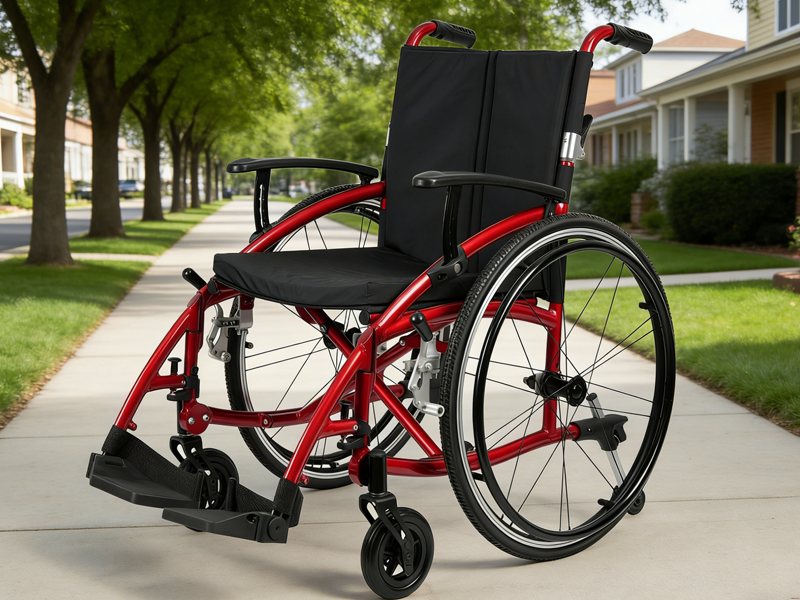
The term “featherweight wheelchair” typically refers to manual wheelchairs designed with extremely low frame weight while maintaining structural strength and safety.
Although definitions vary slightly by manufacturer, most featherweight wheelchairs share several key characteristics:
Weight below 30 pounds
Many modern models weigh between 18 and 28 pounds without accessories.
Lightweight frame materials
Common materials include aluminum alloys, titanium, and high-strength composite metals.
Compact folding design
Many models fold easily for storage in vehicles, airplanes, or public transportation.
Simplified structural components
Designers reduce unnecessary hardware and streamline components to minimize weight.
The goal of a featherweight wheelchair is simple: maximize mobility while minimizing the effort required to move the chair.
For users who propel themselves manually, even a few pounds of weight reduction can make a noticeable difference in daily energy expenditure.
Creating a wheelchair that is both lightweight and durable requires careful design. Engineers must balance three competing factors:
Weight reduction
Structural strength
User comfort
Manufacturers accomplish this through a combination of design strategies.
Advanced Materials
High-grade aluminum alloys are commonly used because they provide excellent strength-to-weight ratios. Titanium is also popular in premium models because it offers durability, corrosion resistance, and shock absorption while remaining extremely lightweight.
Ergonomic Frame Geometry
Frame geometry affects how efficiently a wheelchair transfers force from the user’s arms to the wheels. Optimized designs improve propulsion efficiency, meaning each push moves the wheelchair farther.
Adjustable Components
Even lightweight models often include adjustable features such as seat height, axle position, or backrest angle. These adjustments allow users to customize the chair to their posture and propulsion style.
Folding Mechanisms
Many featherweight wheelchairs incorporate cross-brace folding systems or rigid folding designs that collapse quickly for transport.
Despite their minimal weight, these wheelchairs are carefully engineered to remain safe and stable in daily use.
Perhaps the most widely appreciated benefit of featherweight wheelchairs is their portability.
For many users, transporting a traditional wheelchair can be physically demanding. Heavy chairs often require assistance when lifting into vehicles or navigating tight spaces.
Featherweight models significantly reduce this burden.
A lightweight folding wheelchair can typically be collapsed within seconds and placed in a car trunk or back seat without excessive lifting effort. This makes them particularly useful for:
Frequent travelers
Commuters using public transportation
Caregivers assisting wheelchair users
Individuals who regularly store their chair in a vehicle
Air travel is also easier with lightweight wheelchairs. Many airport staff find them simpler to handle, and users themselves can maneuver through terminals more comfortably.
For active individuals, this portability expands possibilities—making spontaneous trips and daily errands far more manageable.
Another major advantage of featherweight manual wheelchairs is improved propulsion efficiency.
Every push of the wheel requires energy. Heavier chairs require more force to start moving and more effort to maintain momentum. Over time, this additional effort can lead to fatigue and even shoulder strain.
Lightweight wheelchairs reduce rolling resistance and inertia, meaning the chair responds more quickly to each push.
This has several important benefits:
Reduced arm and shoulder fatigue
Improved maneuverability in tight spaces
Greater independence for users with limited upper-body strength
Increased daily mobility distance
For people who rely on their wheelchair for many hours each day, the energy savings can be significant.
Less physical strain also contributes to long-term joint health, which is a critical consideration for wheelchair users who rely heavily on upper-body mobility.
Featherweight wheelchairs can also provide indirect health advantages.
Users with cardiovascular or respiratory conditions often benefit from mobility devices that reduce physical exertion. A lighter wheelchair requires less effort to move, making it easier for individuals with limited stamina to remain active.
Remaining mobile is essential for both physical and mental health. Increased mobility encourages:
Outdoor activity
Social interaction
Independence in daily routines
Improved circulation and physical conditioning
Additionally, minimizing repetitive strain can help prevent common wheelchair-related injuries, including shoulder overuse and wrist strain.
While a lightweight wheelchair alone cannot eliminate these risks, it can significantly reduce the workload placed on the upper body.
Many wheelchair users describe the transition to a featherweight model as transformative.
Individuals who previously relied on assistance for transportation often find they can move more independently. Activities like visiting parks, navigating busy city streets, or attending events become easier and less physically exhausting.
For travelers, lightweight wheelchairs remove many logistical barriers. Users frequently report being able to handle their own mobility equipment when boarding flights or loading vehicles.
Of course, experiences vary depending on lifestyle and environment. Someone living in a dense urban area with smooth sidewalks may experience greater advantages than someone navigating rough rural terrain.
Still, user feedback consistently highlights improved convenience and increased mobility freedom.
Despite their advantages, featherweight wheelchairs are not without limitations.
One concern sometimes raised by users involves durability.
While modern lightweight materials are extremely strong, they may not match the long-term ruggedness of heavier steel frames in demanding environments.
Frequent exposure to rough terrain, uneven sidewalks, or heavy loads may place additional stress on lightweight frames.
For users who regularly encounter challenging terrain, a slightly heavier wheelchair with reinforced construction may offer better long-term durability.
This does not mean featherweight wheelchairs are fragile—far from it. However, they are optimized primarily for mobility efficiency rather than extreme durability.
Weight reduction often requires simplifying certain components.
In some featherweight wheelchairs, manufacturers reduce padding thickness or limit additional accessories to keep the chair light.
This can occasionally lead to reduced comfort during long periods of sitting.
Users who require specialized seating systems, pressure relief cushions, or posture supports may need to add accessories that slightly increase the overall weight of the chair.
For individuals who spend many hours per day in their wheelchair, comfort and ergonomic support should remain top priorities when selecting a model.
Another potential limitation is customization.
Some featherweight wheelchair models offer fewer adjustment options compared with fully customized mobility systems.
This is primarily because additional hardware adds weight and complexity.
Users who require highly specialized seating positions, advanced posture supports, or unique mobility configurations may find greater flexibility in custom-built wheelchairs rather than standard lightweight models.
That said, many modern featherweight wheelchairs still offer basic adjustments that accommodate most users comfortably.
High-quality featherweight wheelchairs often come at a premium price.
Advanced materials like titanium and precision engineering increase manufacturing costs, which are reflected in retail pricing.
However, many users view the investment as worthwhile when considering the long-term benefits:
Reduced physical strain
Increased mobility independence
Improved daily convenience
Better travel compatibility
Insurance coverage, government assistance programs, and nonprofit grants can sometimes help offset these costs depending on the user’s location and eligibility.
Careful research is essential when exploring funding options.
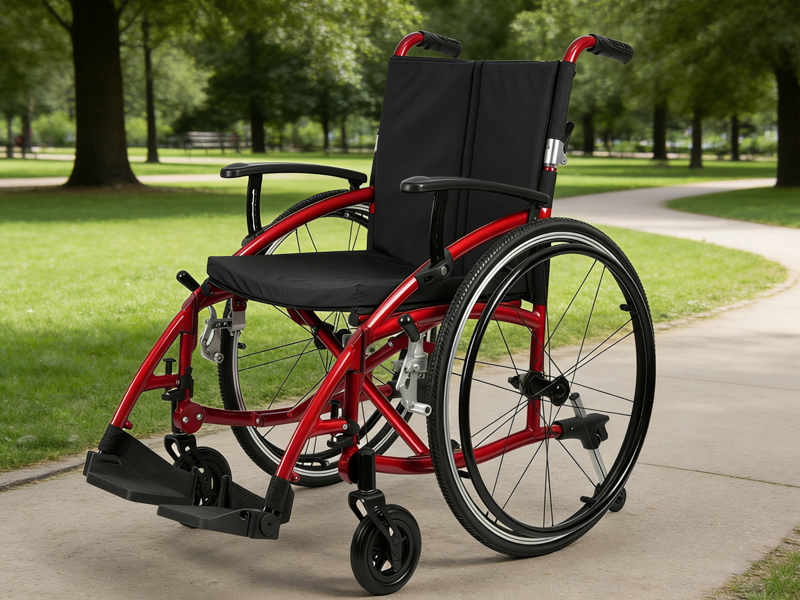
Foldable Aluminum Manual Wheelchair with Quick Release Wheels
Selecting the right wheelchair should always involve a personalized assessment.
Key factors to consider include:
Daily usage patterns
How many hours per day will the wheelchair be used?
Terrain and environment
Will the user encounter smooth indoor floors, urban sidewalks, or rugged outdoor terrain?
User weight and body support needs
Different models support different weight ranges and seating requirements.
Transport requirements
Will the chair be frequently loaded into vehicles or taken on flights?
Budget and funding options
What financial resources or insurance coverage are available?
A consultation with a mobility specialist or occupational therapist can also provide valuable guidance when choosing a wheelchair.
1. Are featherweight manual wheelchairs suitable for everyday use?
Yes, many featherweight wheelchairs are designed specifically for daily mobility. They are particularly effective for users who self-propel frequently and benefit from reduced weight and improved propulsion efficiency. However, individuals who require extensive support or frequently travel on rough terrain may need a more reinforced model.
2. How much lighter are featherweight wheelchairs compared with standard models?
Traditional manual wheelchairs often weigh between 35 and 50 pounds. Featherweight models typically weigh between 18 and 30 pounds. This reduction can significantly improve maneuverability and reduce the physical effort required for propulsion.
3. Are featherweight wheelchairs durable enough for long-term use?
Most high-quality featherweight wheelchairs are engineered for durability and daily use. However, their lightweight construction means they may not be ideal for extremely rough environments or heavy-duty applications. Choosing a model designed for your specific lifestyle will help ensure long-term reliability.