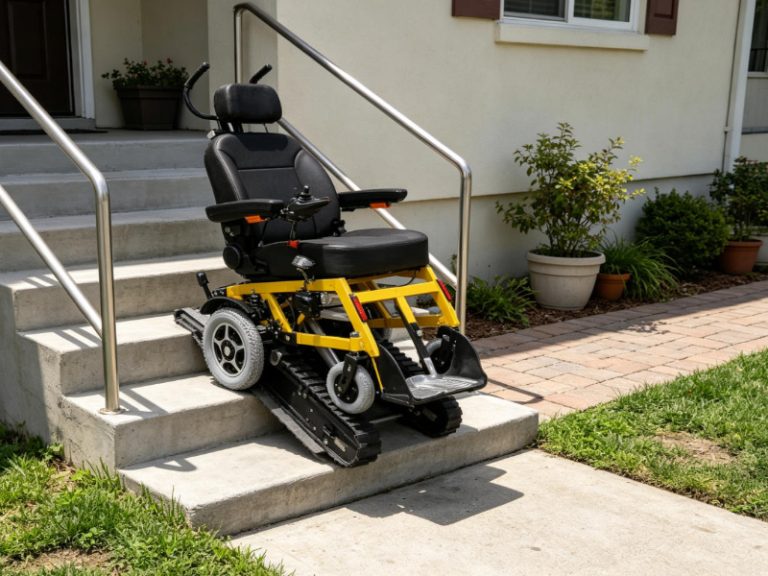
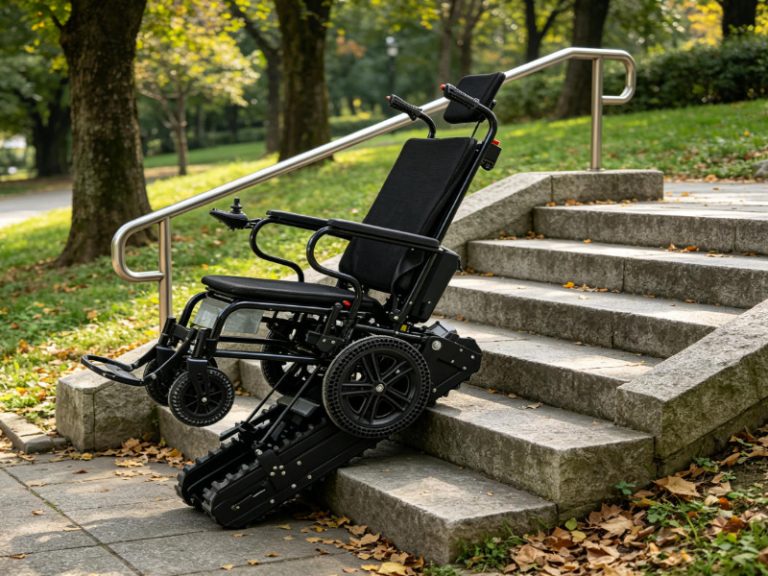
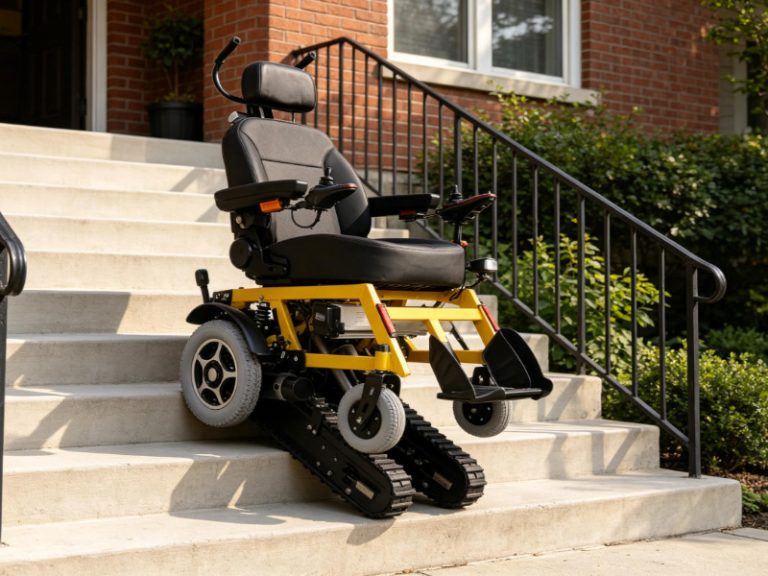
Our Location
Free Trade Tower, Xiyong street.
Chongqing, China

Free Trade Tower, Xiyong street.
Chongqing, China
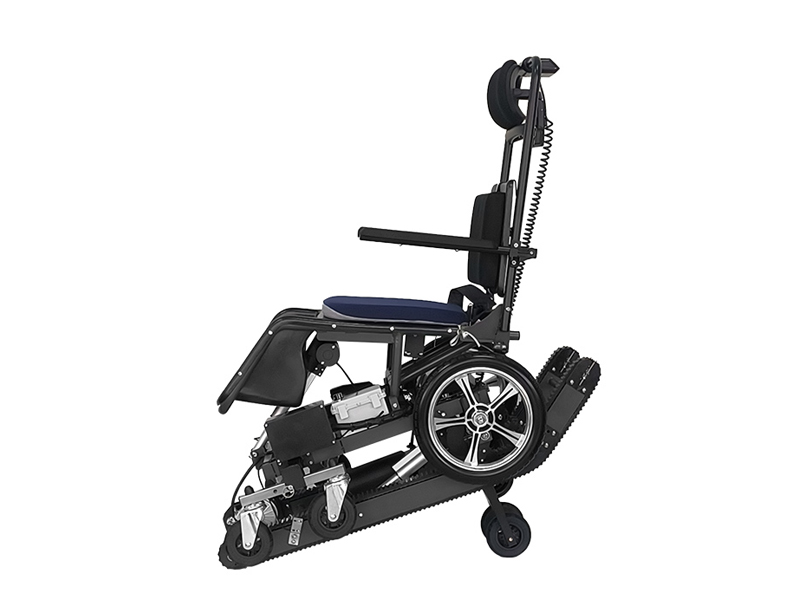
In many parts of the world, accessibility is still defined by architecture that wasn’t designed with everyone in mind. Stairs remain one of the most common barriers for individuals with limited mobility, especially in older buildings, private homes without elevators, or urban environments where retrofitting isn’t always possible. Over the past decade, stair-climbing wheelchairs have emerged as one of the most practical and transformative mobility solutions, and among them, foldable electric models have quickly become the most versatile category for both home users and caregivers.
What makes this new generation of foldable stair-climbing wheelchairs so compelling is not just the ability to navigate stairs safely, but the way they integrate portability, automation, and compact engineering into a single device. Instead of relying on permanent installations or expensive home modifications, users now have access to mobility tools that adapt to real life—travel, home use, emergencies, and everyday movement.
For individuals with limited mobility, stairs are not just an inconvenience; they can define where a person can live, how independently they can move, and even how often they can leave their home. Traditional solutions like stair lifts or home elevators can work well, but they require installation, structural compatibility, and significant financial investment. In rental housing or temporary living situations, these options are often unrealistic.
Manual stair carry chairs exist, but they rely heavily on caregivers and can be physically demanding and potentially unsafe without proper training. This gap has created demand for a solution that is:
This is where foldable stair-climbing wheelchairs have started to redefine expectations.
Unlike fixed installations, these devices use tracked climbing systems or intelligent wheel mechanisms to ascend and descend stairs with controlled stability. When paired with foldable frames, they become practical not only for home use but also for ambulances, care facilities, and travel scenarios.
At first glance, a stair-climbing wheelchair may look like a standard powered chair with additional mechanics, but the engineering behind it is significantly more advanced.
Most modern foldable models combine:
The foldable design is especially important. It allows caregivers or users to store the chair in a vehicle trunk, small apartment corner, or medical facility without requiring dedicated storage space. This makes it suitable for both permanent and temporary mobility support.
Another key difference lies in control systems. Many newer models incorporate intuitive control panels designed for caregivers, ensuring smooth operation even with minimal training.
Electric Stair Climbing Wheelchair YSE208
The YSE208 represents a practical middle ground in the stair-climbing wheelchair category, designed for users who require consistent performance without unnecessary complexity. It focuses on stability and controlled climbing performance, making it suitable for residential environments, care institutions, and home healthcare scenarios.
One of the most notable characteristics of the YSE208 is its emphasis on structural balance during stair navigation. Instead of relying purely on speed or automation, it prioritizes controlled movement, ensuring that each step is managed with precision. This is particularly important in environments where stair dimensions may vary or where space is limited.
The frame design incorporates foldability without sacrificing rigidity, allowing the chair to be transported in most standard vehicles. Caregivers often appreciate the way it reduces physical strain during transfers, while users benefit from a smoother ride experience on both stairs and flat surfaces.
In practical use, the YSE208 is often chosen by families who need a reliable daily mobility solution that can handle both indoor and occasional outdoor stair access. It is not over-engineered, but instead focuses on dependable functionality, which makes it appealing for long-term use scenarios.
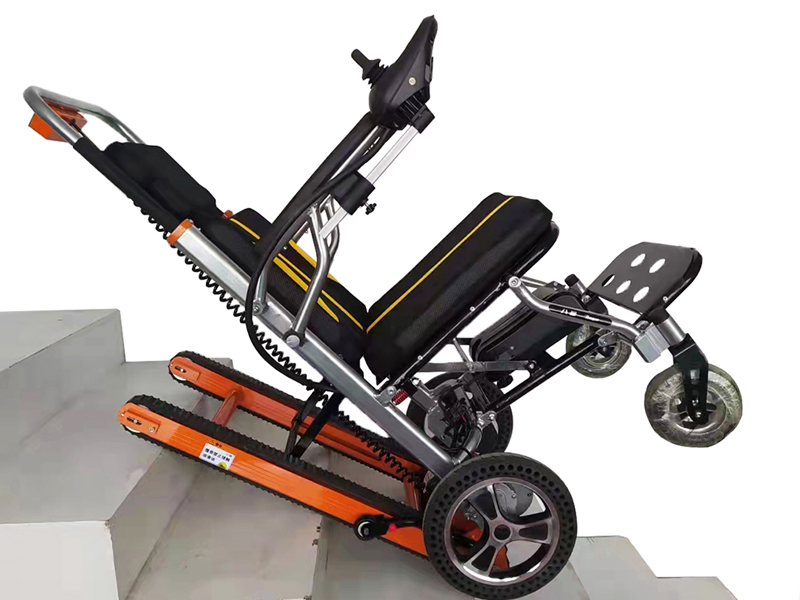
Lightweight Foldable Stair Climbing Wheelchair YSE202
If portability is the priority, the YSE202 stands out as one of the most travel-friendly options in the foldable stair-climbing wheelchair category. It is specifically designed for users or caregivers who need to transport the device frequently, whether between homes, medical facilities, or while traveling.
The lightweight structure is achieved through optimized frame engineering, reducing bulk while maintaining structural safety. This makes a significant difference in real-world scenarios where lifting and loading equipment can otherwise become a challenge.
The YSE202 is particularly well-suited for:
Despite its lighter frame, the climbing mechanism remains stable and controlled, ensuring that safety is not compromised for portability. The folding system is streamlined, allowing the chair to be collapsed efficiently without complex steps.
In everyday use, the YSE202 is often appreciated for its convenience factor. It doesn’t require large storage space, and it integrates smoothly into transport routines. For many users, this model represents freedom not only inside the home but also beyond it.
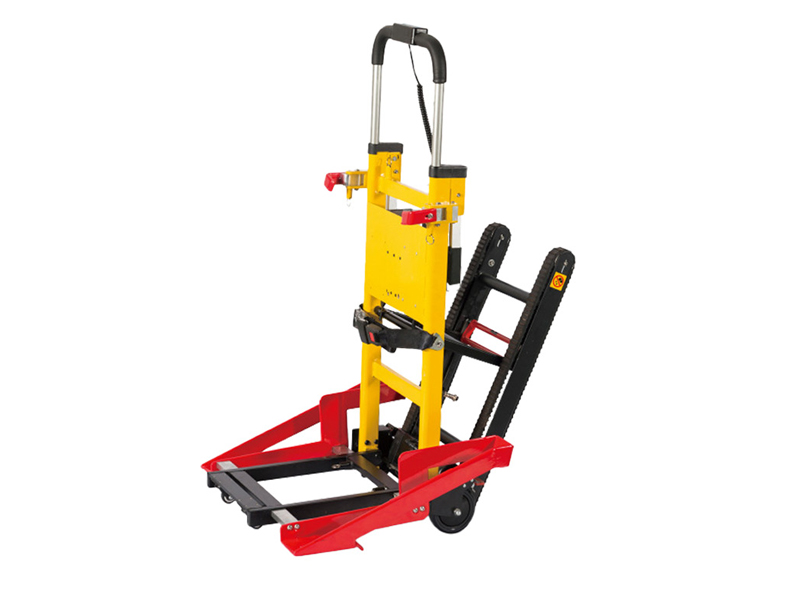
Automatic Stair Climbing Wheelchair YSE210
At the more advanced end of the spectrum, the YSE210 introduces a higher level of automation and operational intelligence. Designed for users who prioritize ease of operation and reduced physical input from caregivers, this model focuses on improving the overall stair-climbing experience through automation-assisted control systems.
The most defining aspect of the YSE210 is its automatic climbing functionality, which supports smoother transitions between steps with reduced manual adjustment. This is particularly valuable in environments where caregivers may need to operate the device frequently or where staircases vary in structure.
Comfort is also a major focus. The seating design is engineered to maintain stability during ascent and descent, reducing discomfort during longer transfers. Combined with enhanced control responsiveness, the YSE210 delivers a more refined experience compared to basic models.
This model is often selected in:
The YSE210 reflects the direction of modern mobility technology: less physical strain, more intelligent support, and improved consistency in performance.
While each model serves a different user profile, the decision often comes down to real-life usage patterns rather than technical specifications alone.
Instead of focusing only on features, it is more practical to consider:
For example, a household that primarily needs stable daily stair access may benefit from the balanced performance of the YSE208. A user who frequently travels or requires lightweight handling may find the YSE202 more practical. Meanwhile, institutions or caregivers handling multiple transfers per day may prefer the automation advantages of the YSE210.
The key is matching the device to lifestyle rather than forcing lifestyle adjustments around the device.
Foldability is no longer a secondary feature—it has become a defining requirement in modern mobility design. As urban living spaces become smaller and healthcare shifts toward home-based care models, equipment must adapt accordingly.
Foldable stair-climbing wheelchairs solve three major limitations at once:
This shift reflects a broader trend in assistive technology: mobility solutions are becoming more decentralized, user-driven, and adaptable.
1. Are foldable stair-climbing wheelchairs safe for daily use on different types of stairs?
Yes, most modern models are designed with stabilization systems that adapt to standard residential and commercial staircases. The key factor is proper operation and ensuring the staircase surface is dry, stable, and free of obstacles. Devices like the YSE208 and YSE210 are engineered to maintain controlled movement during both ascent and descent, reducing risk when used correctly.
2. Can one person operate a stair-climbing wheelchair without assistance?
In many cases, yes, but it depends on the model and user condition. Lightweight models such as the YSE202 are easier to handle in transport situations, while more advanced systems like the YSE210 are designed to reduce caregiver effort during operation. However, for safety reasons, many users still prefer having a second person assist during stair navigation.
3. How do I decide between a lightweight model and an automatic one?
The decision usually depends on lifestyle. If frequent travel and portability are priorities, a lightweight model like the YSE202 is more practical. If the focus is on reducing physical effort during operation and handling frequent stair use, a more automated option like the YSE210 may be better suited. The YSE208 sits between both, offering a balanced solution for everyday residential use.