Our Location
Free Trade Tower, Xiyong street.
Chongqing, China

Free Trade Tower, Xiyong street.
Chongqing, China
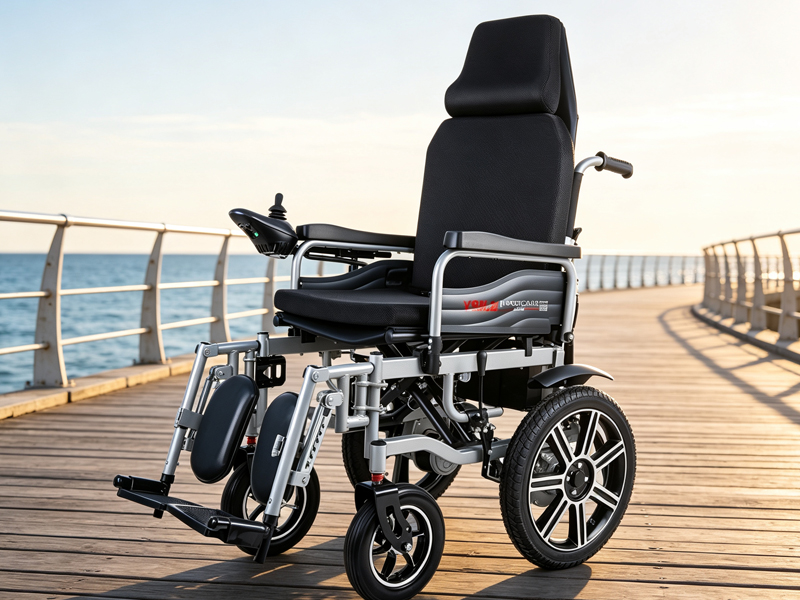
For many seniors and adults with limited mobility, a wheelchair becomes part of everyday life. It may be used for several hours at home, during hospital visits, rehabilitation, shopping trips, family outings, or longer journeys. When sitting time increases, comfort, posture, ease of operation, transportation, and safety become just as important as mobility itself.
That is why the high back reclining wheelchair for adults and seniors has become an increasingly practical category to consider. Compared with a conventional wheelchair, a high-back reclining design provides more upper-body support while allowing the user to change the angle of the backrest instead of remaining upright in one fixed position.
But there is another question worth asking: what if the user also wants powered mobility and a wheelchair that can be transported in a vehicle?
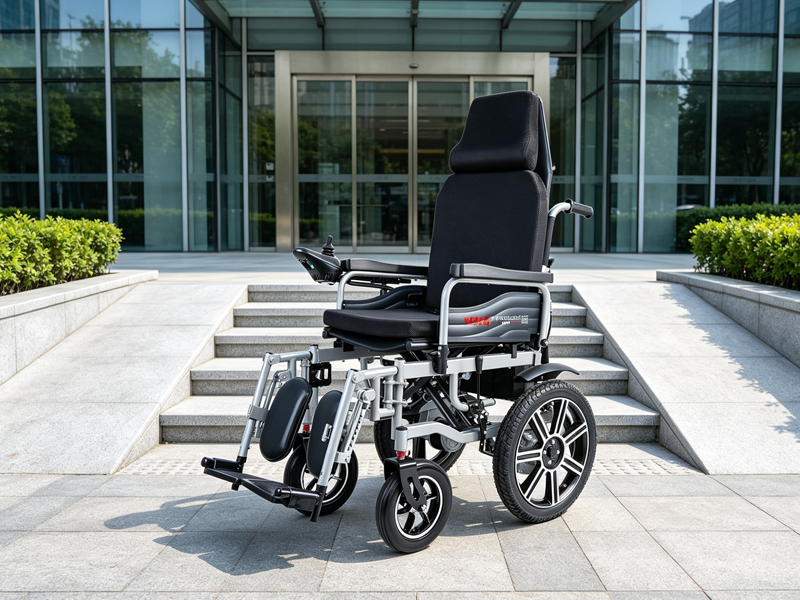
This is where a model such as the IYASOCARE YSE109 High-Back Foldable Electric Wheelchair becomes particularly interesting. Rather than treating portability, powered mobility, reclining comfort, and supportive seating as separate requirements, the YSE109 brings them together in one design.
A standard wheelchair is designed primarily to help a person move from one place to another. That basic function is essential, but it does not necessarily address the needs of someone who spends long periods sitting.
Older adults may have reduced trunk strength, fatigue easily, or simply prefer to change their sitting position throughout the day. For these users, remaining at the same back angle for hours can become uncomfortable.
A high back wheelchair extends the supporting surface higher along the user’s back. Depending on the design, it can provide more support around the upper back, shoulders, and head area than a conventional low-back wheelchair.
The reclining function adds another layer of flexibility.
Instead of forcing the user to maintain one upright sitting angle, the backrest can be adjusted to a more relaxed position. This can be useful when the user wants to rest, when a caregiver needs to reposition the person, or when a long journey makes a fixed sitting posture tiring.
The concept is simple: mobility should not come at the expense of comfort.
Modern reclining wheelchairs are therefore increasingly designed around the complete experience of sitting, moving, resting, and transferring rather than transportation alone.
However, not every reclining wheelchair is the same. Some are fully manual. Some are heavy-duty clinical chairs. Others are powered. Some fold easily, while others are primarily designed for institutional environments.
For adults and seniors who want both powered mobility and a more flexible seating position, an electric high-back reclining wheelchair can offer a particularly useful combination.
The IYASOCARE YSE109 is officially described as a high-back foldable electric wheelchair designed around comfort, portability, and everyday travel. Its design is particularly relevant to seniors because the wheelchair combines powered driving with a relatively straightforward control system and multiple features intended to make daily use easier.
The first thing to understand is that the YSE109 is not simply a traditional manual reclining wheelchair with an electric motor added.
It is an electric mobility solution with a high-back configuration, adjustable backrest, folding frame, electric and manual operating modes, and a set of safety and convenience features.
The specifications provide a useful snapshot:
| Feature | IYASOCARE YSE109 |
|---|---|
| Type | High-back foldable electric wheelchair |
| Seat width | 46 cm |
| Seat depth | 45 cm |
| Seat height | 54 cm |
| Backrest height | 75 cm |
| Maximum user weight | 130 kg / approximately 287 lb |
| Backrest adjustment | 90°–150° |
| Driving range | Up to 15 km |
| Maximum speed | 6 km/h |
| Climbing ability | Up to 15° |
| Rear wheels | 16 inches |
| Front wheels | 10 inches |
| Motors | 250 W × 2 |
| Battery | 24 V 12 Ah lead-acid |
| Charging time | 4–6 hours |
| Normal dimensions | 110 × 64 × 125 cm |
| Folding dimensions | 79 × 39 × 74 cm |
| Full lying dimensions | 170 × 64 × 85 cm |
| Frame | Steel |
| Net/Gross weight | 47 kg / 52 kg |
These specifications come directly from the manufacturer’s product information.
For a buyer, however, numbers alone do not tell the whole story. The real question is how those specifications translate into everyday use.
One of the key reasons people search for a high back reclining wheelchair for adults is the desire for a more adaptable seating position.
The YSE109’s backrest can be adjusted between 90° and 150°.
At approximately 90°, the wheelchair provides a conventional upright sitting position. As the backrest moves backward, the user can adopt a more relaxed posture.
This can be particularly useful during longer periods of sitting.
Imagine an older adult spending an afternoon at a family gathering. A conventional wheelchair may provide adequate mobility, but after several hours the user may want to lean back and rest. With an adjustable backrest, the wheelchair can accommodate a different sitting position without requiring the person to transfer to another chair.
The same idea can be useful during travel.
A journey that lasts only 20 minutes may not require much adjustment. But when a wheelchair is being used throughout an entire day, small changes in posture can make the experience noticeably different.
The YSE109 also lists a full lying dimension of 170 × 64 × 85 cm, reflecting the extended configuration when the backrest and seating position are adjusted.
It is important, however, to distinguish this design from products advertised as fully reclining 180-degree medical chairs. The YSE109’s published backrest adjustment range is 90°–150°, so buyers should use the manufacturer’s stated range rather than assuming it offers a 180-degree recline.
That distinction matters when comparing wheelchair specifications.
A high backrest can be particularly valuable for adults and seniors who need more upper-body support than a conventional wheelchair provides.
The YSE109 has a listed backrest height of 75 cm, giving it a substantially taller back structure than many basic wheelchair designs.
The purpose of a high back is not simply to make the chair look larger.
It creates a larger supporting area for the user’s back and can make the seating environment feel more secure. For people who experience fatigue while maintaining an upright posture, additional support can be an important part of comfortable daily mobility.
This is especially relevant for users who may spend extended periods in their wheelchair.
A useful way to think about the high-back design is that the wheelchair is not only transporting the user; it is also supporting the user’s seated position.
Of course, every person’s posture and physical requirements are different. A wheelchair should always be selected according to the user’s body size, mobility level, transfer ability, and professional recommendations when applicable.
Still, for a senior looking for a high back reclining wheelchair, the YSE109’s combination of a 75 cm backrest and adjustable 90°–150° back angle makes it a model worth examining closely.
Another major advantage of the YSE109 is that it is an electric wheelchair.
This changes the experience considerably compared with a conventional self-propelled manual wheelchair.
The chair uses two 250 W motors and is designed for powered driving through a 360-degree joystick. According to IYASOCARE, the control system is intended to support one-handed operation and straightforward maneuvering.
For seniors with limited upper-body strength, this can be an important feature.
A manual wheelchair requires the user to repeatedly push the rear wheels or depend on a caregiver for propulsion. An electric wheelchair can reduce that physical demand.
The joystick also makes direction changes intuitive. Forward, backward, and turning movements can be controlled from a single interface.
This does not mean every user will immediately feel comfortable driving an electric wheelchair. Like any powered mobility device, it requires practice, especially in crowded spaces, narrow hallways, ramps, and unfamiliar environments.
But a simple control system can reduce the learning curve.
For families purchasing a wheelchair for an older relative, this can be one of the most meaningful practical considerations: Can the user operate the chair comfortably and confidently?
Daily mobility rarely happens on a perfectly smooth indoor floor.
A wheelchair may need to cross sidewalks, driveways, compact gravel, grass, thresholds, speed bumps, and other mildly uneven surfaces.
The YSE109 uses 16-inch rear wheels and 10-inch front wheels, together with a shock absorption system and rear anti-roll wheels. IYASOCARE specifically describes the chair as being designed to provide stable operation across surfaces such as grass, gravel, and speed bumps.
The published climbing ability is 15°.
This specification can be useful when comparing electric wheelchairs, but it should not be interpreted as a recommendation to attempt steep slopes without considering the actual terrain, surface condition, user weight, battery condition, and manufacturer’s safety guidance.
Real-world conditions matter.
A dry paved incline is very different from wet grass. A short smooth ramp is different from loose gravel. Safety should always take priority over the maximum specification printed on a product page.
Traditional high-back reclining wheelchairs can be relatively bulky. This is one reason some users hesitate before choosing a reclining model: they may worry about whether it can be transported in a car.
The YSE109 approaches this problem with a folding frame.
Its published folding dimensions are 79 × 39 × 74 cm, while the normal dimensions are 110 × 64 × 125 cm.
That difference is significant.
When folded, the wheelchair takes up substantially less space than it does during use, making storage and vehicle transportation more manageable.
For families who regularly travel by car, this can change how often the wheelchair is actually used.
A wheelchair that is difficult to transport may stay at home most of the time. A wheelchair that can be folded and stored more conveniently has a better chance of becoming part of everyday outings.
The YSE109 is not a lightweight travel wheelchair—the manufacturer’s listed net weight is 47 kg, with a gross weight of 52 kg.
Therefore, buyers should not confuse “foldable” with “lightweight.”
It is foldable and comparatively transport-friendly in terms of dimensions, but lifting a 47 kg wheelchair into a vehicle may still require two people or suitable loading equipment.
That is an important practical detail that is sometimes overlooked when people focus only on the word “foldable.”
One of the more useful features of the YSE109 is its ability to switch between electric and manual modes.
Why does that matter?
Because batteries are not always predictable.
A user may be away from home when the battery becomes low. In that situation, having a manual operating option can provide additional flexibility.
It can also be useful for caregivers.
For example, in a narrow indoor space, a caregiver may prefer to push the chair manually rather than operate the motor. In another situation, the user may want to drive independently using the joystick.
The ability to move between modes means the wheelchair does not have to be limited to one operating style.
For families, that can make the product more versatile.
When choosing a wheelchair for an older adult, safety should be considered alongside comfort.
The YSE109 includes several features intended to support safe operation, including a seat belt, adjustable footrests, reversible armrests, manual and electronic parking brakes, and rear anti-roll wheels.
The armrests can be reversed to make sitting down and sideways transfers more convenient.
This may sound like a small detail, but transfer accessibility can have a major impact on everyday usability.
If the user frequently needs assistance getting into or out of the wheelchair, armrests that can move out of the way can make the process easier.
The adjustable footrests also contribute to a more adaptable seating position.
Parking deserves attention as well. The product information specifies both manual braking and an electronic parking brake.
As with any mobility device, the user and caregiver should become familiar with the braking system before using the chair independently.
The YSE109 is listed with a 15 km driving range and a 24 V 12 Ah lead-acid battery. Charging time is listed as approximately 4–6 hours.
A 15 km stated range can be useful for daily activities, but buyers should avoid treating it as a guaranteed distance under every condition.
Actual range can vary according to factors such as:
For example, a wheelchair used mainly indoors on smooth flooring may consume energy differently from one driven outdoors over slopes and uneven ground.
For most buyers, the important question is not simply “How many kilometers can it travel?”
A better question is:
Does the expected range match the user’s normal daily routine?
If the wheelchair will mainly be used for shopping, medical appointments, visiting relatives, or short neighborhood trips, the published 15 km range may be highly relevant. Users planning much longer outdoor journeys should consider charging access and actual operating conditions carefully.
The YSE109 has a listed maximum load of 130 kg, with a 46 cm seat width and 45 cm seat depth.
These measurements are more important than many buyers realize.
A wheelchair can have excellent electronics and a sophisticated reclining mechanism, but if the seat dimensions are not appropriate for the user, long-term comfort may suffer.
When evaluating a high back reclining wheelchair for adults or seniors, measure the user’s body dimensions rather than choosing based on appearance alone.
The key measurements include:
Seat width:
There should be sufficient room for comfortable sitting without excessive lateral movement.
Seat depth:
The seat should provide appropriate thigh support without pressing uncomfortably behind the knees.
Seat height:
This can influence foot placement, transfers, and overall sitting posture.
Backrest height:
A high-back wheelchair should provide the level of upper-body support the user actually needs.
For institutional buyers, distributors, rehabilitation centers, and home-care providers, these dimensions are also important when matching different users to the same product family.
There is no single wheelchair that is perfect for everyone.
However, the YSE109’s feature combination makes it particularly relevant to several user groups.
Older Adults
Seniors who experience reduced physical strength but still want a degree of independent mobility may appreciate the electric joystick, high back support, reclining adjustment, and safety features.
Adults With Limited Mobility
Adults who find prolonged upright sitting uncomfortable may benefit from the adjustable backrest, particularly when the wheelchair is used for extended periods.
Family Caregivers
Caregivers can benefit from the folding design, reversible armrests, adjustable footrests, and manual/electric operating options.
Home Care Users
For home environments where the wheelchair needs to move between rooms and occasionally be transported by car, a foldable electric design can be more versatile than a permanently bulky clinical chair.
Travel and Outdoor Users
The YSE109 is designed with portability in mind and can be folded for vehicle storage. Its powered drive system also reduces the physical effort required for longer outings.
That said, its 47 kg net weight means users should plan transportation realistically.
The phrase “high back reclining wheelchair” covers a surprisingly broad range of products.
Before choosing one, look beyond the headline.
1. Reclining range
Do not assume every reclining wheelchair reclines to 180 degrees.
Check the actual adjustment range.
The YSE109, for example, specifies 90°–150°.
2. Manual or electric operation
A manual wheelchair may be suitable for users with sufficient upper-body strength or a dedicated caregiver.
An electric model can reduce propulsion effort and potentially increase independence.
3. Folding dimensions
If the wheelchair needs to go into a car, measure both the folded chair and the vehicle’s available cargo space.
The YSE109 folds to approximately 79 × 39 × 74 cm according to the manufacturer’s specifications.
4. User weight and seat size
Always compare the user’s measurements with the manufacturer’s specifications.
The YSE109 is rated for up to 130 kg and has a 46 cm seat width.
5. Battery and charging requirements
Look at battery type, charging time, expected range, and whether replacement batteries are readily available.
6. Safety equipment
Seat belts, parking brakes, anti-roll wheels, footrests, and armrest design can all affect everyday usability.
7. Transportation weight
A foldable wheelchair may still be heavy.
The YSE109’s 47 kg net weight should be taken into account when planning vehicle loading and unloading.
The difference becomes easier to understand when the two categories are placed side by side.
| Consideration | Conventional Manual Wheelchair | IYASOCARE YSE109 |
|---|---|---|
| Propulsion | User/caregiver | Electric + manual |
| Back support | Usually standard | High back |
| Back adjustment | Often limited/fixed | 90°–150° |
| Joystick | No | Yes |
| Folding | Depends on model | Yes |
| Seat belt | Depends on model | Yes |
| Anti-roll wheels | Depends on model | Yes |
| Maximum load | Model dependent | 130 kg |
| Driving range | Not applicable | 15 km stated |
| Maximum speed | Not applicable | 6 km/h |
| Motors | No | 250 W × 2 |
| Battery | No | 24 V 12 Ah |
The biggest distinction is not simply that one is electric.
It is that the YSE109 combines powered mobility, high-back seating, adjustable reclining, folding portability, and manual backup operation.
For some users, that combination can eliminate the need to choose between comfort and mobility.
One of the most important lessons when buying a wheelchair is that mobility and comfort are interconnected.
If a wheelchair is uncomfortable, the user may avoid using it.
If it is difficult to transport, family members may leave it at home.
If it is difficult to operate, the user may depend more heavily on a caregiver.
If the backrest does not provide enough support, long periods of sitting may become unpleasant.
A good wheelchair therefore needs to work in the real world.
The YSE109’s design reflects this broader approach. Its adjustable backrest addresses positioning, its powered drive system addresses mobility, its folding structure addresses transportation, and its safety features address everyday operation.
That combination is what makes it relevant when searching for a high back reclining wheelchair for adults and seniors, particularly for buyers who want a powered option.
The answer depends on the individual user and the intended environment.
The YSE109 has several characteristics that support regular use: a steel frame, 130 kg maximum load, adjustable reclining backrest, powered mobility, manual backup mode, adjustable footrests, seat belt, parking brakes, and folding construction.
However, “everyday use” should always be interpreted in context.
A person who spends eight to ten hours per day in a wheelchair may have different seating and clinical support requirements from someone who uses it for short outings.
For users with complex postural needs, pressure-management requirements, or specific rehabilitation conditions, a healthcare professional or qualified seating specialist should be involved in selecting the appropriate wheelchair.
The YSE109 should therefore be viewed as a versatile mobility product rather than a universal clinical solution for every medical condition.
The best wheelchair is not necessarily the one with the longest feature list.
It is the one that fits the user’s actual life.
Consider a senior who wants to visit a shopping center with family. The wheelchair needs to be comfortable enough for several hours, simple enough to operate, and practical enough to transport.
Or consider an adult who spends most of the day at home but occasionally needs to travel to medical appointments. The ability to fold the wheelchair and place it in a vehicle may become just as important as its electric drive system.
For a caregiver, the ability to adjust the backrest, move the armrests, change the footrest position, and switch between powered and manual modes can make everyday assistance easier.
This is why the YSE109 deserves attention within the high-back reclining wheelchair category.
It does not focus on one feature alone.
Instead, it brings several practical requirements together in one product: high-back support, adjustable reclining, powered mobility, folding portability, safety features, and manual backup operation.
For adults and seniors, choosing a wheelchair is ultimately about more than transportation.
It is about maintaining access to everyday life.
A suitable wheelchair can make it easier to leave the house, spend time with family, attend appointments, go shopping, travel by car, or simply move around the home with greater confidence.
A high back reclining wheelchair for adults and seniors can add another important dimension by allowing the user to adjust their sitting position rather than remaining locked into one posture.
The IYASOCARE YSE109 High-Back Foldable Electric Wheelchair takes this concept further by combining a 90°–150° adjustable backrest with powered driving, a 360-degree joystick, folding construction, manual/electric operating modes, adjustable footrests, reversible armrests, seat belt, parking brakes, and rear anti-roll wheels. Its published specifications include a 130 kg load capacity, 15 km driving range, 6 km/h maximum speed, 15° climbing capability, and 47 kg net weight.
For buyers comparing different wheelchair types, these details provide a useful starting point.
The most important step, however, is always matching the wheelchair to the individual—not simply choosing a product because it has the longest list of features.
A wheelchair should fit the user’s body, mobility level, environment, transportation needs, and daily routine.
When those factors line up, mobility becomes more than getting from point A to point B.
It becomes a practical part of living independently and comfortably.
1. Is the IYASOCARE YSE109 a high back reclining wheelchair?
Yes. The YSE109 is a high-back foldable electric wheelchair with an adjustable backrest. The manufacturer’s specifications state that the backrest can be adjusted from 90° to 150°, allowing the user to move between an upright and more reclined position.
It should not, however, be described as a 180-degree reclining wheelchair because the published adjustment range is 90°–150°.
2. Is the YSE109 suitable for seniors?
The YSE109 is designed with several features that can be useful for seniors, including one-handed joystick control, high-back support, adjustable footrests, a seat belt, parking brakes, rear anti-roll wheels, and electric/manual operating modes. The manufacturer lists a maximum load of 130 kg and a maximum speed of 6 km/h.
Whether it is appropriate for a particular senior depends on the person’s body dimensions, mobility ability, transfer needs, environment, and individual health or rehabilitation requirements.
3. Can the YSE109 be folded and transported in a car?
Yes. The YSE109 is designed to fold, with published folded dimensions of approximately 79 × 39 × 74 cm. This makes vehicle storage considerably more practical than transporting the chair at its full size.
However, the wheelchair has a listed net weight of 47 kg, so it is not a lightweight travel chair. Buyers should consider whether they have sufficient help or suitable loading equipment to place it into and remove it from a vehicle safely.